
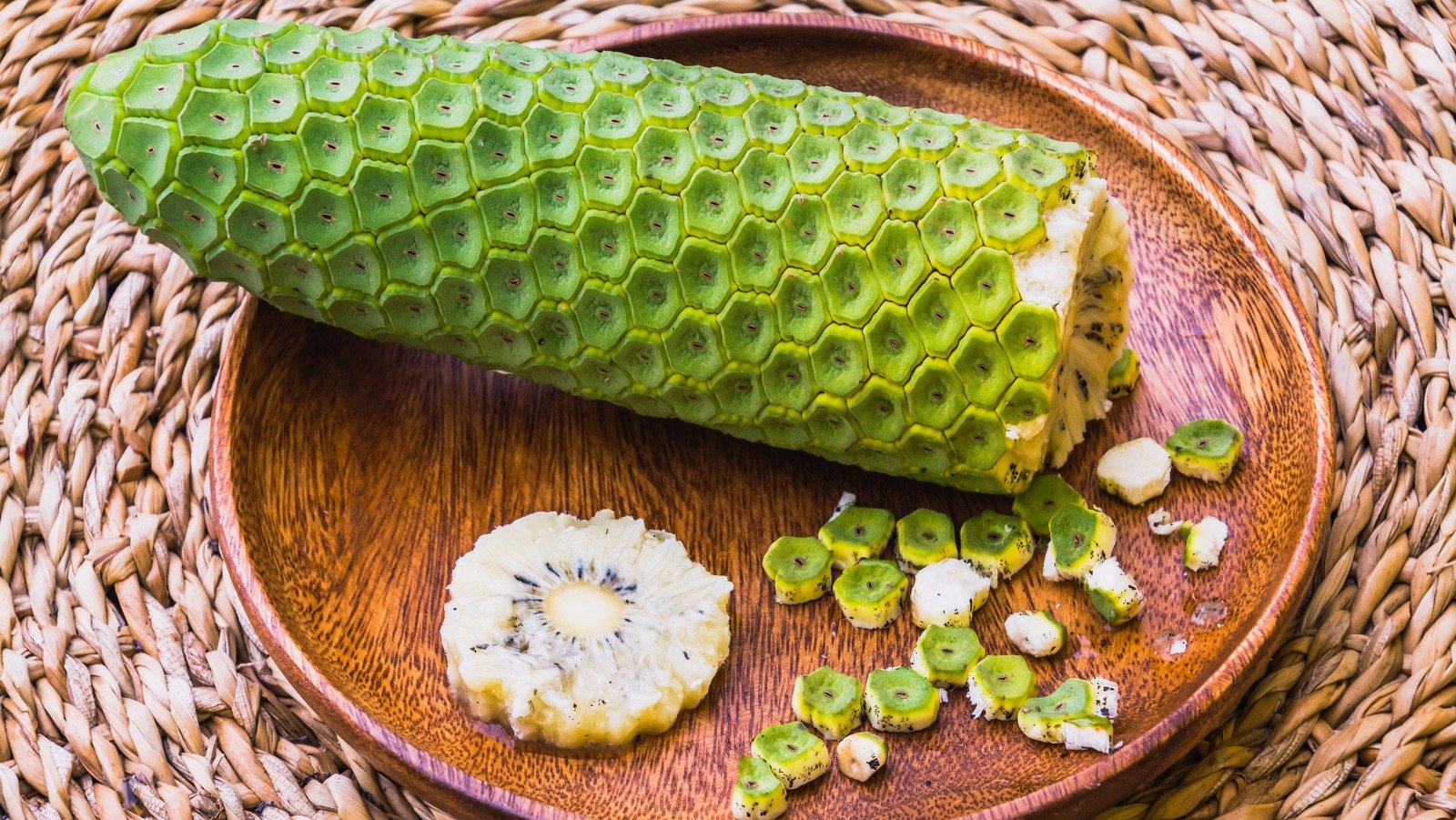
Fruit salad plant fruit comes from Monstera deliciosa, a tropical climbing plant known for its large, split leaves. The ripe fruit has a sweet flavor often compared to banana and pineapple, but it needs careful handling because unripe fruit can irritate the mouth and throat.
What is fruit salad plant fruit?
Fruit salad plant fruit is the edible fruit of Monstera deliciosa, also called the Swiss cheese plant or ceriman. This tropical plant belongs to the arum family and grows naturally in parts of Central America.
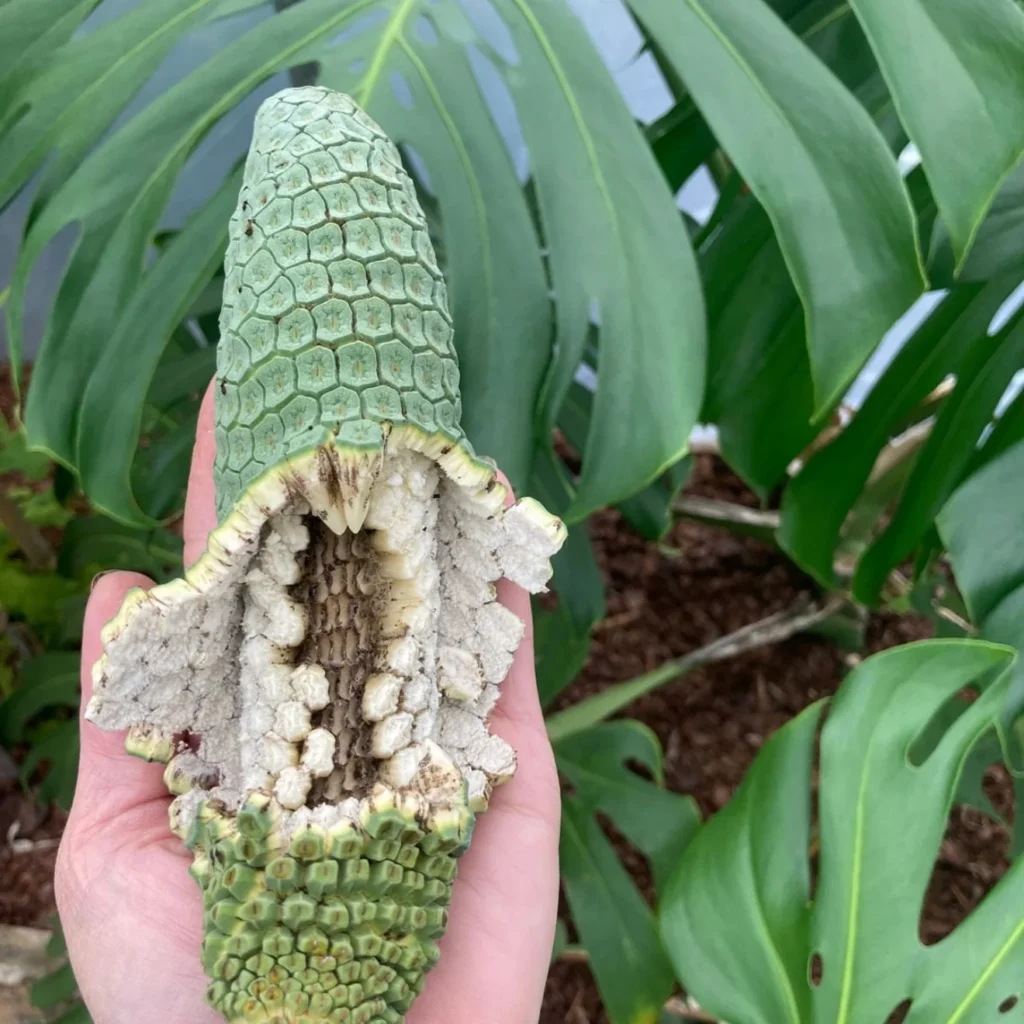
The fruit has an unusual shape. It looks like a thick green ear of corn covered in small, hard, hexagonal scales. As the fruit ripens, these scales loosen and fall away, exposing the pale, creamy flesh underneath.
Although many people grow the fruit salad plant as a houseplant, it can produce edible fruit under suitable growing conditions. Indoor plants rarely reach the maturity and conditions needed to flower and fruit.
The plant needs warmth, room to climb, and enough light to support mature growth. In warm tropical climates, it may grow outdoors, while gardeners in cooler regions usually keep it in a pot indoors or in a protected greenhouse.
What does fruit salad plant fruit taste like?
Fully ripe fruit salad plant fruit has a sweet, tropical flavor that is often compared to banana and pineapple. Some descriptions also mention hints of mango or jackfruit, which gives the fruit its familiar name.
The flesh is soft and creamy, with a texture that can remind you of ripe pineapple. You can eat the ripe pulp fresh or use it to flavor desserts and drinks.
The taste depends on the fruit’s ripeness. Fruit that is still green and firmly covered in scales is unripe and unsafe to eat. Do not taste it to check whether it is ready.
Only eat the portions that have ripened fully and separate easily from the central core. Remove any sections that remain firm or tightly covered by their scales.
How to tell when fruit salad plant fruit is ripe
Fruit salad plant fruit ripens gradually from the bottom toward the tip. The lower scales begin to loosen first, revealing the pale flesh beneath them.
Look for these signs when checking a fruit:
- The green outer covering becomes lighter as the fruit matures.
- The scales near the base begin to separate naturally.
- The exposed flesh looks creamy rather than green.
- Ripe sections release easily from the central core.
A fruit can take many months to mature after flowering, so patience is necessary. Do not assume that a large fruit is ready to eat simply because it has reached its full size.
If you harvest a mature fruit before it is completely ripe, place it at room temperature and allow it to finish ripening. The University of Florida’s gardening guidance describes a process that can take about five to six days under warm indoor conditions, although timing varies.
Eat only the sections that have ripened fully. If you cannot tell whether a section is ready, leave it uneaten.
Is fruit salad plant fruit safe to eat?
Fruit salad plant fruit is edible only when fully ripe. Unripe fruit contains calcium oxalate crystals, which can cause burning pain and irritation in the mouth and throat.
The leaves, stems, roots, and other plant parts also contain irritating compounds. Never eat the leaves or other parts of the plant, and keep them away from children and pets who may chew them.
Take these precautions before handling or eating the fruit:
- Wait until the outer scales loosen naturally and expose the ripe flesh.
- Remove the edible pulp from the central core without eating immature sections.
- Avoid tasting fruit that is still green or tightly covered.
- Wash your hands after handling cut plant material, and avoid contact with the sap.
Even ripe fruit may cause a reaction in some people. Stop eating it if you notice itching, burning, swelling, or other unusual symptoms. Seek urgent medical care if you have difficulty breathing or swallowing, or if your lips or tongue swell.
If you have never eaten this fruit before, be cautious. Its unusual appearance and sweet smell do not guarantee that every section is safe to consume.
How to grow a fruit salad plant
A fruit salad plant grows best in warm conditions with bright, indirect light and soil that drains well. It is a climbing tropical plant, so give it room to grow and a sturdy support such as a moss pole or trellis.
| Growing need | What to provide |
|---|---|
| Light | Bright, indirect light or partial shade outdoors. |
| Water | Water when the upper layer of soil begins to dry. |
| Soil | A loose, well-draining potting mix with organic matter. |
| Humidity | Moderate to high humidity is helpful for tropical growth. |
| Support | A sturdy pole or trellis for climbing stems. |
| Temperature | Warm conditions without prolonged exposure to cold. |
Light and temperature
Place an indoor fruit salad plant near a bright window where it receives filtered light. Strong direct sun can scorch the leaves, especially after a plant has been kept in a dim room.
Warm conditions support steady growth. Protect the plant from cold drafts and prolonged low temperatures, which can damage its leaves and slow growth.
Watering and soil
Water thoroughly when the upper layer of potting mix starts to dry, then allow excess water to drain. Avoid leaving the pot in standing water because constantly wet soil can damage the roots.
Choose a pot with drainage holes and a loose mix that holds some moisture without becoming soggy. Check the soil before watering instead of following a rigid daily schedule.
Why the plant may not produce fruit
A fruit salad plant can grow well for years without producing fruit indoors. Young plants need time to mature, and indoor conditions may not provide enough warmth, space, or light for flowering.
Focus on healthy growth first. Provide suitable light, steady warmth, climbing support, and good drainage. Do not expect fruit simply because the plant has developed large, split leaves.
Common mistakes when growing fruit salad plants
Several growing mistakes can weaken the plant or prevent it from reaching maturity.
- Overwatering: Waterlogged soil can cause root problems. Let excess water drain and check the soil before watering again.
- Insufficient light: A very dark location can slow growth. Move the plant to a brighter spot with filtered light.
- Lack of support: Long stems may bend or become difficult to manage without a sturdy climbing structure.
- Expecting quick fruit: Indoor plants often remain foliage plants and may never produce fruit in ordinary home conditions.
- Eating unripe fruit: Firm green scales indicate that the fruit may still be immature. Wait until the ripe sections separate naturally.
Frequently asked questions about fruit salad plant fruit
Can you eat fruit salad plant fruit?
Yes, but only the fully ripe fruit is considered edible. Unripe sections can cause painful irritation because they contain calcium oxalate crystals.
How long does fruit salad plant fruit take to ripen?
The fruit takes many months to mature on the plant. Once a mature fruit is harvested, it may need several more days at room temperature to ripen fully.
Does fruit salad plant fruit taste like pineapple?
Yes, pineapple is one of the flavors commonly associated with ripe fruit. Many people also compare it to banana, with some descriptions mentioning mango or jackfruit.
Can a fruit salad plant grow fruit indoors?
It is possible, but uncommon. Most indoor plants do not reach the maturity and growing conditions needed to flower and produce fruit.
Why is my fruit salad plant fruit still green?
Green, tightly attached scales usually indicate that the fruit is not fully ripe. Allow it to mature rather than tasting it before the scales loosen.
Is the fruit salad plant poisonous to pets?
The plant contains calcium oxalate crystals that can irritate the mouth and digestive tract when chewed or swallowed. Keep the plant and its unripe fruit away from cats, dogs, and children.
Can you grow a fruit salad plant outside?
Yes, in suitable warm climates with partial shade and well-draining soil. In cooler regions, grow it in a container indoors or in a protected greenhouse.
Should I buy a fruit salad plant for its fruit?
Choose this plant mainly for its decorative foliage unless you can provide suitable conditions for mature growth. If fruit production is your main goal, remember that flowering and fruiting are uncommon in typical indoor settings.