
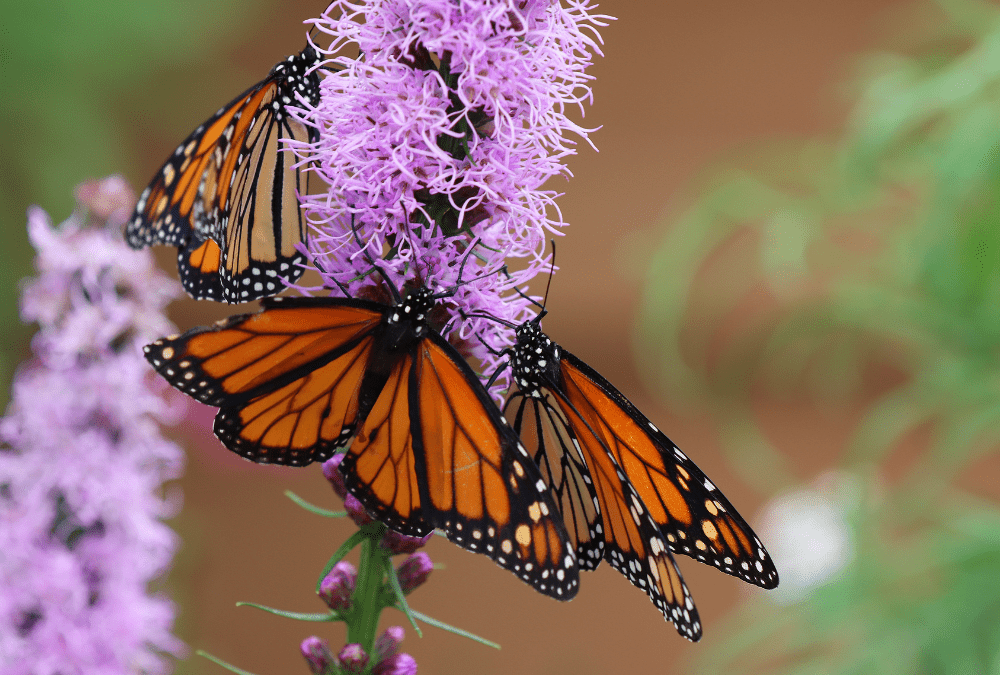
The gayfeather plant (Liatris spp.) is a flowering perennial with tall, upright spikes of purple, pink, or white flowers. It grows well in sunny garden beds with well-drained soil and brings bees and butterflies to the garden during summer.
TL;DR
- Gayfeather grows best in full sun and soil that drains well.
- Water regularly during the first growing season, then adjust watering to rainfall and soil conditions.
- Plant corms in spring or grow new plants from seed.
- Remove spent flower spikes if you want to limit self-seeding.
- Leave some dry stems standing through winter to provide shelter for native bees.
What is the gayfeather plant?
The gayfeather plant is a perennial flowering plant in the daisy family, Asteraceae. It is also called blazing star, and its narrow flower spikes make it easy to recognize in a garden.
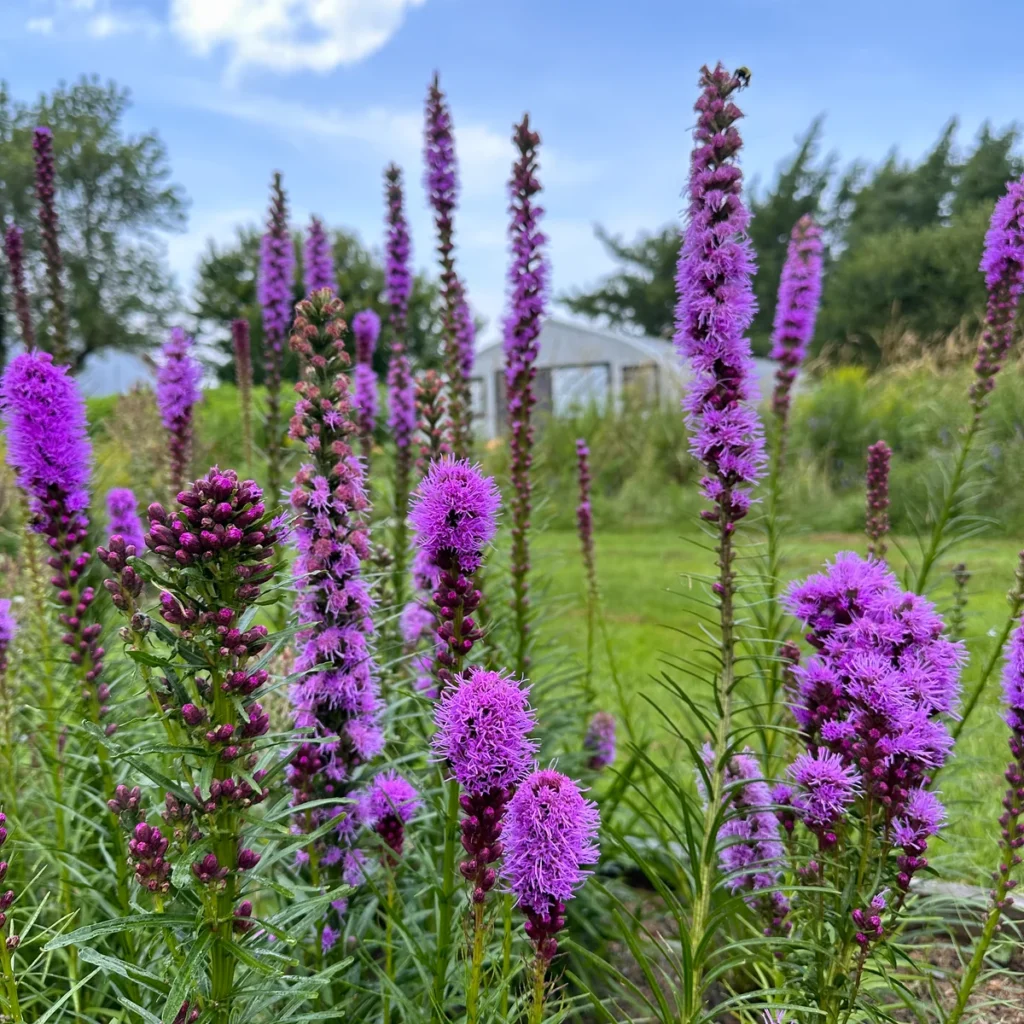
Liatris is a genus that includes several species, so plant height, soil preferences, and flowering times vary. One popular garden species is Liatris spicata, also called spike gayfeather. It has grass-like leaves and upright flower spikes that open from the top downward.
Gayfeather is a good choice for sunny borders, cottage gardens, and pollinator beds. Its tall flowers add vertical interest without taking up much ground space.
The flowers are usually purple or lavender, though white and pink varieties are also available. Depending on the species and local climate, flowering often begins in summer and continues into early autumn.
How to grow and care for a gayfeather plant
Gayfeather grows best with at least six hours of direct sunlight each day and moist but well-drained soil. Give it enough room for its mature height, and avoid planting it where water sits around the roots for long periods.
| Care factor | Requirement |
|---|---|
| Light | Full sun is best; some species tolerate partial shade. |
| Water | Regular watering during establishment, followed by watering during prolonged dry spells. |
| Soil | Well-drained soil with moderate moisture. |
| Flowering season | Usually summer to early autumn, depending on species and climate. |
| Growth habit | Upright perennial with narrow leaves and flower spikes. |
| Propagation | Seeds or division of established plants, depending on species. |
Light needs
Choose a sunny spot for your gayfeather plant. Full sun helps produce strong stems and plentiful flowers.
Partial shade can work in hot climates, but too little sunlight may lead to fewer flowers and weaker growth. If your garden receives afternoon shade, choose a location that still gets several hours of direct sunlight.
Watering needs
Keep the soil evenly moist while a newly planted gayfeather establishes its roots. Water deeply when the surface soil begins to dry, then allow excess water to drain away.
Established plants can tolerate some dry weather, although watering during a long dry spell helps prevent stress. Avoid frequent watering when the soil is already wet, as soggy conditions can cause root and corm rot.
Soil and drainage
Gayfeather prefers soil that holds some moisture but drains freely. Sandy loam and ordinary garden soil can work well when water does not collect around the roots.
If your soil is heavy clay, improve drainage before planting or choose a raised bed. Adding a thick layer of fertilizer will not solve poor drainage, and overly fertile soil can encourage tall stems to flop.
Temperature and seasonal care
Many garden-grown gayfeather species tolerate cold winters, but hardiness varies by species and cultivar. Check the requirements of your chosen plant against your local climate before planting.
In warm regions, give the plant good air circulation and watch soil moisture during hot weather. In areas with wet winters, drainage is especially important because dormant roots can rot in waterlogged soil.
How to plant gayfeather corms
Plant gayfeather corms in spring after preparing a sunny bed with well-drained soil. A corm is a short, swollen underground stem that stores energy for the plant, much like a small bulb.
Follow these steps for reliable planting:
- Choose a site that receives full sun and does not stay waterlogged after rain.
- Loosen the soil and remove weeds that could compete with young plants.
- Plant the corms according to the depth recommended for the species or supplier. For Liatris spicata, planting about 5 inches deep is a common guideline.
- Space plants according to their mature size. Many garden varieties need around 6 to 15 inches between plants.
- Cover the corms with soil and water the bed gently.
- Keep the soil lightly moist while new growth develops, without leaving it saturated.
You can also plant nursery-grown gayfeather plants. Set each plant at the same depth it grew in its container, firm the soil around the roots, and water thoroughly.
Spring planting gives the roots time to establish before summer flowering. In climates with mild autumns, fall planting may also work if the soil is not waterlogged and the plant has time to settle before winter.
When does the gayfeather plant bloom?
The gayfeather plant usually blooms in summer or early autumn, depending on its species, cultivar, and growing conditions. Purple and lavender flower spikes are common, while some varieties produce white or pink blooms.
One unusual feature is that the flowers open from the top of the spike downward. This gives the plant a different look from many other tall garden flowers, which open from the bottom upward.
To encourage good flowering, provide enough sunlight and avoid excessive fertilizer. Rich soil can produce plenty of foliage but weaker stems in some varieties.
You can cut flower spikes for fresh arrangements when enough individual flowers have opened. Gayfeather also works well in dried arrangements when the flowers are harvested and dried properly.
How to propagate gayfeather
You can grow gayfeather from seed or divide established plants. The best method depends on the species and whether you want several new plants or a quicker way to expand an existing clump.
Growing from seed
Sow seeds in a suitable seed-starting mix or prepared garden bed, following the instructions for your species. Keep the growing medium lightly moist while the seeds germinate.
Seed-grown plants may take longer to flower than established nursery plants. Many Liatris plants grown from seed do not bloom until their second year.
Dividing established plants
Divide mature clumps in spring as new growth begins. Carefully lift the plant, separate healthy sections, and replant each section at the correct depth.
Make sure each division has healthy roots or corms and a growing point. Water the new plants after planting, then keep the soil lightly moist while they settle in.
Division is useful when a clump becomes crowded or you want more plants with characteristics similar to the parent. Seedlings may vary, especially when growing named cultivars.
Common problems with gayfeather plants
Gayfeather is generally easy to grow, but poor drainage, insufficient sunlight, and overly tall stems can cause problems. Check the growing conditions before treating a plant that looks weak or fails to flower.
| Problem | Likely cause | What to do |
|---|---|---|
| Few or no flowers | Too much shade or excessive fertilizer. | Move the plant to a sunnier spot if practical and reduce unnecessary feeding. |
| Stems fall over | Tall growth, rich soil, or insufficient sunlight. | Use a plant support and avoid excess fertilizer. |
| Yellowing leaves | Waterlogged soil, drought stress, or another growing problem. | Check soil moisture and inspect the plant for signs of damage. |
| Weak growth | Poor growing conditions or competition from weeds. | Improve sunlight, drainage, and space around the plant. |
| Root or corm rot | Soil stays wet for too long. | Improve drainage and reduce watering when the soil is saturated. |
Avoid cutting all the stems back as soon as the flowers fade. The dry stems of some Liatris species provide nesting sites for native bees. Leave some stems standing through winter, then trim them back in spring when new growth begins.
Is gayfeather a good choice for your garden?
Gayfeather is a good choice if you want upright summer flowers and a perennial that needs relatively little care once established. It works particularly well in sunny borders, naturalistic plantings, and gardens designed to attract pollinators.
Consider its mature height before planting. Taller species may need support in exposed sites, while compact cultivars fit smaller beds more easily.
Gayfeather may be less suitable for gardens with deep shade or soil that stays waterlogged. If your garden has heavy, wet soil, improve drainage or choose a species suited to your conditions before planting.
For a balanced planting, combine gayfeather with lower-growing perennials that have different flower shapes. Leave enough space for air to move between plants, and avoid crowding the base of the stems.
Frequently asked questions about the gayfeather plant
Is the gayfeather plant a perennial?
Yes, most garden-grown Liatris species are herbaceous perennials. They die back during the dormant season and grow again when conditions become suitable.
Does gayfeather need full sun?
Gayfeather grows best in full sun, generally with at least six hours of direct sunlight daily. Some species tolerate partial shade, but flowering may be reduced.
How often should I water a gayfeather plant?
Water regularly during the first growing season and whenever the soil becomes dry during prolonged hot weather. Adjust watering to rainfall and soil drainage, because consistently wet soil can damage the roots.
Does gayfeather bloom in its first year?
It depends on how you grow it. Seed-grown plants often flower in their second year, while established corms and nursery-grown plants may bloom sooner under suitable conditions.
Do bees and butterflies like gayfeather?
Yes, gayfeather flowers attract bees and butterflies. The flower spikes also provide nectar and pollen for visiting pollinators.
Should I cut back gayfeather in autumn?
You can remove spent flower spikes if you want to limit self-seeding, but leave some stems standing through winter. Cut them back in spring to retain potential nesting habitat for native bees.
Can gayfeather grow in pots?
Yes, compact varieties can grow in containers with drainage holes and a free-draining potting mix. Choose a pot large enough for the roots and water when the mix begins to dry.
Why is my gayfeather plant falling over?
Tall stems may fall over because of excessive fertilizer, limited sunlight, or exposure to strong wind and rain. Grow the plant in full sun, avoid overfeeding, and add support when needed.