
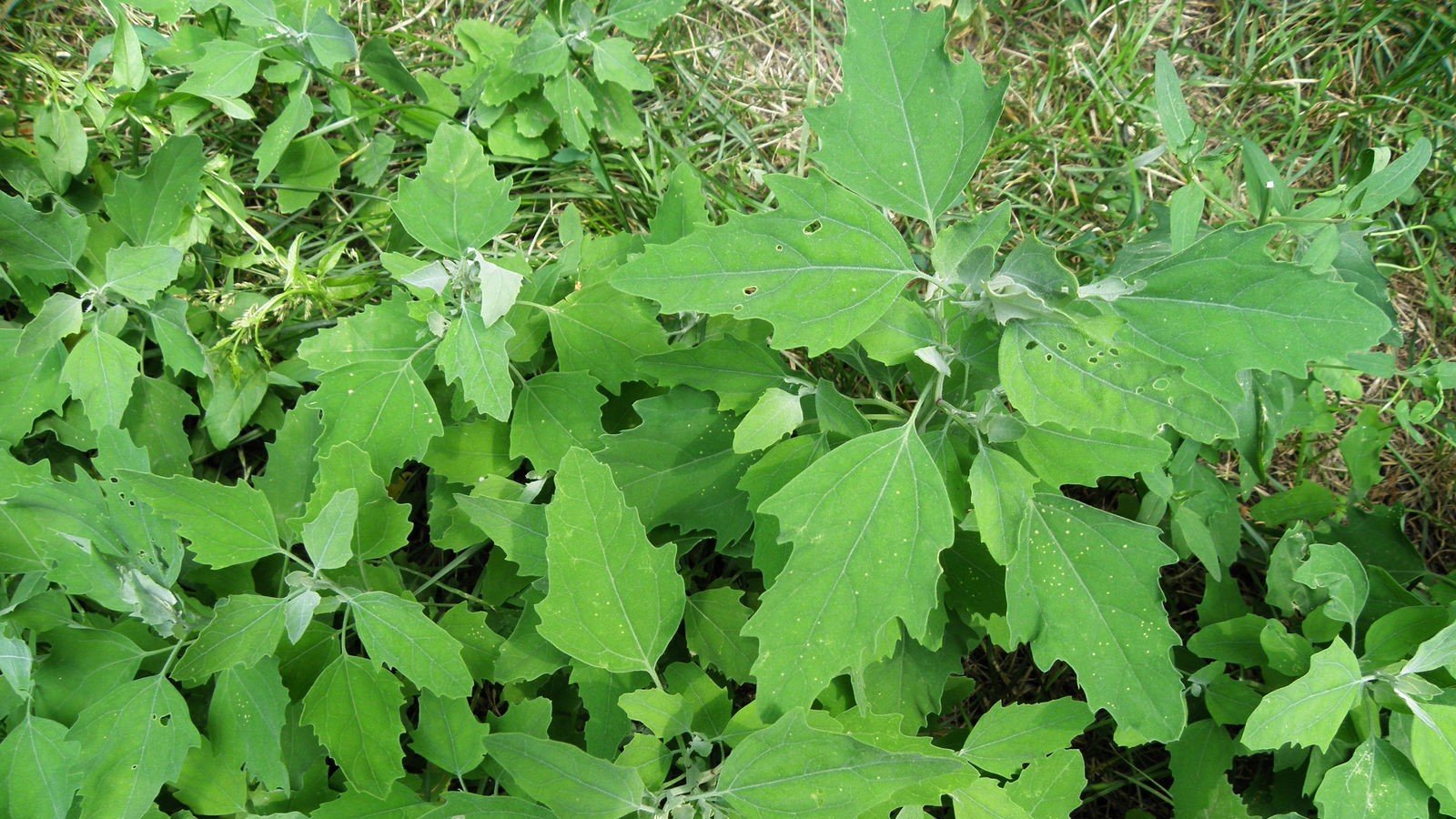
The fat hen plant (Chenopodium album) is a fast-growing annual plant found in gardens, vegetable beds, fields, and disturbed soil. Its triangular leaves, pale powdery coating, and clusters of tiny green flowers make it easier to recognise once you know what to look for.
TL;DR
- The fat hen plant is an annual broadleaf weed with green leaves and a whitish, powdery surface.
- It grows well in open areas with fertile soil and plenty of light.
- Young leaves are eaten as a leafy vegetable in some regions, often under the name bathua.
- Remove unwanted plants before they produce seeds to limit future growth.
- Identify the plant carefully before eating it, as similar species can be difficult to distinguish.
What is the fat hen plant?
The fat hen plant is a common annual herb that grows quickly in cultivated soil and other disturbed places. It belongs to the amaranth family, Amaranthaceae, and is also known as lamb’s quarters or white goosefoot.
Gardeners often treat fat hen as a weed because it competes with vegetables and other plants for light, water, nutrients, and space. However, its young leaves are also used as food in parts of the world.
The plant can grow as a single upright stem or develop several branches. Its size varies with growing conditions, so a young specimen may look quite different from a mature plant.
Fat hen often appears where soil has been recently dug, cultivated, or disturbed. You may find it in vegetable plots, compost-rich ground, field edges, and bare patches in a garden.
How to identify the fat hen plant
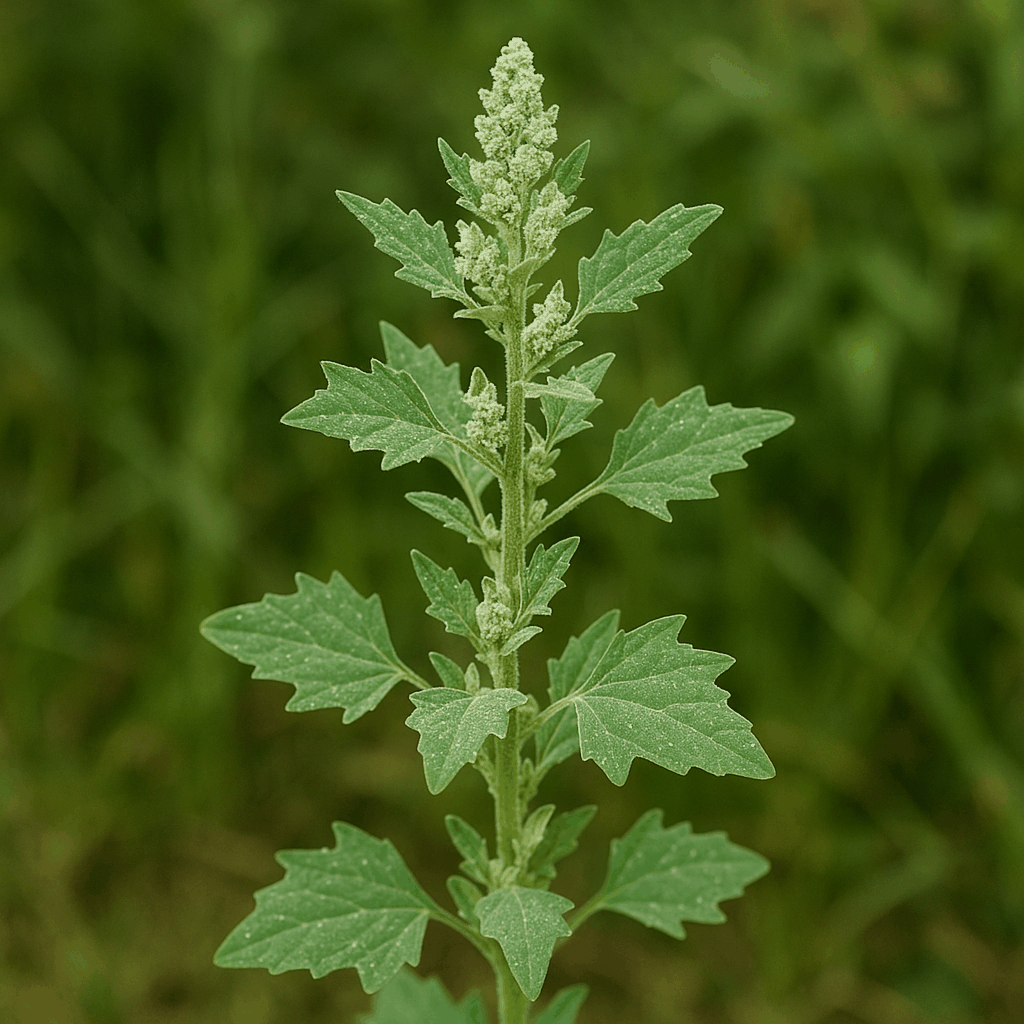
The fat hen plant is easiest to identify by examining its leaves, stems, and flowers together. Its leaves are usually green to grey-green, with a pale, flour-like coating that is especially noticeable on young growth and the undersides of leaves.
Look for these features when checking a plant:
- Leaves: The leaves are often triangular, diamond-shaped, or oval, with irregularly toothed edges. Lower leaves tend to be broader than those near the top.
- Leaf coating: Young leaves may have a whitish, mealy surface that looks as though they have been dusted with flour.
- Stems: The upright stems branch as the plant matures. Some plants develop reddish or purple streaks.
- Flowers: Tiny green flowers grow in dense clusters near the tips of stems and along upper branches.
- Seeds: Mature flower clusters produce many small seeds that can fall into the soil and germinate later.
Fat hen varies in appearance according to its age and growing conditions. Some plants are compact, while others grow tall and heavily branched.
Do not rely on one feature alone when identifying it. Several related weeds have similar leaves, and young seedlings can be difficult to distinguish. If you plan to eat the plant, obtain a reliable identification before harvesting.
How to grow the fat hen plant
The fat hen plant grows readily from seed in open ground, particularly where the soil is fertile and receives plenty of light. It usually needs little help to establish itself, which is why it can appear without being deliberately planted.
If you want to grow it as a leafy vegetable, choose a clean area away from roadsides, treated ground, and places where animals may leave waste. Use ordinary garden soil that drains reasonably well and receives full sun or partial shade.
| Growing factor | Suitable conditions |
|---|---|
| Plant type | Annual herb |
| Light | Full sun to partial shade |
| Soil | Fertile, well-drained soil |
| Water | Regular moisture while young, without waterlogging |
| Propagation | Seeds |
| Maintenance | Low if grown for use, higher if seed spread needs control |
When should you sow fat hen seeds?
Sow seeds in spring or when local conditions favour germination. In warm climates, the timing can differ from that in temperate regions, so use local growing conditions rather than a fixed calendar date.
Scatter seeds thinly over prepared soil and cover them with only a light layer of fine soil. Keep the surface moist while seedlings establish. Thin crowded seedlings so the remaining plants have room to develop.
Fat hen grows quickly in suitable conditions. Check the bed often, because plants left to mature can produce seeds that spread throughout the growing area.
Does fat hen need fertiliser?
Fat hen usually grows well in reasonably fertile soil and rarely needs extra fertiliser. Adding large amounts of nitrogen-rich fertiliser can encourage excessive leafy growth and may be unnecessary.
If you are growing it for edible leaves, start with clean soil amended with mature compost. Avoid using fresh manure on leaves that will be harvested for food.
How to use fat hen as a leafy vegetable
Young fat hen leaves are eaten as a leafy vegetable in several regions, including South Asia, where the plant is known as bathua. The leaves can be cooked much like spinach, but you must identify the plant correctly and harvest it from a clean growing area.
Choose young, tender leaves before the plant develops tough stems. Wash them thoroughly under clean running water and cook them before eating. Fat hen contains oxalic acid, and eating large quantities can pose a risk because of its oxalate content.
Keep these precautions in mind:
- Harvest only plants you can identify with confidence.
- Avoid plants growing beside busy roads or in soil that may contain chemicals or animal waste.
- Do not collect plants from areas treated with herbicides or other garden chemicals.
- Cook the leaves rather than eating large amounts raw.
- If you have dietary restrictions related to oxalates, ask a qualified health professional whether these leaves are suitable for you.
Fat hen is not suitable for every garden or every diet. Treat it as a food plant only when identification, growing conditions, and preparation are appropriate.
How to control fat hen in the garden
The simplest way to control fat hen is to remove young plants before they form mature seeds. Regular checks are more effective than waiting until the weed has grown tall and developed dense flower clusters.
For a small garden, hand-pulling or hoeing is usually sufficient. Remove the plant with as much of its root as practical, especially when the soil is moist and the plant comes out easily.
Follow these steps to reduce its spread:
- Inspect bare soil and vegetable beds regularly for young seedlings.
- Pull or hoe unwanted plants while they are small.
- Remove mature plants before their seeds ripen.
- Clear pulled plants from the growing area if they carry mature seeds.
- Cover bare soil with suitable mulch or grow desirable plants close enough to reduce open space.
Fat hen can continue appearing after you remove mature plants because seeds already in the soil may germinate later. Repeat inspections through the growing season instead of expecting one round of weeding to solve the problem.
If the weed grows among vegetables, remove it carefully to avoid damaging crop roots. In larger areas, choose a control method suited to the crop and follow the instructions on any herbicide label.
Common mistakes when dealing with fat hen
Several common mistakes allow fat hen to spread or lead to poor plant identification.
- Waiting until flowering is finished: Mature plants may already have released seeds. Remove unwanted plants before the seeds ripen.
- Ignoring small seedlings: Young plants are easier to pull and take less time to remove than large, branched specimens.
- Assuming every similar weed is edible: Related plants can look alike. Confirm the species before using any wild plant as food.
- Overwatering the growing area: Fat hen tolerates a range of soil conditions, but waterlogged soil can harm many garden plants. Water according to the needs of the plants you intend to grow.
- Leaving seed-bearing weeds on the ground: Disturbing mature seed clusters can spread seeds around the garden. Handle these plants carefully and dispose of them appropriately.
A short inspection every few days during periods of active growth can help you catch new seedlings before they become difficult to manage.
Frequently asked questions about the fat hen plant
Is the fat hen plant a weed?
Yes, fat hen is commonly treated as a weed because it grows readily in cultivated ground and can compete with crops. It can also be grown or harvested as a leafy vegetable where its use is appropriate.
What is the scientific name of the fat hen plant?
The scientific name is Chenopodium album. The plant is also called lamb’s quarters and white goosefoot.
Can you eat the fat hen plant?
Young leaves and shoots are eaten in some cuisines, including South Asian cooking. Confirm the plant’s identity, harvest it from a clean area, and cook it before eating because it contains oxalic acid.
Does the fat hen plant come back every year?
Fat hen is an annual plant, so an individual plant completes its life cycle in one growing season. New plants can appear in later seasons when seeds remain in the soil and germinate.
How tall does the fat hen plant grow?
Its height varies with soil fertility, light, and growing conditions. Plants can remain relatively small or grow into tall, branching specimens.
How do you stop fat hen from spreading?
Remove young plants before they produce mature seeds, and check the soil regularly for new seedlings. Mulching bare soil can also help reduce the space available for weeds to establish.
Does the fat hen plant need full sun?
Fat hen grows well in full sun but can tolerate partial shade. Fertile soil and suitable moisture help it establish and grow.
Is fat hen the same as bathua?
Bathua commonly refers to Chenopodium album in South Asian food and gardening contexts. However, common names can vary by region, so confirm the plant’s identity rather than relying on its name alone.