
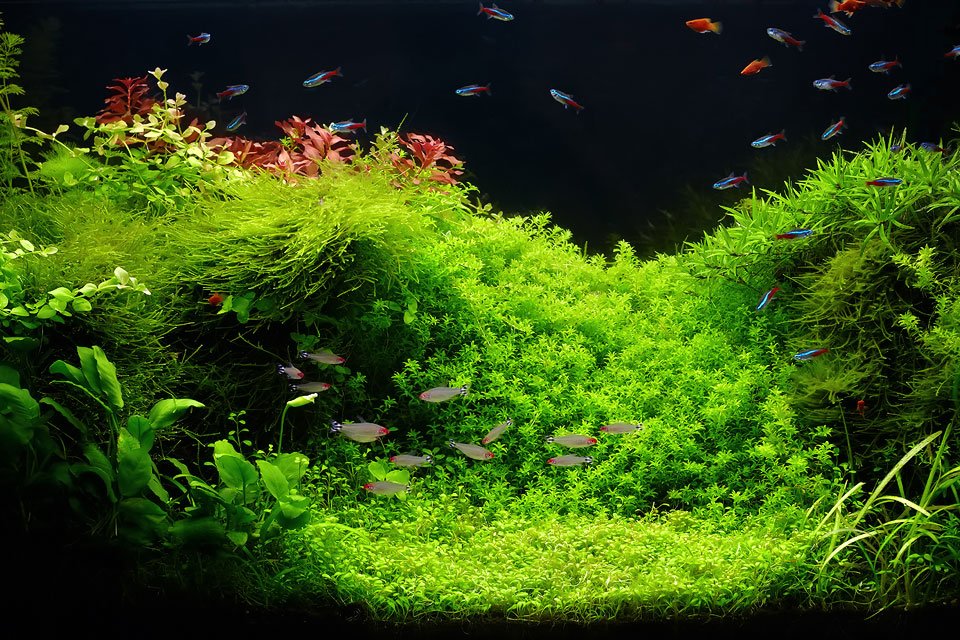
Fish tank plant fertiliser helps aquarium plants grow healthy leaves, develop strong roots and maintain steady growth. The right type depends on your plants, lighting, substrate, fish load and whether your tank has added carbon dioxide. Using the correct fertiliser in suitable amounts can support a thriving planted aquarium without putting fish and other aquatic animals at risk.
Before adding any product, check which nutrients your plants need and whether your aquarium already receives them through fish waste, fish food or nutrient-rich substrate.
TL;DR
- Choose an aquarium-specific fertiliser designed for planted tanks.
- Use liquid fertiliser for nutrients absorbed through leaves and stems, and root tabs for plants that feed heavily through their roots.
- Follow the product label and start cautiously, especially in tanks with sensitive fish or shrimp.
- Watch plant growth and algae levels to help assess whether your fertilising routine needs adjustment.
- Avoid garden fertilisers because they may contain ingredients unsuitable for aquariums.
Why Do Aquarium Plants Need Fertiliser?
Aquatic plants need nutrients to produce leaves, develop roots and carry out photosynthesis. Light provides the energy for growth, but plants also need access to essential nutrients from the water and substrate.
Some nutrients enter an aquarium naturally. Fish waste and decomposing food can provide nitrogen and phosphorus, while tap water may contain minerals that plants can use. However, these sources do not always supply everything plants need in balanced amounts.
In a heavily planted tank, fast-growing plants may use nutrients quickly. If the available supply falls short, growth can slow and leaves may develop unusual colours or damage.
Fertiliser can help fill these gaps. It works best as part of a balanced setup that includes suitable lighting, stable water conditions and appropriate plant care.
Types of Fish Tank Plant Fertiliser
Different fertilisers supply nutrients in different ways. Choosing the right one depends on the plants in your aquarium and how they obtain nutrients.
1. Liquid Aquarium Fertiliser
Liquid fertiliser is added directly to the aquarium water. It supplies nutrients that aquatic plants can absorb through their leaves, stems and other submerged surfaces.
It can be useful for plants such as Java fern, Anubias and many stem plants. It is also practical in aquariums where the substrate contains little nutrition.
Liquid fertilisers may contain micronutrients such as iron and trace minerals, macronutrients such as nitrogen and phosphorus, or a combination of both. Check the label to understand what the product provides.
2. Root Tabs
Root tabs are nutrient-rich tablets placed into the substrate near plant roots. They release nutrients into the surrounding substrate, making them useful for plants that obtain much of their nutrition through their roots.
Root-feeding plants, including many Amazon swords and crypts, often benefit from nutrient-rich substrate or root tabs.
Push each tab into the substrate according to the product instructions. Avoid leaving tablets exposed where fish or other aquarium animals could disturb them.
3. All-in-One Fertiliser
All-in-one aquarium fertilisers supply several nutrients in a single product. They can simplify plant care because you do not need to purchase separate bottles for every nutrient.
However, an all-in-one product may not suit every aquarium. A tank with a large fish population may already have sufficient nitrogen and phosphorus, while a lightly stocked tank with fast-growing plants may need additional nutrients.
Choose a product that fits your aquarium rather than assuming every planted tank requires the same formula.
Which Nutrients Do Aquarium Plants Need?
Understanding the main nutrients can help you recognise what a fertiliser does and why plants may struggle.
- Nitrogen: Supports leaf and stem growth. A shortage can cause older leaves to become pale or yellow.
- Phosphorus: Helps plants transfer and store energy and supports healthy growth.
- Potassium: Supports several plant processes, including water regulation and enzyme activity. A shortage may contribute to pinholes or damaged leaf edges.
- Iron: Helps plants produce chlorophyll and maintain healthy new growth. Some deficiencies can cause young leaves to appear pale.
- Trace elements: Nutrients such as manganese, boron and zinc are needed in small quantities for normal plant development.
These symptoms are not definitive diagnoses. Yellow leaves, holes or slow growth can also result from unsuitable lighting, damaged roots, unstable water conditions or natural leaf ageing. Look at the whole aquarium before increasing fertiliser.
How Often Should You Add Fish Tank Plant Fertiliser?
The correct schedule depends on the product, plant growth rate, lighting, water changes and nutrient levels already present in the aquarium.
Some liquid fertilisers are intended for daily dosing, while others are designed for weekly use. Root tabs may last for weeks or months before they need replacing. Always follow the instructions for your chosen product.
For a new fertilising routine, begin with the label’s recommended dose for your tank size. If you keep sensitive species, such as shrimp, take extra care to select a compatible product and avoid unnecessary dosing.
Observe your plants over the following weeks. Healthy new growth, stable leaves and steady development are useful signs that your routine may be working. Algae growth alone does not prove that you are using too much fertiliser, since lighting and other conditions also affect algae.
Keep a simple record of the amount added, the date and any visible changes. This makes it easier to adjust your routine gradually instead of changing several things at once.
How to Fertilise Aquarium Plants Step by Step
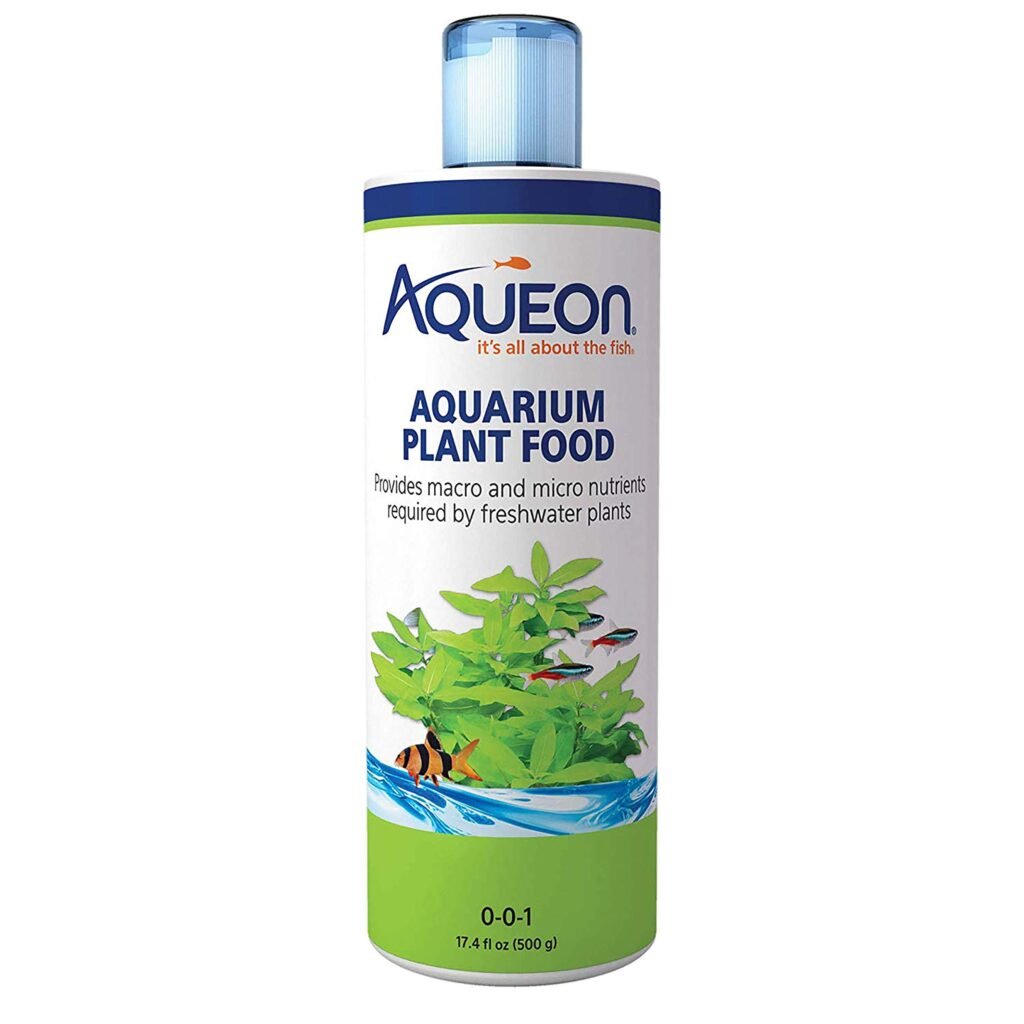
Follow these steps to build a consistent routine.
- Identify your plants. Check whether they are mainly root-feeding plants, water-column feeders or a mixture of both.
- Assess your substrate. Nutrient-rich substrate may supply some needs, while inert gravel or sand may require root tabs for root-feeding species.
- Check your current nutrient sources. Fish waste, food, tap water and substrate can all contribute nutrients.
- Select an aquarium-safe product. Confirm that it is designed for planted aquariums and suitable for the animals in your tank.
- Measure the dose. Follow the product label and account for the actual water volume rather than the aquarium’s external dimensions alone.
- Apply it correctly. Add liquid fertiliser as directed, or place root tabs into the substrate near the plants that need them.
- Monitor the results. Look for healthy new growth, persistent deficiencies or changes in algae, and adjust only when there is a clear reason.
Regular maintenance matters too. Remove decaying leaves, clean the aquarium as needed and perform appropriate water changes to maintain stable conditions.
Can You Use Regular Garden Fertiliser in a Fish Tank?
No. Garden fertilisers are not designed for direct use in aquariums and may contain ingredients or concentrations that are unsafe for fish, shrimp, snails and other aquatic life.
Some garden products contain compounds, additives or coatings that can alter water chemistry or introduce unwanted substances. Their nutrient concentrations may also be difficult to control in a small aquarium.
Choose a fertiliser specifically formulated for aquatic plants and follow its instructions. If you are unsure whether a product is aquarium-safe, do not add it to the tank.
Common Fish Tank Plant Fertiliser Mistakes
Avoiding a few common mistakes can make plant care easier.
- Adding too much fertiliser: More nutrients do not automatically produce faster growth. Excessive dosing can contribute to imbalances and may affect water quality.
- Ignoring the substrate: Root-feeding plants may struggle if they rely on an inert substrate without additional root nutrition.
- Assuming every yellow leaf means a nutrient deficiency: Poor lighting, damaged roots and natural ageing can produce similar symptoms.
- Changing several factors at once: Adjusting fertiliser, lighting and carbon dioxide simultaneously makes it harder to identify what helped or caused a problem.
- Skipping water changes and maintenance: Fertiliser is not a replacement for routine aquarium care.
- Using products without checking compatibility: Some formulations may not be suitable for particular aquatic animals or aquarium setups.
A steady routine and gradual adjustments are usually more useful than frequent changes in response to every small variation.
Frequently Asked Questions
Is fish tank plant fertiliser safe for fish?
Aquarium-specific plant fertilisers can be used safely when they are suitable for the species in the tank and dosed according to the label. Avoid excessive amounts and check product warnings, especially if you keep shrimp, snails or sensitive fish.
Do aquarium plants need fertiliser every day?
Not always. Some products are intended for daily use, while others are dosed weekly or less frequently. Follow the instructions for your particular fertiliser and consider the nutrient supply already available in your aquarium.
Can I grow aquarium plants without fertiliser?
Yes. Some low-demand plants can grow well with nutrients supplied by fish waste, fish food, tap water and the substrate. However, fast-growing or heavily planted aquariums may need additional nutrients to maintain healthy growth.
Should I use liquid fertiliser or root tabs?
Use liquid fertiliser when plants need nutrients supplied through the water, and consider root tabs for plants that feed heavily through their roots. Many aquariums contain both types of plants, so using both products may be appropriate when their nutrient needs justify it.
Does aquarium plant fertiliser cause algae?
Fertiliser does not automatically cause algae. Algae growth depends on several factors, including light intensity, lighting duration, nutrient availability and plant growth. Excessive dosing may contribute to an imbalance, but reducing fertiliser without identifying the cause can also leave plants deficient.
When should I start fertilising a new planted aquarium?
It depends on the substrate, plants and product. A nutrient-rich substrate may supply some nutrients initially, while an inert substrate may provide little. Follow the fertiliser manufacturer’s guidance and monitor plant growth rather than automatically applying a full dose from the first day.
Can I use fertiliser in a tank with shrimp?
Some aquarium fertilisers are suitable for shrimp tanks, but compatibility varies by formulation and dose. Check the label for relevant warnings, choose a product intended for your setup and avoid exceeding the recommended amount.
Final Thoughts
The best fish tank plant fertiliser is one that supplies the nutrients your plants actually need without compromising aquarium conditions. Liquid fertilisers can support plants that feed through the water, while root tabs help provide nutrients to plants that feed through the substrate.
Start with an aquarium-specific product, follow the recommended dosing schedule and watch how your plants respond. With consistent maintenance and sensible fertilising, you can support healthy aquatic plant growth while keeping your aquarium balanced.