
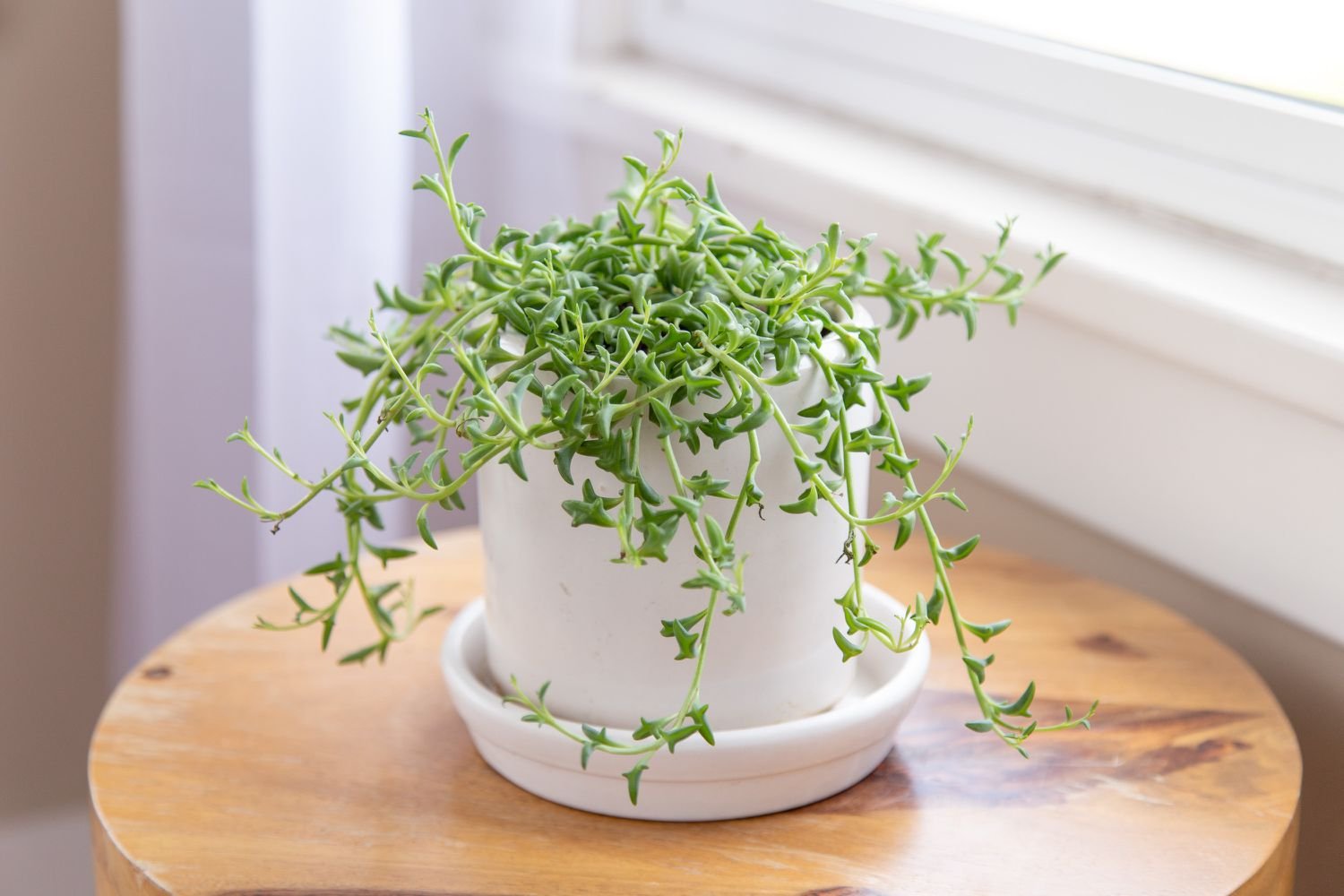
The dolphin plant is a trailing succulent with fleshy leaves shaped like small jumping dolphins. It is usually sold as string of dolphins and works well in a hanging pot or on a bright shelf.
TL;DR
- The dolphin plant needs bright light and soil that drains quickly.
- Let the potting mix dry well before watering again.
- Use a small pot with drainage holes and a gritty succulent mix.
- Cut back long stems to keep the plant full and use healthy pieces for propagation.
- Too much water and too little light are common causes of poor growth.
What is a dolphin plant?
A dolphin plant is a trailing succulent grown for its curved, dolphin-shaped leaves. You may also see it labeled string of dolphins, dolphin necklace, or an older botanical name such as Curio × peregrinus.
The current Kew Plants of the World Online record accepts the hybrid name ×Bacurio delphinatifolius. Older names remain common in plant shops and care guides, so the different labels can refer to the same plant. The hybrid comes from Baculellum articulatum and Curio rowleyanus.
The leaves are plump because they store water. Long stems trail from the pot, making the plant a good choice for a hanging basket or a container placed on a high shelf.
How much light does a dolphin plant need?
A dolphin plant grows best in bright light, with some gentle direct sun if the plant has been gradually acclimated. Strong morning or late-day sun can work well, while harsh midday sun through glass can scorch the foliage.
Watch the stems if you are unsure about the light. Low light often produces longer gaps between leaves and weaker, stretched growth. Move the plant closer to a bright window or add a grow light if the room is too dim.
A north-facing window may be too weak in winter in many homes. An east-facing window is often easier to manage because it provides bright light with less intense afternoon heat.
How often should you water a dolphin plant?
Water a dolphin plant thoroughly, then allow the potting mix to dry before watering again. The plant stores water in its leaves, so keeping the roots wet for long periods can cause problems.
Do not water by the calendar alone. Check the mix with your finger before watering. If it still feels damp below the surface, wait. When the mix is dry, soak it until water runs from the drainage holes, then empty any water left in the saucer.
Your home conditions affect the timing. A warm, bright room can dry a pot faster than a cool room with weak light. In winter, growth may slow and the plant usually needs less water.
Wrinkled, slightly flattened leaves can mean the plant needs water. Soft stems, yellowing leaves, or a wet mix that stays damp for days point to excess moisture instead.
What soil and pot does a dolphin plant need?
A dolphin plant needs a fast-draining succulent or cactus mix and a pot with drainage holes. The goal is to let excess water leave the root area quickly after watering.
A commercial succulent mix works well. You can also improve a regular potting mix with materials such as perlite or pumice to increase drainage.
Choose a pot that is only a little larger than the root ball. An oversized pot holds more wet soil around a small root system, which makes watering harder to manage.
A hanging basket is useful once the stems become long. For a young plant, a simple small pot on a bright shelf is easier to monitor.
What temperature is best for a dolphin plant?
Keep a dolphin plant warm and protect it from frost and cold drafts. It is better suited to indoor growing in regions with cold winters, while outdoor growing works in warm climates where temperatures stay suitable.
If you move the plant outdoors for the warmer months, introduce it to stronger light gradually. A sudden change from indoor light to intense sun can damage the leaves.
Bring the plant back indoors before cold weather arrives if your area can experience frost. Cold, wet soil is especially hard on a succulent.
How do you propagate a dolphin plant?
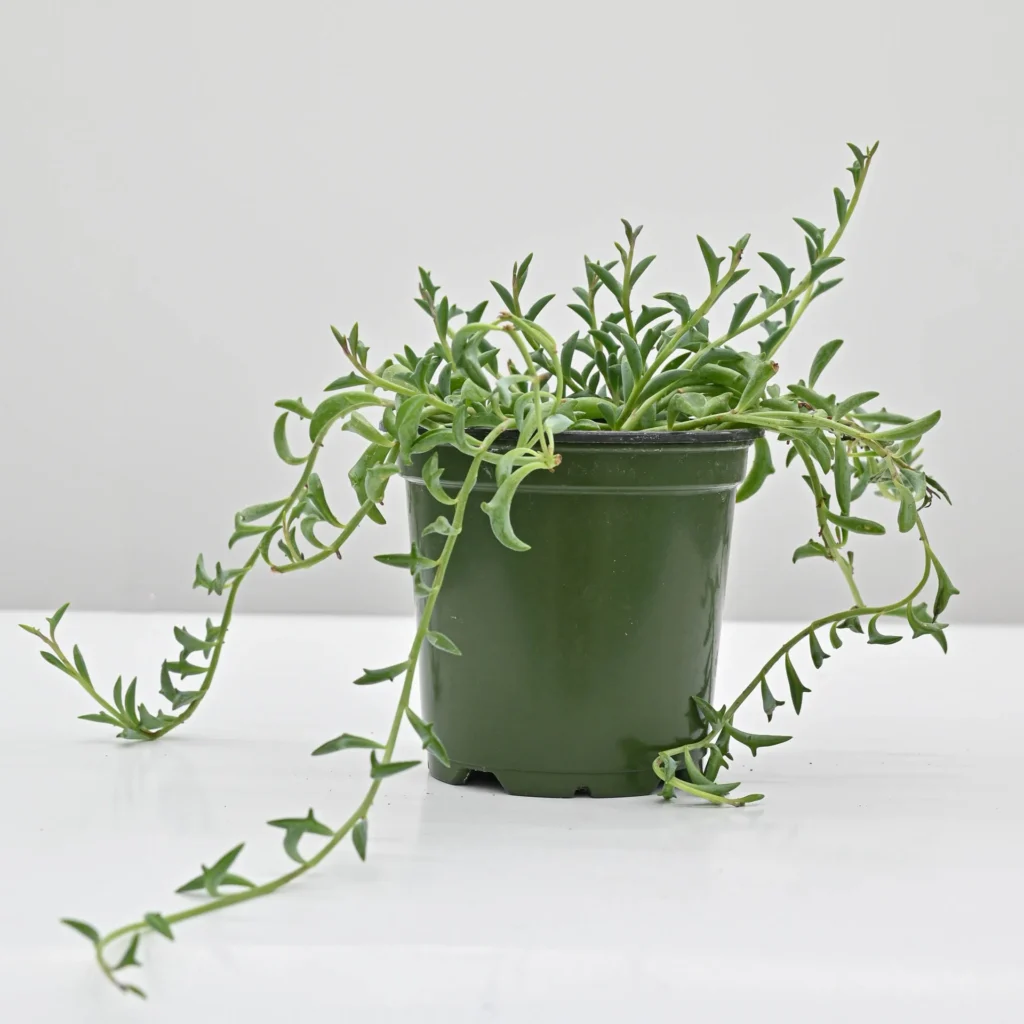
The easiest way to make new dolphin plants is from healthy stem cuttings or by layering a stem onto the potting mix. Both methods use the plant’s ability to produce roots from parts of a growing stem.
For a stem cutting, choose a healthy section with several leaves. Let the cut end dry briefly, then place the stem in a fast-draining propagation mix. Keep the mix lightly moist while roots form, but do not keep it wet.
Layering is even simpler for a long trailing plant. Lay part of a healthy stem against the surface of a suitable potting mix and hold it gently in place. Once that section has rooted, it can be separated from the parent plant.
Avoid taking cuttings from stems that are already soft, blackened, or badly damaged. Start with firm, healthy growth.
Why is my dolphin plant losing its shape?
A dolphin plant can lose its compact shape when it receives too little light or when growth conditions are poor. Long gaps between leaves usually point to insufficient light.
Move the plant to a brighter position and give it time to produce new growth. You can trim very long stems above a healthy section to encourage a fuller appearance.
Overwatering can also cause trouble. If stems become soft and the potting mix stays wet, check the roots and remove damaged material before repotting into fresh, fast-draining mix.
Do not try to fix weak growth by simply adding more fertilizer. Light, drainage, and watering habits have a much larger effect on the plant’s basic health.
Common mistakes with a dolphin plant
- Watering whenever the surface looks dry can keep the deeper mix wet, so check below the surface before watering.
- Keeping the plant in a dim room can lead to stretched stems and sparse leaves, so move it to brighter light.
- Using a pot without drainage holes can trap excess water around the roots, so choose a container that drains freely.
- Placing the plant straight into strong outdoor sun can scorch the foliage, so increase sun exposure gradually.
- Keeping the soil constantly damp can lead to soft stems and root problems, so allow the mix to dry between waterings.
Frequently asked questions about dolphin plants
Is a dolphin plant the same as string of dolphins?
Yes. Dolphin plant is a common name for the succulent usually sold as string of dolphins, with curved leaves that resemble small dolphins.
How much sunlight does a dolphin plant need?
Give a dolphin plant bright light and, when possible, some gentle direct sun. Protect it from sudden exposure to intense midday sunlight.
How often should I water a dolphin plant?
Water when the potting mix has dried well, then water thoroughly and let the excess drain away. The timing changes with light, temperature, pot size, and season.
Can I grow a dolphin plant indoors?
Yes. Dolphin plants are well suited to indoor growing when they have a bright window, good drainage, and careful watering.
Can you propagate a dolphin plant from a cutting?
Yes. Healthy stem cuttings can be rooted in a fast-draining propagation mix, and long stems can also be propagated by layering.
Why are my dolphin plant leaves becoming small?
Small or widely spaced leaves can develop when the plant does not receive enough light. Move it to a brighter location and watch the new growth.
Can a dolphin plant grow outside?
It can grow outdoors in a warm, frost-free setting with suitable light and drainage. In colder regions, grow it in a container and bring it indoors before cold weather.
What is the botanical name of the dolphin plant?
The plant has been sold under names including Curio × peregrinus and Senecio × peregrinus. Kew currently accepts ×Bacurio delphinatifolius for the hybrid.