
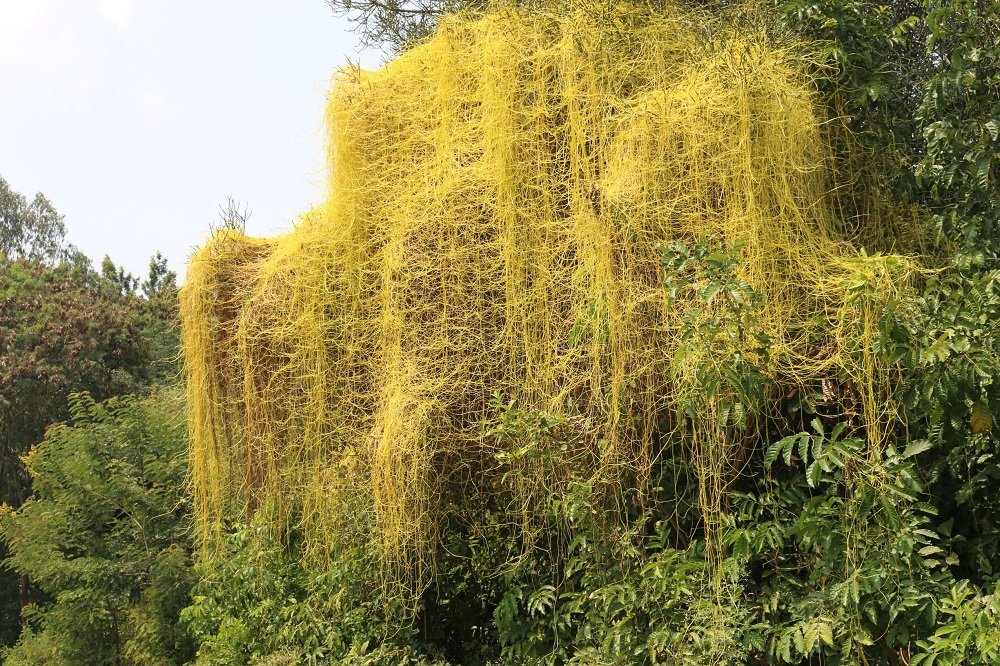
A dodder plant is a parasitic vine in the genus Cuscuta. It has thin yellow, orange, or reddish stems that wrap around other plants and draw water and nutrients from them.
Dodder can spread quickly once it finds a host. Early removal is much easier than trying to separate established dodder from the plant it has attached to.
TL;DR
- A dodder plant is a rootless parasitic vine that depends on a host plant for water and nutrients.
- Look for thin yellow or orange strands wrapped tightly around stems and leaves.
- Remove dodder before it flowers and produces seeds.
- Once dodder has attached firmly, removing the host plant may be the safest way to limit spread.
- Check previously affected areas for new seedlings because dodder seeds can remain in soil for years.
What is a dodder plant?
A dodder plant is a parasitic annual vine that lives by attaching to another plant. Unlike most garden vines, dodder has very small leaves or no obvious leaves and produces thread-like stems that twine around its host.
Dodder is also called Cuscuta. The genus contains many species, and their appearance can vary. Most garden infestations are easy to spot once the thin, yellow or orange stems begin forming tangled masses.
Dodder starts life from a seed in the soil. A young seedling must find a suitable host while it is still small. After contact, it wraps around the host and forms specialized structures called haustoria. Haustoria penetrate host tissue and connect the dodder to the plant’s vascular system.
This makes dodder different from an ordinary climbing weed. A climbing vine uses another plant for physical support. Dodder uses its host for food and water.
How do you identify a dodder plant?
You can usually identify a dodder plant by its thin, string-like stems and its habit of tightly wrapping around another plant. The stems range from yellow and orange to reddish-brown, while the leaves are tiny, scale-like, or difficult to see.
Look for these signs:
- Thin strands forming loops around stems, leaves, or branches.
- Yellow, orange, or reddish growth with little visible foliage.
- Dense tangles that spread across the surface of a host plant.
- Small white, yellow, or pinkish flowers when the plant reaches maturity.
- New strands emerging from soil near previously affected plants.
Dodder can resemble a fine mass of thread caught in a shrub or herb. That appearance is useful when checking plants during routine garden inspections.
If you are unsure whether a plant is dodder, compare its growth habit with a local weed identification guide or ask a cooperative extension service for identification.
How does a dodder plant feed on its host?
A dodder plant feeds on its host after forming haustoria that penetrate the host’s tissues. These structures allow dodder to draw water and nutrients from the plant it has attached to.
Young dodder seedlings begin with limited stored resources. Once they establish contact with a host, the connection to the soil becomes less important as the parasite develops.
Dodder can grow across several stems and branches, so one small patch can become a larger tangled mass. Heavy infestations can weaken host plants because the parasite is taking resources from them.
Dodder’s attachment also explains why pulling only the visible strands may fail. Pieces left attached to the host can continue to grow, and removing the parasite after it has produced seed can leave a longer-term problem in the soil.
When should you remove dodder?
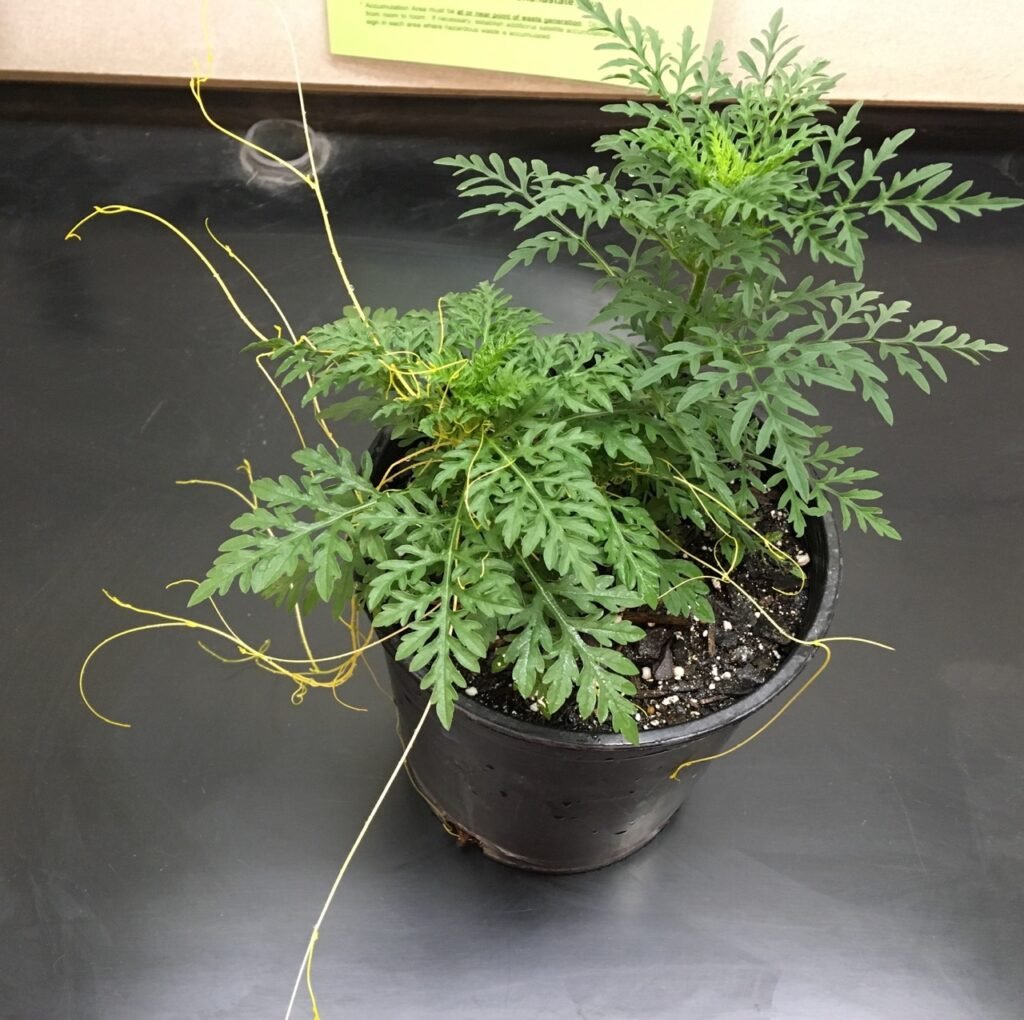
Remove dodder as soon as you notice it, preferably before it flowers and sets seed. Young plants are easier to remove because they have had less time to attach to the host.
For a small garden infestation, inspect the affected plant and surrounding soil carefully. Pull or cut away the dodder before it develops mature seed capsules. Dispose of the removed material rather than leaving it on the ground.
If dodder has become tightly established throughout a desirable plant, removing the entire host may be the more practical option. The University of Minnesota Extension recommends removing the host and dodder together when they cannot be separated without leaving attached material behind.
After removal, keep checking the area. Dodder seeds can survive in soil for many years, so a cleared plant does not always mean the problem is finished.
How can you prevent dodder from spreading?
The best prevention is to stop dodder from producing and spreading seed. Inspect susceptible plants regularly, especially in areas where dodder has appeared before.
Use these habits:
- Remove young dodder before it reaches nearby plants.
- Remove affected plant material before flowers produce mature seed.
- Check nearby plants for new strands after an infestation.
- Avoid moving dodder-contaminated plant material to clean parts of the garden.
- Monitor the same area in following growing seasons.
Dodder seeds can remain dormant in soil for years. The Missouri Botanical Garden reports that seeds can survive for more than 20 years, which is why repeated monitoring matters after an infestation.
In agricultural settings, clean seed is also part of dodder prevention because dodder seeds can become mixed with crop seed.
What should you do if dodder is growing on a valuable plant?
If dodder is lightly attached, remove the strands and inspect the host closely for remaining pieces. If the parasite has spread through much of the plant, removing the affected host may reduce the chance of dodder spreading to nearby plants.
Avoid simply cutting off the visible top growth and assuming the problem is solved. Check the base of the plant and surrounding soil for young dodder seedlings.
Chemical control is more complicated because many herbicides that kill dodder can also damage the host plant. For edible crops, ornamental plants, or large infestations, use the product label and local extension guidance before applying any herbicide.
Common mistakes with dodder plants
- Waiting for the infestation to become obvious can make removal harder. Inspect thin strands early and remove them before they spread.
- Pulling only the visible upper strands can leave attached pieces behind. Check the host plant carefully after cutting or pulling.
- Ignoring the soil can lead to repeated infestations. Watch the same area for new seedlings in later growing seasons.
- Putting removed dodder into garden compost can spread the problem if viable seed is present. Dispose of infested material in a way that prevents it from returning to growing areas.
- Treating the host plant and dodder as separate problems can lead to poor control. Dodder depends on its host, so inspect and manage both.
Frequently asked questions about dodder plant
Is a dodder plant harmful to other plants?
Yes. Dodder is a parasite that takes water and nutrients from its host after attaching to its tissues. A heavy infestation can weaken the affected plant.
Does a dodder plant have roots?
Young dodder seedlings begin from roots, but the mature parasite becomes largely dependent on its host. After attachment, dodder develops haustoria that connect it to the host.
Can dodder grow without a host plant?
Only for a short time after germination. A young dodder seedling must find and attach to a suitable host or it will die.
How do I get rid of a dodder plant?
Remove dodder as soon as you see it, preferably before it produces seed. If it has become firmly established on a plant, removing the affected host along with the dodder can help prevent further spread.
Can dodder come back after removal?
Yes. Dodder can return from seeds already present in the soil. Continue checking an affected area for new seedlings in later seasons.
What does dodder look like?
Dodder looks like a mass of fine yellow, orange, or reddish threads wrapped around another plant. Its leaves are very small or absent, which makes the tangled stems easy to notice.
Is dodder a vine?
Dodder is a vine-like parasitic plant, but it differs from ordinary climbing vines because it obtains water and nutrients from a host plant rather than simply using the host for support.