
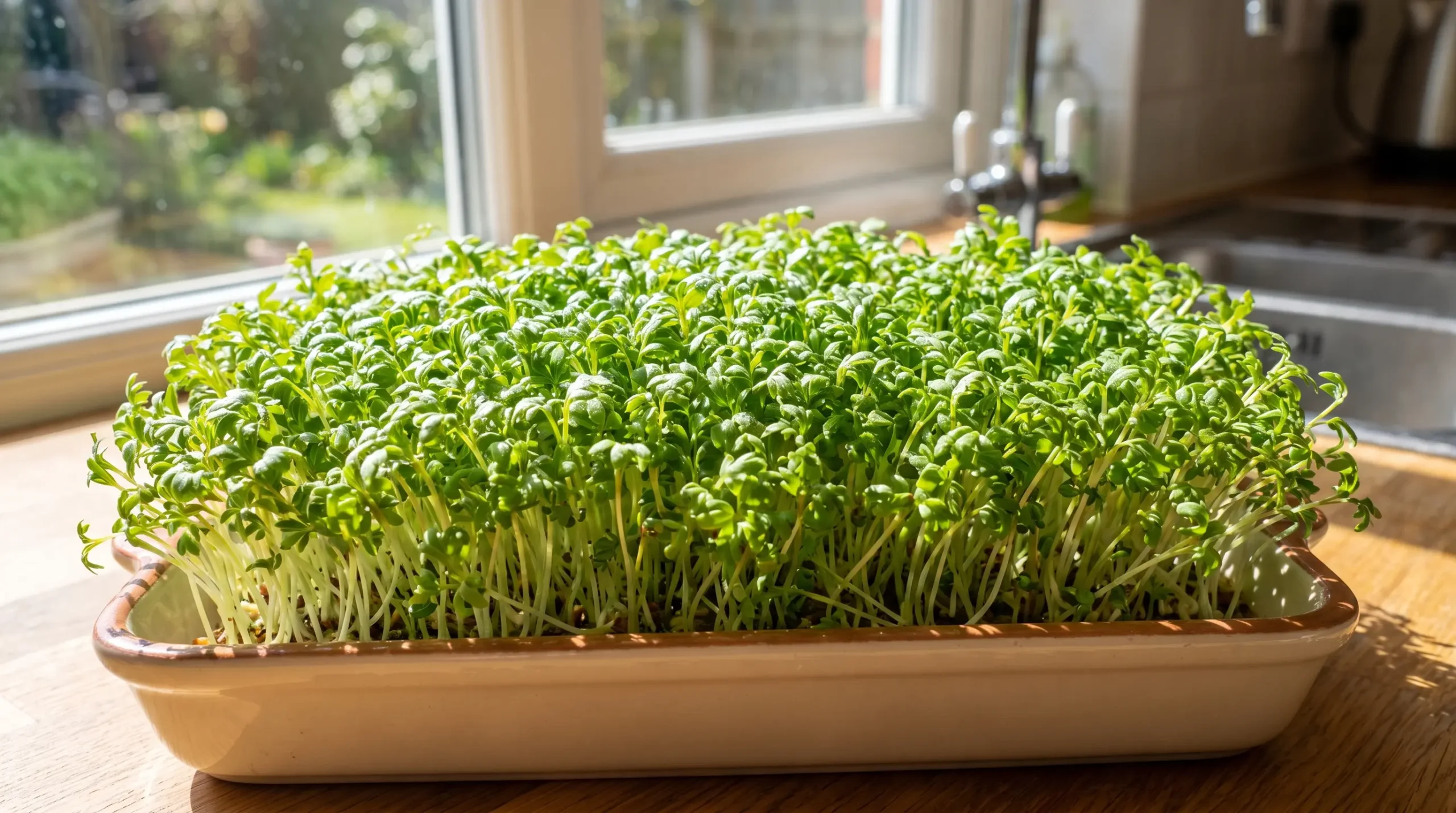
A cress plant is a fast-growing herb that does best in cool weather, steady moisture, and good light. This guide covers how to grow garden cress from seed, where to plant it, when to harvest it, and the common mistakes that can slow it down.
TL;DR
- A cress plant, usually garden cress, is a quick-growing annual herb grown mainly for its young leaves.
- Garden cress prefers cool conditions, good light, and soil that stays evenly moist.
- Sow cress seeds shallowly and keep the growing medium moist while they germinate.
- You can grow cress in containers or indoors when outdoor conditions are too warm.
- Harvest young leaves while they are tender, rather than waiting for the plant to become tall and coarse.
What is a cress plant?
A cress plant is garden cress, Lepidium sativum, a small annual herb in the mustard family. It is grown for its young leaves, which have a fresh, peppery taste. Garden cress is also commonly called peppergrass.
The name can cause confusion because several plants are called cress. Watercress is a different species and has different growing requirements. This article uses “cress plant” to mean garden cress.
Garden cress is useful when you want a crop that moves from seed to harvest quickly. It also works well in a container, so you do not need a large garden bed.
How do you grow a cress plant?
A cress plant is simple to grow from seed. Choose a sunny or lightly shaded spot, use fertile soil that holds moisture without staying waterlogged, sow the seeds shallowly, and keep the soil consistently moist.
For outdoor growing, prepare a fine seedbed and scatter or sow the seeds in shallow rows. Garden cress seeds are small, so avoid burying them deeply. A thin covering of soil is enough.
Water gently after sowing so the seeds stay in place. Keep checking the soil during germination because a shallow seedbed can dry out quickly, especially in warm or windy weather.
For a small indoor crop, use a clean container with drainage and a good-quality growing medium. Place it near a bright window and keep the growing medium moist.
Garden cress grows best during cooler weather. If your outdoor conditions are hot, an indoor container can give you better control over temperature and moisture.
What light and soil does a cress plant need?
A cress plant grows well in full sun or partial shade, provided the soil stays moist. Garden cress prefers fertile, moisture-retentive soil rather than a dry, gritty planting site.
A simple growing setup should provide:
| Need | Requirement |
|---|---|
| Light | Full sun to partial shade |
| Soil | Fertile soil that holds moisture |
| Water | Keep the soil evenly moist |
| Growing season | Cool weather is preferable |
| Container | A container with drainage works well |
The University of Arkansas Division of Agriculture recommends moist, cool growing conditions for garden cress and gives a soil pH range of 6.0 to 7.5. That range is useful when you are testing garden soil, but most home growers can focus first on moisture, drainage, and fertility.
Avoid a site that dries out rapidly. Cress has a small root system, so it has little room to cope with prolonged dry soil.
When should you plant cress seeds?
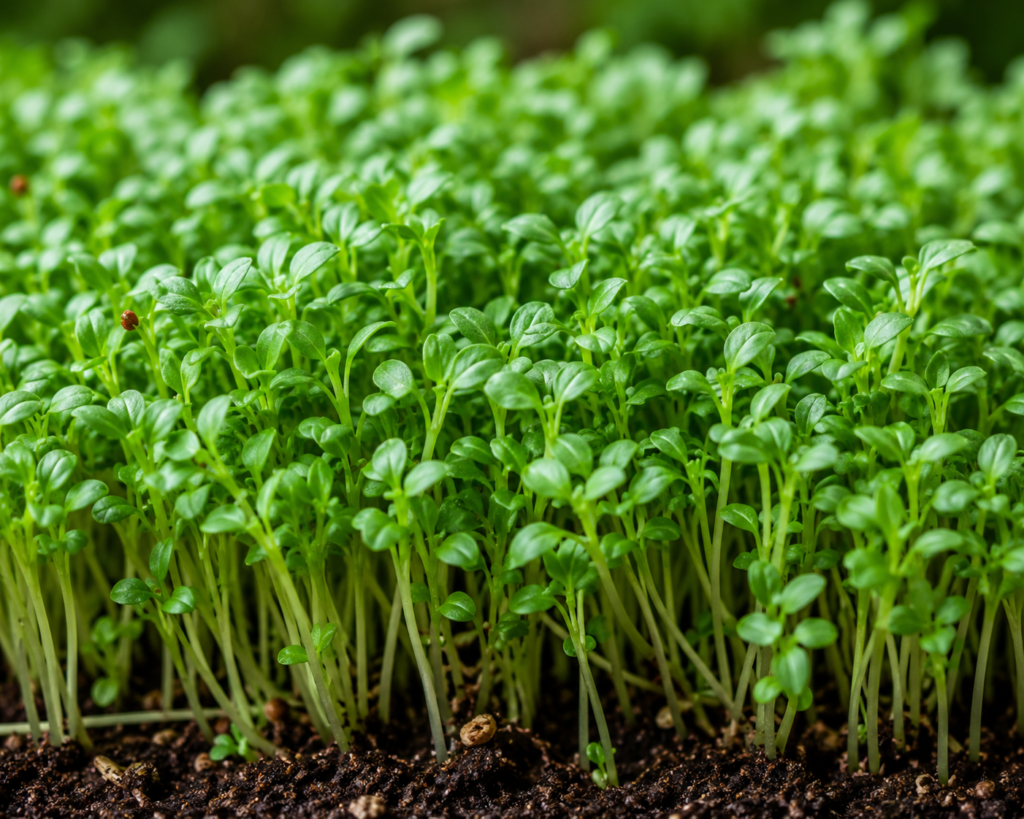
Plant cress seeds when temperatures are suitable for cool-season growth, or grow them indoors when outdoor weather is too hot. Garden cress can be sown directly into the garden, and repeat sowings can provide a steady supply of young leaves.
Sow the seeds about 1/4 inch deep. Keep the surface moist until seedlings appear, then continue watering whenever the soil begins to dry.
For a longer harvest period, sow a small amount every couple of weeks during a suitable growing season. This is often more useful than planting a large amount at once because cress develops quickly.
In warm climates, the cooler part of the year is usually easier for outdoor growing. Indoor containers can extend the growing period when summer temperatures are unsuitable.
When can you harvest a cress plant?
You can harvest a cress plant when the young leaves are large enough to use, often within a few weeks of emergence under suitable growing conditions. Garden cress is usually best while the leaves are young and tender.
For a small harvest, snip the leaves above the growing medium and leave the remaining plant in place. If you want to use the whole plant, harvest it while it is still young rather than waiting for flower stems to develop.
The University of Arkansas Division of Agriculture recommends harvesting the leaves when they reach about 3 to 5 inches, or harvesting the whole plant before seedstalks develop.
Because temperature, light, and moisture affect growth, use the size and texture of the plant as your guide rather than relying on one exact harvest date.
When is a cress plant not a good fit?
A cress plant is a poor choice for a hot, dry growing site unless you can provide enough moisture and some protection from harsh conditions. It also needs regular harvesting if you want tender young leaves rather than older growth.
If your main goal is to grow watercress, garden cress is not the right plant. Watercress has different growing requirements and is associated with consistently wet growing conditions.
For a very small space, however, garden cress is a practical choice. A container on a bright windowsill can produce a useful crop without needing a garden bed.
Common mistakes with a cress plant
The most common cress-growing problems come from poor moisture control, unsuitable temperatures, or planting the seeds too deeply.
- Planting seeds too deeply: Small cress seeds need a shallow sowing depth. Deep planting can make emergence slower or uneven.
- Letting the soil dry out: Cress needs steady moisture while it is getting established. Check shallow containers often.
- Growing it in excessive heat: Hot conditions can make cool-season cress harder to manage. Move containers to a cooler bright spot when needed.
- Waiting too long to harvest: Young leaves are the usual target. Older plants can become less tender as they mature.
- Sowing everything at once: Small repeat sowings can give you a more useful supply of fresh leaves over time.
- Confusing garden cress with watercress: Check the plant name before choosing a growing method because the two plants have different needs.
Frequently asked questions about cress plant
How fast does a cress plant grow?
Garden cress grows quickly when it has suitable light, moisture, and cool conditions. Young leaves can be ready within a few weeks, depending on the growing environment.
Can I grow a cress plant indoors?
Yes. Garden cress grows well in containers indoors when it receives good light and the growing medium stays moist.
Does a cress plant need full sun?
Garden cress can grow in full sun or partial shade. Good light supports compact growth, while some shade can help in warmer conditions.
How often should I water a cress plant?
Water whenever the growing medium starts to dry. The aim is steady moisture without leaving the roots sitting in water.
Can I grow cress in a container?
Yes. A container with drainage is suitable for garden cress, and its small size makes it a useful option for balconies, patios, and bright indoor spaces.
When should I harvest cress?
Harvest garden cress while the leaves are young and tender. You can cut individual leaves or harvest the whole plant before it develops mature seedstalks.
Is garden cress the same as watercress?
No. Garden cress and watercress are different plants. Garden cress is Lepidium sativum, while watercress is a separate species with different growing requirements.