
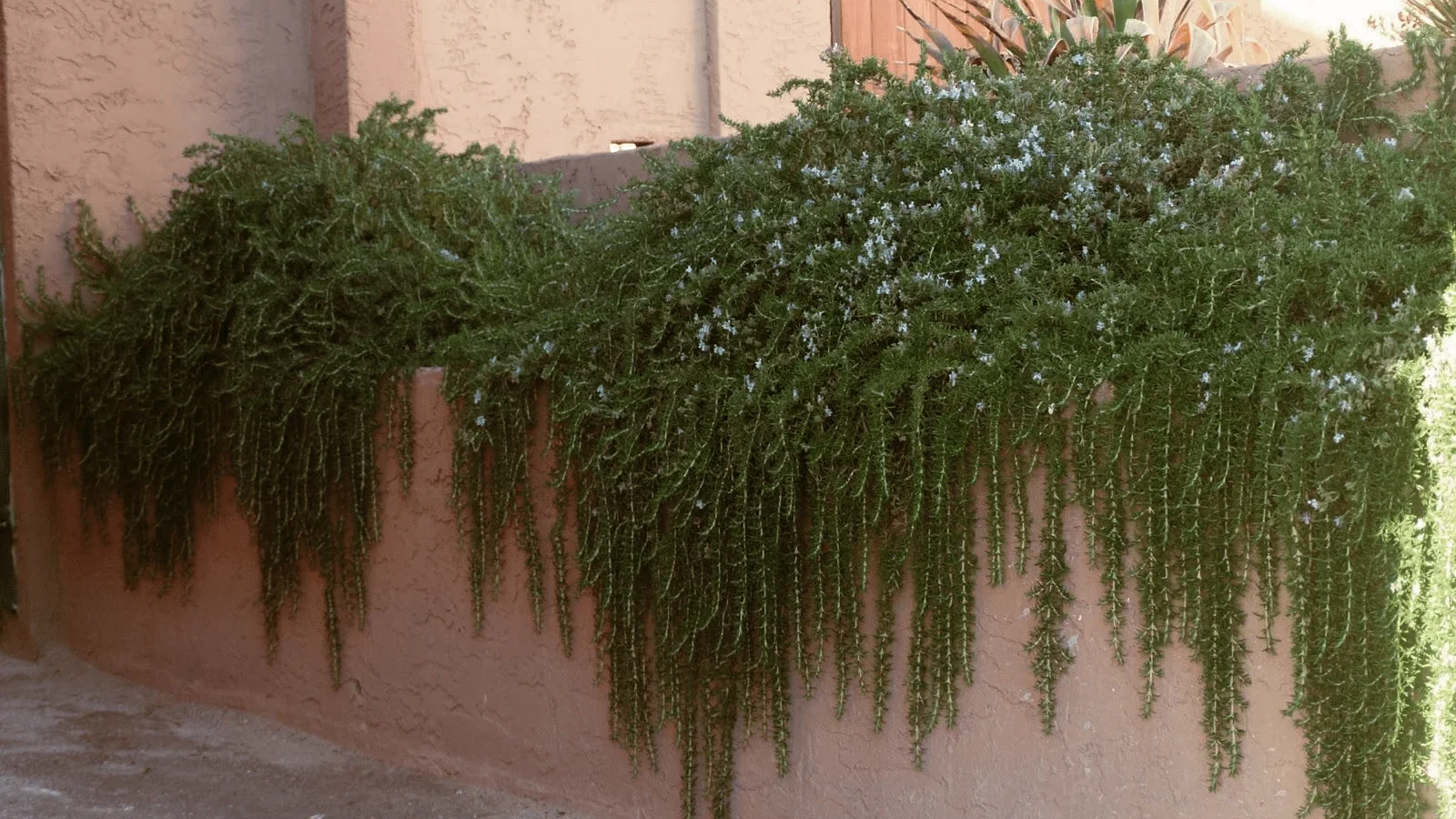
This low-growing rosemary is easy to grow when you give it plenty of sun, sharp drainage, and careful watering.
TL;DR
- A creeping rosemary plant is a low-growing, spreading form of rosemary, also called Salvia rosmarinus.
- Give it full sun and well-drained soil. Wet roots are a bigger problem than dry soil.
- Water when the soil has dried rather than keeping it constantly moist.
- Prune lightly after flowering or when the plant becomes too long or open.
- Use creeping rosemary for containers, rock gardens, borders, walls, and spots where stems can trail.
What is a creeping rosemary plant?
A creeping rosemary plant is a spreading or trailing form of rosemary with aromatic evergreen foliage. Unlike upright rosemary, these forms stay low and send stems outward or downward, making them useful for containers, raised beds, walls, and ground-level planting.
The botanical name is Salvia rosmarinus. You may still see the older name Rosmarinus officinalis on plant labels and in older gardening references. The RHS lists rosemary as a variable species that ranges from prostrate to upright forms.
Cultivars differ in size and habit. For example, the RHS lists ‘McConnell’s Blue’ as a dwarf, spreading form that can reach about 1 to 1.5 metres across, while ‘Jackman’s Prostrate’ is described as semi-trailing and about 50 cm tall. Check the mature size of the cultivar you buy before planting.
How much sun does creeping rosemary need?
Creeping rosemary grows best in full sun, with at least six hours of direct light a day. A bright, open position helps the plant produce dense aromatic foliage and supports flowering.
Choose a spot with good air movement as well as strong light. A sunny raised bed, rock garden, wall edge, or patio container can work well.
Some shade is tolerated, but too little light can produce weaker, more open growth. If a container-grown plant is stretching toward a window or becoming thin in the centre, move it to a brighter position.
What soil is best for creeping rosemary?
Well-drained soil is more important than rich soil for creeping rosemary. The roots should not sit in water after rain or irrigation.
A sandy, gritty, rocky, or otherwise free-draining soil is a good choice. In heavy soil, improve drainage before planting or grow the plant in a raised bed or container.
Avoid adding large amounts of moisture-holding material simply to make the soil richer. Rosemary naturally grows in dry, rocky conditions, and North Carolina Extension notes that overwatering is a common cause of decline.
For containers, use a pot with drainage holes and a free-draining growing mix. Never leave the pot sitting in a saucer of standing water.
How often should you water creeping rosemary?
Water creeping rosemary thoroughly, then allow the soil to dry before watering again. Established plants usually handle short dry periods better than constantly wet soil.
Newly planted rosemary needs more attention while its roots establish. Check the soil rather than following a fixed daily schedule. Hot weather, small containers, strong sun, and windy conditions can all make the soil dry faster.
The most common watering mistake is giving rosemary small amounts of water too often. Frequent moisture keeps the root area wet and can contribute to root problems.
If the leaves look dull or the plant is declining despite regular watering, check the soil first. Wet soil may be the problem rather than a lack of water.
How do you prune a creeping rosemary plant?
Prune creeping rosemary to control its shape, remove weak growth, and keep the plant compact. Light trimming is usually enough.
For a simple pruning routine:
- Remove dead, damaged, or obviously weak stems.
- Trim long stems back to keep the plant within its growing area.
- Shape the outer growth without removing large amounts at once.
- Avoid cutting deeply into old, bare woody stems because rosemary may produce little new growth from them.
A light trim after flowering can help maintain a dense shape. Don’t shear the plant simply because it has become slightly uneven. Creeping forms are naturally loose and arching, and that habit is part of their appeal.
Can you grow creeping rosemary in a pot?
Yes. Creeping rosemary is well suited to containers because its trailing stems can spill over the edge.
Choose a container with drainage holes and enough room for the plant’s expected spread. A wider pot can work better than a narrow, deep container for a spreading cultivar.
Place the container in full sun and check the soil more often during hot weather. Containers dry faster than garden beds, but that does not mean the plant should stay wet.
A hanging container, raised planter, or pot beside a sunny doorway can show off the trailing stems while keeping the aromatic foliage within easy reach.
How do you propagate creeping rosemary?
Stem cuttings are a practical way to propagate rosemary. North Carolina Extension lists stem cuttings, layering, division, and seed among the available propagation methods, while the RHS recommends semi-ripe cuttings for rosemary.
For a simple cutting method, take a healthy non-flowering stem, remove the lower leaves, and place the cutting in a free-draining propagation medium. Keep the medium lightly moist while roots develop, but avoid saturation.
Seed is possible, but rosemary can be slow to germinate. For a named creeping cultivar, cuttings are also useful because they preserve the characteristics of the parent plant.
What problems affect creeping rosemary?
Poor drainage and excess water are among the main problems to watch for. Root rot can develop when the growing medium stays wet.
Poor air circulation and high humidity can also encourage powdery mildew. Indoor plants may be more prone to pests such as aphids, mealybugs, whiteflies, and spider mites, according to North Carolina Extension.
Start with the growing conditions before reaching for a treatment. If the soil stays wet, correcting drainage may do more good than simply treating the leaves.
Is creeping rosemary good for ground cover?
Creeping rosemary can work well as a low, spreading ornamental plant, but it should not be treated like a dense lawn substitute.
Its trailing stems are useful for softening the edge of a wall, spilling over a container, covering part of a rock garden, or filling a sunny border. Some cultivars spread more widely than others, so check the plant’s mature dimensions before spacing several plants together.
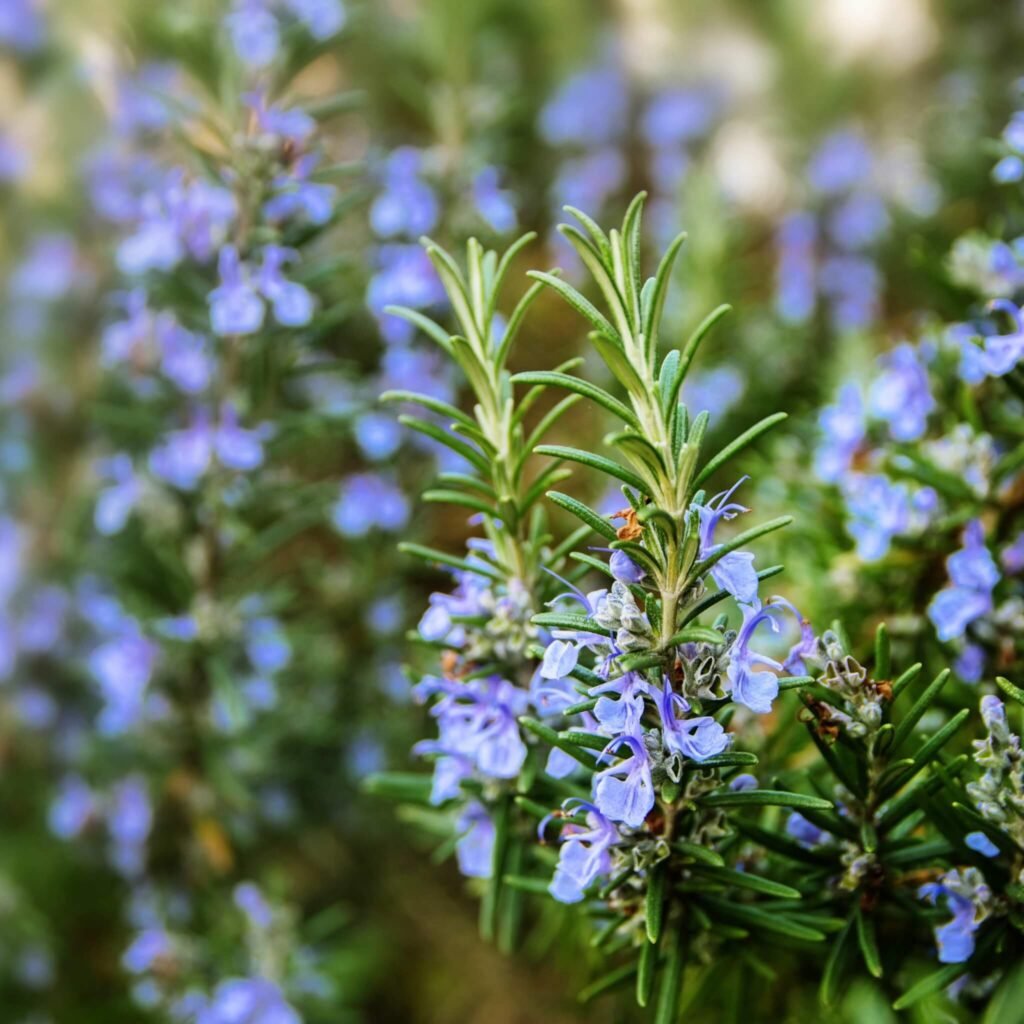
The foliage stays evergreen in suitable conditions, while small blue, purple, pink, or white flowers can appear depending on the cultivar.
Frequently Asked Questions
Does creeping rosemary need full sun?
Yes. Creeping rosemary grows best in full sun with strong direct light. Give it the brightest practical position available.
How do I keep creeping rosemary from getting woody?
Prune lightly and regularly rather than waiting until the plant is severely overgrown. Avoid cutting far back into old woody stems because they may not produce much new growth.
Can creeping rosemary survive in wet soil?
It is poorly suited to wet conditions. Use well-drained soil and allow the growing medium to dry between waterings.
Can creeping rosemary grow indoors?
It can be grown in a bright indoor location, but maintaining strong light and good air circulation can be difficult. A sunny outdoor position is usually easier when the local climate allows it.
Can I use creeping rosemary for cooking?
Yes, provided you have a culinary rosemary cultivar that has been grown without unsuitable pesticides or other treatments. Rosemary leaves are widely used as a culinary herb.
How fast does creeping rosemary spread?
Growth and final size depend on the cultivar and growing conditions. Some prostrate and spreading forms can reach about 1 metre or more across, so check the plant label for the specific cultivar.
Does creeping rosemary attract pollinators?
Rosemary flowers can attract bees and butterflies. Flowering time and flower color vary by cultivar and growing conditions.