
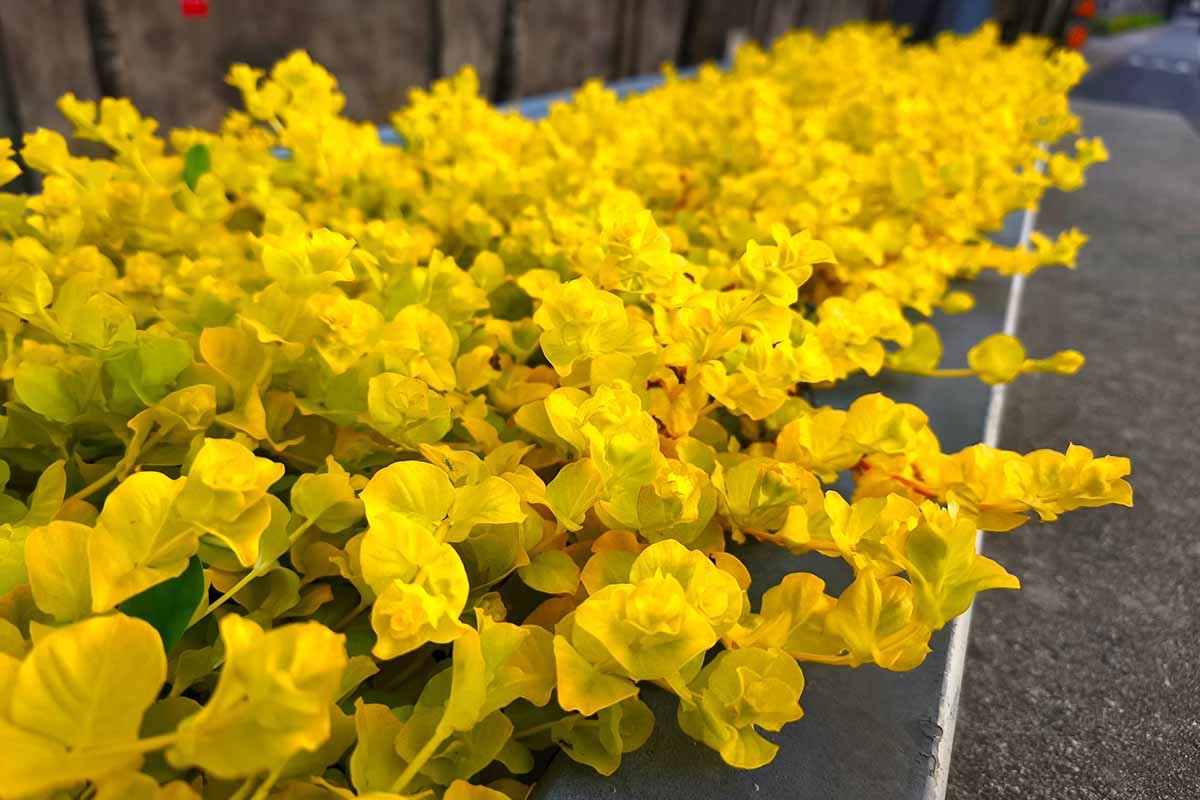
Creeping jenny plant is a low-growing perennial ground cover with round leaves and small yellow flowers. Give it moist soil, moderate light, and room to spread, or grow it in a container where you can control its growth.
TL;DR
- Creeping jenny plant, or Lysimachia nummularia, is a low-growing perennial that spreads along the soil.
- It grows best with consistent moisture and can handle full sun or partial shade.
- Its trailing stems root at leaf nodes, so it can spread quickly in suitable conditions.
- Containers and hanging baskets make it easier to control its growth.
- Check local invasive-plant guidance before planting it outdoors.
What is a creeping jenny plant?
Creeping jenny plant is Lysimachia nummularia, a low-growing perennial in the primrose family. It has rounded leaves, trailing stems, and small yellow, cup-shaped flowers that appear in summer.
The plant is also called moneywort. Its coin-shaped leaves explain the botanical name nummularia, which refers to a coin-like shape.
Creeping Jenny stays only a few inches tall but can spread several feet across. Its stems can root where the leaf nodes touch moist soil, helping it form a dense mat.
The plant is native to Europe and temperate parts of Asia. It was introduced to North America as an ornamental ground cover and has become naturalized in some areas.
How do you care for a creeping jenny plant?
Creeping Jenny grows best in moist soil with full sun to partial shade. Keep the soil from drying out for long periods, especially when the plant is grown in a sunny container.
| Need | Requirement |
|---|---|
| Light | Full sun to partial shade |
| Water | Keep soil consistently moist |
| Soil | Moist, ordinary garden soil with reasonable drainage |
| Growth habit | Low, trailing, and spreading |
| Flowering | Small yellow flowers in summer |
| Container growing | Well suited to pots and hanging baskets |
Light needs
Give creeping Jenny full sun if the soil stays moist. In hotter or drier conditions, partial shade can reduce stress and help the soil retain moisture.
The plant can also grow in dappled shade. If the stems become thin and the leaves lose their normal color, move a container to a brighter position.
Watering needs
Water creeping Jenny when the soil begins to dry near the surface. This plant prefers steady moisture, so do not let a container dry out completely between waterings.
Outdoor plants in naturally damp soil may need much less watering than plants in small pots. During hot weather, check containers more often because they lose moisture faster.
Soil and planting
Plant creeping Jenny in soil that holds moisture without staying stagnant for long periods. It tolerates several soil textures, including clay, loam, and sandy soil.
For containers, use a standard potting mix in a pot with drainage holes. Leave enough room around the plant for its trailing stems to spread.
Where does creeping Jenny grow best?
Creeping Jenny works well in containers, hanging baskets, rain gardens, and other moist planting areas where its spreading habit can be managed. It can also cover bare soil quickly, but that same growth habit makes site selection important.
A container is a good choice if you want the trailing foliage without allowing the plant to move freely through a garden bed.
Near ponds or other damp areas, keep an eye on the stems as they spread. Remove unwanted runners before they reach nearby planting areas.
How fast does creeping Jenny spread?
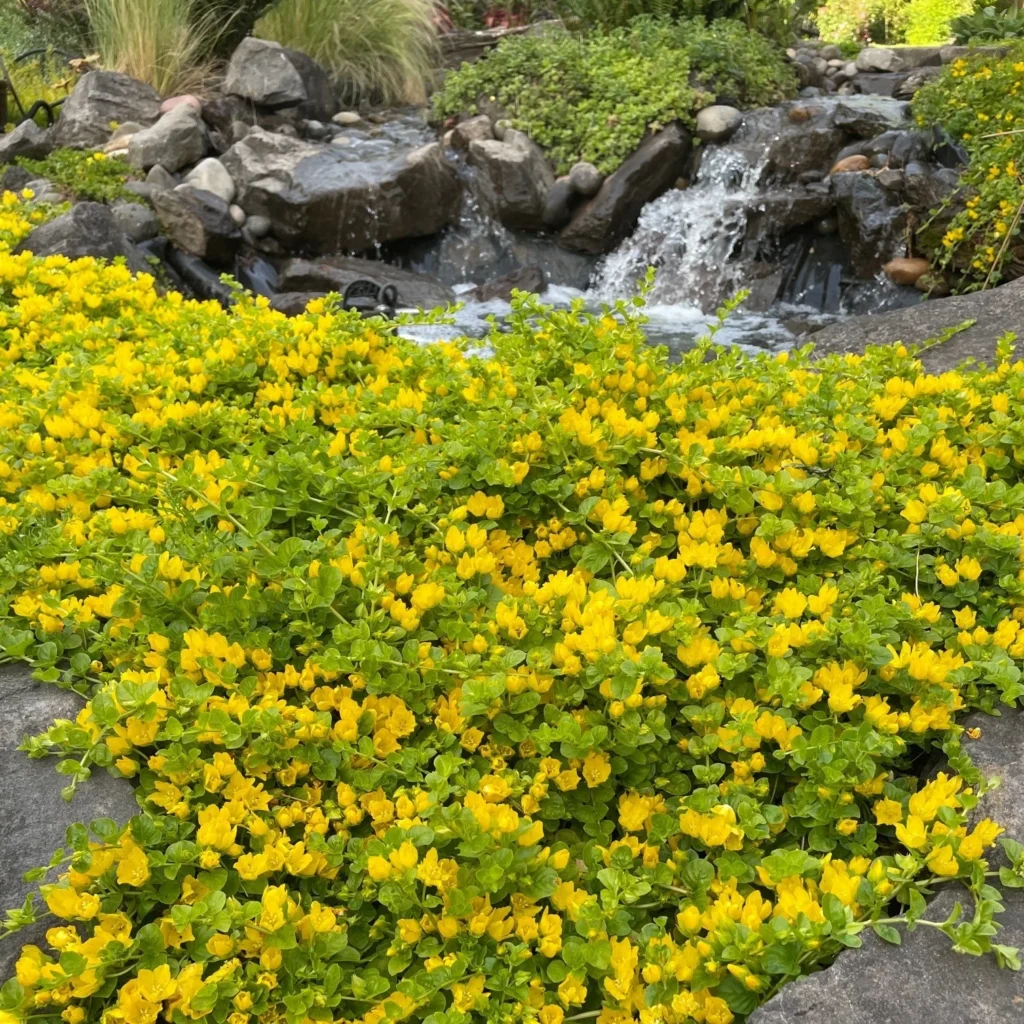
Creeping Jenny spreads quickly when it has moisture and suitable growing conditions. Its stems travel across the soil and can form roots where nodes touch the ground.
This is useful when you want fast ground cover. It can become a problem when it reaches areas meant for other plants.
Prune or pull unwanted stems before they establish new roots. For a small garden, growing creeping Jenny in a container is often easier to manage than planting it directly in the ground.
Is creeping Jenny invasive?
Creeping Jenny can be invasive or weedy in some regions, so check local guidance before planting it outdoors. North Carolina State Extension lists it as a plant that can spread aggressively and compete with native species in some areas.
This does not mean the plant has the same status everywhere. Invasive status depends on location, climate, and local environmental conditions.
If your area lists creeping Jenny as invasive, choose a native ground cover instead. If it is permitted, contain the plant and remove stems that move beyond the intended planting area.
How do you prune creeping Jenny?
Prune creeping Jenny whenever the stems move beyond the space you want them to cover. Cut or pull unwanted runners back to the main planting area and remove pieces that have rooted elsewhere.
Container plants may need trimming several times during the growing season. Regular pruning also keeps the stems from trailing onto paths or into nearby pots.
Dispose of unwanted pieces carefully if the plant is spreading in your area. Avoid leaving rooted stem pieces on bare soil where they can establish again.
How do you propagate creeping Jenny?
Creeping Jenny is easy to propagate by division or by using rooted sections of the trailing stems. A piece that already has roots can be replanted directly into moist soil.
For division, lift a healthy section, separate it into smaller pieces with roots attached, and replant the pieces at the same depth. Water them well after planting.
Because the stems can root at their nodes, you may also find new rooted sections where the plant has spread naturally.
What problems affect creeping Jenny?
Creeping Jenny is generally straightforward to grow, but wet foliage and poor air movement can contribute to leaf problems. North Carolina State Extension lists rust and leaf spot among its potential problems.
Watch for leaves that develop spots, discoloration, or premature browning. Remove badly affected foliage and avoid keeping the leaves wet for long periods.
The bigger issue for many gardeners is uncontrolled spread. If creeping Jenny begins moving into areas where it is unwanted, cut back the runners and remove rooted sections promptly.
Frequently asked questions about creeping Jenny plant
Is creeping Jenny a good ground cover?
Creeping Jenny can make an effective low ground cover because its trailing stems spread across the soil and root at nodes. Use it only where its spreading habit can be controlled and where local guidance permits it.
Does creeping Jenny need full sun?
Creeping Jenny grows in full sun and partial shade. Full sun works best when the soil stays moist, while partial shade can help in hot or dry conditions.
How often should I water creeping Jenny?
Water creeping Jenny when the surface of the soil starts to dry. Container plants usually need more frequent checks than plants growing in moist outdoor soil.
Can creeping Jenny grow in pots?
Yes. Creeping Jenny grows well in containers and hanging baskets, where its trailing stems can spill over the sides. Containers also make it easier to control the plant’s spread.
Does creeping Jenny come back every year?
Yes. Creeping Jenny is a perennial, so it can return year after year in suitable growing conditions. Its winter behavior depends on the local climate.
Why is my creeping Jenny turning green?
The green form is normal for the species, while some cultivated forms have brighter yellow or golden foliage. Light levels can also affect how strongly colored the foliage appears.