
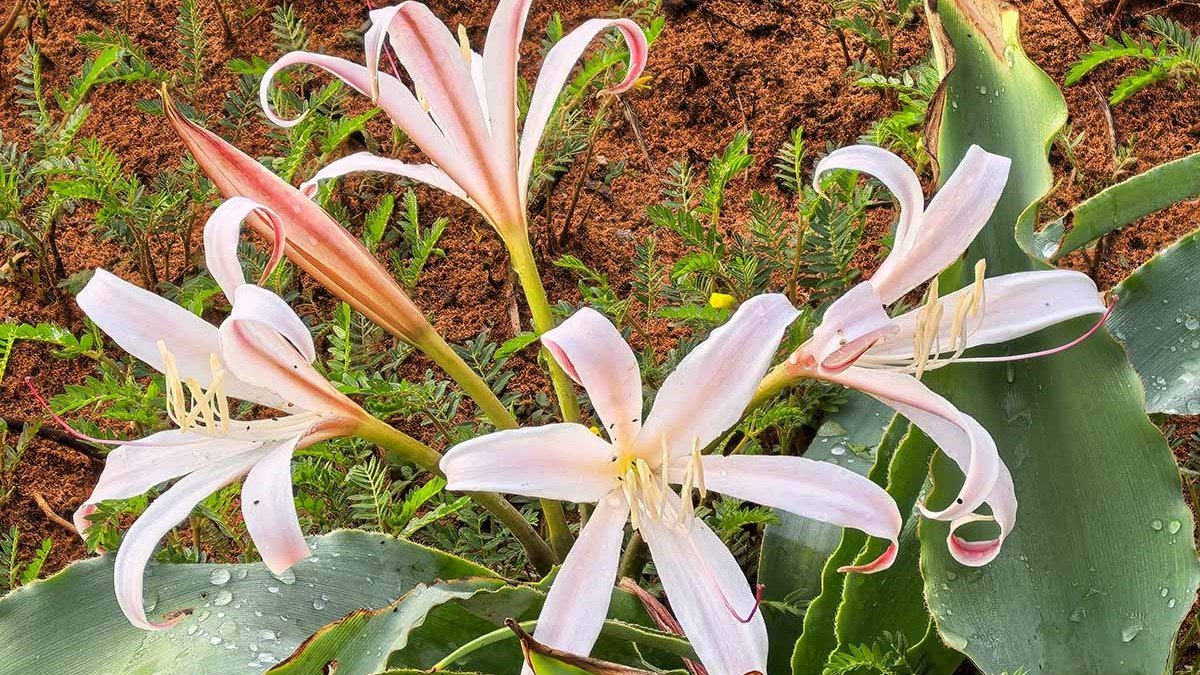
A crinum lily plant is a long-lived flowering bulb that produces strap-like leaves and fragrant flowers in white, pink, rose, or striped shades. Give it plenty of space, good drainage, and sun to part shade for reliable growth.
TL;DR
- Crinum lily plants are large perennial bulbs that grow best in warm climates.
- Give crinums full sun to part shade and soil that drains well.
- Leave plenty of room because mature plants can spread several feet wide.
- Divide established crinum plants during winter when they are not actively growing.
- Keep children and pets away from the plant because crinum contains toxic compounds if eaten.
What is a crinum lily plant?
A crinum lily plant is a perennial bulb in the genus Crinum and the amaryllis family, Amaryllidaceae. Crinum lilies form large clumps of long, strap-like leaves and send up flower stalks carrying clusters of fragrant, spider-like flowers.
The name covers many species and hybrids, so size and flower color vary. UF/IFAS Extension describes Crinum spp. as plants that commonly reach about 3 to 5 feet in height and spread, although individual species can be smaller or larger.
Crinums suit warm gardens, borders, large containers, and spaces where a permanent flowering plant has room to expand. UF/IFAS Extension lists USDA hardiness zones 8b through 11 for its general crinum lily profile.
How do you care for a crinum lily plant?
A crinum lily plant is easy to care for once it is established. Plant it where it gets full sun or part shade, use well-drained soil, and water during prolonged dry periods while avoiding conditions that keep the soil constantly wet.
| Need | Requirement |
|---|---|
| Light | Full sun to part shade works well. |
| Soil | Crinums tolerate several soil types, but good drainage is a sound choice for garden planting. |
| Water | Water during extended dry periods, especially while new plants establish. |
| Space | Allow about 3 to 5 feet between plants, depending on the species and mature size. |
| Climate | Many crinums suit warm climates and are listed by UF/IFAS Extension for USDA zones 8b through 11. |
Light needs
Give crinum lily plants full sun to part shade. More sun can support flowering, but part shade is useful in hot climates where afternoon conditions are harsh.
Check the mature size of the species before planting. A small bulb can look lost in a large bed at first, then become a wide clump over time.
Watering
Water a newly planted crinum regularly while it develops roots. Once established, many crinums tolerate periods of dry weather, although prolonged drought can reduce growth and flowering.
The exception is the swamp lily, Crinum americanum. UF/IFAS describes this native species as a plant of wet areas that grows well beside ponds, streams, and in rain gardens.
Soil and planting depth
Plant crinum bulbs in soil that drains well and gives the roots room to develop. UF/IFAS Extension notes that crinums tolerate clay, sand, loam, acidic soil, and slightly alkaline soil.
Do not bury the bulb too deeply. Keep the neck of the bulb near the soil surface rather than covering the whole bulb with a thick layer of soil.
How big does a crinum lily plant get?
A crinum lily plant can become a large permanent feature, with many plants reaching roughly 3 to 5 feet in height and spread. Some species and cultivars grow outside that range, so check the mature size before choosing a planting spot.
UF/IFAS Extension recommends spacing general crinum plantings about 36 to 60 inches apart. This gives the foliage room to develop without forcing mature plants into a crowded bed.
Crinums work well as specimen plants, in groups, or beneath taller landscape plants. Their long leaves also give the garden a strong vertical and arching form even when flowers are absent.
When does a crinum lily plant bloom?
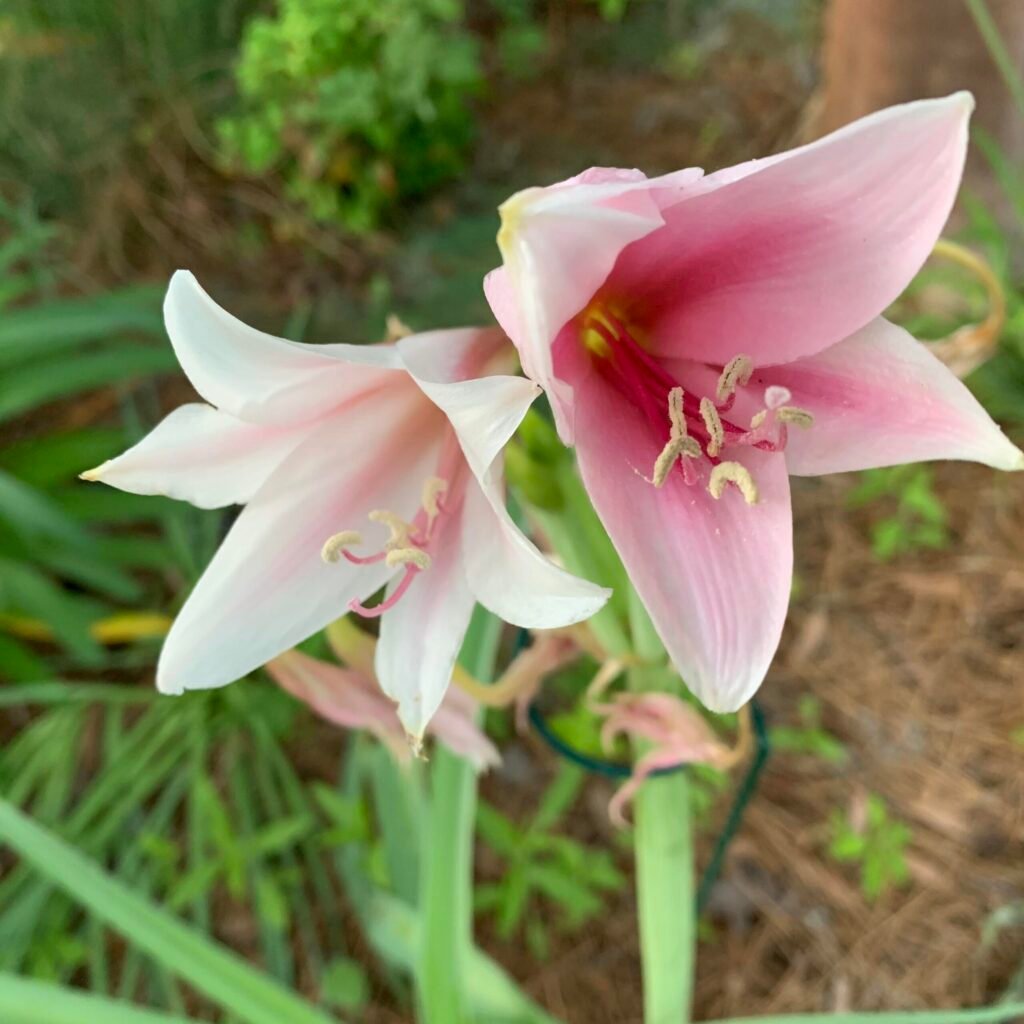
Crinum lily plants can flower at different times depending on the species, cultivar, climate, and growing conditions. Many produce fragrant flowers during warm weather, while some can flower at other times of the year.
Flower colors include white, pink, deep rose, and striped combinations. UF/IFAS Gardening Solutions notes that flower stalks commonly rise 2 to 5 feet above the foliage, although height varies among species.
Remove fading flower stalks if you want a neater plant. You can also leave developing seed pods in place if you want to collect seed or allow new seedlings to develop.
How do you propagate a crinum lily plant?
The easiest way to propagate an established crinum lily plant is usually by separating offsets or dividing a mature clump. Division is best done during winter while the plant is not actively growing, according to UF/IFAS Extension.
Lift the clump carefully and separate smaller bulbs from the parent plant without damaging the roots or basal plate. Replant the divisions promptly and keep them from drying out while they establish.
Crinums can also grow from seed. Seed-grown plants can take longer to reach flowering size, so division is usually the more practical choice when you want another plant sooner.
What problems affect crinum lily plants?
Crinum lily plants are generally sturdy, but a few pests and diseases can cause trouble. Chewing insects, leaf spot diseases, and certain grasshoppers can affect the foliage.
Eastern lubber grasshoppers are a particular concern in areas where they occur. UF/IFAS Extension identifies them as a favored pest of crinums. Inspect plants regularly and deal with young grasshoppers before they become large adults.
Leaf spots can develop in moist, shaded conditions. Give plants suitable spacing and avoid keeping foliage wet for long periods when watering.
Is a crinum lily plant poisonous?
Yes. Crinum lilies contain toxic alkaloids, and eating the plant can cause poisoning. UF/IFAS Extension specifically advises caution because all parts of crinum plants can be toxic if consumed.
Keep bulbs, leaves, flowers, and seeds away from children and pets that may chew plants. If ingestion occurs, contact an appropriate medical or veterinary poison service for advice rather than trying a home treatment.
Common mistakes with crinum lily plants
- Planting a small bulb in a space that cannot accommodate the mature plant leads to crowding, so check the expected height and spread first.
- Burying the bulb too deeply can interfere with healthy growth, so keep the bulb neck near the soil surface.
- Keeping established crinums constantly wet can create poor growing conditions, so water according to the soil and weather rather than on a fixed daily schedule.
- Dividing a mature plant during active growth can add unnecessary stress, so winter is the better time in climates where the plant has a dormant or slower-growing period.
- Planting crinums where children or pets can chew them creates an avoidable poisoning risk because the plant contains toxic compounds.
Frequently asked questions about crinum lily plants
How much sun does a crinum lily plant need?
A crinum lily plant grows well in full sun to part shade. In very hot climates, some afternoon shade can help reduce heat stress.
How often should I water a crinum lily plant?
Water newly planted crinums regularly while they establish. Established plants can handle periods of dry weather, but they need water during prolonged drought.
Can crinum lilies grow in pots?
Yes, crinums can grow in large containers, but the container must give the bulb and roots enough room. Choose a pot with drainage holes and expect the plant to become heavy as it matures.
How do I divide a crinum lily plant?
Divide an established crinum during winter when it is not actively growing. Lift the clump, separate healthy offsets or divisions, and replant them without letting the bulbs dry out.
Why is my crinum lily plant not flowering?
Poor flowering can result from insufficient light, recent division, young plant age, or unsuitable growing conditions. Give the plant enough light and space, then allow it time to establish.
Are crinum lilies poisonous to dogs and cats?
Crinum lilies contain toxic compounds, so pets should not be allowed to chew or eat them. Keep bulbs and plant material out of reach and seek veterinary advice if a pet has eaten part of the plant.