
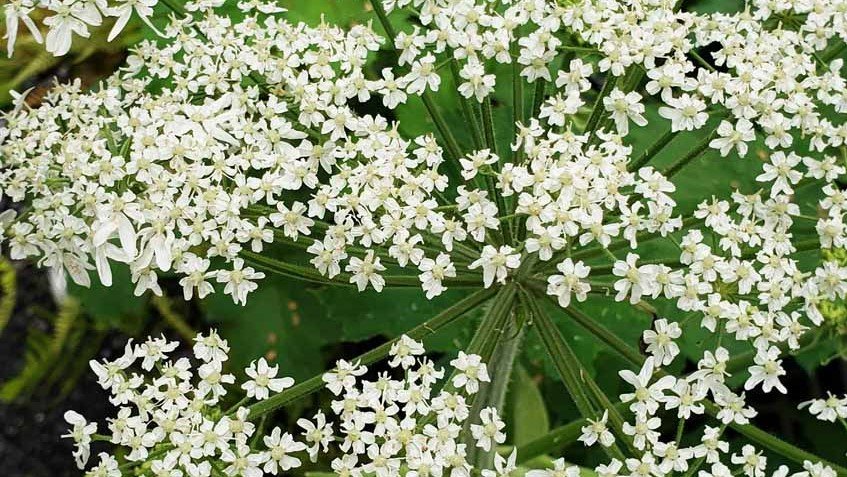
The cow parsnip plant, Heracleum maximum, is a tall North American perennial with large divided leaves and flat clusters of small white flowers. It grows best in moist soil with sun to partial shade and needs care when handled because its sap can irritate skin in sunlight.
TL;DR
- Cow parsnip is a tall native plant with large leaves and white, umbrella-shaped flower clusters.
- It grows best in moist, well-drained soil with full sun to partial shade.
- The plant can reach about 3 to 10 feet tall, depending on growing conditions.
- Its sap can cause a skin reaction after contact followed by sunlight, so wear gloves when handling it.
- Cow parsnip is often useful in native plant and wildlife gardens where there is enough space for its size.
What is the cow parsnip plant?
The cow parsnip plant is Heracleum maximum, a perennial herb in the carrot family, Apiaceae. It is native to much of North America and is commonly found in moist meadows, stream edges, forest openings, woodland margins, and other damp sites.
The plant was formerly known as Heracleum lanatum, a name still found in older plant references. The U.S. Forest Service adopted Heracleum maximum as the current scientific name in its 2018 taxonomy update.
Cow parsnip can grow from about 3 to 10 feet tall. Its large lower leaves may reach around 20 inches across, while mature plants produce broad, flat flower clusters made up of many small white flowers.
The flowers give cow parsnip a familiar look within the carrot family. This also means it can be confused with other tall members of the same family, including giant hogweed.
How do you identify cow parsnip?
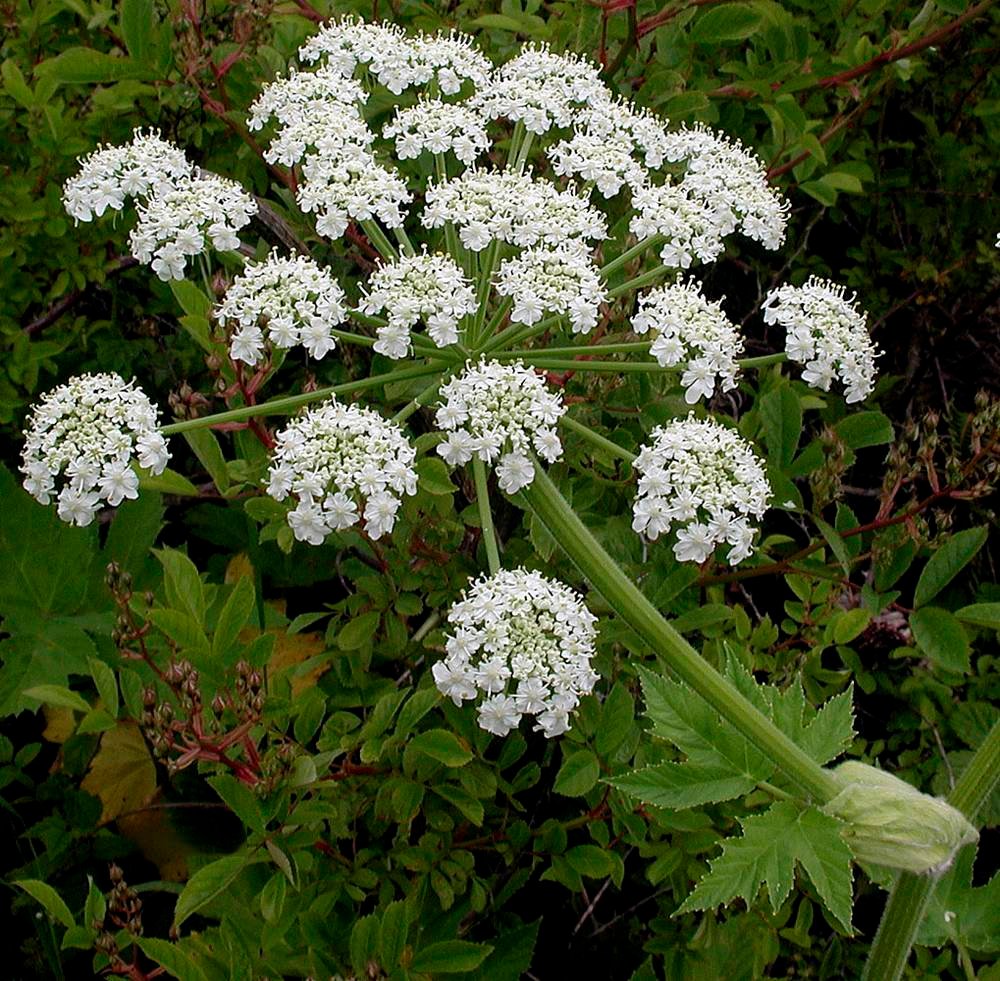
You can identify cow parsnip by its large divided leaves, stout hollow stem, and broad white flower clusters. The leaves are usually made up of several large leaflets with lobed, toothed edges, while the stem is hairy and can have green or purplish areas.
The flowering structure is called an umbel, a cluster in which many flower stalks spread from a common point. Cow parsnip produces broad, flat-topped umbels rather than a single large flower.
The plant may look different at various stages of growth. Young plants can form a low group of large leaves before producing a tall flowering stem.
Cow parsnip is sometimes mistaken for giant hogweed because both have large leaves and white umbels. Size alone is not a reliable way to identify either plant, so check several features before deciding what you have.
Where does cow parsnip grow?
Cow parsnip grows naturally across a large part of North America, from Alaska and Canada through many parts of the United States. It is especially associated with moist sites, including stream margins, wet meadows, forest openings, and areas where moisture remains available through the growing season.
The plant does best in moist to semi-wet soil that still drains reasonably well. Loam and sandy loam are suitable, although cow parsnip can also grow in clay and gravelly soils.
For a garden setting, choose a site that stays evenly moist rather than one that becomes dry soon after watering. A spot with morning sun and some afternoon shade can work well where summers are hot.
How do you grow cow parsnip?
Cow parsnip grows best when you match the planting site to its natural conditions. Give it adequate moisture, enough room for its large leaves, and light ranging from full sun to partial shade.
| Growing need | Suitable condition |
|---|---|
| Light | Full sun to partial shade |
| Soil | Moist, well-drained soil |
| Moisture | Moderate to high, without constant standing water |
| Space | Allow room for a large mature plant |
| Propagation | Seed |
| Growth habit | Perennial or short-lived perennial |
Light
Give cow parsnip full sun to partial shade. In cooler climates, it can handle more sun when the soil stays moist. In hotter areas, some afternoon shade can reduce stress.
Water
Keep the soil consistently moist during active growth. Water deeply when natural rainfall is not enough, especially if the plant is growing in a garden bed rather than a naturally damp site.
Avoid treating cow parsnip like a drought-tolerant perennial. Its natural habitats include moist woodland edges and streamside areas, so dry soil can limit growth.
Soil
Use soil that holds moisture but still drains. A loamy garden soil is a good starting point. Improve very poor soil with organic matter before planting rather than relying on frequent shallow watering.
Propagation
Cow parsnip reproduces by seed. If you are growing it from collected or purchased seed, follow the instructions for the seed source and keep the planting area evenly moist during establishment.
Is cow parsnip safe to touch?
Cow parsnip requires protective handling because its sap contains compounds that can make skin more sensitive to sunlight. The U.S. Forest Service and university extension sources warn that contact followed by sunlight can cause a painful skin reaction.
Wear gloves, long sleeves, and other clothing that covers exposed skin when cutting or handling the plant. Wash exposed skin after contact, and avoid touching your eyes or face while working with it.
This safety issue also matters when deciding where to grow cow parsnip. A planting beside a busy path, children’s play area, or place where pets regularly pass may be a poor choice.
Is cow parsnip the same as giant hogweed?
Cow parsnip and giant hogweed are different plants, although they can look similar. Cow parsnip is Heracleum maximum, while giant hogweed is Heracleum mantegazzianum.
Both can have large leaves and white flower clusters, so identification should rely on several plant features rather than height alone. Cow parsnip is generally smaller than giant hogweed, and its stems and leaves have characteristics that can help separate the two.
If you find an unfamiliar large Heracleum plant, avoid handling it until you are confident of its identity. A local extension service or reliable plant identification resource can help confirm the species.
Is cow parsnip useful in a garden?
Cow parsnip can fit well in a large native planting, naturalized area, or wildlife garden where its mature size is appropriate. Its flowers provide food resources for many insects, and the plant is also used as forage by several large mammals in its native range.
It is best suited to informal garden settings rather than small beds. A mature plant can occupy substantial vertical and horizontal space, and its sap makes a high-traffic planting location less suitable.
For a smaller garden, choose a plant with a more compact habit and similar moisture preferences.
Common mistakes with cow parsnip
- Planting cow parsnip in dry soil can lead to poor growth because the species naturally favors moist conditions.
- Putting it beside a walkway can increase accidental contact with the sap.
- Identifying the plant by height alone can lead to confusion with giant hogweed or another member of the carrot family.
- Handling the plant with bare skin can increase the chance of a sunlight-related skin reaction.
- Giving a mature plant too little space can make its large leaves and tall flowering stems difficult to manage.
Frequently asked questions about the cow parsnip plant
What is the cow parsnip plant?
The cow parsnip plant is Heracleum maximum, a tall perennial wildflower in the carrot family that is native to much of North America.
How tall does cow parsnip get?
Cow parsnip commonly grows about 3 to 10 feet tall, although size varies with location and growing conditions.
Does cow parsnip need full sun?
Cow parsnip grows in full sun to partial shade. Moist soil becomes especially important when the plant receives more direct sun.
Can cow parsnip cause a rash?
Yes. Its sap can cause a skin reaction when exposed skin is later exposed to sunlight, so protective clothing and gloves are recommended when handling the plant.
Is cow parsnip the same as giant hogweed?
No. Cow parsnip is Heracleum maximum, while giant hogweed is Heracleum mantegazzianum. They are related and can look similar, so careful identification matters.
Can cow parsnip grow in a home garden?
Yes, provided the site has enough space and suitable moisture. Choose a location away from areas where children, pets, or people are likely to brush against the plant.