
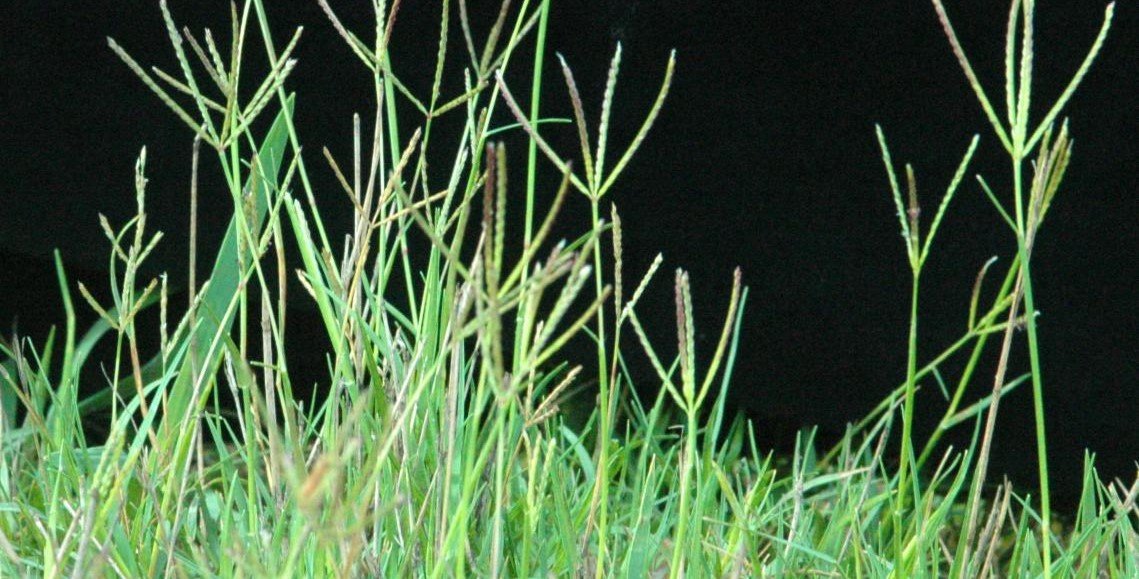
The couch grass plant usually refers to Cynodon dactylon, a creeping perennial grass also known as Bermuda grass. It forms dense mats through underground rhizomes and above-ground stolons and is widely found in warm regions.
TL;DR
- Couch grass plant commonly refers to Cynodon dactylon, also called Bermuda grass.
- It is a warm-climate perennial that spreads through rhizomes and stolons.
- Fine leaves, creeping stems, and finger-like flower spikes help identify it.
- It grows best in warm conditions and can handle a range of soils.
- The name “couch grass” can also mean Elymus repens in some regions.
What is a couch grass plant?
A couch grass plant is a perennial grass in the Poaceae family. In this article, the name refers to Cynodon dactylon, which Kew’s Plants of the World Online lists as an accepted species. Kew also records Bermuda grass, common quick grass, couch grass, and quick grass among its English common names.
Cynodon dactylon has a creeping growth habit. Its stems spread across the soil surface as stolons, while slender rhizomes grow below ground. New shoots can develop from these spreading stems, allowing the plant to form a close mat.
The species has a broad natural range across temperate and subtropical parts of the Old World and Australia. It is also widely established in warmer regions beyond that native range.
One point causes frequent confusion: “couch grass” does not always mean Cynodon dactylon. In the UK, the name commonly refers to Elymus repens, a different perennial grass. Check the botanical name before identifying or buying a plant.
How to identify Cynodon dactylon
Cynodon dactylon is usually easy to recognise once you know its creeping form and distinctive flower heads. It is a low-growing, mat-forming grass with slender stems, narrow leaves, and spreading stolons and rhizomes.
Look for these features:
- Fine, narrow leaf blades that are usually green to grey-green.
- Creeping stolons that run along the soil surface.
- Slender rhizomes below the soil.
- Upright flowering stems that rise above the creeping growth.
- Several narrow flower spikes arranged like fingers from one point at the top of the stem.
Kew’s GrassBase records flowering stems generally reaching around 8 to 40 cm, although growth varies with conditions and plant type. The flower head typically has several digitate racemes, giving it a small starburst or finger-like appearance.
The combination of creeping stems and the finger-like flower head is more useful for identification than leaf colour alone. Colour can change with weather, soil, moisture, and growing conditions.
Where does couch grass grow best?
Couch grass plant grows best in warm conditions and can occupy many different habitats. Kew records Cynodon dactylon from tropical and warm temperate regions, with examples ranging from roadsides and disturbed ground to grassland and cultivated areas.
It generally prefers plenty of light and can grow in sandy or gravelly ground as well as other soil types. Its spreading stems allow it to occupy open ground quickly.
Warm weather encourages active growth. In cooler conditions, growth may slow considerably. This makes the plant much more vigorous in climates where temperatures remain suitable for longer periods.
If you are growing Cynodon dactylon as a plant, give it an open position with good light and enough room for its creeping habit. A small container or tightly planted border can quickly become crowded because of the way the stems spread.
How does couch grass plant spread?
Couch grass plant spreads through both stolons and rhizomes, which are modified stems rather than ordinary roots. Stolons run across the soil surface and can root at nodes, while rhizomes spread underground and produce new growth.
This growth habit explains why an established plant can cover ground rapidly. Kew’s GrassBase describes Cynodon dactylon as a mat-forming perennial with elongated rhizomes and stolons.
The same feature can be useful when a dense ground-covering grass is wanted, but it can also make the plant difficult to contain in a small planting area.
Propagation can also occur through seed. Cornell University’s weed science profile describes Bermuda grass as a long-lived perennial that spreads by runners and rhizomes and also produces seed.
What is couch grass plant used for?
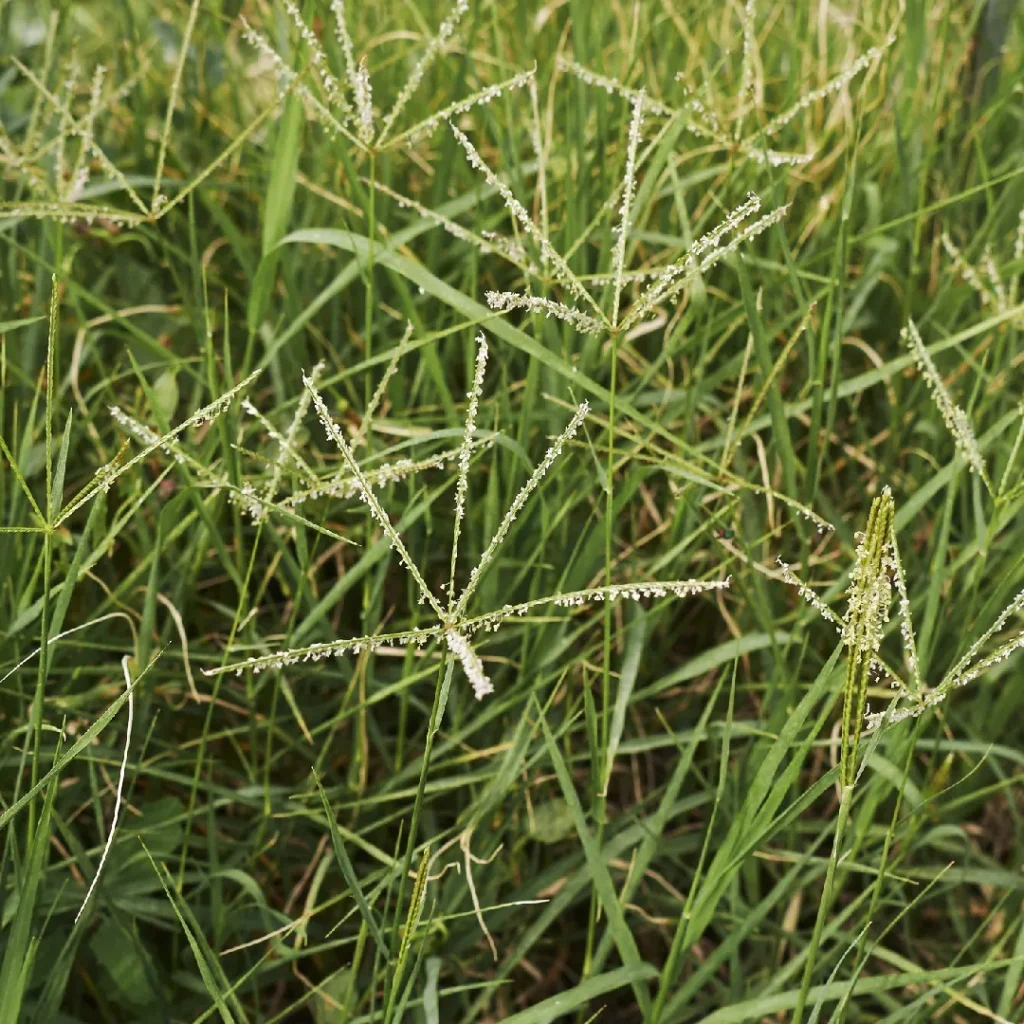
Cynodon dactylon has several recorded uses, including forage and environmental uses. It has also been used as a turf grass in warm climates, although this article focuses on the plant rather than lawn management.
Kew records animal food, environmental uses, food, material uses, and medicinal uses in its plant-use databases. Agricultural plant databases also record its use as forage and for erosion control.
The plant’s ability to spread and form a dense cover helps explain some of these uses. It can establish across open ground and persist under warm conditions.
Uses vary by region, plant type, and local practice. Medicinal or food uses should be treated separately from ordinary garden use because traditional use does not by itself establish medical safety or effectiveness.
When is couch grass plant not a good fit?
Couch grass plant may be a poor choice for a small garden bed when you want plants to stay within a fixed boundary. Its stolons and rhizomes can spread beyond the original planting area.
It can also be a poor match for gardens with limited space or mixed borders where neighbouring plants need clear boundaries.
Before planting Cynodon dactylon, check how it behaves in your local climate. A plant that grows slowly in a cool region may spread much more actively in a hot, sunny setting.
The local meaning of “couch grass” also matters. If a plant label simply says couch grass, confirm the scientific name. Cynodon dactylon and Elymus repens are different species with different growth habits and regional associations.
Common mistakes when identifying couch grass
The most common mistake is treating every plant called couch grass as the same species. Common names vary between countries, so they can create confusion.
Another mistake is identifying the plant from leaf colour alone. Grey-green or green foliage occurs in many grasses. The combination of growth habit, stems, rhizomes, leaf form, and flower head gives a much better identification.
It is also easy to confuse creeping stems with roots. In Cynodon dactylon, stolons spread above the soil and can root at their nodes, while rhizomes spread below the soil.
For a reliable identification, compare the plant with a botanical reference and look at several features rather than one visual trait.
Frequently asked questions about couch grass plant
Is couch grass the same as Bermuda grass?
Yes, Cynodon dactylon is commonly called Bermuda grass and couch grass. However, “couch grass” can refer to Elymus repens in some regions.
Is couch grass a perennial?
Yes. Cynodon dactylon is a perennial grass that can persist for multiple years through its rhizomes and stolons.
Does couch grass spread underground?
Yes. It produces underground rhizomes as well as above-ground stolons, both of which contribute to its spreading habit.
How tall does Cynodon dactylon grow?
Flowering stems are generally short, often around 8 to 40 cm, although height varies with growing conditions and plant form.
Does couch grass need full sun?
Cynodon dactylon generally performs best with plenty of light and warm growing conditions.
Can couch grass grow from seed?
Yes. Cynodon dactylon can reproduce by seed as well as through its stolons and rhizomes.
Is “couch grass” always Cynodon dactylon?
No. In the UK, “couch grass” commonly refers to Elymus repens. Always check the botanical name when identification matters.
What family does couch grass belong to?
Cynodon dactylon belongs to Poaceae, the grass family.