
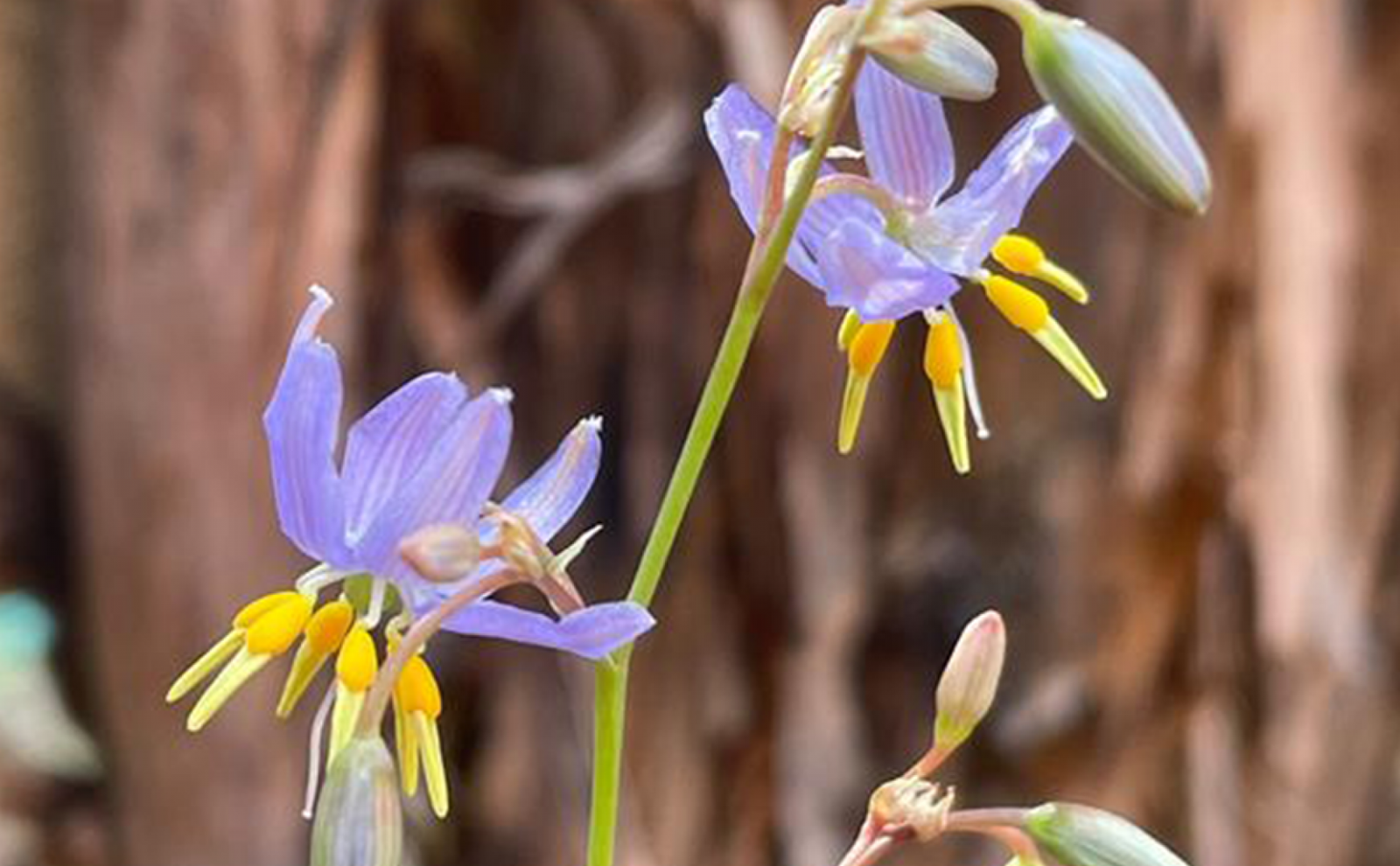
The flax lily plant (Dianella species) is a grass-like perennial grown for its long, narrow leaves, small flowers, and colorful berries. It grows well in garden beds and containers, needs little care once established, and suits many warm-climate gardens.
TL;DR
- Flax lily grows best in well-drained soil with full sun or partial shade.
- Water regularly while young, then reduce watering once the roots are established.
- Trim dead leaves to keep the plant tidy and encourage fresh growth.
- Divide mature clumps in spring to grow new plants.
- Choose a suitable Dianella species for your climate and check local guidance before planting.
What is a flax lily plant?
The flax lily plant is an ornamental perennial in the genus Dianella, which includes several species native to Australia and nearby regions. Despite its common name, it is not a true lily. Gardeners grow it mainly for its narrow, strap-shaped leaves and its ability to form neat clumps.
Depending on the species and variety, the leaves may be plain green, blue-green, or striped with cream or white. Small blue, purple, or pale-colored flowers appear on slender stems. These flowers may develop into blue or purple berries.
Flax lily works well as a border plant, a ground cover, or a container specimen. Its upright foliage adds structure to a garden without needing frequent pruning.
Different species vary in size, cold tolerance, and growth habits. Check the plant label before buying, especially if you live in a region with cold winters or where some flax lilies are considered invasive.
How to care for a flax lily plant
A flax lily plant is generally easy to maintain when it receives suitable light, well-drained soil, and enough water during establishment. Once established, many varieties tolerate short dry spells, although growth and leaf quality depend on local conditions.
| Care requirement | What the plant needs |
|---|---|
| Light | Full sun to partial shade, depending on the variety and climate |
| Water | Regular watering while young, less frequent watering once established |
| Soil | Well-drained soil that does not stay soggy |
| Temperature | Depends on the species and local growing conditions |
| Fertilizer | A light application of balanced fertilizer during active growth, if needed |
| Pruning | Remove dead or damaged leaves as they appear |
How much sunlight does flax lily need?
Flax lily grows in full sun or partial shade. In cooler climates, a sunny position can support healthy growth. In hot regions, partial shade can help protect the leaves from intense afternoon sun.
Variegated varieties may need enough light to maintain their leaf markings. However, strong afternoon sun can scorch foliage in very hot weather.
If the leaves develop brown, dry patches, check how much direct sunlight the plant receives. Moving a container to a spot with morning sun and afternoon shade may help.
How often should you water flax lily?
Water a newly planted flax lily whenever the soil begins to dry near the surface. During warm, dry weather, check the soil more often. Established plants usually need less frequent watering, especially when rainfall meets their needs.
Check the soil before watering rather than following a fixed schedule. If the soil is still wet, wait. Constantly damp soil can damage the roots.
Container-grown flax lilies often dry out faster than plants growing in the ground. Check pots regularly during hot weather, and make sure excess water can drain through the bottom.
What soil is best for flax lily?
Flax lily prefers well-drained soil. It can grow in several soil types, but heavy soil that stays wet for long periods can cause root problems.
Before planting, loosen compacted soil and mix in organic matter if the soil structure needs improvement. For containers, use a quality potting mix and a pot with drainage holes.
Avoid placing flax lily in a low spot where water collects after rain. Good drainage matters more than frequent feeding.
How to plant flax lily outdoors or in a pot
Plant flax lily during mild weather so its roots have time to settle before extreme heat or cold. Spring is a practical choice in many climates, although planting times vary by region.
Follow these steps:
- Choose a site with full sun or partial shade that suits your variety.
- Prepare the soil by loosening compacted areas and checking drainage.
- Dig a hole as deep as the root ball and slightly wider.
- Place the plant in the hole with the crown at soil level.
- Backfill with soil and press gently around the roots.
- Water thoroughly to settle the soil.
- Add a thin layer of mulch around the plant, keeping it away from the crown.
For container planting, choose a pot large enough to accommodate the root system and allow room for growth. Use fresh potting mix and avoid leaving the pot standing in a saucer full of water.
If you are planting several flax lilies in a border, check the expected mature width of your variety. Give each plant enough space to spread without crowding its neighbors.
How to prune and maintain flax lily
Flax lily needs little pruning. Remove dead, damaged, or badly discolored leaves near the base with clean garden shears. This keeps the clump tidy and allows fresh foliage to develop.
If an established plant has many dead leaves after cold weather, cut the damaged foliage back close to the crown in late winter or early spring, where the local climate allows. Avoid cutting into healthy new growth.
You can also remove spent flower stems if you prefer a neat appearance. If you want the plant to produce berries, leave suitable flower stems in place until the fruit develops.
For crowded clumps, divide the plant rather than repeatedly trimming the outer leaves. Spring is generally a suitable time to do this.
How to propagate a flax lily plant
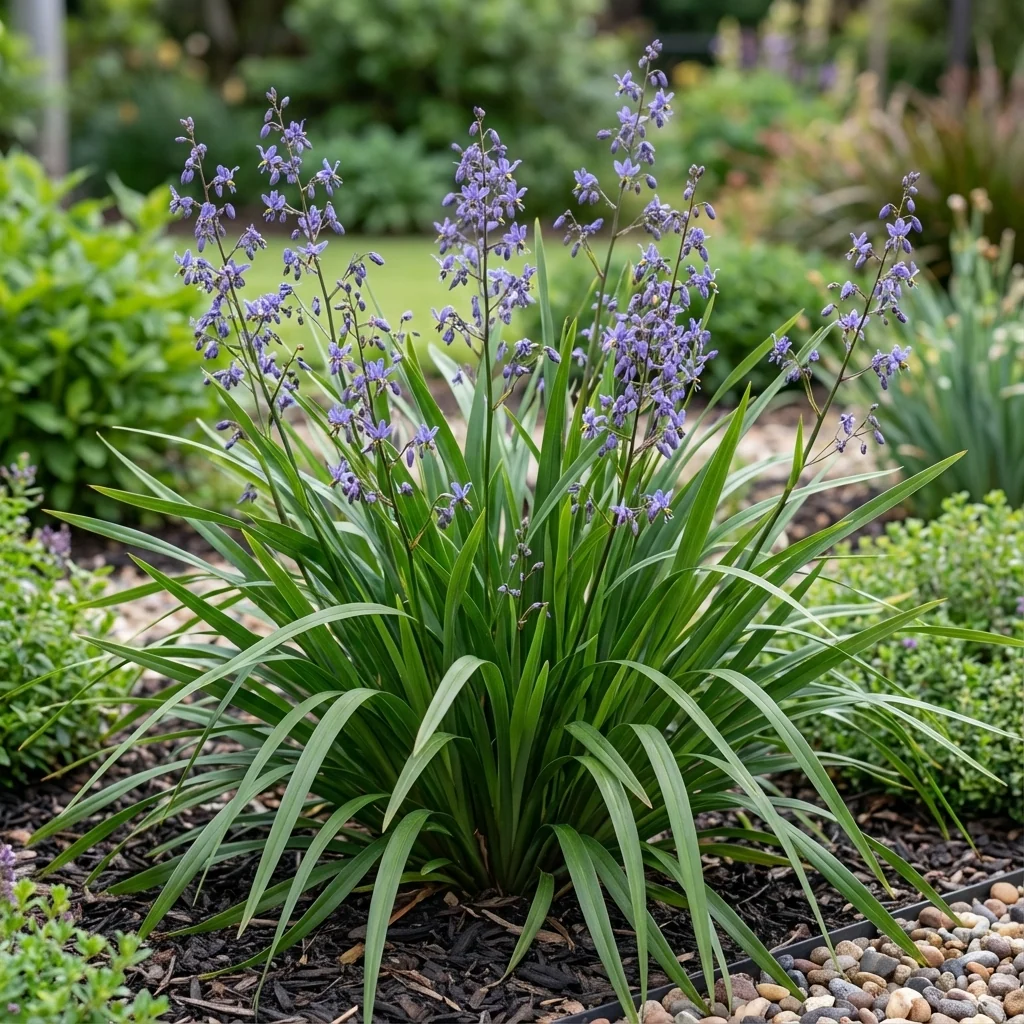
The easiest way to propagate many flax lily varieties is by division. This method produces new plants from an established clump and helps refresh plants that have become crowded.
Follow these steps:
- Water the plant a day before dividing it if the soil is dry.
- Lift the clump carefully with a garden fork or spade.
- Brush away some soil so you can see the roots and growing points.
- Separate the clump into smaller sections, making sure each section has healthy roots and shoots.
- Replant each section at the same depth as before.
- Water well and keep the soil lightly moist while the new plants establish.
Division is best done when the weather is mild and the plant is actively growing. Avoid dividing a plant that is already stressed by severe heat, drought, or waterlogged soil.
Seed propagation is also possible for some species, but growth can be slower and seedlings may not retain the exact leaf markings of a named variety.
Common flax lily problems and how to fix them
Flax lily is usually low-maintenance, but poor growing conditions can affect its foliage and roots.
| Problem | Possible cause | What to do |
|---|---|---|
| Brown leaf tips | Dry soil, heat, or other environmental stress | Check soil moisture and protect the plant from harsh afternoon sun if needed. |
| Yellowing leaves | Waterlogged soil, aging foliage, or poor growing conditions | Check drainage and remove old leaves. |
| Soft or damaged roots | Soil that stays too wet | Improve drainage and reduce watering. |
| Sparse growth | Too much shade or unsuitable growing conditions | Check the variety’s light needs and adjust its position if practical. |
| Crowded clumps | Natural growth over time | Divide the plant in spring. |
A few brown outer leaves are not always a sign of disease. Look at the whole plant and check the soil before changing your watering routine or applying fertilizer.
When is flax lily a good choice for your garden?
Flax lily is a good choice for gardeners who want an ornamental plant with narrow foliage and modest maintenance needs. It can soften the edges of paths, fill garden borders, and grow in containers on patios or balconies.
It also suits gardens where a clumping plant is useful for filling gaps between shrubs. Some varieties tolerate dry periods once established, which can reduce watering needs in suitable climates.
However, flax lily is not the right choice for every garden. It may struggle in poorly drained soil, and some varieties are sensitive to frost. Certain Dianella species can also become invasive in particular regions.
Before planting, identify the species and check whether it is recommended for your area. This matters especially if you plan to use it as a ground cover, where spreading plants can be harder to control.
Frequently asked questions about flax lily
Is the flax lily plant easy to grow?
Yes, many flax lily varieties are easy to grow when planted in well-drained soil with suitable sunlight. They need regular attention while establishing but often require little maintenance afterward.
Does flax lily prefer sun or shade?
Flax lily grows in full sun or partial shade, depending on the species and climate. In hot regions, partial shade can help prevent leaf scorch.
Can flax lily grow in pots?
Yes, flax lily can grow in containers with drainage holes and a well-draining potting mix. Check the soil regularly because container plants can dry out faster than those growing in garden beds.
How do you make flax lily spread?
Flax lily spreads as its clumps grow, and many varieties can be propagated by division. Divide a mature clump in spring to create additional plants.
Should you cut back flax lily in winter?
Remove dead or damaged leaves as needed. In regions with cold winters, wait until the worst cold has passed before cutting back frost-damaged foliage.
Is flax lily drought-tolerant?
Many established flax lilies tolerate short periods of dry weather. Young plants and container-grown specimens need closer attention to watering.
Can flax lily grow indoors?
Flax lily is mainly grown outdoors, but a container may work indoors in a bright spot with suitable airflow. Light levels, room temperature, and drainage will affect how well it grows.
Are flax lily berries safe to eat?
Do not eat the berries. Some Dianella species have berries regarded as potentially poisonous, and the safety of the fruit should not be assumed from its appearance. Keep berries away from children and pets.