
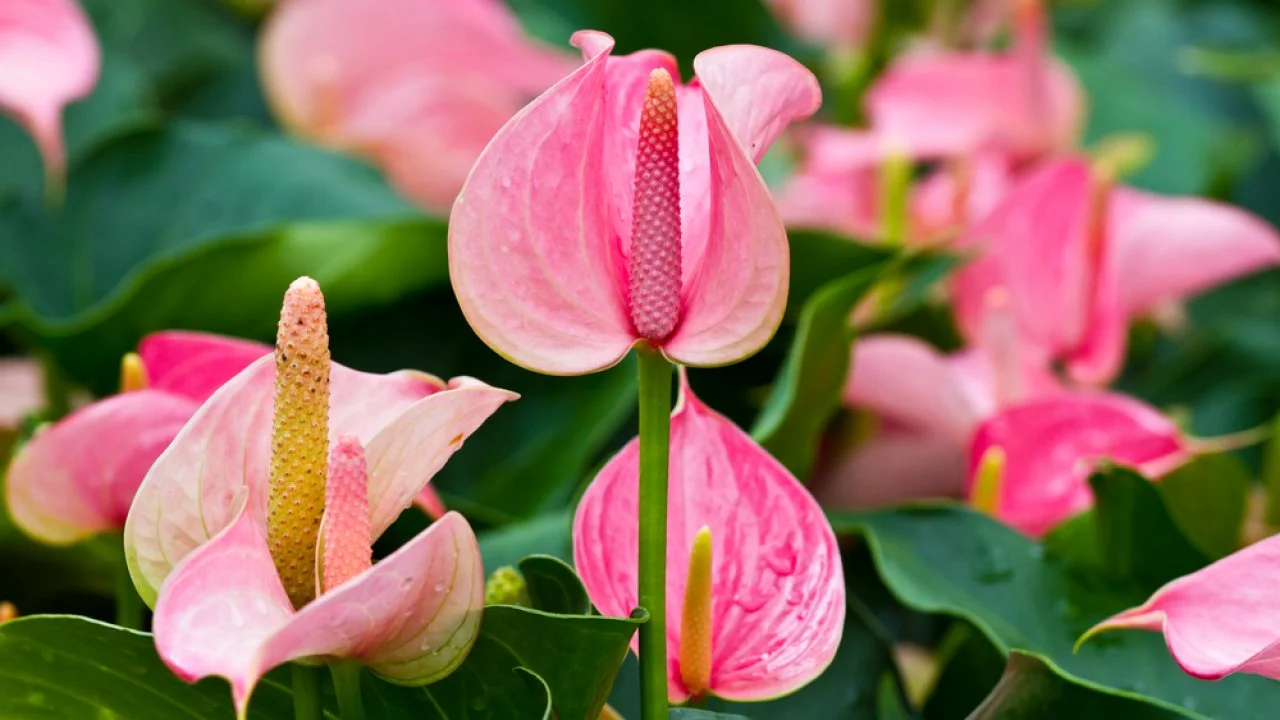
The flamingo flower plant (Anthurium andraeanum) is a tropical houseplant known for its glossy green leaves and waxy, heart-shaped blooms. Give it bright, indirect light, warm temperatures, and evenly moist soil to keep it healthy and encourage new flowers.
TL;DR
- The flamingo flower plant grows best in bright, indirect light.
- Water when the top inch of potting mix feels dry.
- Use an airy, well-draining mix that holds some moisture.
- Maintain warm temperatures and moderate to high humidity.
- Keep the plant away from pets and children because it is toxic if eaten.
What is a flamingo flower plant?
The flamingo flower plant is a tropical evergreen perennial grown mainly for its colorful, long-lasting blooms and glossy foliage. It comes from tropical parts of Colombia and Ecuador and grows well indoors when its warmth, light, and moisture needs are met.
Its most familiar feature is the waxy, heart-shaped red, pink, orange, or white structure above the green leaves. This structure is called a spathe, a modified leaf that surrounds a narrow flower spike called a spadix.
The tiny true flowers grow along the spadix. This unusual structure gives the plant its distinctive appearance.
You may also see the flamingo flower sold as an anthurium, flamingo lily, or painter’s palette. Many varieties are compact enough for a windowsill, shelf, or indoor plant stand.
How to care for a flamingo flower plant
The flamingo flower plant needs bright, filtered light, regular watering, a free-draining potting mix, and warm, humid conditions. It can grow for years indoors when you avoid soggy soil and protect it from cold drafts.
| Care factor | What the plant needs |
|---|---|
| Light | Bright, indirect sunlight |
| Water | Water when the top inch of soil feels dry |
| Soil | Airy, moisture-retentive, well-draining potting mix |
| Temperature | Around 65 to 80°F (18 to 27°C) |
| Humidity | Moderate to high humidity |
| Fertilizer | Balanced houseplant fertilizer during active growth |
| Repotting | When roots fill the pot or the mix breaks down |
Light needs
Place the flamingo flower near a bright window where direct midday sunlight does not reach its leaves. An east-facing window often works well, while a bright south- or west-facing window may need a sheer curtain.
Too little light can lead to slow growth and fewer flowers. Strong direct sunlight can scorch the leaves and fade the colorful spathes.
If the plant produces healthy leaves but few blooms, check its light first. Move it closer to a bright window gradually rather than exposing it to strong sun all at once.
Watering schedule
Water the flamingo flower when the top inch of potting mix feels dry. Check the soil with your finger instead of following a fixed weekly schedule, since watering needs change with room temperature, light, pot size, and season.
Water thoroughly until excess moisture drains from the bottom of the pot. Empty the saucer so the roots do not sit in standing water.
The soil should remain lightly moist between waterings, but it must not stay waterlogged. Reduce watering when growth slows in cooler months, and check the soil before adding more water.
Soil and pot selection
Choose a loose potting mix that holds some moisture while allowing excess water to escape. A mix designed for aroids or a blend containing potting mix, orchid bark, and perlite can provide a suitable balance of moisture and air.
Use a pot with drainage holes. A container that is much larger than the root ball can hold excess moisture for too long, increasing the risk of root rot.
Repot when the roots crowd the container or the potting mix becomes compacted. Move the plant into a slightly larger pot and keep the base of the stems at the same soil level.
Temperature and humidity
The flamingo flower grows best in a warm room with steady humidity. Keep it away from air-conditioning vents, cold windows, and sudden temperature changes.
Dry indoor air can cause brown leaf tips and edges. Increase humidity with a room humidifier or group several plants together, while keeping enough space for air to circulate.
Misting gives only a brief rise in moisture around the leaves. It is less reliable than maintaining suitable room humidity.
How to encourage a flamingo flower plant to bloom
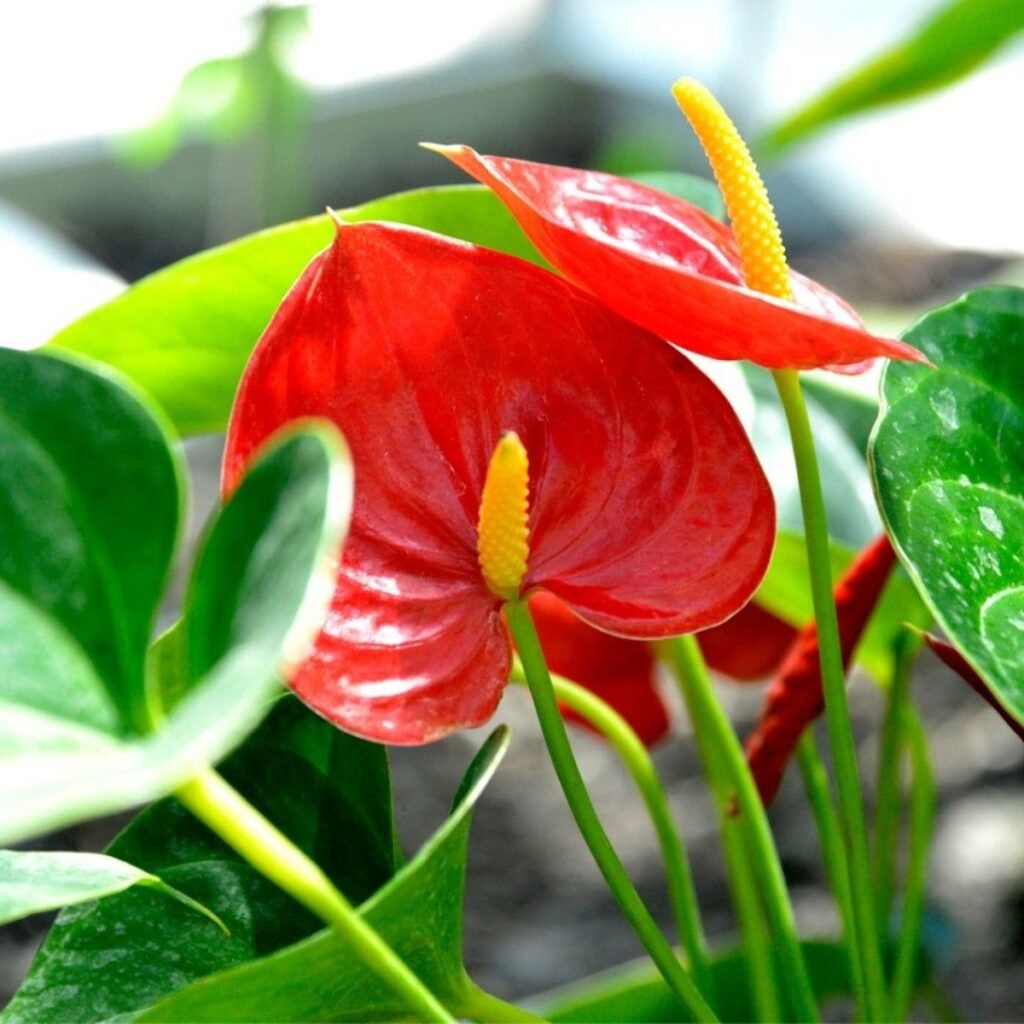
Give the flamingo flower enough indirect light, steady warmth, and regular care to encourage repeat flowering. A healthy plant can produce blooms over a long period, but the timing and amount of flowering depend on the variety and growing conditions.
Start by checking the light. A plant in a dim corner may keep its leaves but produce few flowers. Move it to a brighter location with filtered sunlight.
Feed the plant during active growth with a balanced liquid houseplant fertilizer. Follow the label directions, and avoid applying extra fertilizer to force blooms. Too much fertilizer can damage roots and cause leaf problems.
Remove faded blooms by cutting their stems near the base with clean pruning shears. Also remove dead or damaged leaves to keep the plant tidy.
Be patient after bringing a flowering plant home. Shop-bought plants may take time to adjust to a new room, and fresh blooms may not appear immediately.
How to propagate a flamingo flower plant
The easiest home method is to divide a mature flamingo flower that has developed separate rooted shoots. Propagation is best done when you repot the plant, usually during active growth.
Follow these steps:
- Remove the plant from its pot and gently loosen the potting mix around the roots.
- Look for natural divisions with their own roots and leaves.
- Separate a rooted division carefully, keeping as many healthy roots attached as possible.
- Plant each division in a suitable pot with fresh, airy potting mix.
- Water lightly and place the new plants in bright, indirect light.
- Keep the soil lightly moist while the divisions settle in, without leaving the pots waterlogged.
Avoid dividing a small plant that has only one growth point. Let it develop further before attempting propagation.
Common flamingo flower plant problems and how to fix them
Most flamingo flower problems come from unsuitable light, poor watering habits, low humidity, or pests. Check the leaves and soil together before changing your care routine.
| Problem | Likely cause | What to do |
|---|---|---|
| Yellow leaves | Excess water or poor drainage | Check the roots and let the surface of the mix dry before watering again. |
| Brown leaf tips | Dry air, inconsistent watering, or mineral buildup | Improve humidity and review your watering routine. |
| Few or no blooms | Insufficient light or unsuitable growing conditions | Move the plant to brighter indirect light and maintain steady warmth. |
| Soft, dark roots | Root rot from wet soil | Remove damaged roots and repot in fresh, well-draining mix. |
| Small webs or sticky leaves | Possible pest activity | Inspect leaf undersides and stems, then treat any pests with a suitable houseplant method. |
Do not respond to every yellow leaf by adding fertilizer. First check whether the soil is staying wet, the pot drains properly, and the plant receives enough light.
Is the flamingo flower plant safe for pets?
The flamingo flower plant is toxic if chewed or swallowed by pets or people. It contains calcium oxalate crystals that can irritate the mouth and digestive tract.
Place the plant where cats, dogs, and young children cannot reach it. Wear gloves if you have sensitive skin, and wash your hands after pruning or handling damaged plant tissue.
If a pet or child eats part of the plant, contact a veterinarian or an appropriate poison advice service for guidance. Do not try home treatments without professional advice.
Frequently asked questions about the flamingo flower plant
How often should I water a flamingo flower plant?
Water when the top inch of potting mix feels dry. The interval varies with light, temperature, humidity, and pot size, so check the soil before each watering.
Can a flamingo flower plant grow indoors?
Yes. It grows well indoors when it receives bright, indirect light, warm temperatures, high enough humidity, and well-draining soil.
Why is my flamingo flower plant not flowering?
Low light is a common reason for poor flowering. Move the plant to a brighter spot without harsh direct sun, and check that it receives suitable water and fertilizer.
How long do flamingo flower blooms last?
Individual blooms can remain attractive for several weeks. Their lifespan depends on the variety and the conditions in which the plant grows.
Can I grow a flamingo flower plant outdoors?
Yes, in warm, frost-free tropical or subtropical conditions with shade or filtered light. In cooler climates, grow it in a container indoors and protect it from cold weather.
Should I mist my flamingo flower plant?
You can mist it, but misting does not maintain humidity for long. A humidifier is a more reliable option if the air in your home is dry.
When should I repot a flamingo flower plant?
Repot when the roots crowd the pot, emerge from the drainage holes, or the potting mix breaks down. Choose a container only slightly larger than the existing one to avoid keeping excess water around the roots.
Is this conversation helpful so far?