
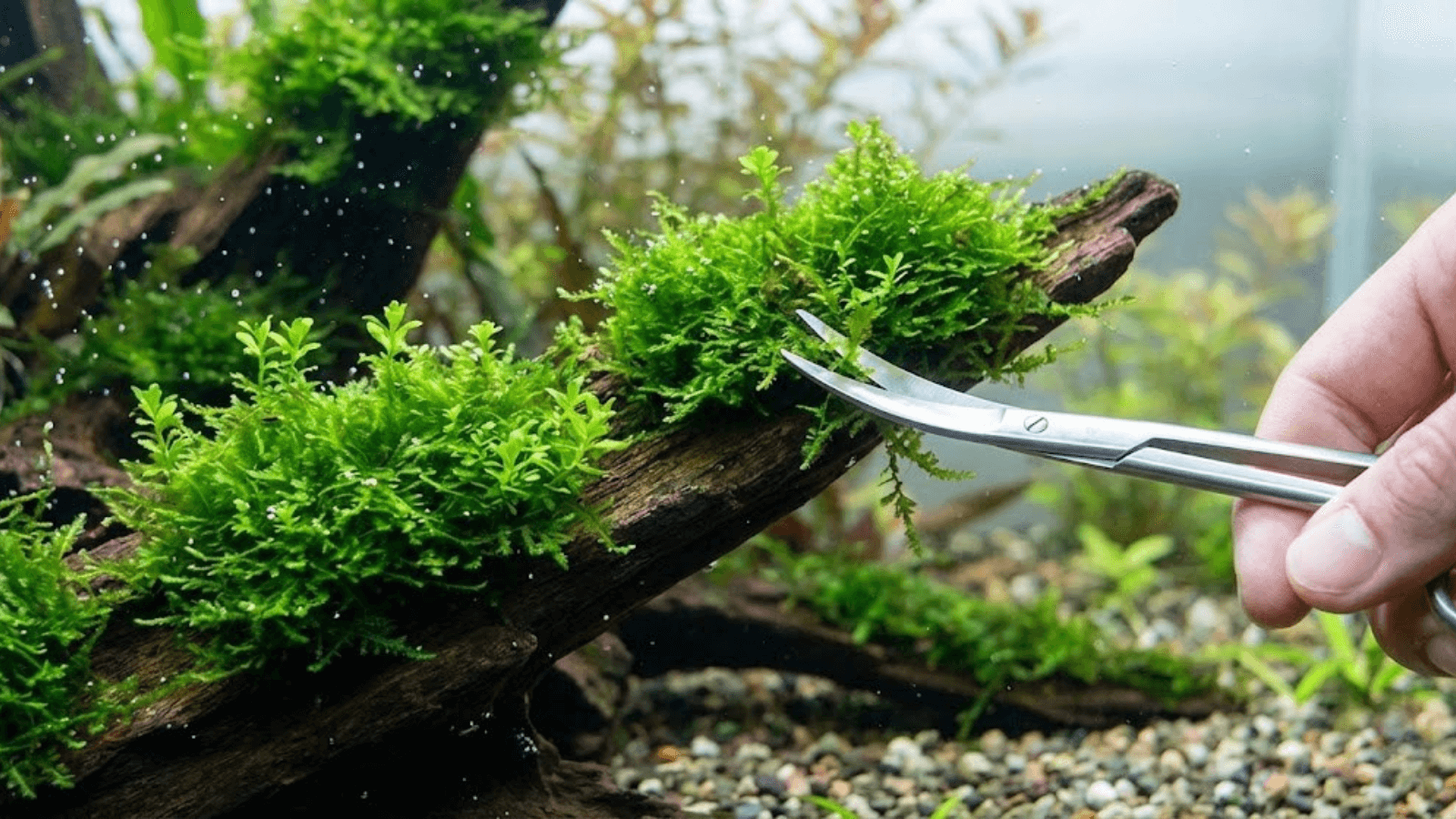
Fish tank moss plants provide shelter for fish and shrimp, grow on rocks and driftwood, and can thrive with simple care in freshwater aquariums. Popular choices include Java moss, Christmas moss, Flame moss, and Weeping moss. Each type has a different growth pattern, so the best option depends on your tank setup and the look you want.
TL;DR
- Java moss is a beginner-friendly choice for many freshwater aquariums.
- Moss can grow on driftwood, rocks, mesh, and other aquarium decorations.
- Most aquarium mosses do well with low to moderate light and stable water conditions.
- Trim moss regularly to prevent debris from collecting inside thick growth.
- Choose aquarium-safe moss and avoid collecting unknown plants from the wild.
What are fish tank moss plants?
Fish tank moss plants are aquatic or moisture-loving plants commonly grown in freshwater aquariums. They create soft green growth on decorations and provide small spaces where shrimp, fry, and microorganisms can shelter.
Many aquarium mosses do not need to be planted in substrate. Instead, they can attach to rocks, driftwood, mesh, and other surfaces. This makes them useful for creating natural-looking layouts without taking up much space on the aquarium floor.
Moss grows at different rates depending on the species, lighting, water conditions, and available nutrients. Some varieties form loose mats, while others create upright shapes or cascading growth.
Best types of fish tank moss plants
1. Java moss
Java moss is one of the most widely used aquarium mosses. It forms loose, branching green growth and can adapt to a range of freshwater tank conditions.
It works well on driftwood, rocks, mesh, and aquarium backgrounds. Java moss is also suitable for many shrimp tanks because its dense structure gives small animals places to explore and forage.
Best for: Beginners, shrimp tanks, breeding setups, and natural aquascapes.
2. Christmas moss
Christmas moss has a layered growth pattern that can resemble the branches of a small evergreen tree. When attached to a flat surface and trimmed carefully, it can form a neat, textured mat.
It often benefits from stable water conditions and moderate lighting. Regular trimming helps preserve its shape and reduces the chance of debris becoming trapped in the growth.
Best for: Decorative driftwood, moss walls, and detailed aquascapes.
3. Flame moss
Flame moss grows upward in narrow, twisting shoots that resemble small green flames. Its upright form adds height and texture to aquarium decorations.
It can be attached to rocks or wood and used as a focal point in planted tanks. Avoid allowing it to become overly thick, as compact growth can collect debris.
Best for: Aquascapes that need vertical texture and distinctive shapes.
4. Weeping moss
Weeping moss is known for its downward-growing branches. When attached to driftwood or elevated rocks, its growth can create a hanging effect.
It works best when given enough room to develop its shape. Gentle water movement and occasional trimming can help keep the growth tidy.
Best for: Driftwood displays, natural layouts, and aquariums with a forest-like appearance.
How to care for fish tank moss plants
Most aquarium mosses are relatively easy to maintain, but they still need suitable water conditions and regular attention.
Lighting
Many mosses grow under low to moderate aquarium lighting. Stronger light may encourage faster growth, but it can also promote algae if nutrients and light exposure are not balanced.
Start with a moderate lighting schedule and observe the plant. Pale growth, slow development, or excessive algae may indicate that the tank conditions need adjustment.
Water conditions
Stable water conditions are generally more helpful than frequent changes. Many commonly kept aquarium mosses tolerate a range of freshwater conditions, but the preferred temperature and water chemistry can vary by species.
Check the needs of the specific moss you buy, especially if your aquarium houses fish or shrimp with particular temperature requirements.
Water flow
Gentle to moderate water movement helps carry nutrients through the aquarium and can prevent debris from settling heavily on moss. Very strong currents may disturb loosely attached growth or make delicate shoots difficult to manage.
Adjust the filter outlet if moss repeatedly collects waste or becomes detached.
Nutrients and carbon dioxide
Aquarium mosses can grow without added carbon dioxide in many setups. Growth may be slower in low-tech tanks, but this does not automatically mean the plant is unhealthy.
A balanced supply of nutrients can support growth. Avoid adding fertilizers without considering the needs of your fish, shrimp, and other plants. Follow product directions and monitor water quality.
Trimming and cleaning
Use clean aquarium scissors to remove excess growth. Trimmed moss can be reused if it is healthy and free from algae or visible pests.
During water changes, gently remove loose debris with a siphon. Avoid pulling hard on attached moss, as this can loosen the plant from its surface.
How to attach moss to rocks and driftwood
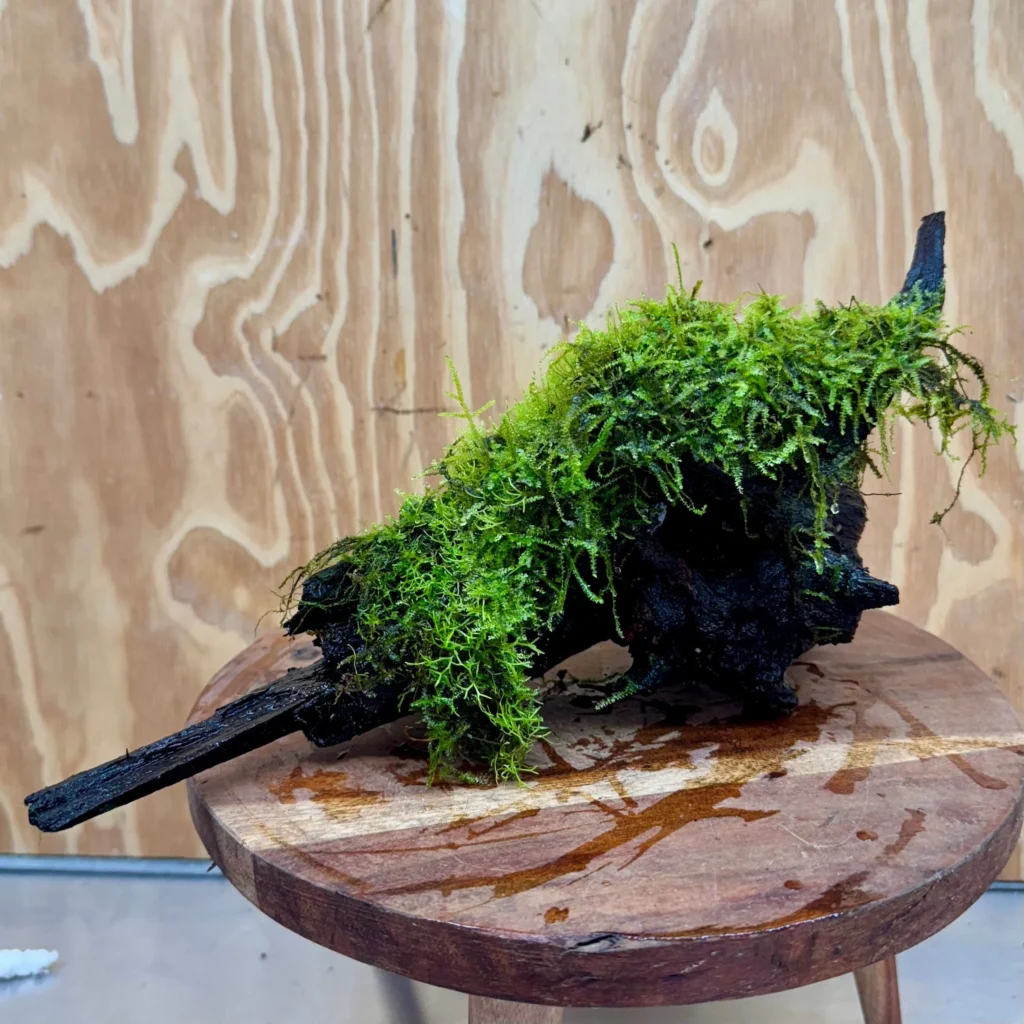
Aquarium moss is usually attached to a surface rather than buried in the substrate.
- Choose a suitable surface. Use aquarium-safe rocks, driftwood, or mesh.
- Prepare the moss. Remove damaged sections and divide large clumps into smaller portions.
- Position the moss. Spread it in a thin layer so water can reach the plant.
- Secure it in place. Use aquarium-safe thread, suitable mesh, or aquarium-safe cyanoacrylate gel designed for aquarium use.
- Monitor new growth. Check that the moss stays attached and remove any pieces that begin to decay.
Avoid covering the surface with a thick mass of moss. Thin, even coverage usually allows better water circulation and makes cleaning easier.
Benefits of aquarium moss
Fish tank moss plants can serve several purposes in a freshwater aquarium.
- Shelter for small animals: Dense growth gives shrimp and young fish places to hide.
- Natural foraging areas: Moss can support microorganisms that shrimp and other small aquarium animals feed on.
- Decorative texture: Moss softens hard edges on rocks and driftwood.
- Flexible placement: Many mosses can grow on surfaces without needing to root in the substrate.
- Useful for breeding tanks: Moss provides cover that may help fry avoid larger fish, although it does not guarantee survival.
Moss can also contribute to nutrient uptake as it grows, but it should not replace proper filtration, water changes, or routine water testing.
Common problems with fish tank moss plants
Moss turning brown
Brown or decaying sections may result from poor water conditions, trapped debris, damage, or unsuitable conditions for the species. Remove dead material and check the aquarium’s temperature, water quality, and water flow.
Some mosses also take time to adjust after being moved to a new tank.
Algae growing on moss
Algae may develop when lighting is too strong or runs for too long, or when the aquarium’s nutrient balance is unsuitable. Reduce excessive lighting, maintain regular water changes, and remove affected sections when necessary.
Dense moss can be difficult to clean once algae becomes established, so early attention helps.
Moss coming loose
Newly attached moss may detach before it has secured itself to the surface. Reattach loose pieces using an aquarium-safe method and check whether strong water flow is disturbing them.
Slow growth
Slow growth is common in low-light aquariums and is not always a sign of trouble. Check that the moss is receiving suitable light, has stable water conditions, and is not covered by sediment or algae before making major changes.
Are fish tank moss plants suitable for every aquarium?
Moss can work in many freshwater aquariums, but it may not suit every setup. Fish that constantly dig, uproot plants, or nibble on soft growth may disturb it. Tanks with heavy waste buildup can also make moss harder to maintain.
Some mosses sold for aquariums have different care requirements, and not every plant marketed as moss is suitable for permanent underwater growth. Buy from a reputable aquarium supplier and confirm that the species is appropriate for your tank.
Avoid introducing moss collected from unknown outdoor sources, as it may carry pests, contaminants, or organisms that could affect the aquarium.
Frequently asked questions
What is the easiest moss for a fish tank?
Java moss is a popular beginner choice because it adapts to many freshwater setups and can grow on rocks, driftwood, and mesh.
Do aquarium moss plants need soil?
No. Many aquarium mosses grow attached to hard surfaces and do not need to be buried in substrate.
Can fish tank moss grow without CO₂?
Yes. Many common aquarium mosses can grow without added carbon dioxide, although growth may be slower depending on lighting, nutrients, and other conditions.
Is moss good for shrimp tanks?
Yes. Moss provides shelter and surfaces where microorganisms can grow, giving shrimp places to explore and forage.
How often should aquarium moss be trimmed?
Trim it when it becomes too thick, collects debris, or grows beyond the shape you want. The frequency depends on the species and its growth rate.
Why is my aquarium moss turning brown?
Possible causes include trapped debris, poor water conditions, damage, algae, or an unsuitable environment. Remove dead sections and check the tank conditions before changing several factors at once.
Can aquarium moss float?
Yes. Loose moss may float until it is attached or settles into a suitable position. Secure it to a rock, piece of driftwood, or mesh if you want it to stay in one place.
Can I use regular garden moss in a fish tank?
It is best to avoid garden moss unless you can positively identify it as suitable for permanent aquarium use. Terrestrial moss may not survive underwater, and outdoor material can introduce pests or contaminants.