
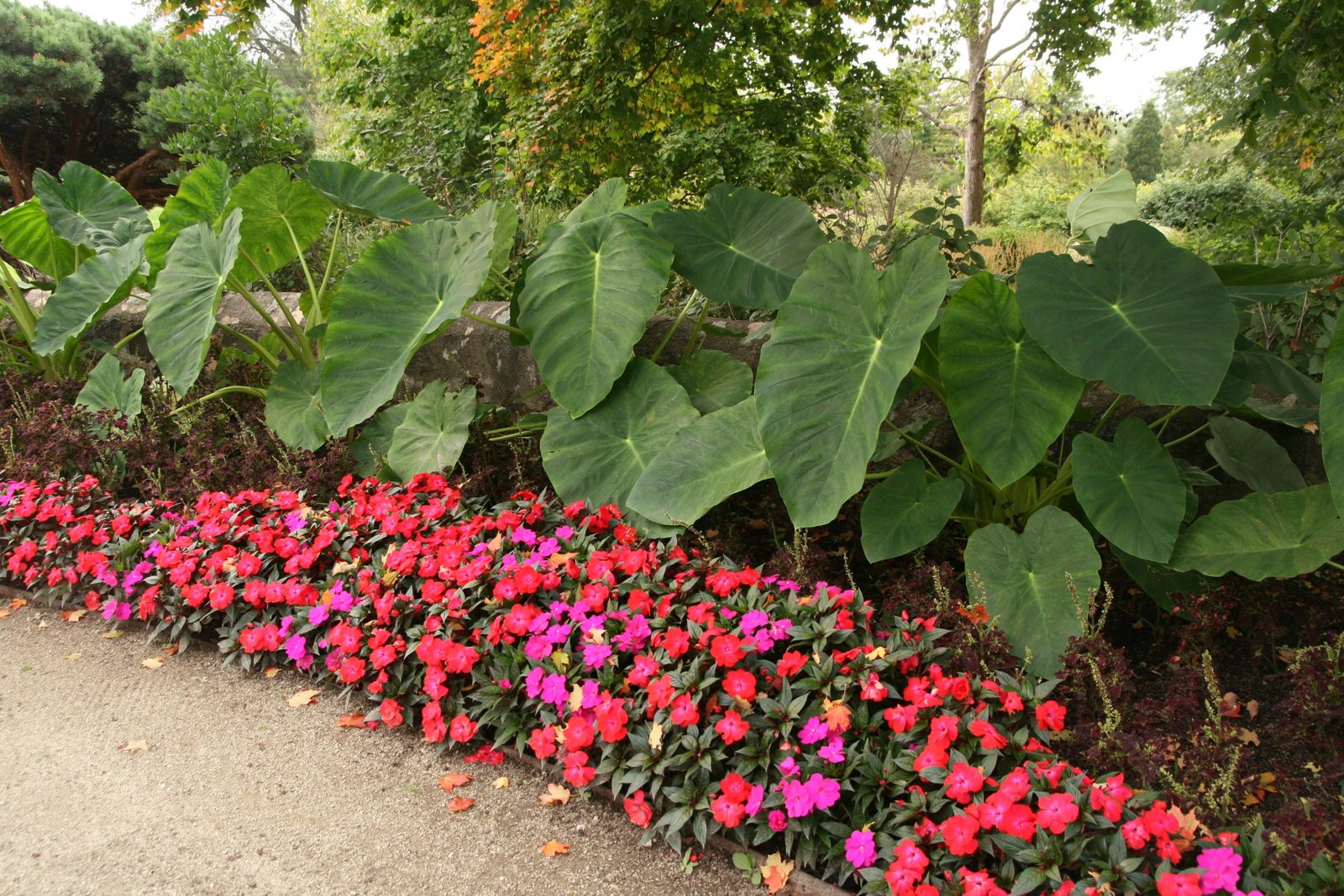
Elephant ear plants can produce flowers, but the blooms are much less common than their large leaves. The flowers look like typical aroid blooms, with a spathe surrounding a spadix, and they may be partly hidden by the foliage.
TL;DR
- Elephant ear plants can flower, although blooms are less common than the large leaves.
- The flower has a spathe around a spadix, rather than a typical open flower with separate petals.
- Colocasia and Alocasia can produce flowers, while flowering depends on the plant and growing conditions.
- Flowers may appear during warm, active growth and can stay partly hidden under the leaves.
- You do not need to remove a flower unless it is damaged, spent, or you want the plant to focus on its foliage.
Does an elephant ear plant flower?
Yes, an elephant ear plant can flower. Elephant ear is a common name for several plants in the genera Colocasia, Alocasia, and Xanthosoma, and these plants can produce the flower structure typical of the arum family.
The flower is quite different from a rose, lily, or daisy. Instead of large petals, an elephant ear flower has a modified leaf called a spathe wrapped around a central structure called a spadix.
The leaves are still the main reason most gardeners grow elephant ears. Flowers can be easy to miss because they may develop underneath or among the large leaves.
What does an elephant ear flower look like?
An elephant ear flower usually has a pale spathe surrounding a cream, white, yellowish, or light green spadix. The exact appearance varies between species and cultivars.
The spathe is the curved, leaf-like part that surrounds the spadix. The spadix is the upright, fleshy structure where the tiny flowers are arranged.
This is the same basic flower structure found in many other plants in the arum family. What looks like one large flower is actually a cluster of very small flowers arranged around the spadix.
Some elephant ear flowers can also produce berries after pollination. You may never see these on a garden plant because flowering itself is uncommon in some growing conditions.
When do elephant ears flower?
Elephant ears generally flower during warm, active growth, with spring and summer being common flowering periods for Alocasia. The exact timing depends on the species, climate, and growing conditions.
Warmth and active growth give the plant the conditions it needs to produce new growth. A plant that is stressed, dormant, or growing in poor conditions may put its energy into maintaining leaves rather than producing flowers.
Outdoor plants in warm climates are more likely to flower than plants growing through a cool or short season. Indoor elephant ears can also flower, but a bloom is not something you should expect every year.
If your elephant ear has never flowered, that does not usually mean something is wrong. These plants are commonly grown for their foliage, and flowers are often seldom seen.
Why is my elephant ear plant not flowering?
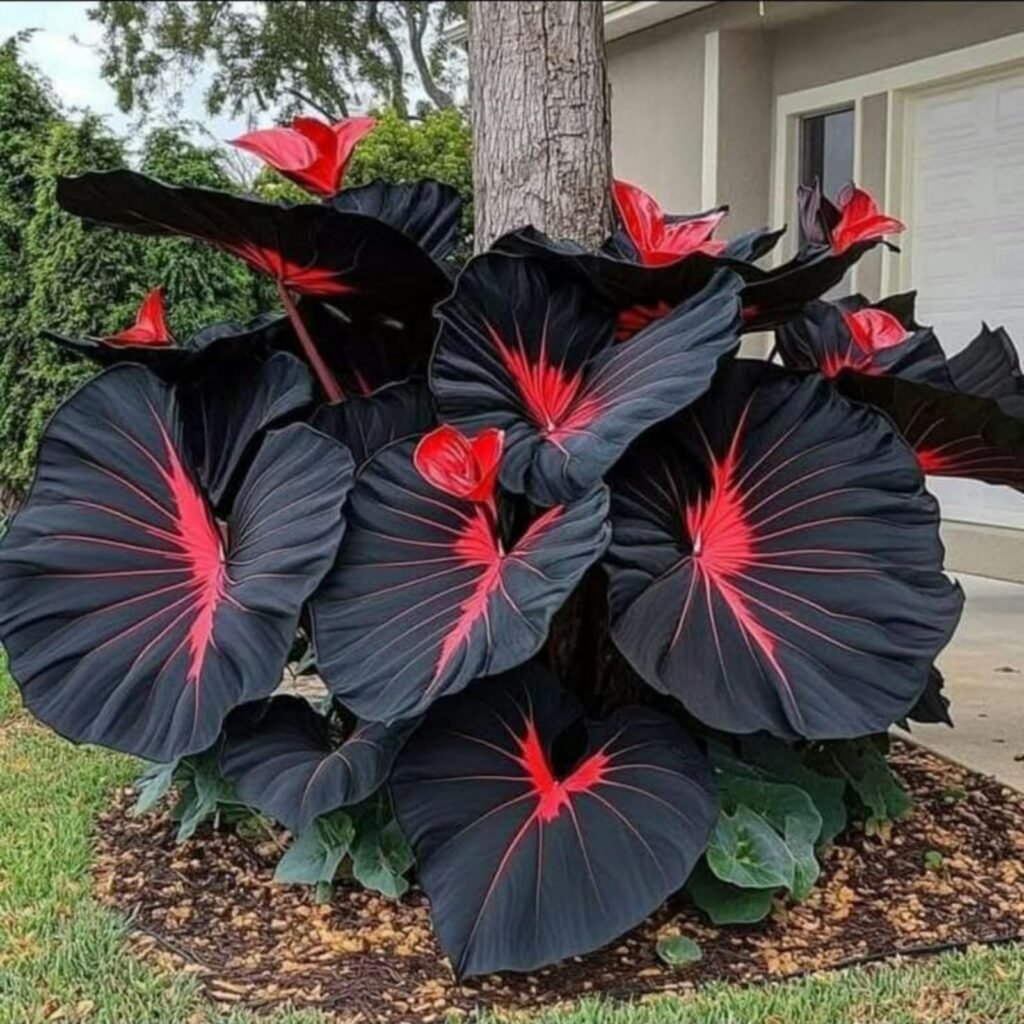
The most common reason is simply that flowering is not a reliable feature of every elephant ear plant. Colocasia, Alocasia, and Xanthosoma differ in their growth habits and flowering behavior.
Growing conditions also affect flowering. Give an elephant ear suitable light, warmth, moisture, and fertile soil during active growth. Avoid keeping the soil constantly waterlogged, especially for types that need good drainage.
A mature, actively growing plant has a better chance of flowering than one that is recovering from stress or has only recently been planted.
Do not try to force a bloom by greatly increasing fertilizer. Excess fertilizer can cause other growth problems and does not guarantee flowers.
Should I cut off an elephant ear flower?
You can leave an elephant ear flower in place if it is healthy and you want to watch it develop. There is no general need to remove a healthy bloom.
Cut off a flower if it becomes damaged, starts to decay, or looks unsightly. Use clean, sharp pruners and cut the flower stalk close to its base without damaging nearby leaves.
If your main goal is large, healthy foliage, focus on normal plant care rather than trying to encourage or stop flowering. Good growing conditions matter more than the presence of a single bloom.
Are elephant ear flowers fragrant?
Some elephant ear flowers can be fragrant, but fragrance varies by plant. The flower may also be partly hidden beneath the foliage, so you may notice the scent before you notice the bloom.
This is one reason an elephant ear flower can seem to appear suddenly. A flower can develop low in the plant while the large leaves hide much of the structure from view.
Can an elephant ear flower produce seeds?
Some elephant ears can produce fruit and seeds after successful pollination. University of Wisconsin Extension notes that elephant ear flowers may be followed by green or yellow berries containing several seeds.
Seed production is not the usual way gardeners propagate large elephant ears. Division or starting with a corm is more practical for many plants.
If you do see berries forming after flowering, let them develop rather than cutting the flower stalk immediately. The seeds may be useful for propagation, although seedlings may not produce plants identical to a named cultivar.
Are elephant ear flowers safe around pets?
Use caution around pets because several plants commonly called elephant ears are toxic to dogs and cats. The ASPCA lists Colocasia esculenta and Alocasia species as containing insoluble calcium oxalates that can cause mouth irritation, swelling, drooling, vomiting, and difficulty swallowing if eaten.
The name “elephant ear” covers several different plants, so identify your plant before relying on a general safety assumption. Keep the plant away from pets that chew leaves or flowers.
If a pet has eaten an elephant ear and shows signs of illness, contact a veterinarian or an animal poison service promptly.
Frequently asked questions about elephant ear plant flowers
Do elephant ear plants really flower?
Yes. Elephant ear plants can produce flowers, although flowering is less common than leaf growth and may vary by species and growing conditions.
What does an elephant ear flower look like?
An elephant ear flower has a spathe surrounding a spadix. The spathe is usually pale green, white, yellowish, or cream, while the spadix contains the tiny flowers.
How often do elephant ears bloom?
There is no reliable bloom schedule for all elephant ears. Some plants flower during warm active growth, while others may rarely or never flower under a particular set of growing conditions.
Why is my elephant ear flowering?
An elephant ear may flower when it is mature and actively growing under suitable warm conditions. Flowering can vary between Colocasia, Alocasia, and Xanthosoma plants.
Should I remove an elephant ear flower?
You can leave a healthy flower in place or remove it after it fades. Remove damaged or decaying flowers with clean pruners if you want to keep the plant tidy.
Can elephant ear flowers turn into seeds?
Some elephant ears can produce berries containing seeds after pollination. Seed production varies by plant and is less commonly used for propagation than division or corms.