
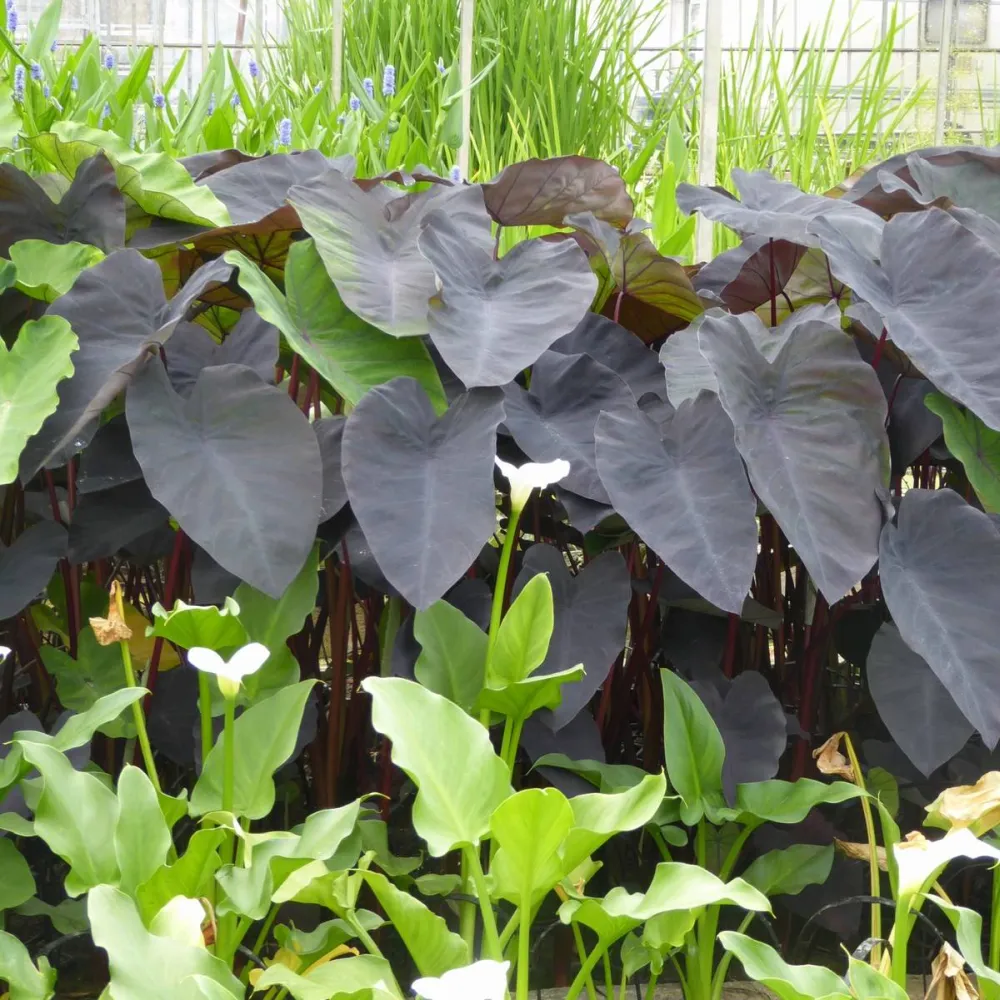
The elephant ear black magic plant, Colocasia esculenta ‘Black Magic’, is a tropical foliage plant with large, dark purple to nearly black leaves. Give it warmth, strong light, and consistently moist soil for the best growth and leaf color.
TL;DR
- The elephant ear black magic plant grows best in warm conditions with full sun to partial shade.
- Keep the soil consistently moist, especially during active growth and hot weather.
- Bright light helps the leaves develop their dark purple color.
- Grow it in a container if your climate gets cold or frost is common.
- Keep this plant away from pets and children because eating it can cause mouth irritation.
What is the elephant ear black magic plant?
The elephant ear black magic plant is a cultivar of Colocasia esculenta, a tropical plant in the Araceae family. It is grown mainly for its large, dark purple leaves and matching dark stems.
The leaves can look almost black in strong light. The plant forms a clump from underground storage structures and can grow into a large foliage plant when given enough warmth, water, and growing space.
This plant is a good choice for a warm outdoor garden, patio container, pond edge, or other spot where the soil stays moist. In cooler regions, it can be grown as a seasonal plant or moved indoors before cold weather.
How do you care for an elephant ear black magic plant?
An elephant ear black magic plant needs bright light, steady moisture, fertile soil, and warm growing conditions. It can tolerate full sun to partial shade, although very hot afternoon sun may cause leaf stress in some climates.
| Care need | What to provide |
|---|---|
| Light | Full sun to partial shade |
| Water | Keep the soil consistently moist |
| Soil | Fertile soil that holds moisture |
| Temperature | Warm conditions with protection from frost |
| Feeding | Regular balanced fertilizer during active growth |
| Container | Use a large, stable pot with drainage |
Light
Give the elephant ear black magic plant full sun to partial shade. More light can produce stronger purple coloring, while partial shade can work well where summers are very hot.
For an indoor plant, place it near a bright window. A south- or west-facing window can provide strong light, but protect the leaves from harsh glass-amplified heat if they begin to scorch.
Water
Keep the soil moist during active growth. This plant handles wet conditions better than many common houseplants, but container-grown plants still need enough drainage to prevent stagnant conditions.
Check the soil regularly during hot weather. A plant in a small pot can dry much faster than one planted in the ground.
Soil and feeding
Use fertile soil that holds moisture without becoming a hard, compact mass. Add organic matter if the garden soil is poor and dries too quickly.
Feed during active growth with a balanced fertilizer according to the product label. Regular feeding supports the heavy leaf growth that makes this cultivar useful as a foliage plant.
Where should you grow Black Magic elephant ear?
Grow Black Magic elephant ear in a warm outdoor bed, large container, or moist area near a pond. It is especially suited to places where you can keep the soil evenly moist and give the plant plenty of room for its large leaves.
For container growing, choose a heavy pot that will not tip easily as the plant grows. Keep the container in a bright position and check moisture more often during hot weather.
In climates with cold winters, containers make seasonal care easier. You can move the plant into a protected area before frost rather than leaving the roots exposed to freezing conditions.
If you grow it indoors, give it the brightest practical location and keep the growing medium moist. Indoor air can be much drier than the conditions this tropical plant prefers, so watch the leaves for signs of stress.
Why are the leaves of Black Magic elephant ear turning green?
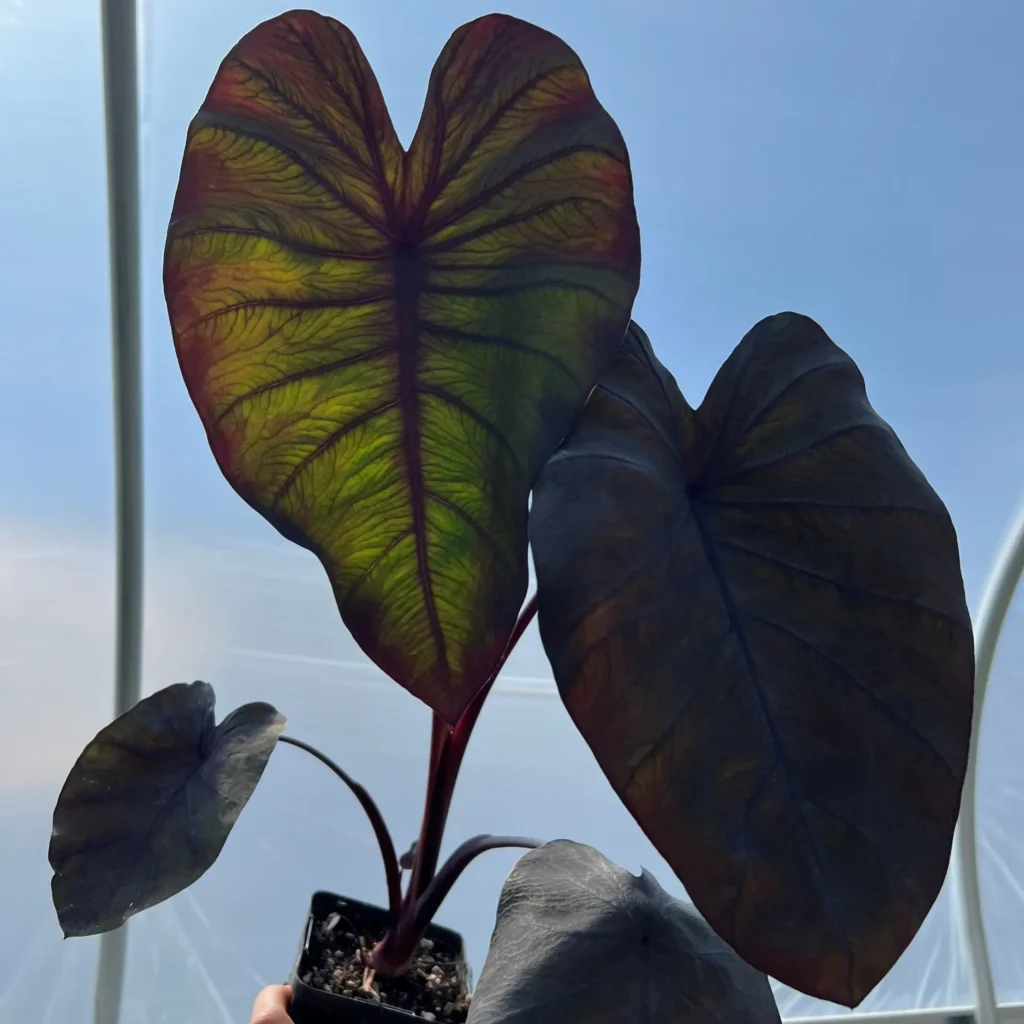
Black Magic elephant ear can lose some of its deep color when light levels are too low. Move the plant gradually toward a brighter position and avoid making a sudden change from shade to intense sun.
Older leaves can also change as they age. Focus on the color and condition of new leaves rather than trying to keep every older leaf perfect.
Curling, browning, or damaged leaves can have several causes. Check soil moisture, recent weather, light exposure, and pests before changing the entire care routine.
How do you overwinter an elephant ear black magic plant?
In cold climates, protect an elephant ear black magic plant from freezing weather. You can grow it in a container and move it to a frost-free place, or lift the underground storage structure for dry storage where local growing conditions require it.
The Royal Horticultural Society recommends keeping dormant tubers frost-free and dry for its cultivation guidance on ‘Black Magic’. In warm climates, the plant can remain outdoors and continue growing when temperatures stay suitable.
Do not treat winter care the same in every region. A plant growing outdoors in a warm tropical climate has different needs from one grown in a garden with regular winter freezes.
Can you propagate Black Magic elephant ear?
You can propagate Black Magic elephant ear by division. Divide the plant when it is dormant or when active growth is slowing, and make sure each division has healthy growth tissue and roots or an appropriate underground section.
Replant divisions in moist soil and keep them warm. New growth may take some time to appear, especially when temperatures are cool.
Is the elephant ear black magic plant toxic to pets?
Yes. Colocasia esculenta contains insoluble calcium oxalates that can cause oral irritation, swelling, drooling, vomiting, and difficulty swallowing when eaten. The ASPCA lists elephant ears as toxic to dogs, cats, and horses.
Keep the elephant ear black magic plant where pets and young children cannot chew the leaves or other plant parts. Wear gloves when handling the plant if its sap or plant material irritates your skin.
Common mistakes with elephant ear black magic plants
- Letting the soil dry out for long periods can cause wilting and poor leaf growth, so check moisture often during warm weather.
- Giving a shaded plant too little light can reduce the deep purple color, so provide brighter light when practical.
- Leaving the plant exposed to frost can damage or kill the top growth and underground parts, so move containers or protect dormant material before freezing weather.
- Using a small, unstable container can make a large plant easy to tip, so choose a wide, heavy pot.
- Placing the plant where pets can chew it creates an avoidable safety risk, so keep it out of reach.
Frequently asked questions about the elephant ear black magic plant
How big does an elephant ear black magic plant get?
Size varies with climate, soil, moisture, and growing conditions. Mature plants can become several feet tall and wide when grown outdoors in suitable conditions.
Does Black Magic elephant ear need full sun?
Black Magic elephant ear can grow in full sun to partial shade. Strong light generally supports darker foliage, while some afternoon shade can help in very hot climates.
How often should I water Black Magic elephant ear?
Water when needed to keep the soil consistently moist. Check more often during hot, dry weather and less often when growth slows.
Can Black Magic elephant ear grow indoors?
Yes, but it needs a bright location and steady moisture. Give it as much useful light as the indoor space allows and protect it from cold drafts.
Can Black Magic elephant ear survive winter?
It can survive outdoor winters in sufficiently warm climates, but freezing conditions can damage the plant. In colder areas, grow it in a container or protect the underground storage structure from frost.
Is Black Magic elephant ear safe for cats and dogs?
No. Colocasia esculenta is listed by the ASPCA as toxic to cats and dogs because it contains insoluble calcium oxalates.