
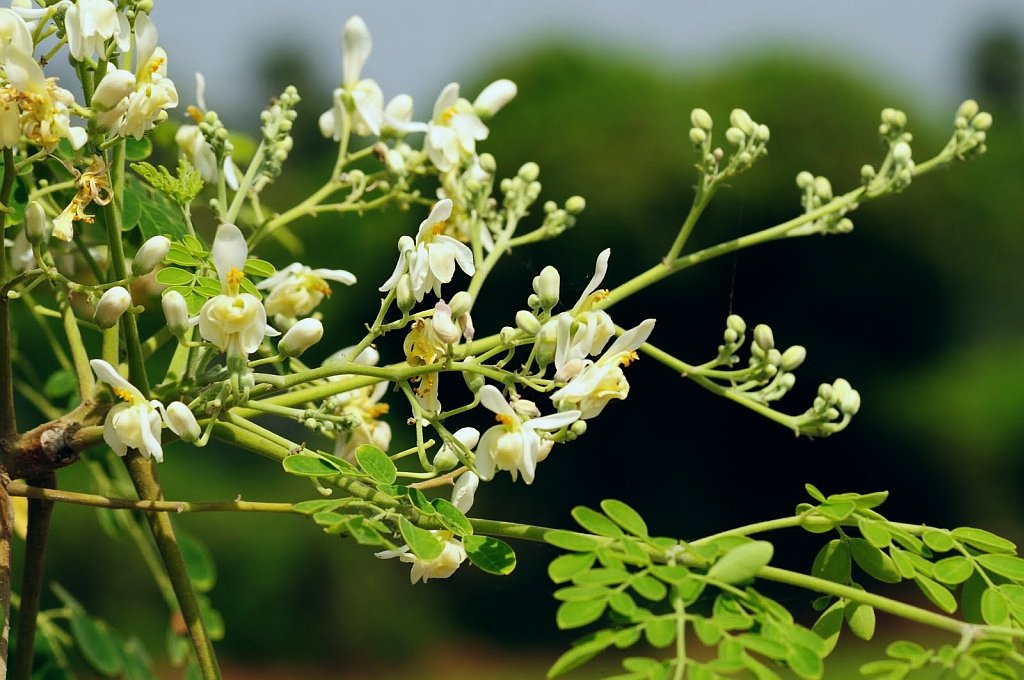
The drumstick plant, Moringa oleifera, is a fast-growing tree grown for its edible leaves, flowers and long seed pods. It needs plenty of sun, warm weather and soil that drains well.
TL;DR
- The drumstick plant needs full sun, warmth and well-drained soil.
- Water it well while young, then let the soil dry slightly between waterings.
- Prune the tree to keep new leaves and pods within easy reach.
- Grow it from fresh seeds or healthy stem cuttings.
- The plant is best suited to tropical and subtropical outdoor gardens.
What is a drumstick plant?
The drumstick plant is Moringa oleifera, a small to medium-sized tree in the Moringaceae family. It is also called the drumstick tree because its long, slender seed pods resemble drumsticks.
Moringa grows quickly in warm climates and can become a tall tree if left unpruned. Its leaves are divided into many small leaflets, and its pale flowers appear on branched clusters.
The tree is widely grown for food. Young leaves can be cooked like leafy greens, while immature pods are used in many South Asian dishes.
The USDA Forest Service describes Moringa oleifera as a multipurpose tree suited to tropical and subtropical regions. Its long pods, compound leaves and edible parts make it useful as both a garden plant and food crop.
How to grow a drumstick plant
A drumstick plant grows best outdoors in a warm, sunny position with free-draining soil. Choose a site that gets full sun for much of the day and does not stay wet after rain.
| Need | Requirement |
|---|---|
| Light | Full sun |
| Soil | Well-drained soil with good airflow |
| Water | Regular water while young, less once established |
| Climate | Warm tropical or subtropical conditions |
| Pruning | Regular pruning keeps the tree manageable |
Avoid heavy, waterlogged soil. Poor drainage can keep the roots wet for too long and lead to root problems.
If you are growing drumstick plant in a container, use a pot with drainage holes and a loose growing mix. Move the plant outdoors into strong light when temperatures are suitable.
Where should you plant drumstick plant?
Plant drumstick plant in the sunniest suitable part of the garden. A warm position near a wall or fence can help in places where nights become cooler.
Give the tree enough room to develop its branches. If your main goal is leaves and pods for home use, regular pruning is better than allowing the tree to grow unchecked.
Moringa prefers warm conditions and does not suit areas with regular frost. In cooler climates, grow it as a container plant only if you can protect it from cold weather.
How do you water drumstick plant?
Water drumstick plant regularly while it is becoming established, but allow excess water to drain away. Once the tree has a strong root system, it can handle periods of dry soil better than a newly planted tree.
Check the soil before watering. If the upper layer feels dry and the plant is growing actively, water deeply around the root area.
Do not keep the soil constantly wet. Frequent shallow watering can also encourage a weak root system, so give the plant a thorough drink rather than a small splash each day.
How do you prune drumstick plant?
Prune drumstick plant when it has enough growth to produce several strong branches. Cutting back the main shoots encourages branching and keeps leaves and pods easier to harvest.
For a home garden, focus on three things:
- Remove weak, damaged or crossing branches.
- Cut back very tall shoots to control the height.
- Harvest young shoots and leaves regularly to encourage fresh growth.
Moringa responds well to pruning and can be maintained at a practical height instead of being allowed to become a tall tree.
How do you grow drumstick plant from seed or cuttings?
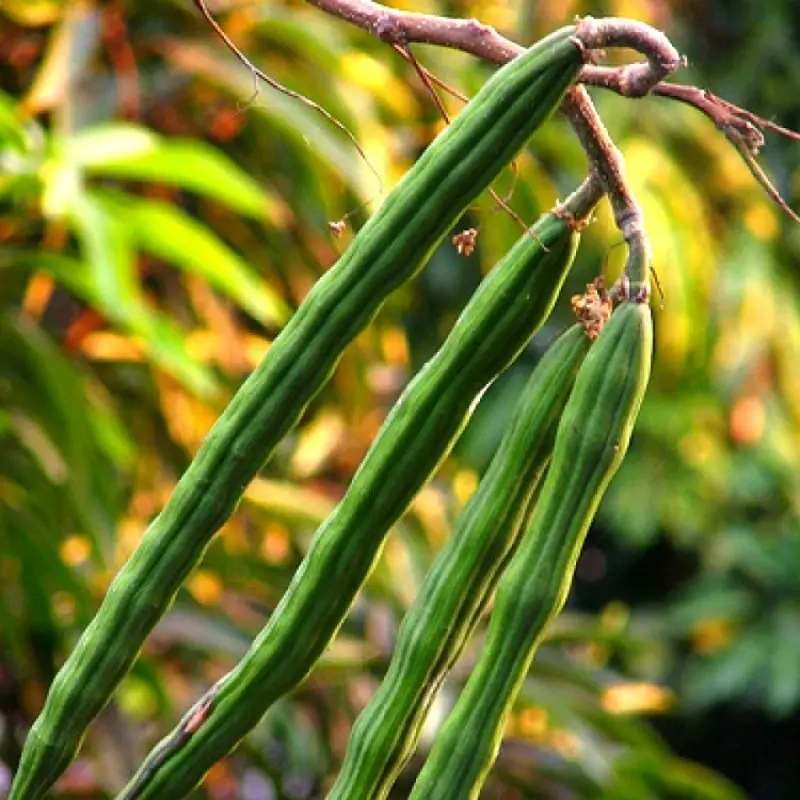
Drumstick plant can be grown from both seeds and stem cuttings. Seeds are a simple choice when you want to start a new tree, while cuttings can be useful when you want a plant with traits similar to a selected parent tree.
To grow from seed, sow fresh seeds in a well-drained growing medium and keep them lightly moist. Once seedlings have developed a strong root system, move them carefully to their growing position.
Stem cuttings are taken from mature, healthy branches. Plant the prepared cutting in a well-drained medium and keep it moist while roots form.
The Food and Agriculture Organization has documented seed, cutting and air-layering methods for Moringa oleifera. Its 2016 propagation report notes that vegetative propagation can help retain characteristics of a selected parent tree.
When can you harvest drumstick plant?
You can harvest drumstick plant for young leaves once the plant has produced enough new growth to recover after picking. Harvest young shoots and leaves regularly rather than removing a large part of the tree at once.
The immature green pods are harvested before they become tough and fibrous. Their best harvest stage depends on the intended use and local growing conditions.
Regular pruning and harvesting also help keep the tree at a manageable size. If you want pods for seed, leave some mature pods on the tree until they dry.
What are common drumstick plant problems?
Most problems come from poor growing conditions rather than complicated care. The main issues to watch are excess moisture, cold weather and uncontrolled growth.
A few common problems include:
- Yellowing leaves can occur when the root area stays too wet, so check drainage before adding more water.
- Weak, stretched growth often means the plant is not getting enough direct sunlight.
- A tall, bare tree can usually be brought back into a useful shape with careful pruning.
- Cold damage can occur when a warm-climate plant is exposed to unsuitable low temperatures.
Check the soil, light and recent weather before treating a problem. Changing the growing conditions is often more useful than adding a product.
Is drumstick plant suitable for every garden?
Drumstick plant is a good choice for warm, sunny gardens, but it is less suitable for places with frequent frost, poor drainage or limited sunlight.
It can also need more space than a small vegetable crop because it becomes a tree. Regular pruning solves much of the height problem, especially when the plant is grown mainly for leaves and young pods.
Local conditions also matter. The University of Florida IFAS currently lists Moringa oleifera as having high invasion risk in Florida, so gardeners in regions where the plant may spread should check local guidance before planting.
Frequently asked questions about drumstick plant
What is a drumstick plant?
A drumstick plant is Moringa oleifera, a warm-climate tree grown for its leaves, flowers and immature seed pods.
How much sunlight does drumstick plant need?
Drumstick plant grows best in full sun. Give it the brightest outdoor position available in a warm, frost-free garden.
How often should I water drumstick plant?
Water regularly while the plant is young, then reduce watering as it becomes established. Let excess water drain away between waterings.
Can drumstick plant grow in a pot?
Yes. A drumstick plant can grow in a large container if it has strong sunlight, good drainage and enough room for its roots.
How do I keep drumstick plant small?
Prune the main shoots and tall branches regularly. This encourages branching and keeps leaves and pods within easier reach.
Can I grow drumstick plant from a cutting?
Yes. Drumstick plant can be propagated from stem cuttings as well as seeds. Healthy mature cuttings can be used when suitable planting material is available.
Does drumstick plant grow in cold climates?
Drumstick plant prefers warm tropical and subtropical conditions and does not tolerate regular frost well. In cooler areas, container growing with cold protection is a better option.