
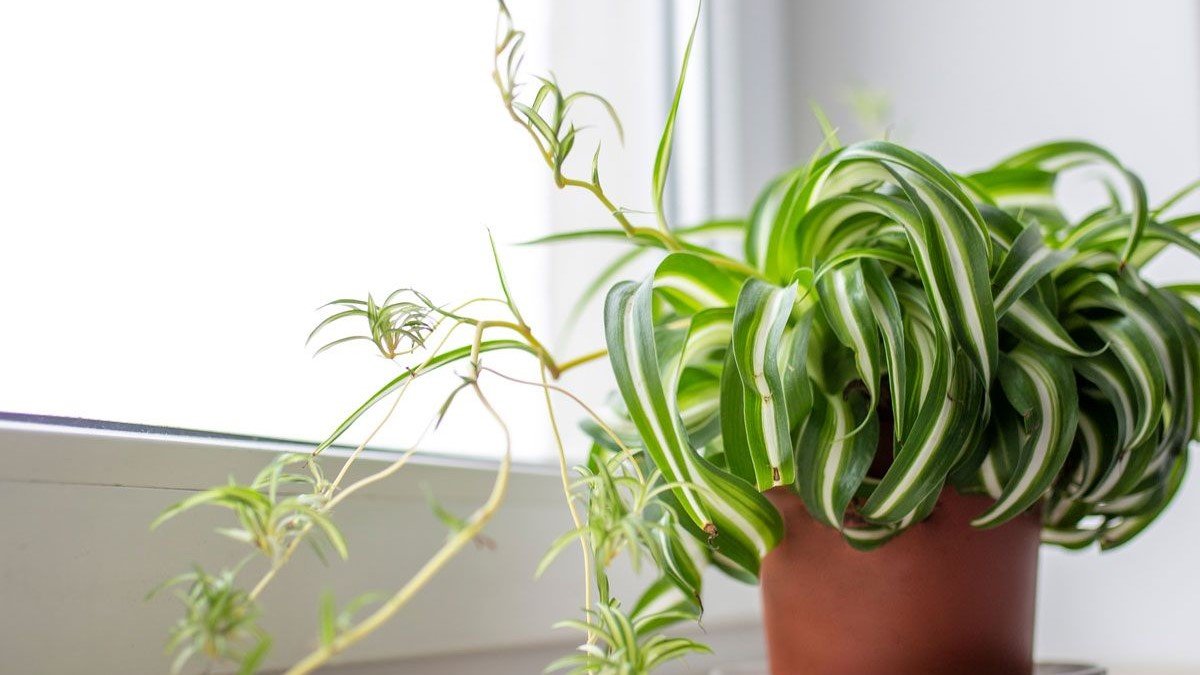
The curly spider plant, usually sold as Chlorophytum comosum ‘Bonnie’, is an easy houseplant with naturally twisted leaves. Give it bright indirect light, a pot with good drainage, and water when the soil begins to dry.
TL;DR
- The curly spider plant is a compact cultivar of the common spider plant with naturally curled leaves.
- Bright indirect light helps maintain strong growth and good leaf color.
- Water when the soil has dried slightly, then let excess water drain away.
- Brown tips often come from dry soil, low humidity, salt buildup, or water quality.
- Plantlets can be rooted while attached to the mother plant or potted once they have roots.
What is a curly spider plant?
A curly spider plant is a compact form of the common spider plant, Chlorophytum comosum. The cultivar ‘Bonnie’ has curled, arching leaves and may have green leaves or green foliage with a pale central stripe. The Royal Horticultural Society lists ‘Bonnie’ as a compact evergreen perennial with curly, variegated leaves.
The curls are a natural feature of the cultivar. They are not a sign that the plant is thirsty or stressed. Like other spider plants, curly spider plant produces long stems that can carry small plantlets, often called spider babies.
This plant works well on shelves, plant stands, and in hanging containers where its arching leaves and young plantlets have room to spread.
How much light does a curly spider plant need?
A curly spider plant grows best in bright, indirect light. Place it close to a bright window where strong midday or afternoon sun is filtered by a sheer curtain or kept away from the glass.
Spider plants can tolerate lower light, but growth may slow. Variegated foliage can also lose some of its stronger markings when light is poor. North Carolina State University Extension lists spider plant as tolerant of shade but intolerant of direct sunlight, while the RHS recommends partial shade for ‘Bonnie’.
A simple test is to watch the leaves. If the plant stretches toward a window and produces weak new growth, move it closer to filtered light. If the leaves develop scorched, pale, or crispy areas after strong sun exposure, move it farther from the window.
How often should you water a curly spider plant?
Water a curly spider plant when the upper part of the potting mix has dried slightly. Water thoroughly until excess moisture runs from the drainage holes, then empty any water left in the saucer.
Avoid keeping the roots constantly wet. Spider plants have thick, fleshy roots that store water, so they can handle a little drying between waterings. University of Wisconsin-Madison Extension recommends allowing the soil to dry slightly between thorough waterings.
Your watering interval will change with the season and room conditions. A plant in a warm, bright room may dry faster than one in a cool room with lower light.
Check the soil with your finger rather than watering on a fixed calendar. In winter, reduce watering if the plant receives less light and the soil stays wet for longer.
What soil and pot does a curly spider plant need?
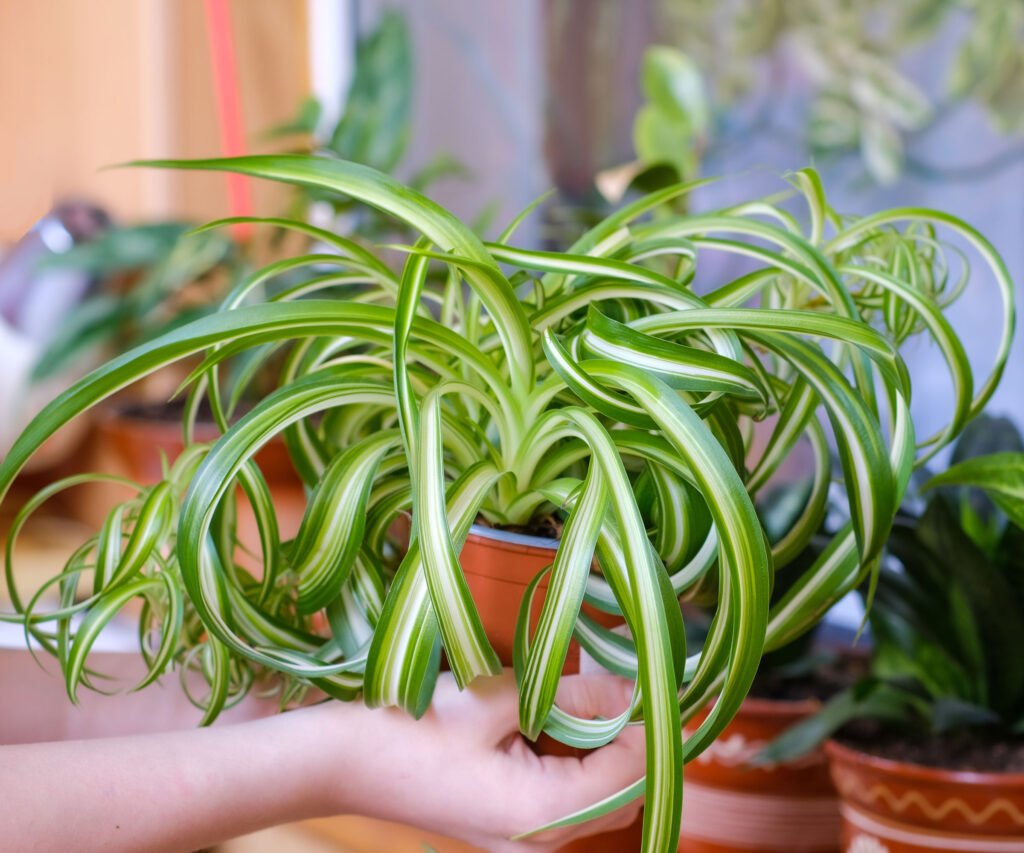
Use a loose, well-drained houseplant mix and a container with drainage holes. The soil should hold enough moisture for the roots without staying saturated after watering.
A standard indoor potting mix works well for spider plants. Clemson Extension also recommends a general-purpose potting soil with good drainage.
Choose a pot that fits the root ball rather than moving a small plant into a very large container. Excess soil around a small root system can stay wet for too long.
Curly spider plants can become crowded as their fleshy roots grow. Repot when the roots fill the container or begin pushing against the sides. The RHS recommends repotting spider plants every few years and notes that ‘Bonnie’ can be divided as it matures.
Why does a curly spider plant get brown leaf tips?
Brown tips are common on spider plants and can have several causes. Dry soil, low humidity, excess fertilizer salts, and chemicals in some tap water can all contribute to tip browning.
University of Wisconsin-Madison Extension lists low humidity, very dry soil, salt buildup, and chemicals such as fluoride or chlorine in tap water among possible causes.
First, check the soil before changing anything else. If it is very dry, improve the watering routine. If the soil stays wet for a long time, check the drainage and pot size.
If brown tips continue despite good watering, consider your water quality and fertilizer use. Avoid heavy feeding, and remove badly damaged tips with clean scissors if you want to improve the plant’s appearance.
How do you propagate a curly spider plant?
The easiest way to propagate a curly spider plant is from its plantlets. These small plants form along long stems from a mature mother plant.
To root a plantlet, place it on the surface of a small pot filled with moist, well-drained potting mix while it is still attached to the mother plant. Once it develops roots, cut the connecting stem and allow the new plant to grow on its own.
You can also remove a rooted plantlet and pot it directly. Spider plants can also be propagated by division, especially when an older plant has become crowded. University of Wisconsin-Madison Extension recommends rooting plantlets while they remain attached, then separating them after roots develop.
Is a curly spider plant safe around cats and dogs?
The ASPCA lists Chlorophytum comosum, the species that includes the ‘Bonnie’ cultivar, as non-toxic to cats and dogs.
Non-toxic does not mean a pet should eat large amounts of any houseplant. Keep plants where pets cannot knock over the pot or repeatedly chew the foliage.
Common mistakes with curly spider plants
- Keeping the soil constantly wet can lead to root problems, so let the soil dry slightly between waterings.
- Putting the plant in harsh midday sun can scorch the leaves, so use bright filtered light instead.
- Feeding too heavily can contribute to brown tips and reduce plantlet production.
- Moving a low-light plant into strong sun too quickly can stress the foliage, so increase light gradually.
- Watering by a fixed weekly schedule can cause problems because soil dries at different rates in different rooms and seasons.
Frequently asked questions about curly spider plants
What is a curly spider plant?
A curly spider plant is usually Chlorophytum comosum ‘Bonnie’, a compact spider plant cultivar with naturally curled leaves.
How much light does a curly spider plant need?
Bright indirect light is the best choice. It can tolerate lower light, but avoid strong direct midday sun.
How often should I water a curly spider plant?
Water when the upper soil has dried slightly, then water thoroughly and let excess water drain away. Adjust the timing to the room’s light, temperature, and season.
Why are my curly spider plant leaves turning brown?
Brown tips can result from dry soil, low humidity, fertilizer salt buildup, or chemicals in tap water. Check watering and drainage first.
Can I grow a curly spider plant from a baby?
Yes. Root a plantlet in moist potting mix while it is still attached to the mother plant, then separate it after roots form.
Is curly spider plant toxic to cats?
The ASPCA lists Chlorophytum comosum as non-toxic to cats and dogs.