
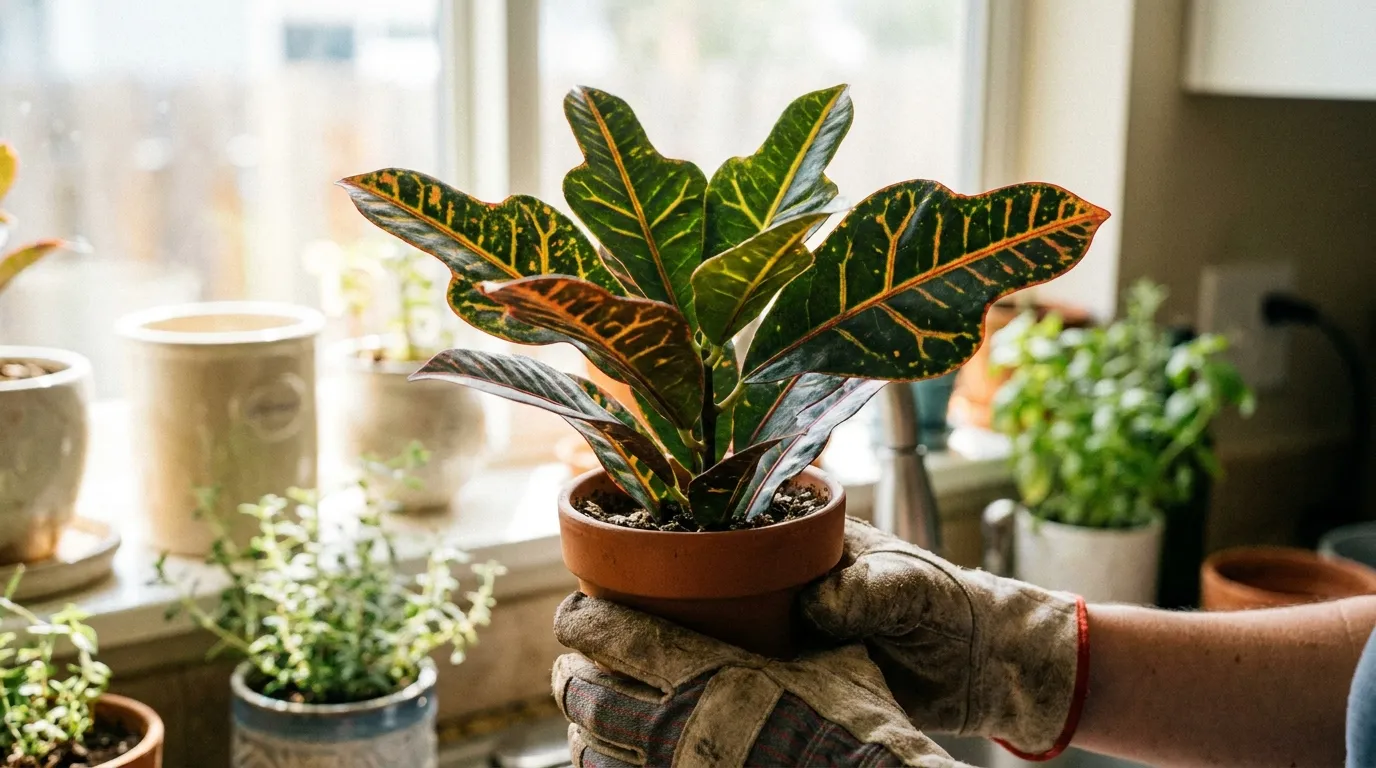
Croton plants are tropical foliage plants grown for their colorful leaves. Give them bright light, warm conditions, well-drained soil, and steady moisture without keeping the roots soggy.
TL;DR
- Croton plants need bright light to maintain strong leaf color.
- Water when the soil begins to dry, then let excess water drain away.
- Use a well-drained potting mix and a container with drainage holes.
- Protect crotons from cold temperatures, especially frost and freezes.
- Keep crotons away from pets and children because the plant and its sap can be irritating and poisonous.
What are croton plants?
Croton plants are tropical evergreen shrubs grown mainly for their colorful foliage. Their botanical name is Codiaeum variegatum, and their leaves can show combinations of green, yellow, orange, red, pink, purple, and white.
Crotons can grow outdoors in warm climates and can also be grown as houseplants. Their final size depends on the cultivar and growing conditions. Some outdoor plants can become large shrubs, while dwarf types work well in containers.
The leaves are the main reason gardeners grow crotons. Some have broad leaves, while others have narrow, twisted, lobed, or heavily marked foliage. Leaf color can also change as the plant matures.
For indoor growing, choose a cultivar that performs well in indoor light. UF/IFAS specifically notes the ‘Petra’ type as an option for houseplant conditions.
How to care for croton plants
Croton plant care is fairly simple when the growing conditions stay warm and the plant receives enough light. The main areas to watch are light, watering, soil, and temperature.
Light needs
Give croton plants bright light to help maintain strong leaf color. Many crotons grow well in full sun outdoors, although some cultivars tolerate or prefer partial shade.
Indoor crotons should be placed near a bright window. If the plant receives too little light, its foliage may lose some of its color and growth can become weaker.
A sudden move from indoor light to strong outdoor sun can also stress the leaves. If you move a croton outside, increase its exposure gradually.
Watering
Water croton plants when the soil begins to dry, then allow excess water to drain from the container. Crotons prefer consistent moisture, but constantly wet soil can cause problems with the roots.
Container-grown plants usually need more frequent watering than plants growing in the ground, particularly during hot weather. Check the soil before watering instead of following a fixed calendar.
UF/IFAS notes that new croton foliage may wilt when the plant is thirsty. That can be a useful signal, but it is better to check the soil before the plant reaches that stage.
Soil and containers
Use a well-drained potting mix for croton houseplants. The container should have drainage holes so extra water can escape.
For outdoor planting, choose a site where water does not remain around the roots after rain. Crotons prefer soil that holds some moisture while still draining freely.
If a container stays wet for several days after watering, check the drainage before adding more water.
Temperature and humidity
Croton plants prefer warm, humid conditions because they are tropical plants. Cold weather can damage them, and frost or freezing temperatures are especially harmful.
Outdoor crotons are best suited to warm climates. In cooler areas, grow them in containers that can be protected indoors when temperatures drop.
Indoor plants usually do well in warm rooms away from cold drafts. Dry indoor air can also make care more difficult, particularly during periods of heavy heating or air conditioning.
How do you keep croton leaves colorful?
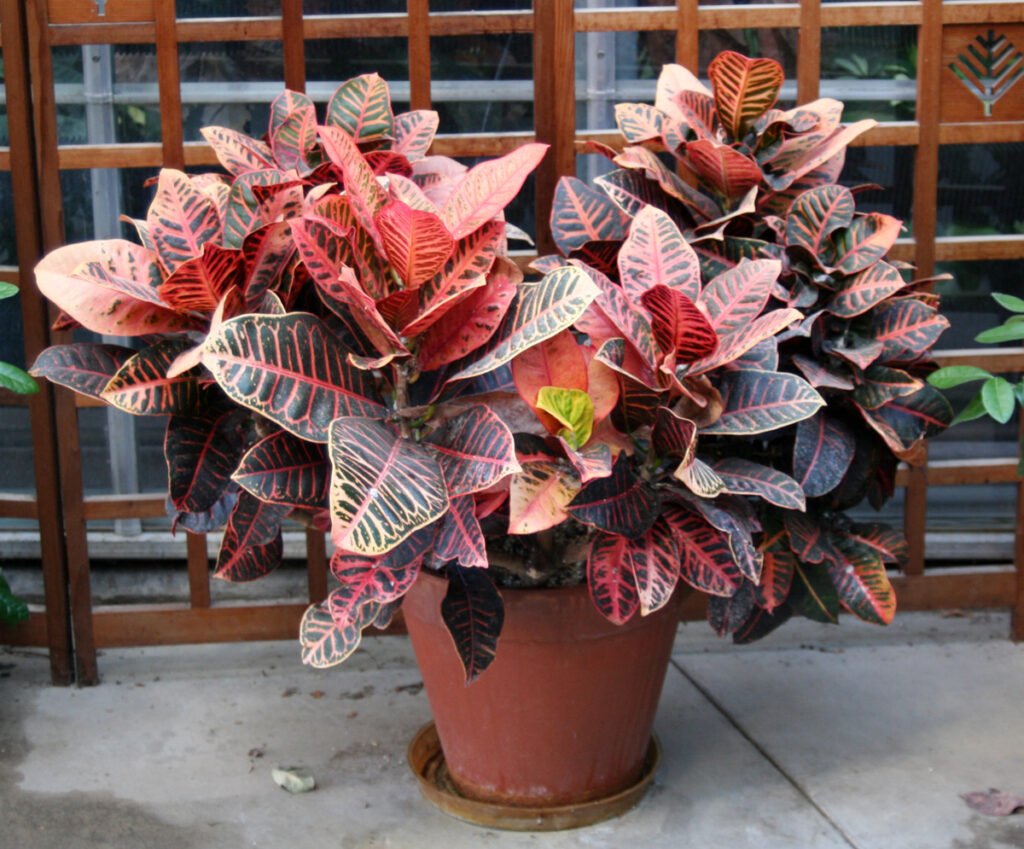
Bright light is the main factor for maintaining colorful croton foliage. Outdoor plants generally develop stronger coloration with good sunlight, while indoor crotons need a bright position near a suitable window.
Too little light can cause a croton to lose some of its color. Too much sudden exposure to intense sunlight can also damage foliage, especially when a plant has been grown indoors.
The safest approach is to match light levels to the cultivar and increase exposure gradually when moving the plant. Watch the leaves rather than assuming every croton needs the same amount of direct sun.
Can croton plants grow indoors?
Yes, croton plants can grow indoors when they receive enough light and stay warm. They are often grown as decorative houseplants because their foliage provides color without depending on flowers.
Place an indoor croton near a bright window and turn the pot occasionally so growth remains more even. Avoid placing it where cold air repeatedly reaches the leaves.
Dust can also collect on the large leaves. Gently washing the foliage in a suitable shaded outdoor location can help remove dust and may also help with occasional spider mite problems.
If an indoor croton starts dropping leaves after a move, give it stable conditions and avoid changing its light, temperature, and watering all at once. Crotons can react strongly to sudden changes in their environment.
How do you propagate croton plants?
Croton plants can be propagated from stem cuttings. UF/IFAS recommends taking a cutting about 3 to 4 inches long with three to five leaves, using rooting hormone, and placing it in a small pot with moist growing media.
Keep the cutting warm and moist without leaving the soil waterlogged. UF/IFAS reports that cuttings can root in less than a month when temperatures remain around 70 to 80°F.
New croton leaves often start green and develop more color as they mature. Wait for a good root system and noticeable new growth before moving the young plant into a larger container.
What problems affect croton plants?
Croton plants can have problems with mealybugs, scale insects, mites, thrips, and some fungal issues. Regularly checking the leaves and stems makes it easier to spot changes early.
Look for insects, sticky residue, distorted growth, unusual leaf texture, or fine webbing. For a houseplant, moving an affected croton away from other plants can reduce the chance of pests spreading.
Poor watering can also cause trouble. Both very dry soil and constantly wet soil can lead to leaf problems, so check the growing conditions before assuming an insect is responsible.
When are croton plants not a good fit?
Croton plants are a poor choice for cold outdoor climates unless you can move them indoors or otherwise protect them from freezing weather. They also need more light than many low-light houseplants.
They may not be a good choice for homes where pets or young children can easily chew the leaves. UF/IFAS advises keeping children and pets from nibbling crotons because the plant has irritating and poisonous qualities. The sap can also stain.
Wear gloves when handling a croton if its sap tends to irritate your skin, and wash your hands after pruning or taking cuttings.
Common mistakes with croton plants
- Keeping the soil constantly wet: Let excess water drain and check the soil before watering again.
- Giving an indoor croton too little light: Move it closer to a bright window if the leaves are losing color.
- Moving it suddenly into strong outdoor sun: Increase sun exposure gradually to reduce leaf stress.
- Ignoring cold weather: Protect container plants before temperatures become dangerous.
- Assuming every croton needs the same light: Cultivars differ, so watch the foliage and adjust the position when needed.
Frequently asked questions about croton plants
Are croton plants easy to care for?
Croton plants can be manageable houseplants when they receive bright light, warmth, and consistent watering. Sudden changes in light or temperature can cause problems.
How often should I water croton plants?
Water when the soil begins to dry, then let excess water drain away. The exact timing depends on pot size, temperature, light, humidity, and whether the plant is indoors or outdoors.
Do croton plants need full sun?
Many outdoor crotons grow well in full sun, but some cultivars tolerate or prefer partial shade. Indoor plants need a bright location to maintain good leaf color.
Can croton plants survive winter?
Crotons can survive winter outdoors only in warm climates where freezing temperatures are not a regular problem. In colder areas, container plants should be protected from cold and frost.
Are croton plants poisonous?
Yes. UF/IFAS advises keeping children and pets from chewing croton leaves because the plant has irritating and poisonous qualities. Its sap can also irritate and stain.
Why are my croton leaves losing color?
Insufficient light is one common reason. Move the plant toward a brighter location gradually and check whether other conditions, such as watering and temperature, are stable.