
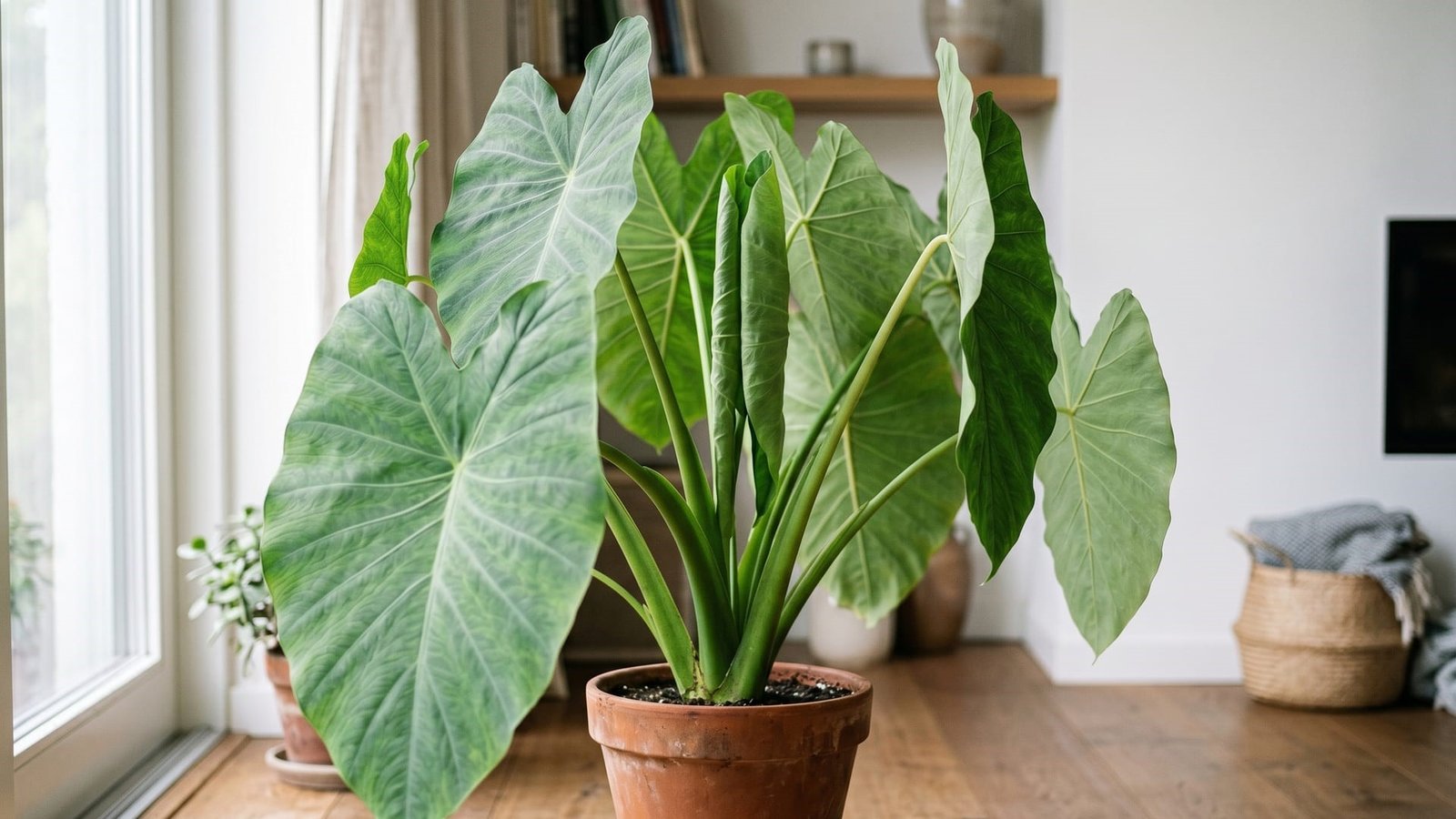
An elephant ear plant indoors can grow well when it gets bright indirect light, evenly moist soil, good drainage, and warm conditions. Alocasia is one of the most common elephant ears grown as a houseplant.
TL;DR
- An elephant ear plant indoors grows best in bright, indirect light.
- Water when the upper part of the soil begins to dry, but do not leave the roots sitting in water.
- Use a loose, well-draining potting mix and a container with drainage holes.
- Keep the plant warm and away from cold drafts and sudden temperature changes.
- Alocasia is toxic to cats and dogs if chewed, so keep it out of their reach.
What is an elephant ear plant indoors?
An elephant ear plant indoors is usually an Alocasia, a tropical foliage plant grown for its large, often arrow-shaped leaves. The name elephant ear also applies to other plants, including Colocasia, so check the plant label before choosing a care routine.
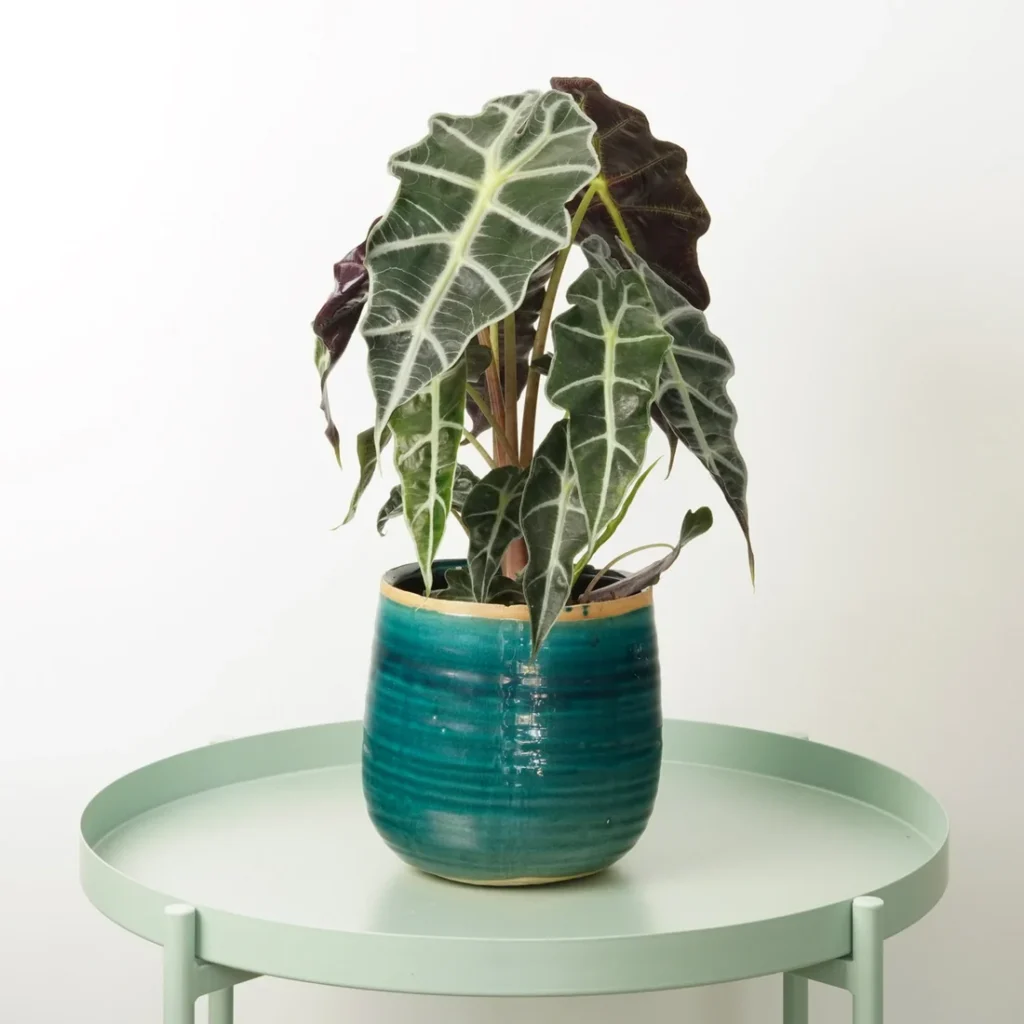
Alocasia works well as a houseplant because many types have compact growth and striking foliage. Missouri Botanical Garden lists Alocasia selections such as Alocasia × amazonica among plants commonly sold in the houseplant section.
The plant needs a warm indoor spot with enough light to support leaf growth. A bright room near an east-facing window is a good starting point. Keep the leaves out of harsh direct afternoon sun if the window gets strong heat.
How do you care for an elephant ear plant indoors?
An elephant ear plant indoors needs bright indirect light, regular watering, an airy potting mix, and steady warmth. Let the soil begin to dry slightly between waterings, then water thoroughly and allow excess water to drain away.
| Need | Indoor requirement |
|---|---|
| Light | Bright, indirect light is a good choice for Alocasia. |
| Water | Keep the soil lightly and evenly moist, but avoid constant saturation. |
| Soil | Use a loose mix that drains freely and does not stay soggy. |
| Pot | Choose a container with drainage holes. |
| Humidity | Moderate to high humidity usually suits tropical Alocasia. |
| Temperature | Keep the plant warm and protect it from cold drafts. |
The University of Minnesota Extension lists elephant ear, including Alocasia, among plants suited to medium indoor light. That means a bright room is useful, but the plant does not need to sit in strong direct sun all day.
Watering is easier when you check the soil instead of following a fixed calendar. If the surface has started to dry, feel deeper into the pot. Water thoroughly when the soil has begun to dry but still has some moisture below the surface.
Where should you place an elephant ear plant indoors?
Place an elephant ear plant indoors near a bright window where it receives plenty of filtered or indirect light. An east-facing window is often a practical choice because it provides bright morning light without the stronger afternoon exposure of many west-facing windows.
If the plant sits too far from a window, new leaves may become smaller and growth can slow. If the leaves receive intense direct sun through glass, they can develop pale or scorched areas.
Give the plant enough room for its leaves to spread. Large elephant ear leaves can crowd a narrow shelf or block a walkway as the plant matures.
Keep the pot away from heating vents, air conditioners, and cold drafts. Sudden changes in temperature can stress a tropical plant.
How often should you water an elephant ear plant indoors?
Water an elephant ear plant indoors when the upper layer of soil has started to dry, rather than watering on a fixed weekly schedule. Light, pot size, room temperature, humidity, and the type of potting mix all affect how quickly the soil dries.
Push a finger into the soil before watering. If the surface is dry but the lower soil still feels very wet, wait a little longer. If the soil has begun to dry and the plant is still in active growth, water thoroughly.
Always use a pot with drainage holes. Water should be able to leave the container instead of collecting around the roots.
Overwatering is a common problem with indoor elephant ears. Yellowing leaves, persistently wet soil, and a sour-smelling potting mix are reasons to check the roots and drainage.
What soil and pot does an indoor elephant ear need?
An indoor elephant ear needs a loose potting mix that holds some moisture while allowing excess water to escape. A standard houseplant mix amended with materials that improve drainage can work well.
Choose a pot only slightly larger than the root system when repotting. A very large container holds more wet soil around a relatively small root system, which can make watering harder to manage.
Repot when the plant has become crowded, roots are circling heavily inside the container, or water is passing through the pot unusually quickly. Move the plant into the next suitable pot size rather than making a large jump in container size.
Why are the leaves of my indoor elephant ear turning yellow?
Yellow leaves on an indoor elephant ear often point to watering or growing-condition problems, but one yellowing older leaf does not always mean something is wrong. Start by checking the soil moisture, drainage, light, and recent changes in the plant’s location.
If several leaves turn yellow while the soil stays wet for long periods, improve drainage and adjust watering. If the plant is growing in very low light, move it gradually toward a brighter location with indirect light.
Pests can also affect stressed indoor plants. The University of Minnesota Extension recommends checking houseplants regularly and isolating a plant when pests are found.
Is an elephant ear plant safe around pets?
No. Alocasia is toxic to cats and dogs if they chew or ingest the plant. The ASPCA lists Alocasia spp. as containing insoluble calcium oxalates, which can cause mouth irritation, swelling, drooling, vomiting, and difficulty swallowing.
Keep an indoor elephant ear where pets cannot reach the leaves or stems. If you suspect that a pet has eaten part of the plant, contact a veterinarian or an appropriate animal poison service.
Common mistakes with an elephant ear plant indoors
- Keeping the pot constantly wet can leave the roots with too little air, so check soil moisture before watering.
- Placing the plant in a dark corner can reduce growth, so move it closer to a bright window with indirect light.
- Using a container without drainage holes can trap excess water, so choose a pot that lets water escape.
- Moving the plant suddenly from a dim room into strong direct sun can stress the leaves, so increase light gradually.
- Ignoring pests can allow a small problem to spread, so inspect leaves and stems regularly.
Frequently asked questions about elephant ear plant indoors
Can an elephant ear plant grow indoors?
Yes. Alocasia is commonly grown indoors, and several selections are sold as houseplants. Give it bright indirect light, suitable moisture, good drainage, and warm conditions.
How much light does an indoor elephant ear need?
An indoor elephant ear does best in bright, indirect light. An east-facing window or a bright spot near a west-facing window can work well when strong direct afternoon sun is filtered.
How often should I water an elephant ear plant indoors?
Water when the upper soil has started to dry, then water thoroughly and let excess water drain. Check the soil each time because indoor drying rates change with light, humidity, temperature, and pot size.
Why are my elephant ear leaves turning yellow indoors?
Check for soil that stays wet for too long, poor drainage, low light, or recent changes in growing conditions. One older yellow leaf can be normal, but repeated yellowing calls for a closer look at the plant’s care.
Can elephant ear plants live indoors all year?
Yes. An elephant ear can remain indoors year-round when its light, watering, temperature, and humidity needs are met. Growth may slow when indoor conditions change with the seasons.
Are elephant ear plants poisonous to cats and dogs?
Yes. Alocasia and several other plants commonly called elephant ears are toxic to cats and dogs when chewed or eaten. Keep the plant away from pets.