
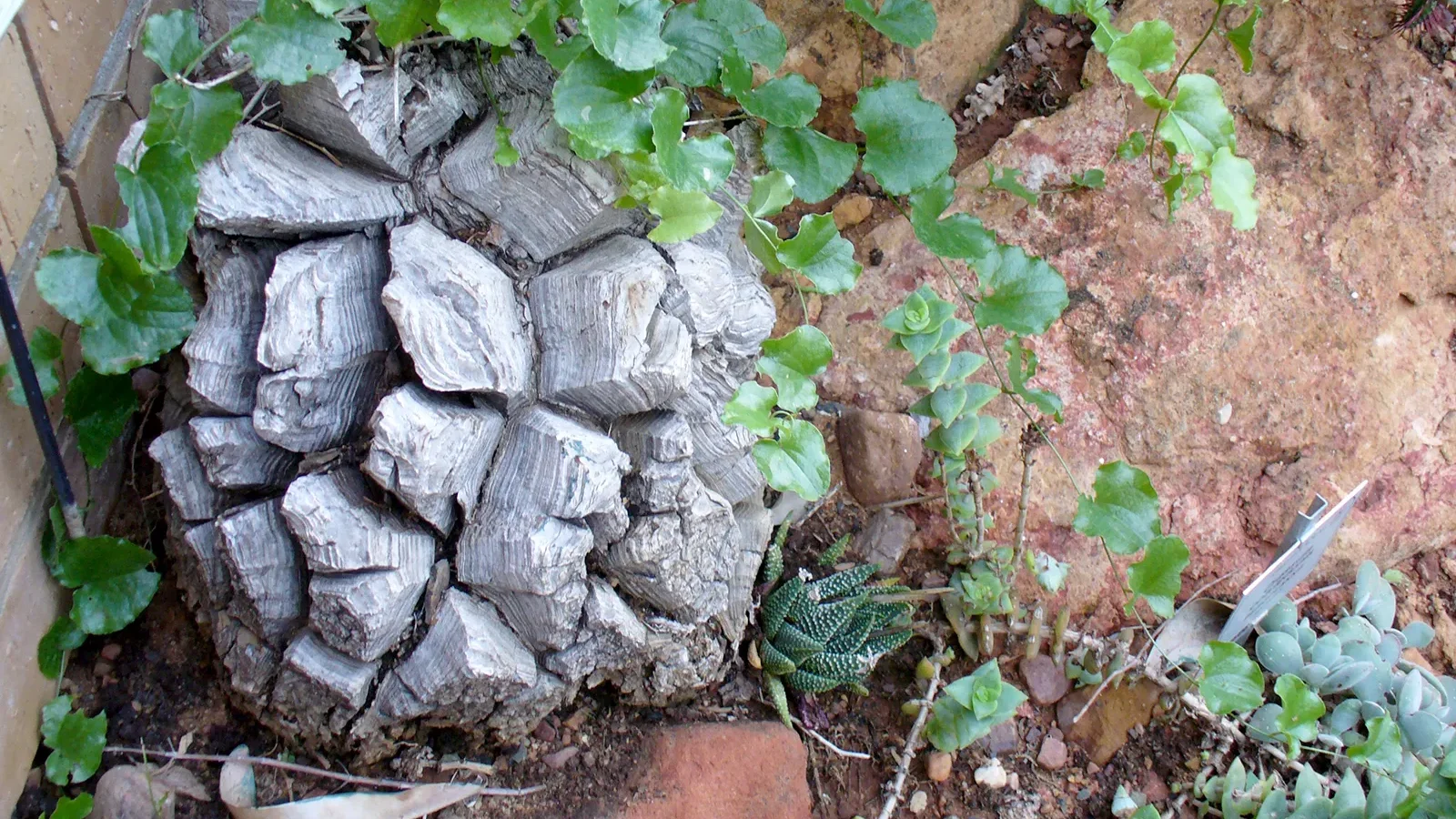
The elephant foot plant (Dioscorea elephantipes) is a slow-growing South African caudex plant known for its large, woody tuber covered in corky plates that resemble an elephant’s skin or a tortoise shell. It grows best in bright light, very well-drained soil, careful watering, and warm conditions.
Also called elephant’s foot yam and tortoise plant, this unusual plant belongs to the yam family, Dioscoreaceae. Kew lists Dioscorea elephantipes as the accepted botanical name, while Testudinaria elephantipes is an older synonym.
TL;DR
- Grow an elephant foot plant in bright light or full sun with good airflow.
- Use a gritty, very well-drained potting mix and a container with drainage.
- Water during active growth, then let the mix dry completely before watering again.
- Keep the plant warm and protect it from cold conditions.
- Reduce or stop watering when the plant is dormant and leafless.
- Propagation is usually done from seed.
What is an elephant foot plant?
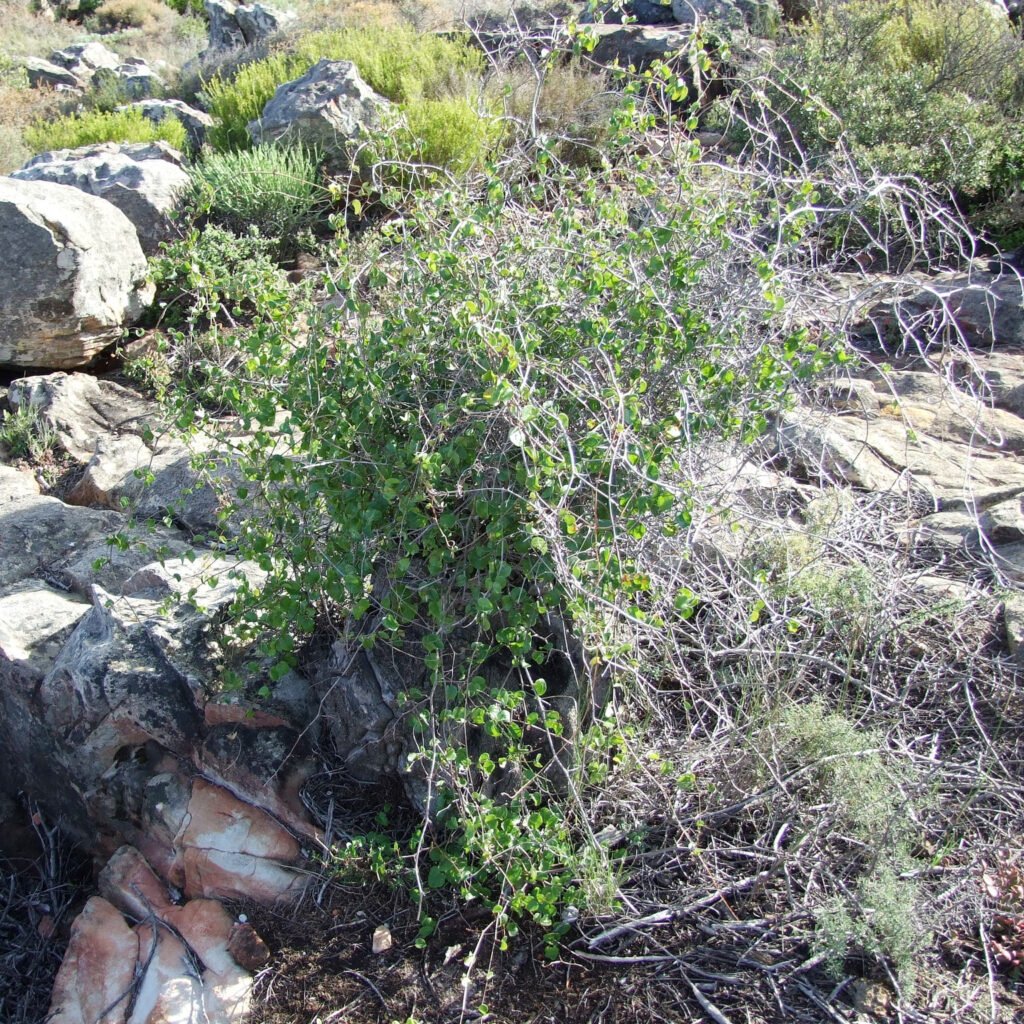
An elephant foot plant is a deciduous climbing perennial with a large, partly exposed tuber called a caudex. Kew describes Dioscorea elephantipes as a slow-growing species native to South Africa, where it occurs on rocky slopes in dry soils.
The swollen tuber is the feature that makes this plant so recognizable. It can become very large over time, with Kew recording tubers reaching up to 75 cm in diameter. The plant itself can grow to about 1.5 metres high.
Young shoots emerge from growing points at the top of the tuber. The stems eventually twine toward their tips, while the small leaves can fold along the mid-vein when the plant has limited water.
The plant is deciduous, so a period without leaves is normal. A bare caudex does not automatically mean the plant is dying.
How much light does an elephant foot plant need?
An elephant foot plant needs strong light, with full sun or very bright light being suitable when the plant has been acclimated to it. The RHS recommends full sun, while its cultivation guidance recommends growing the plant under glass in full light.
For indoor growing, place it close to a bright window where it receives plenty of natural light. If the plant has been kept in lower light, increase exposure gradually rather than moving it suddenly into intense sun.
Good airflow also helps when growing this plant under glass. Its natural habitat is associated with dry conditions, so a stuffy, constantly damp growing environment is a poor match.
What soil is best for an elephant foot plant?
Use a gritty, very well-drained growing mix that allows excess water to leave the container quickly. This is one of the most important parts of elephant foot plant care because the large tuber can suffer when it stays wet for too long.
Kew grows its plants in terracotta pots with a mix containing clay granules and grit. The RHS also recommends gritty, very well-draining compost.
A container with a drainage hole is essential. Avoid heavy soil that stays wet for long periods.
The exposed portion of the tuber should also have good air circulation. Avoid burying the entire caudex simply to make the plant look more like a conventional potted plant.
How often should you water an elephant foot plant?
Water an elephant foot plant during active growth, then allow the potting mix to dry completely before watering again. Kew specifically recommends watering during the growing season and allowing the compost to dry completely between waterings.
The RHS gives similar advice, recommending moderate watering while the plant is growing and keeping it completely dry in winter.
This means you should not follow a fixed weekly watering schedule. Check the growing mix first.
When the plant is actively producing leaves and stems, water thoroughly enough to moisten the mix, then allow excess water to drain away. When the plant becomes dormant and loses its leaves, greatly reduce watering or keep it dry according to its growing conditions.
Overwatering is a bigger concern than allowing the dry-loving caudex to spend some time in dry soil.
What temperature does Dioscorea elephantipes need?
Dioscorea elephantipes needs warm, protected conditions and is best grown under glass or indoors where cold temperatures can be avoided. Kew keeps its plants in a glasshouse with a minimum temperature of 12 to 15°C.
The RHS gives this plant an H1C rating and recommends cultivation under glass. In practice, that makes it a poor choice for a cold outdoor garden.
If you grow it indoors, keep it away from cold drafts and poorly heated rooms during the cooler part of the year. Warmth, bright light, and fast drainage work together to keep the plant in suitable growing conditions.
Should you fertilize an elephant foot plant?
Feed an elephant foot plant during active growth rather than while it is dormant. Kew feeds its plants once a month, while the RHS recommends a balanced liquid fertilizer every two to three weeks during growth.
There is no need to keep feeding a leafless plant. When growth has stopped, focus on keeping the caudex in appropriate dry conditions rather than encouraging new growth with fertilizer.
If you are following a commercial fertilizer label, use its dilution and application instructions rather than increasing the dose because the plant is slow growing.
How do you propagate an elephant foot plant?
The main propagation method for Dioscorea elephantipes is seed. Kew lists seed propagation for this species, while the RHS recommends sowing seed at 19 to 24°C in spring.
This plant also has separate male and female plants. Kew describes the species as dioecious, meaning male and female flowers occur on separate plants.
Propagation therefore requires patience. Elephant foot plants are slow growing, so raising one from seed is a longer project than propagating many common houseplants.
The RHS also lists softwood cuttings from young shoots as a possible propagation method.
Does an elephant foot plant lose its leaves?
Yes. Leaf loss can be part of the normal growth cycle. The plant is deciduous, and its shoots and leaves do not remain active throughout the year.
Kew notes that shoots arise from growing points on the tuber and can persist for 10 to 14 months. When the plant enters a dormant period, the leaves may disappear and the exposed caudex can remain bare.
This is one of the easiest points to misunderstand when growing an elephant foot plant. A leafless plant should not automatically be treated as a dying plant. Check the caudex for signs of serious damage and adjust watering to the plant’s dormant state.
Is the elephant foot plant toxic?
The RHS lists Dioscorea elephantipes as toxic if eaten and a skin irritant, and advises wearing protective equipment when handling it. Kew also notes that the tubers require significant processing to remove toxic compounds before they can be safely eaten by humans.
For home growing, the practical approach is simple: do not eat the plant, and use care when handling it. Keep it away from children and pets that may chew plants.
Common elephant foot plant problems
The most common growing mistake is keeping the potting mix wet for too long. Poor drainage combined with frequent watering creates conditions that are unsuitable for a plant adapted to dry environments.
Other problems can include pests such as mealybugs, red spider mites, thrips, aphids, and froghoppers. Kew notes mealybugs, red spider mites, and thrips among pests encountered in its glasshouse cultivation, while the RHS lists aphids and froghoppers.
If growth looks weak, check the basics first: light, drainage, watering, and temperature. These conditions usually matter more than adding extra fertilizer.
Frequently asked questions
Is an elephant foot plant easy to grow?
It can be grown successfully in a container when you provide strong light, excellent drainage, careful watering, and warm conditions. Its slow growth and unusual seasonal cycle require patience.
How big does an elephant foot plant get?
Kew records Dioscorea elephantipes growing up to about 1.5 metres high, while its exposed tuber can reach up to 75 cm in diameter.
Can an elephant foot plant grow indoors?
Yes. An indoor location with very bright light and good airflow can suit the plant. Avoid cold rooms and use a fast-draining potting mix.
Why is my elephant foot plant losing its leaves?
Leaf loss can be part of its normal deciduous growth cycle. If the plant is entering dormancy, the leaves may disappear while the caudex remains alive.
How often should I water elephant foot plant?
Water during active growth and allow the growing mix to dry completely before watering again. When the plant is dormant, watering should be greatly reduced or stopped.
Can you grow elephant foot plant from seed?
Yes. Seed is the main propagation method listed by Kew. The RHS recommends sowing at 19 to 24°C in spring.
Is Dioscorea elephantipes the same as Testudinaria elephantipes?
Yes. Testudinaria elephantipes is a synonym of the accepted name Dioscorea elephantipes, according to Kew’s Plants of the World Online.