
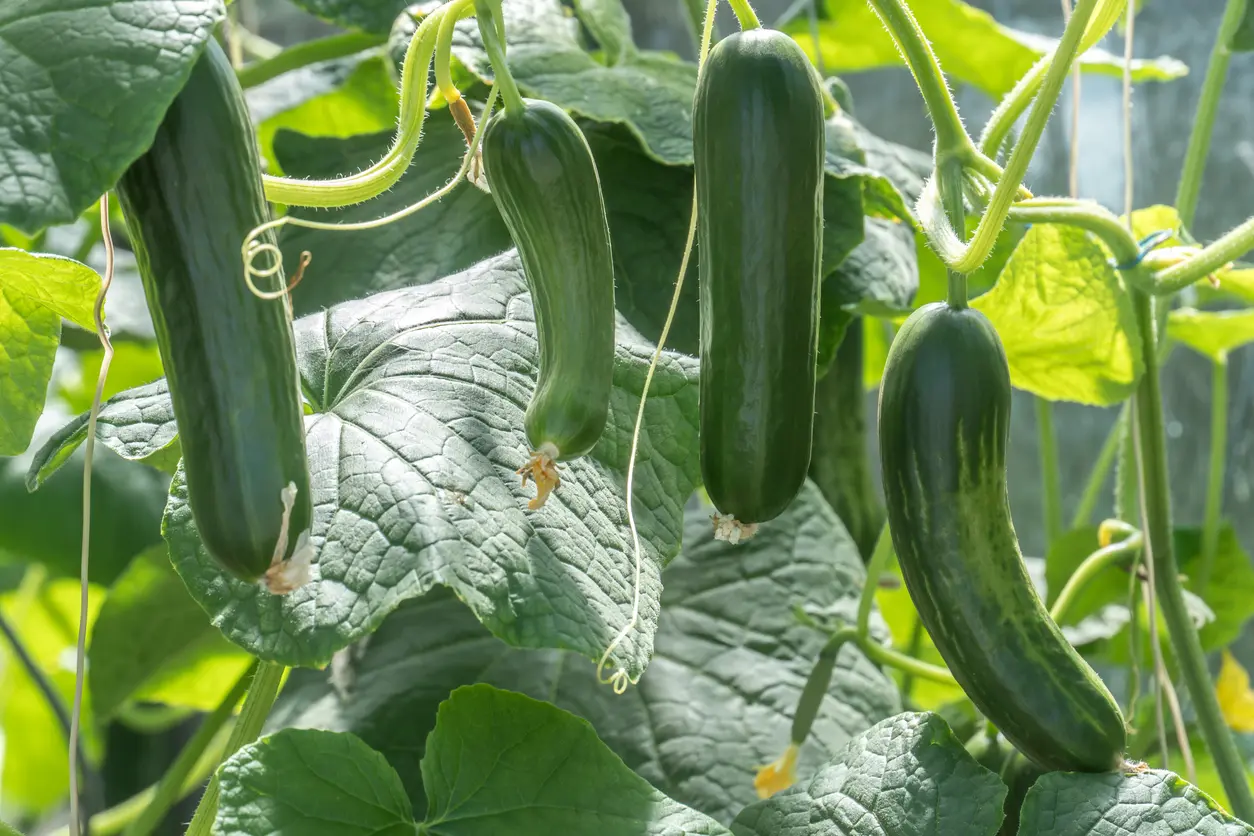
Cucumber plant stages show how a cucumber develops from a germinating seed into a flowering vine that produces fruit. Knowing each stage helps you adjust watering, support, pollination, and harvest timing as the plant grows.
TL;DR
- Cucumber plants pass through germination, seedling growth, vine growth, flowering, fruit development, and harvest.
- Cucumber seeds can germinate in about 5-10 days when conditions are warm enough.
- The first flowers are usually male, while female flowers have a small swelling at their base.
- Bees and other insects pollinate most cucumber varieties that need pollination for fruit set.
- Cucumbers develop quickly after flowering, so check the vines often once fruit begins to form.
What are the main cucumber plant stages?
Cucumber plant stages can be grouped into six parts: germination, seedling growth, vine growth, flowering, fruit development, and harvest. The exact timing varies with variety, temperature, soil moisture, and whether the plant grows outdoors or under protection.
A cucumber seed first absorbs water and begins germinating. The seedling then produces its first leaves and develops a stronger root system. As the plant matures, the stem becomes a spreading or climbing vine.
Flowering comes next. Most cucumber plants produce separate male and female flowers on the same plant. After pollination, the ovary behind a female flower grows into a cucumber. The final stage is harvest, which begins while the fruit is still young and tender.
Stage 1: Cucumber seed germination
Cucumber germination begins when a seed absorbs enough moisture and has suitable warmth. A small root emerges first, followed by the young shoot that pushes through the growing medium.
Warm soil helps cucumber seeds germinate well. Utah State University Extension reports that cucumber seeds germinate in about 5-10 days at 65-85°F. Cold soil can delay or prevent good emergence.
Keep the seed bed evenly moist during this stage. Avoid leaving the soil soggy, because young seeds and roots can be damaged in wet conditions.
Stage 2: Cucumber seedling growth
The seedling stage begins after the cucumber emerges from the soil. The young plant first relies on its seed leaves, then develops its first true leaves as the root and shoot system grows.
At this point, give cucumber seedlings strong light and steady moisture. If seedlings are started indoors, move them outside only after frost danger has passed and outdoor conditions are warm enough.
A young cucumber plant is sensitive to cold. Minnesota Extension notes that cucumber seeds do not germinate well in cold soil, and young plants should not be exposed to freezing temperatures.
Stage 3: Vine growth and leaf development
The cucumber plant enters its main vegetative growth stage when it begins producing more leaves, longer stems, and side shoots. Vine varieties can spread across the ground or climb a trellis.
Give cucumber plants enough room and steady soil moisture during this stage. A trellis can help keep climbing varieties off the ground and make the developing fruit easier to see.
As the vine grows, avoid disturbing its roots or repeatedly moving the stems. Cucumber plants can develop roots from parts of the vine that touch the soil, so rough handling can damage them.
Stage 4: Flowering
Flowering begins when the cucumber vine becomes mature enough to produce flowers. Most standard cucumber plants produce both male and female flowers, with male flowers usually appearing first.
Female cucumber flowers are easy to recognize because they have a small swollen ovary behind the flower. That swelling looks like a tiny cucumber and develops into fruit after successful pollination.
The first flowers may therefore appear without producing cucumbers. This is normal when those early flowers are male. Minnesota Extension notes that female flowers open later and develop fruit after pollination.
During flowering, avoid using insecticides on open flowers unless the product label specifically permits it and the treatment is needed. Bees and other insects pollinate many cucumber varieties, so protecting pollinators helps fruit set.
Stage 5: Pollination and fruit development
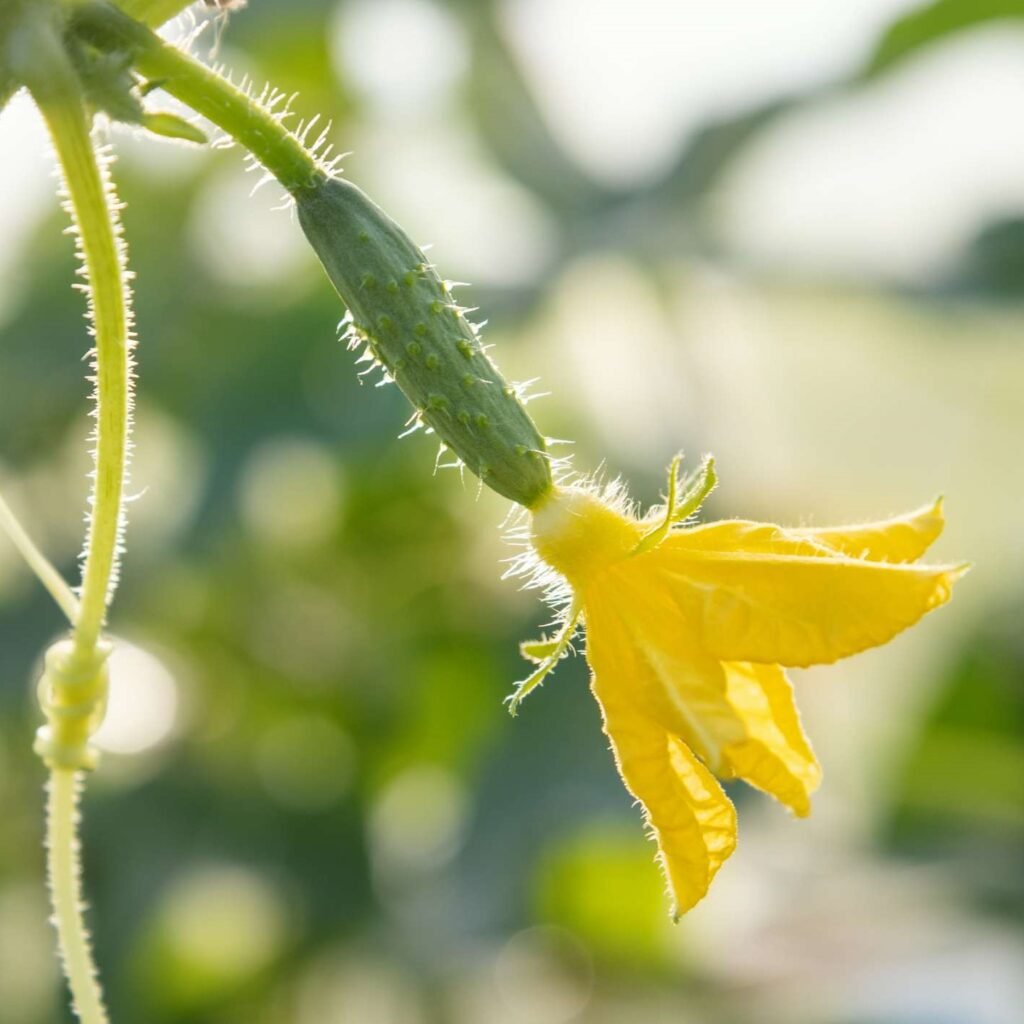
Pollination is the step that allows a pollinated female cucumber flower to develop into fruit in varieties that require pollination. Bees transfer pollen from male flowers to female flowers, after which the small ovary begins to enlarge.
Penn State Extension explains that most open-field cucumber production relies on insect pollination, while some cucumber varieties can produce fruit without pollination.
Watch the tiny cucumber behind each female flower. A healthy developing fruit should continue to enlarge rather than stop growing or shrivel.
Poor pollination can lead to misshapen or poorly developed fruit. Cold, rainy, or cloudy weather can also reduce pollination activity, according to Minnesota Extension.
Stage 6: Cucumber harvest
Harvest is the final stage of the cucumber growth cycle, but cucumber plants can keep producing new flowers and fruit after the first harvest.
Pick cucumbers while they are young and tender rather than leaving them on the vine until they become oversized. Regular harvesting encourages continued production, and very large fruit can reduce plant yield.
The best harvest size depends on the cucumber variety and how you plan to use the fruit. For example, slicing cucumbers are often picked before they become large, yellow, or heavily seeded.
Once fruit starts forming, check the vines often. Cucumbers can grow quickly in warm weather, so waiting several days between checks can result in fruit that has passed the preferred eating stage.
How long do cucumber plant stages take?
Cucumber growth does not follow one fixed calendar because temperature, variety, light, moisture, and growing method all affect development. Seeds may germinate in about 5-10 days under suitable warm conditions, while the transition from flowering to harvest can also happen quickly.
For home gardeners, watching the plant is more useful than following a strict day-by-day schedule. Look for the next physical sign: emergence, true leaves, longer vines, flowers, small fruit, and harvest-size cucumbers.
Common problems during cucumber growth stages
- Seeds that stay in cold, wet soil may germinate poorly or rot before emergence.
- Seedlings that receive too little light can become weak and stretched.
- Flowering plants may produce few cucumbers when pollination is poor.
- Inconsistent watering can contribute to misshapen or bitter fruit.
- Overripe cucumbers can become large, yellow, and heavily seeded, so harvest them regularly.
Frequently asked questions about cucumber plant stages
What are the stages of a cucumber plant?
The main cucumber plant stages are germination, seedling growth, vine growth, flowering, fruit development, and harvest. The timing varies with variety and growing conditions.
How long does it take for cucumber seeds to germinate?
Cucumber seeds can germinate in about 5-10 days when they have suitable warmth and moisture. Cold soil can slow germination.
When does a cucumber plant start flowering?
A cucumber plant starts flowering after it has developed enough vegetative growth to reach maturity. Male flowers usually appear before female flowers.
How do I know when a cucumber flower will produce fruit?
A female cucumber flower has a small swollen ovary behind the flower that looks like a tiny cucumber. After successful pollination, that ovary begins to enlarge.
How long after flowering can I harvest cucumbers?
Cucumbers can be ready for harvest only a few days after flowering, depending on the variety and growing conditions. Utah State University Extension gives about 5-7 days as a general harvest period after flowering for cucumbers grown in its conditions.
Why does my cucumber plant have flowers but no cucumbers?
The plant may be producing male flowers before female flowers, or female flowers may not be receiving enough pollination. Cold, rainy, and cloudy weather can also reduce pollination and fruit set.
Do cucumber plants keep producing after the first harvest?
Yes. Cucumber plants can continue flowering and producing new fruit during the growing season when conditions remain suitable and the plant stays healthy.