
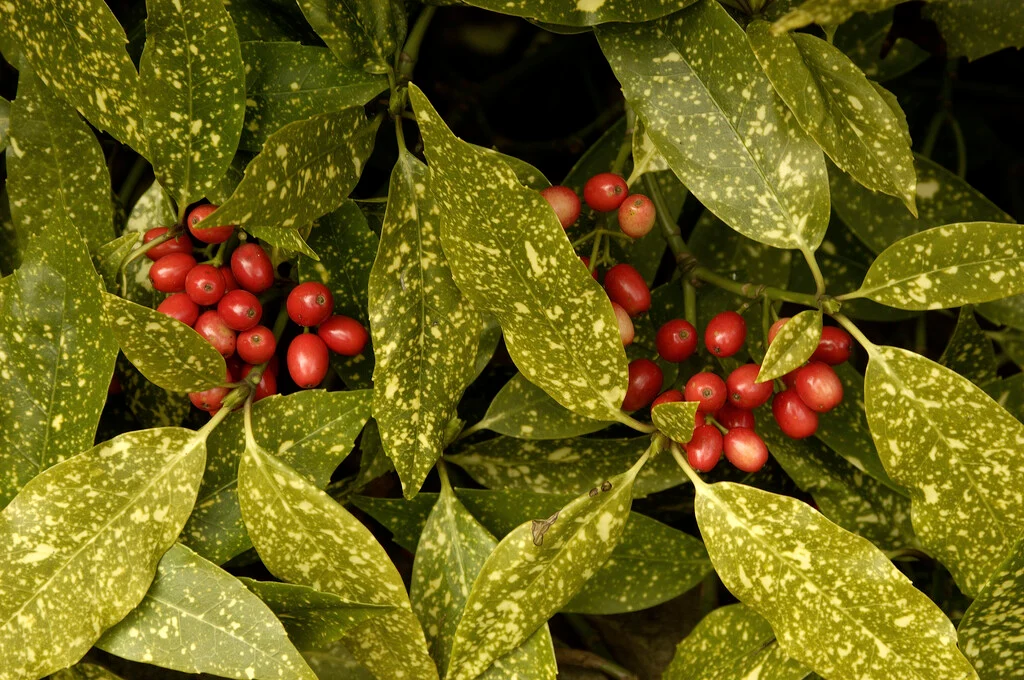
The gold dust plant gets its name honestly – its dark green leaves are speckled with bright yellow spots, like someone flicked gold paint across them. It’s an easy shrub to grow indoors or in a shaded garden bed, and it forgives a lot of beginner mistakes.
TL;DR
- The gold dust plant (Aucuba japonica) is a shade-loving evergreen shrub with yellow-speckled leaves.
- It needs bright, indirect light indoors and partial to full shade outdoors.
- Water when the top 1-2 inches of soil feel dry, and avoid soggy soil.
- It grows slowly and rarely needs pruning more than once a year.
- Indoors, it tolerates average home humidity and cool room temperatures.
What is a gold dust plant?
The gold dust plant is the common name for Aucuba japonica, an evergreen shrub in the Garryaceae family. Some varieties are also called spotted laurel or Japanese laurel, but “gold dust plant” usually refers to the yellow-speckled cultivar ‘Variegata.’
Outdoors, it’s native to Japan, China, and parts of the Himalayas, where it grows as an understory shrub in shaded forest. In the ground, it can reach up to 10 feet tall and wide in ideal conditions, though it often tops out around 6 feet. Grown in a pot indoors, it stays much smaller and is easy to keep at a manageable size with occasional pruning.
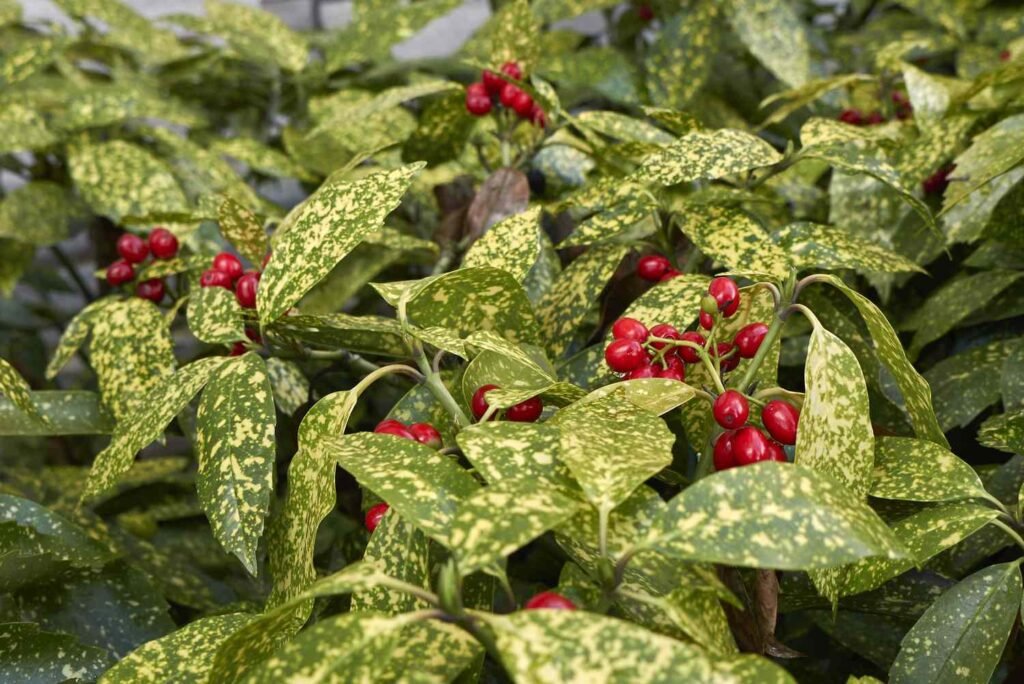
The leaves are what make this plant stand out: leathery, glossy, and dark green, splashed with gold-yellow markings that look almost hand-painted. It’s a good choice if you have a dim room, a shaded porch, or a corner where flowering plants tend to sulk.
How to care for a gold dust plant
credit: https://www.rhs.org.uk/
Give your gold dust plant bright, indirect light, water when the topsoil dries out, and keep it in cool to average room temperatures. It’s a low-maintenance plant once it’s settled into a pot or garden bed, and it tolerates more shade than most houseplants.
Light needs
Indoors, place it near an east- or north-facing window where it gets bright, indirect light. Direct afternoon sun can scorch the leaves, especially the pale yellow markings, which burn more easily than solid green foliage. Outdoors, plant it in partial to full shade – it’s one of the few shrubs that actually shows more color in deep shade rather than less.
Watering schedule
Let the top 1-2 inches of soil dry out between waterings, then water thoroughly until it runs from the drainage holes. Skip watering by the calendar and check the soil with your finger instead – overwatering is the most common way to lose this plant. Cut back on watering in winter, when growth slows and the soil stays damp longer.
Soil and potting
Use a general-purpose potting mix that’s rich in organic matter but still drains well. If your mix feels dense or holds water too long, work in a handful of perlite or coarse sand. A pot with drainage holes is essential – this plant doesn’t tolerate wet feet for long.
Temperature and humidity
Gold dust plants prefer cool to moderate indoor temperatures, roughly 45-65°F (7-18°C), and can handle cooler rooms better than most houseplants. They aren’t fussy about humidity and do fine at average indoor levels, though a pebble tray or humidifier helps in dry winter air.
Common mistakes with gold dust plant care
- Overwatering: soggy, poorly-drained soil is the fastest way to cause root rot. Let the topsoil dry before watering again.
- Too much direct sun: harsh afternoon light scorches the leaves and fades the gold markings. Move it to bright, indirect light instead.
- Skipping drainage: a pot without drainage holes traps water around the roots. Always use one, or drill holes into a decorative cover pot.
- Ignoring dusty leaves: dust buildup blocks light and clogs the leaf pores. Wipe leaves with a damp cloth every few weeks.
Pruning and repotting
Gold dust plants grow slowly, so they don’t need frequent pruning. If your plant gets tall or leggy, prune the stems back in spring, cutting at a 45-degree angle just after a leaf node. This encourages bushier, fuller growth.
Repot every 2-3 years, or when roots start circling the bottom of the pot. Move up to a container just one size larger – a pot that’s too big holds excess moisture and increases the risk of root rot. If your plant is already at the size you want, top-dress it instead: remove the top 2-3 inches of soil and replace it with fresh potting mix.
Frequently asked questions about the gold dust plant
What is a gold dust plant?
It’s the common name for Aucuba japonica, an evergreen shrub with dark green leaves speckled in yellow. It’s grown both as a houseplant and as a shade shrub outdoors.
How often should I water my gold dust plant?
Water when the top 1-2 inches of soil feel dry, usually every 1-2 weeks indoors depending on light and season. Water less often in winter, when growth slows down.
Is a gold dust plant toxic to pets?
Aucuba japonica is considered mildly toxic to cats and dogs if eaten, so keep it out of reach of curious pets.
Can a gold dust plant grow in low light?
Yes, it tolerates low to medium light better than most variegated houseplants, though the yellow markings show up brightest in bright, indirect light.
Why are the leaves on my gold dust plant turning black or dropping?
This is usually a sign of overwatering or poor drainage. Let the soil dry out more between waterings and check that the pot drains freely.