
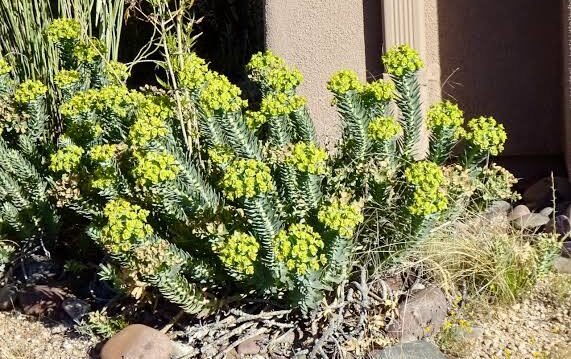
Gopher plant (Euphorbia rigida) is a low, mounding succulent with spiraling blue-green leaves and chartreuse flower clusters that show up in late winter. It thrives on neglect, which makes it one of the easiest plants you can put in a hot, dry corner of the yard.
TL;DR
- Gopher plant needs full sun, sharp drainage, and almost no supplemental water once established.
- It’s hardy down to 0°F and thrives in USDA zones 7-10.
- The sap is a skin irritant, so wear gloves when you prune or handle cuttings.
- It reaches about 2 feet tall with a 3-foot spread and blooms chartreuse-yellow in early spring.
- Overwatering, not neglect, is what kills this plant.
What is a gopher plant?
Gopher plant is the common name for Euphorbia rigida, a perennial succulent in the spurge family. It’s native to the Mediterranean and Middle East and grows as a mounding evergreen with narrow, pointed, blue-green leaves arranged in a tight spiral up each stem.
The name causes some confusion because it’s also loosely applied to Euphorbia lathyris (mole plant), a taller, more aggressive euphorbia that gardeners plant specifically to deter gophers. This article covers Euphorbia rigida – the compact, ornamental species you’ll find sold as “gopher plant” or “gopher spurge” at most nurseries and garden centers.
Euphorbia rigida was formerly classified as Euphorbia biglandulosa, so you may still see that name on older plant tags or in some references.
How to care for gopher plant
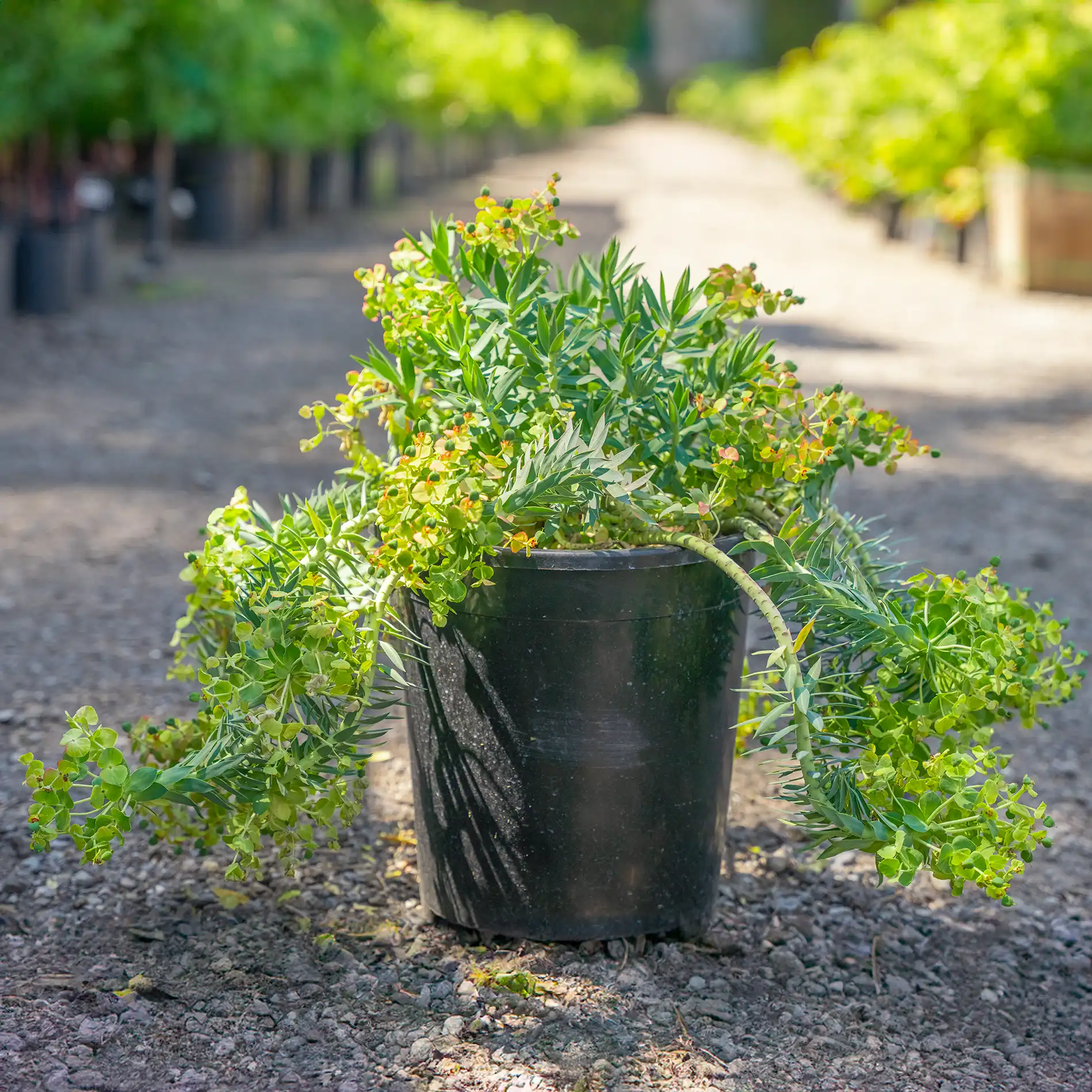
credit: https://www.moonvalleynurseries.com/
Gopher plant wants full sun, poor-to-average soil, and drainage that never lets water pool around the roots. Get those three things right and the plant takes care of itself for most of the year.
Light
Give it full sun. Six or more hours of direct light a day keeps the foliage compact and the blue-green color rich. In hotter inland climates, gopher plant tolerates a little afternoon shade, but too much shade makes it leggy and washes out the leaf color.
Water
Water deeply but infrequently. Once established, gopher plant can go roughly five months without water if temperatures aren’t extreme. During the first growing season, water when the top few inches of soil are dry, then taper off. After that, rainfall alone is usually enough outside of extended drought.
The plant fails from overwatering far more often than underwatering. Wet, soggy soil around the roots leads to rot, and rot is the main way gardeners lose this plant.
Soil and drainage
Gopher plant isn’t fussy about soil type or fertility, but drainage is non-negotiable. Sandy or rocky soil works well. If your soil is heavy clay, plant on a slope or in a raised bed, or mix in coarse sand and grit before planting.
Pruning and propagation
Gopher plant blooms once in late winter to early spring, producing rounded clusters of papery, chartreuse-yellow bracts at the branch tips. After the blooms fade to a greenish tan, cut the flowering stems back to the base. This keeps the mound compact and pushes new growth from the center of the plant.
Wear gloves and, if you’re cutting a lot of stems, eye protection. Euphorbias release a milky sap when cut that irritates skin and can sting if it gets in your eyes. Rinse any sap off skin with soap and water right away.
To propagate, take a cutting about nine inches long in spring or summer. Strip the leaves from the bottom three-quarters of the cutting, let the cut end callus over for a day, then plant it a few inches deep in a well-draining cactus mix. A six-inch pot can hold three or four cuttings while they root.
Common mistakes with gopher plant
- Watering on a schedule instead of by soil condition: gopher plant doesn’t want regular watering once established. Check the soil first, and skip watering if it’s still dry several inches down from a recent rain.
- Planting in shade for “protection”: this plant wants full sun. Shade makes it stretch, flop, and lose its color instead of protecting it from anything.
- Handling cuttings without gloves: the sap causes real skin irritation for most people. Gloves take ten seconds to put on and save you a rash.
- Leaving old flower stems in place all season: skipping the post-bloom prune leaves the plant looking straggly and slows new growth from the center.
Frequently asked questions about gopher plant
What is a gopher plant?
Gopher plant is the common name for Euphorbia rigida, a drought-tolerant succulent shrub with blue-green foliage and yellow spring flowers, native to the Mediterranean and Middle East.
How often should I water a gopher plant?
Water regularly during the first season to help it establish, then cut back sharply. A mature gopher plant needs little to no supplemental water outside of extreme drought.
Is gopher plant sap dangerous?
The milky sap is a skin and eye irritant, not a poison you’d need to call anyone about from casual contact. Wear gloves when pruning and wash off any sap that touches your skin.
How cold-hardy is gopher plant?
It tolerates temperatures down to about 0°F and grows reliably in USDA zones 7 through 10. In colder zones, gardeners often grow it as an annual.
Does gopher plant actually repel gophers?
Euphorbia rigida isn’t typically grown for pest control. The “gopher-repelling” reputation belongs more to its relative, Euphorbia lathyris (mole plant), though evidence for either species reliably deterring gophers is thin.