
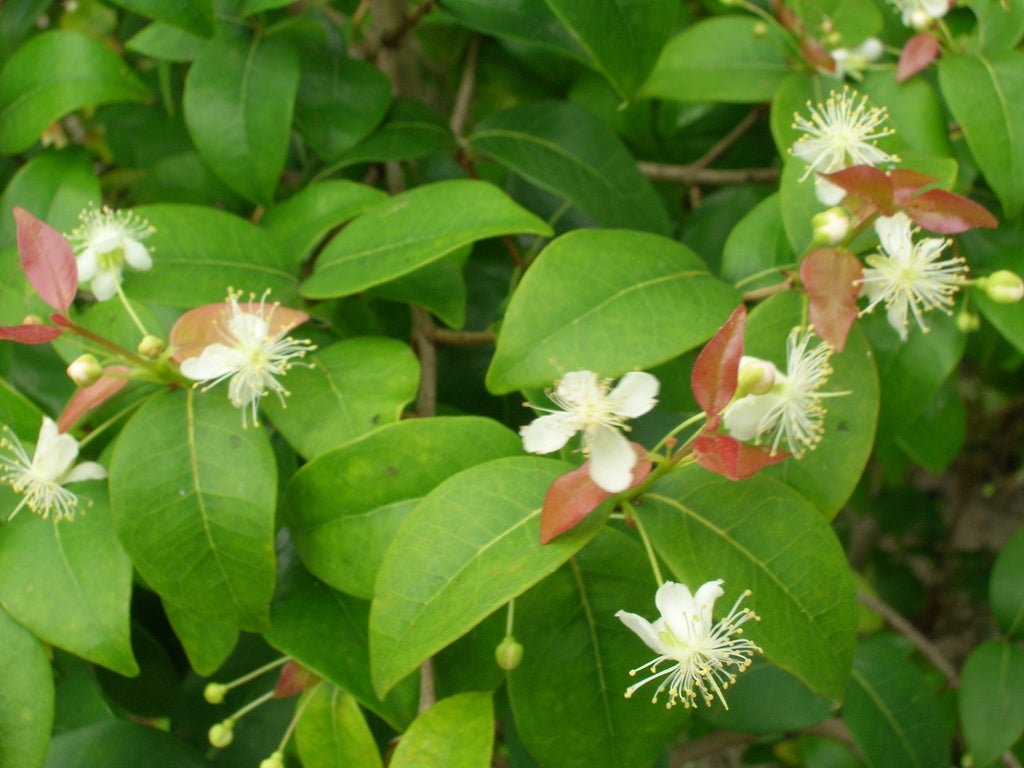
The eugenia plant (Syzygium paniculatum, often sold as Eugenia myrtifolia) is a dense, glossy-leaved shrub prized for hedges, topiaries, and container growing. This guide covers exactly what it needs to stay full and healthy, plus the mistakes that cause thinning and leaf drop.
TL;DR
- Eugenia needs 4-6 hours of bright light daily, with some shelter from harsh midday sun.
- Water when the top inch of soil is dry – don’t let it sit in soggy soil.
- It grows best in acidic, well-draining soil (pH 5.5-6.5).
- Prune in spring or summer only; fall pruning invites fungal problems.
- It’s hardy outdoors in USDA zones 9-11 and needs winter protection elsewhere.
What is a eugenia plant?
Eugenia is a compact, evergreen shrub known for small, glossy green leaves and a naturally dense growth habit that makes it a favorite for clipped hedges and topiary shapes. It’s native to Australia and closely related to the myrtle family.
Gardeners grow it three ways: as a formal hedge, as a trained topiary (single stem or spiral), or as a potted specimen indoors. New growth often comes in with a reddish-bronze tint before maturing to deep green, which is normal and not a sign of stress.
How much light does eugenia need?
Eugenia does best with 4-6 hours of bright light a day. Indoors, place it within a few feet of a south- or east-facing window. Outdoors, morning or late-afternoon sun works better than harsh midday exposure, which can scorch the leaves.
Too little light causes leggy, stretched-out growth and pale foliage, especially noticeable on topiary shapes where density matters most. If your plant is thinning out despite regular pruning, light is the first thing to check, not fertilizer.
How often should you water eugenia?
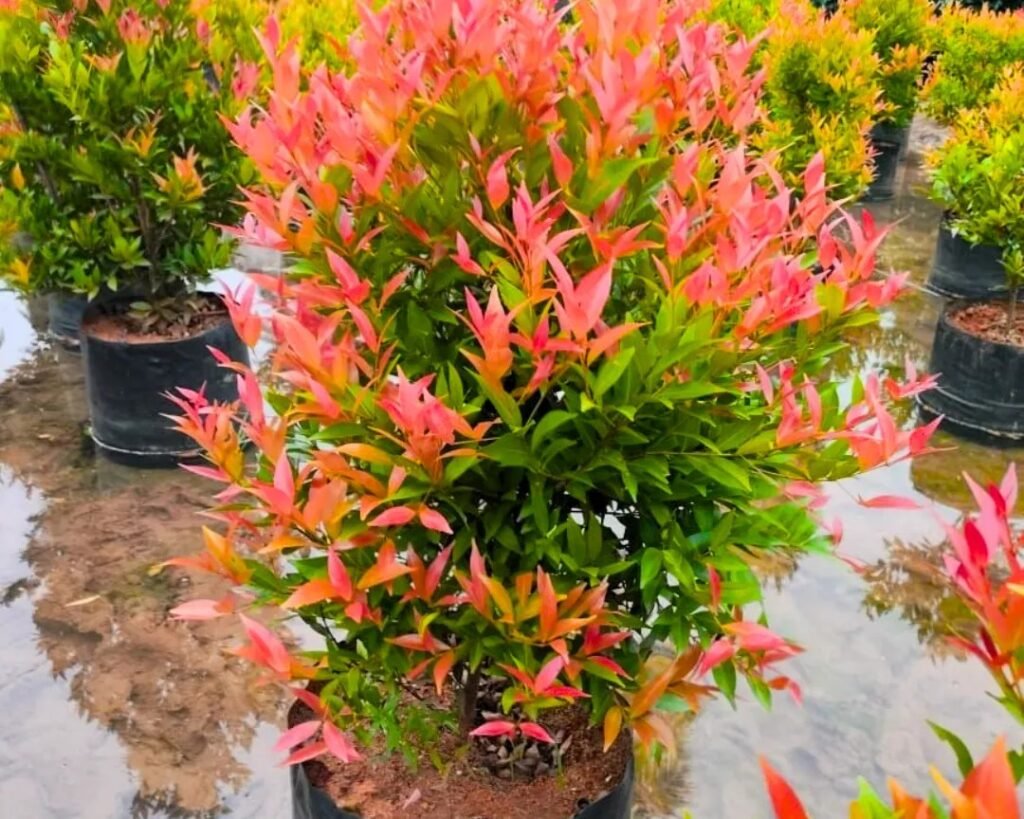
credit: https://wayanadantouchgarden.com/
Check the top inch of soil before watering. When it’s dry to about half an inch down, water thoroughly until it drains from the bottom of the pot. In summer this often means once a week; in winter, stretch that to every 7-10 days.
Eugenia is sensitive to wet feet. Overwatering, not underwatering, is the more common problem, and it shows up as curling, drooping, or yellowing leaves along with a dull, less glossy sheen. If your pot doesn’t have drainage holes, that’s worth fixing before you troubleshoot anything else.
Container-grown eugenia can also develop salt buildup from tap water over time, which shows up as yellowing leaf edges. Flushing the pot with distilled water every few months helps prevent this.
What soil and fertilizer does eugenia need?
Eugenia wants well-draining, slightly acidic soil, ideally in the 5.5-6.5 pH range. A standard potting mix cut with perlite or coarse sand gives roots the drainage they need while holding enough moisture between waterings.
Feed with a balanced, slow-release fertilizer every 4-6 weeks during the growing season, spring through early fall. Skip fertilizing in winter, when the plant’s growth naturally slows and extra nutrients just sit unused in the soil.
When and how to prune eugenia
Prune only in early spring or summer, while the plant is actively growing. Late-fall or winter pruning leaves cut wounds exposed during cooler, damper conditions, which raises the risk of fungal disease.
Use sharp, clean shears and avoid removing more than a third of the plant’s growth in a single session. For topiary shapes, light shearing every few weeks during the growing season keeps the form tight without stressing the plant. For hedges, one or two structural prunings a year is usually enough.
Common eugenia problems and how to fix them
| Problem | Likely cause | Fix |
|---|---|---|
| Yellowing leaves | Overwatering or salt buildup | Let soil dry out more between waterings; flush pot with distilled water |
| Leggy, sparse growth | Not enough light | Move to a brighter spot with 4-6 hours of light |
| Leaves curling or drooping | Root rot from soggy soil | Check drainage, repot into fresh, dry soil if roots are mushy |
| Sudden leaf drop | Cold exposure or drafts | Move away from drafty windows or vents; bring outdoor pots in below 32°F |
| Sticky residue or visible pests | Aphids, mealybugs, or spider mites | Inspect leaf undersides regularly; treat early with insecticidal soap |
Frequently asked questions about eugenia plants
How often should I water my eugenia plant?
Water when the top inch of soil feels dry, which is typically once a week in summer and every 7-10 days in winter. Always check the soil rather than watering on a fixed schedule.
Can eugenia be grown indoors?
Yes, eugenia grows well indoors near a bright south- or east-facing window. It’s commonly kept as a potted topiary and brought outdoors seasonally in cooler climates.
Why is my eugenia losing its leaves?
Leaf drop is usually caused by overwatering, cold drafts, or a sudden drop in temperature below freezing. Check soil moisture and the plant’s location near vents or windows first.
How cold-hardy is eugenia?
Eugenia is reliably hardy outdoors in USDA zones 9-11 and needs to come indoors or be protected when temperatures drop below 32°F. In colder zones, container growing makes winter protection much easier.
How often does eugenia need pruning?
Most eugenia plants need pruning one to two times a year to maintain shape, though topiaries benefit from light shearing every few weeks during the growing season. Always prune in spring or summer, never late fall.