
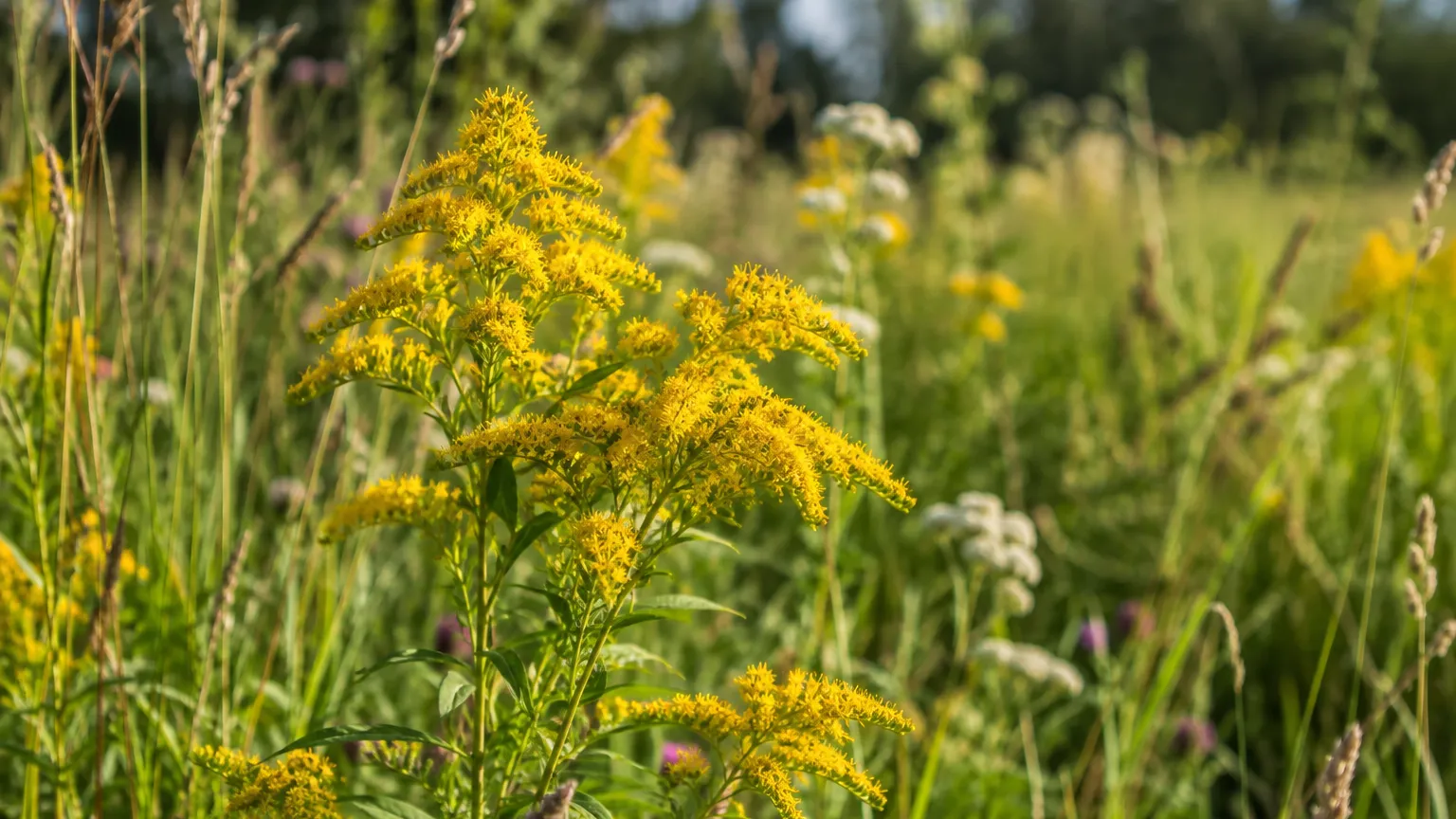
The golden rod plant is a flowering perennial known for its bright yellow blooms, upright stems, and late-season color. It is a good choice for sunny garden beds, wildflower areas, and pollinator gardens when you select a variety suited to your climate and available space.
Goldenrod belongs to the genus Solidago. Most varieties grow outdoors and need little care once established. The main thing to consider before planting is how much space the variety needs, as some types spread quickly.
TL;DR
- Goldenrod is a perennial wildflower that produces clusters of small yellow flowers.
- Most varieties grow best in full sun and well-drained soil.
- Water new plants regularly until their roots establish, then adjust watering to rainfall and soil conditions.
- Divide spreading varieties when clumps become crowded or grow beyond their allotted space.
- Goldenrod attracts bees and butterflies and provides late-season flowers for the garden.
What is the golden rod plant?
The golden rod plant is a group of herbaceous perennial flowers in the daisy family, Asteraceae. Most varieties have green leaves, upright stems, and clusters of small yellow flowers that open in summer or fall.
A perennial is a plant that lives for several years and regrows after its dormant season. Goldenrod dies back in many climates during winter and sends up new growth when conditions warm.
Goldenrod is native to many parts of North America, although the genus also includes species found elsewhere. Different types grow in meadows, woodland edges, wetlands, and dry open areas.
The plant’s mature size and growing needs depend on the species or cultivar. Some goldenrods stay relatively compact, while others grow tall and spread through underground stems or self-seeding.
Goldenrod is often confused with ragweed because both can flower around the same time. However, goldenrod has showy yellow flowers, while ragweed has small, less noticeable greenish flowers. Ragweed is a more common cause of seasonal pollen allergies.
How to grow and care for the golden rod plant
The golden rod plant is generally easy to grow outdoors. Most varieties prefer full sun and soil that drains well, although certain species grow better in partial shade or consistently moist ground.
Use these general care guidelines as a starting point, then adjust them to your chosen variety.
| Growing need | Recommended care |
|---|---|
| Light | Full sun for most varieties, with some types tolerating partial shade |
| Water | Regular watering while young, followed by watering during prolonged dry spells |
| Soil | Well-drained soil suited to the variety |
| Fertilizer | Little or no added fertilizer in reasonably fertile soil |
| Pruning | Remove damaged stems and trim spent flowers if you want to limit seed spread |
| Maintenance | Divide spreading clumps when needed |
Light requirements
Most goldenrod varieties flower best in a sunny location that receives at least six hours of direct sunlight each day.
Choose an open garden bed or a sunny border where the plant has room to grow. In partial shade, some varieties may survive but produce fewer flowers or develop weaker stems.
Check the needs of your chosen cultivar before planting. Woodland goldenrods can tolerate less sun than prairie types.
Watering needs
Water goldenrod regularly after planting so the roots can settle into the soil. Check the ground before watering again, because the right frequency depends on rainfall, soil texture, and temperature.
Once established, many goldenrod varieties tolerate short dry periods. Water during extended hot weather if the soil becomes dry and the plant begins to wilt.
Goldenrod that grows naturally in wet meadows may need more moisture than types adapted to dry, rocky ground. Avoid keeping a variety that prefers well-drained soil in constantly soggy conditions.
Soil and fertilizer
Plant goldenrod in soil that matches the needs of its species. Many garden varieties grow well in ordinary garden soil with good drainage and can tolerate less-than-perfect soil.
You usually do not need to feed goldenrod heavily. Excess fertilizer, especially nitrogen-rich fertilizer, can encourage tall, weak growth and cause stems to bend or flop.
If your soil is poor, add a modest amount of mature compost before planting. This improves soil structure without forcing excessive leafy growth.
Temperature and seasonal care
Goldenrod is an outdoor perennial in many temperate regions, but cold tolerance varies by species and cultivar. Check the plant label for suitable growing zones before buying a variety for a region with cold winters.
In warm climates, provide the soil moisture the selected species needs and avoid planting a cool-climate variety in a location that stays excessively hot and wet.
In autumn, leave some healthy flower heads standing if you want birds to feed on the seeds. Cut back dead stems when needed, either in late autumn or before new growth begins in spring.
When does goldenrod bloom?
Most goldenrod varieties bloom from summer into autumn, with the exact flowering period depending on the species, climate, and growing conditions.
The flowers form dense clusters of small yellow flower heads at the tips of upright or arching stems. Individual blooms are small, but many flowers grow together to create a noticeable display.
To encourage healthy flowering, plant goldenrod in suitable light and avoid excessive fertilizer. Remove faded flower clusters if you want to reduce self-seeding or tidy the plant.
Goldenrod can also work well alongside asters and other late-flowering perennials. Purple or blue flowers provide a pleasing contrast to the yellow blooms, while plants with different flowering times help extend seasonal interest.
What are the benefits of growing goldenrod?
Goldenrod offers several practical benefits for outdoor gardens, especially when you want late-season flowers without intensive maintenance.
- It provides flowers when many summer-blooming plants have finished flowering.
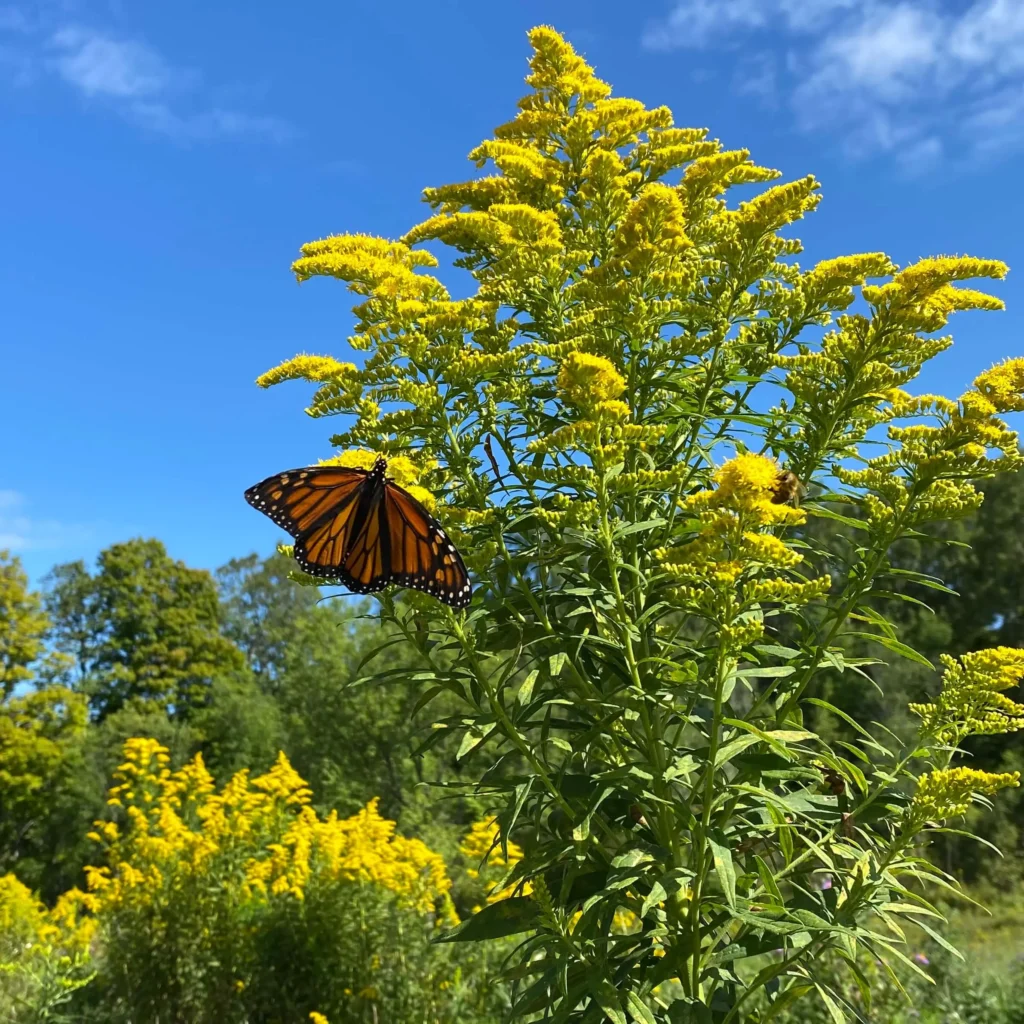
- Its nectar and pollen attract bees, butterflies, and other insects.
- Its seed heads can provide food for birds.
- Many varieties tolerate ordinary garden soil and need little fertilizer.
- It works in naturalized borders, meadow plantings, and pollinator gardens.
Goldenrod can also fill space in a large planting where other perennials struggle. Choose the species carefully, however, because a vigorous spreading variety can crowd neighboring plants.
How to control goldenrod from spreading
Some goldenrod varieties spread through underground rhizomes, which are horizontal stems that produce new shoots. Other varieties spread readily by seed. Choose a compact cultivar if you have a small garden or prefer a tidy border.
To manage an established plant, follow these steps:
- Remove unwanted seedlings while they are small and easy to pull.
- Cut off spent flower heads before mature seeds disperse if you want to reduce self-seeding.
- Divide large clumps when they begin spreading beyond their allotted area.
- Remove unwanted underground growth when dividing the plant, taking care to collect the remaining rhizomes.
- Monitor the surrounding bed during the growing season and remove new shoots promptly.
Division is often easiest in early spring as new growth begins. The interval depends on the variety and how quickly it spreads, so check the plant’s growth rather than following a fixed schedule.
Common goldenrod growing problems
Goldenrod is generally a low-maintenance plant, but poor growing conditions can affect its appearance and flowering.
| Problem | Likely cause | What to do |
|---|---|---|
| Few flowers | Too much shade or unsuitable growing conditions | Move the plant to a sunnier location if the variety needs full sun. |
| Floppy stems | Excess fertilizer, rich soil, or insufficient light | Reduce feeding and improve the growing conditions. |
| Yellowing leaves | Waterlogged soil, drought, or root stress | Check soil moisture and correct the watering problem. |
| Powdery mildew | Poor airflow and conditions that favor fungal growth | Space plants properly and remove affected foliage. |
| Unwanted seedlings | Mature flower heads releasing seeds | Remove spent flowers before seeds mature. |
| Crowded plants | Vigorous underground growth | Divide the clump and remove unwanted sections. |
Check the soil and growing conditions before treating a problem. Several different issues can cause similar symptoms, so avoid applying pesticides or other treatments without identifying the likely cause.
When is goldenrod not a good fit?
Goldenrod may be unsuitable for a small, tightly planned garden if you choose a variety that spreads aggressively. It can also be a poor choice for a shaded location when the selected species needs full sun to flower well.
Before planting, check the mature height, width, and growth habit. Give taller varieties room behind shorter plants, and use compact cultivars where space is limited.
If your garden has heavy, poorly drained soil, choose a species that tolerates those conditions or improve drainage before planting. A goldenrod suited to moist ground may be a better option for a naturally damp area.
Also consider your local climate. A variety that grows well in a cool temperate region may struggle in a hot, humid environment. Selecting a plant suited to your region is more reliable than trying to correct a poor match with extra watering or fertilizer.
Frequently asked questions about the golden rod plant
Is the golden rod plant easy to grow?
Yes, most goldenrod varieties are easy to grow when planted in suitable light and soil. Established plants often need little maintenance beyond occasional watering and control of their spread.
Does goldenrod come back every year?
Yes, goldenrod is a perennial and usually returns each growing season in a suitable climate. Its above-ground growth may die back during winter before new shoots appear.
Does goldenrod need full sun?
Most varieties grow and flower best in full sun. Some woodland species tolerate partial shade, so check the requirements of your chosen plant.
Does goldenrod spread quickly?
Some varieties spread quickly through underground rhizomes or self-seeding, while others remain more compact. Choose a suitable cultivar and divide spreading clumps when they become too large.
Does goldenrod attract bees and butterflies?
Yes, goldenrod flowers attract bees, butterflies, and other pollinating insects. Its late-season blooms can provide a useful food source when fewer flowers are available.
Is goldenrod the same as ragweed?
No, goldenrod and ragweed are different plants. Goldenrod produces noticeable yellow flower clusters, while ragweed has inconspicuous flowers and is a more common cause of seasonal pollen allergies.
Can goldenrod grow in pots?
Yes, compact goldenrod varieties can grow in large containers with drainage holes. Use a suitable potting mix, water when needed, and choose a container large enough to accommodate the roots.
When should I cut back goldenrod?
Cut back dead or damaged stems in late autumn or before new growth begins in spring. Leave some seed heads standing if you want to provide food for birds during the colder months.