
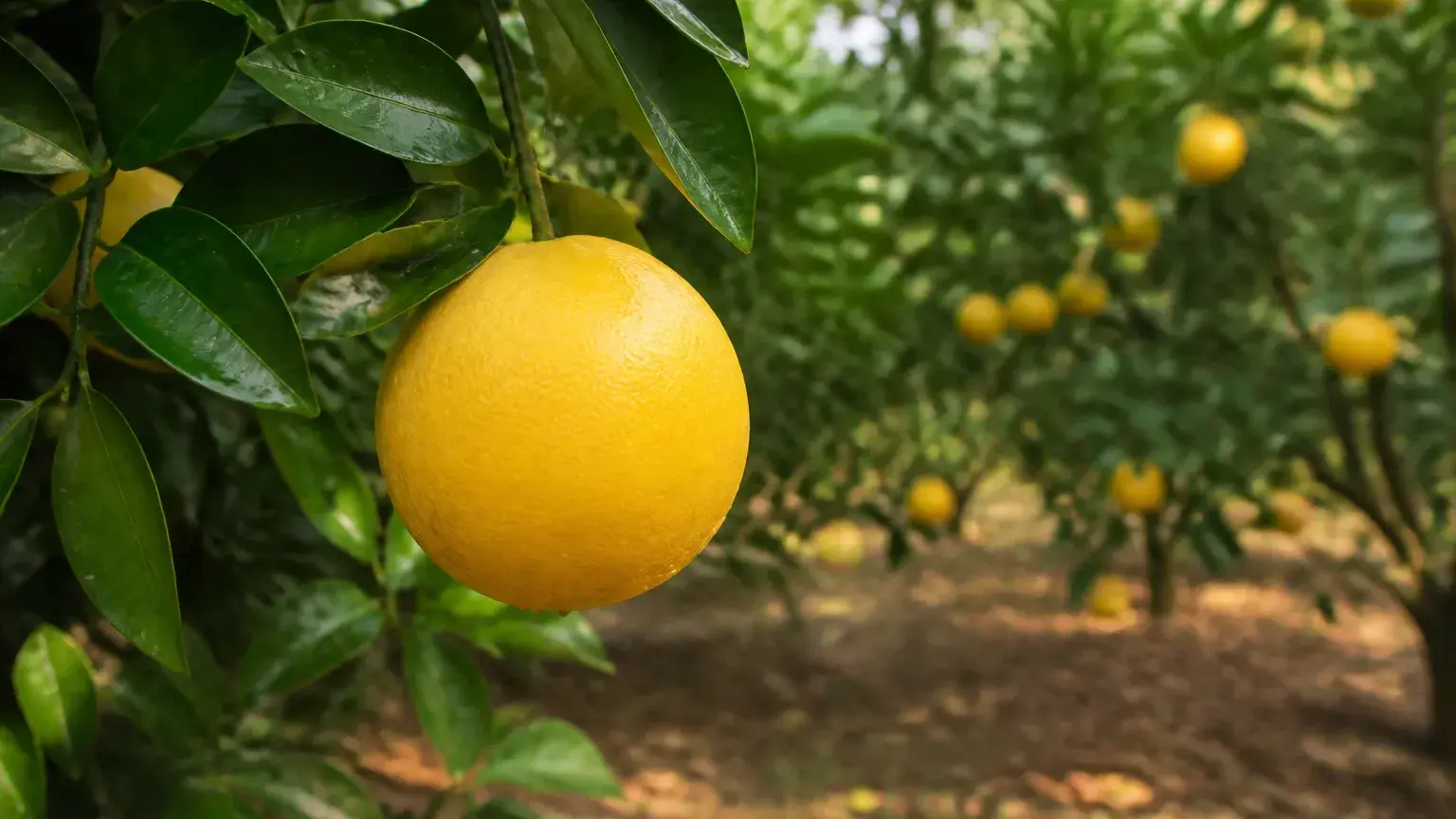
A grapefruit plant is a citrus tree that produces large, round fruits with yellow or pink flesh. It grows best outdoors in warm, frost-free climates, but you can also grow a young tree in a large pot and move it indoors when temperatures drop. With enough sunlight, good drainage, and steady care, a grapefruit plant can grow well for many years.
TL;DR
- A grapefruit plant needs full sun and warm growing conditions.
- Plant it in well-drained soil that holds some moisture without becoming waterlogged.
- Water deeply when the soil begins to dry, adjusting for weather and pot size.
- Feed the tree during active growth with a citrus fertilizer suited to its needs.
- Choose a grafted tree if you want fruit sooner than a seed-grown plant can provide.
What is a grapefruit plant?
A grapefruit plant (Citrus × paradisi) is an evergreen citrus tree that grows glossy green leaves, fragrant white flowers, and large edible fruits. The fruit can have white, pink, or red flesh, depending on the variety.
A mature grapefruit tree can grow quite large in a suitable outdoor garden. Dwarf varieties are better for patios and containers, especially when space is limited.
Grapefruit trees grow best in tropical and subtropical climates. They need plenty of warmth and sunlight, so cold winters can make outdoor growing difficult. In cooler regions, grow a compact tree in a pot and protect it from cold weather.
How to care for a grapefruit plant
A grapefruit plant needs full sunlight, well-drained soil, regular watering, and suitable nutrition. Outdoor trees generally grow best in a sunny, sheltered spot, while potted trees need extra attention because their soil dries out faster.
| Care requirement | What the plant needs |
|---|---|
| Light | At least 6 hours of direct sunlight daily |
| Water | Deep watering when the soil begins to dry |
| Soil | Fertile, well-drained soil |
| Temperature | Warm conditions with protection from frost |
| Fertilizer | Citrus fertilizer applied according to its label |
| Pruning | Light pruning to remove damaged branches and maintain shape |
| Growing method | In-ground planting in warm climates or container growing in cooler regions |
Light needs
Place a grapefruit plant where it receives at least six hours of direct sunlight each day. More sunlight can help an outdoor tree grow well and produce fruit when other conditions are suitable.
If you grow a grapefruit tree indoors, choose your brightest window. A south-facing window in the Northern Hemisphere can work well, although the amount of direct light varies by season and location.
Move a potted tree outdoors gradually when warm weather arrives. Start in a partly shaded place, then increase its exposure to direct sunlight over several days.
Watering needs
Water a grapefruit plant deeply, then allow excess water to drain away. The soil should remain lightly moist during active growth, but the roots should never sit in waterlogged soil.
Check the soil before watering. If the upper layer still feels wet, wait and check again later. In hot, dry weather, a young tree may need water more often than an established tree.
Container-grown grapefruit plants usually need closer attention than trees planted in the ground. Always use a pot with drainage holes, and empty any standing water from its saucer.
Soil and fertilizer
Plant a grapefruit tree in fertile soil that drains freely. Heavy clay soil that stays wet can damage the roots, while very sandy soil may dry out too quickly.
A slightly acidic to near-neutral soil is generally suitable. If you are unsure about your garden soil, a soil test can help you decide whether any adjustment is needed.
Feed the tree with a fertilizer made for citrus plants. Follow the label for the tree’s size, age, and growing conditions. Avoid applying extra fertilizer in the hope of getting faster growth, as too much can damage roots or encourage leafy growth at the expense of fruit.
How to grow a grapefruit plant from seed
You can grow a grapefruit plant from a fresh seed, but a seed-grown tree may take many years to produce fruit. Its fruit may also differ from that of the parent tree. For a more predictable harvest, choose a grafted tree from a reputable nursery.
If you want to grow a plant from seed, follow these steps.
- Remove seeds from a fresh, ripe grapefruit and rinse away the fruit pulp.
- Fill a small pot with moist, well-drained potting mix.
- Plant the seeds about half an inch deep and cover them lightly with soil.
- Keep the pot in a warm place with bright light, and maintain even moisture without soaking the mix.
- Once the seedling develops several leaves, move it into a larger pot if its roots need more room.
- Gradually increase its exposure to direct sunlight as it grows.
Germination time varies with seed freshness, warmth, and moisture. Be patient, and avoid keeping the pot constantly wet while you wait for the first shoot.
Can you grow a grapefruit plant in a pot?
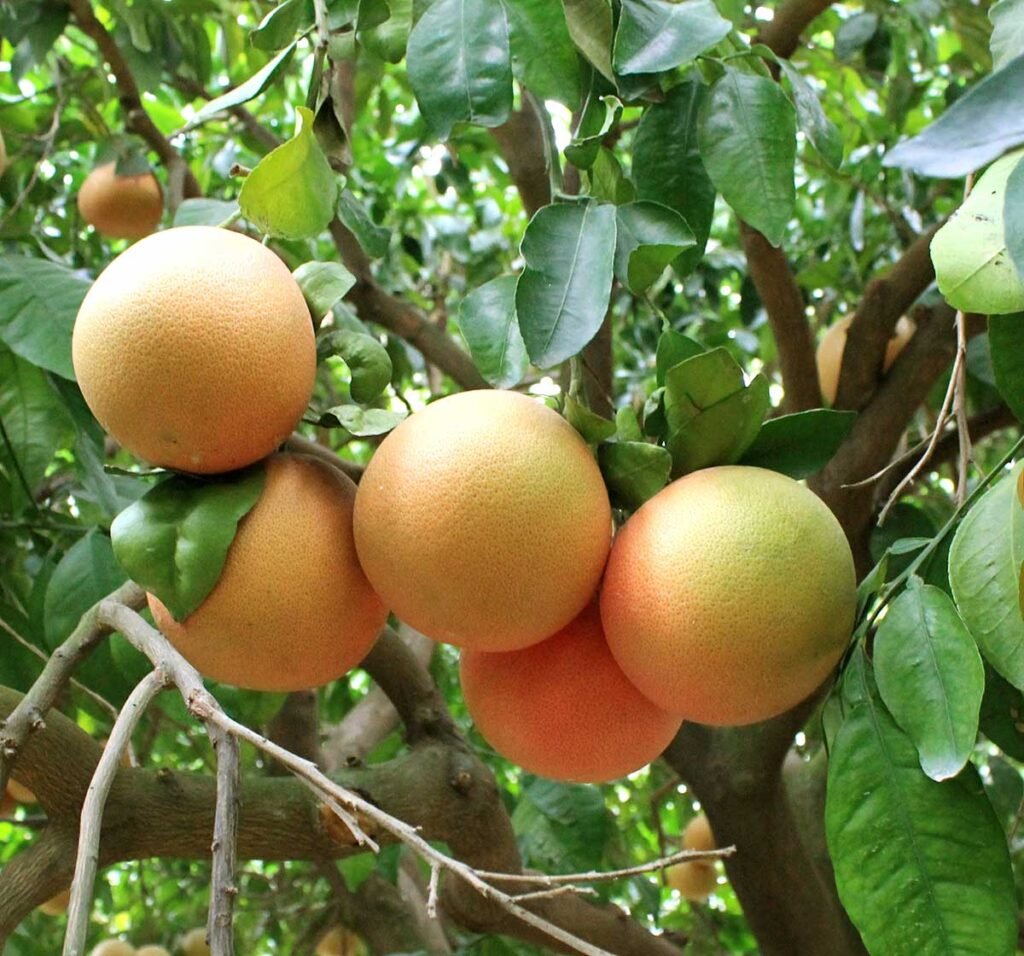
Yes, you can grow a grapefruit plant in a pot, especially if you choose a dwarf variety. Container growing is useful when your climate has cold winters or your garden has limited space.
Choose a sturdy pot with several drainage holes. Start with a container that comfortably holds the root ball, then move the tree into a larger pot as its roots develop.
Use a free-draining potting mix suitable for citrus trees. Avoid garden soil that becomes dense inside a container, as it can restrict airflow around the roots.
Place the pot in a sunny outdoor spot during warm weather. If temperatures drop toward frost, move the tree to a protected location. Indoors, provide as much direct sunlight as possible and allow good airflow around the foliage.
A potted grapefruit tree may produce fewer fruits than a mature tree growing in the ground. Its size, light exposure, nutrition, and root space all affect flowering and fruit production.
When does a grapefruit plant produce fruit?
A grapefruit plant grown from seed can take several years to flower and produce fruit, sometimes five years or longer. A grafted tree often fruits sooner because it comes from mature plant material, although the exact timing depends on the variety and growing conditions.
The tree usually produces fragrant white flowers before small fruits begin to develop. Some flowers and young fruits may drop naturally, particularly when the tree is young or under stress.
For better fruit production, give the tree plenty of sunlight, steady moisture, and suitable fertilizer. Avoid heavy pruning, excessive watering, and excessive nitrogen, as these can interfere with flowering or fruit development.
Grapefruit ripening time varies by variety and climate. Check the fruit’s color, size, and taste rather than relying on the calendar alone. Some grapefruit varieties retain a greenish color even as the fruit matures.
Common problems with grapefruit plants
Most grapefruit plant problems relate to watering, light, nutrition, or pests. Check the leaves and soil before treating the tree, because similar symptoms can have different causes.
| Problem | Possible cause | What to do |
|---|---|---|
| Yellow leaves | Excess water, poor drainage, or nutrient deficiency | Check soil moisture and drainage before adding fertilizer |
| Few or no flowers | Insufficient sunlight, a young tree, or excessive nitrogen | Improve light and review the feeding routine |
| Falling leaves | Water stress, cold exposure, or root problems | Check moisture, temperature, and root health |
| Small or poor-quality fruit | Inconsistent watering, low light, or nutrition problems | Maintain suitable growing conditions |
| Pests on leaves | Sap-feeding insects or mites | Inspect both sides of leaves and treat the identified pest appropriately |
Do not assume that every yellow leaf means the plant needs fertilizer. If the roots remain wet for long periods, adding more nutrients may not solve the problem. Correct the growing conditions first, then reassess the new growth.
When a grapefruit plant is not a good fit
A grapefruit plant is difficult to grow outdoors in places with long, cold winters or frequent frost. If your garden is exposed to freezing temperatures, a container-grown tree gives you more control over its growing conditions.
The tree can also be a poor choice for a small garden if you plant a standard variety without enough room for its mature size. Choose a suitable dwarf variety for a patio or balcony, and check its expected size before buying it.
If you have limited direct sunlight indoors, you may be able to keep a grapefruit plant alive, but flowering and fruit production can be disappointing. A sunny outdoor position in a warm climate is generally the better choice.
Frequently asked questions about grapefruit plants
How long does a grapefruit plant take to grow?
A grapefruit plant grows at a rate that depends on its variety, climate, light, and care. Seed-grown trees generally take longer to fruit than grafted nursery trees.
Can a grapefruit plant grow indoors?
Yes, a grapefruit plant can grow indoors if it receives enough direct sunlight and has good drainage. A dwarf variety is easier to manage in a container than a standard tree.
How often should I water a grapefruit plant?
Water when the upper layer of soil begins to dry, then let excess water drain away. The right frequency depends on the temperature, pot size, soil, and whether the tree grows indoors or outdoors.
Does a grapefruit plant need full sun?
Yes, full sun is best for healthy growth and fruit production. Aim for at least six hours of direct sunlight daily.
Why is my grapefruit plant not producing fruit?
A grapefruit plant may fail to fruit because it is too young, receives too little sunlight, has poor nutrition, or experiences watering stress. A seed-grown tree can also take much longer to mature than a grafted tree.
Can I grow a grapefruit plant from store-bought fruit?
Yes, seeds from store-bought grapefruit can germinate and grow into seedlings. However, the resulting tree may take years to produce fruit, and the fruit may not match the original grapefruit.
What is the best time to plant a grapefruit tree?
Plant a grapefruit tree during mild, warm weather when it can establish roots without facing frost or extreme heat. In tropical climates, choose a period when you can provide reliable moisture while the young tree settles in.
A grapefruit plant can be a rewarding fruit tree when its basic needs are met. Choose a suitable variety, provide plenty of sunlight, keep the roots well drained, and adjust watering to the weather. If you grow it in a pot, watch its root space and protect it from cold conditions as it matures.
Do you like this personality?