
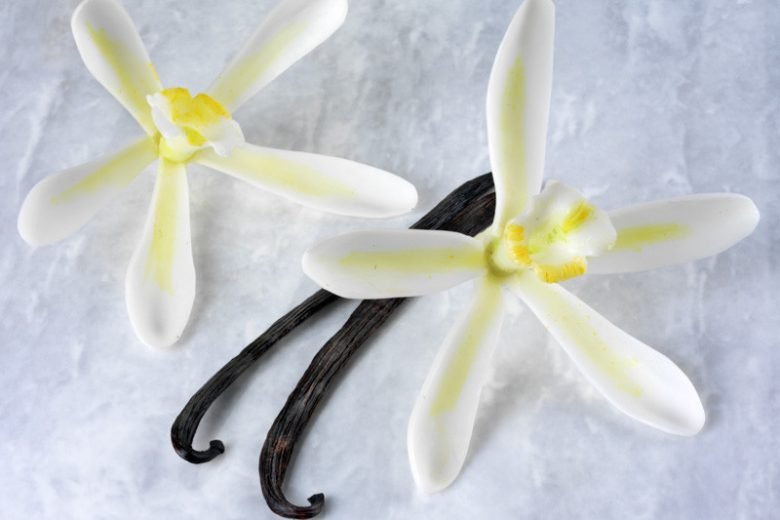
The vanilla orchid plant is the source of real vanilla flavoring, and yes, you can grow one at home. This guide covers what it needs to thrive indoors, why it can take years to bloom, and how to get pods if you’re patient enough to try.
TL;DR
- The vanilla orchid (Vanilla planifolia) is a climbing, epiphytic vine that needs bright indirect light, high humidity, and warm temperatures.
- Water every 5-7 days in the growing season, letting the top of the mix dry slightly between waterings.
- Plants typically take 3-5 years to mature enough to flower.
- Flowers must be hand-pollinated within hours of opening, since the natural pollinator isn’t present outside its native range.
- Give it a moss pole or trellis to climb, since the vine can grow to several meters long.
What is a vanilla orchid plant?
A vanilla orchid is a climbing vine in the orchid family, and it’s the plant that gives us real vanilla. The pods it produces after pollination are cured and processed into the vanilla extract and vanilla bean products found in kitchens everywhere.
Most home growers work with Vanilla planifolia, the species behind the vast majority of commercial vanilla. In the wild, it grows up tree trunks in tropical forests, using aerial roots to anchor itself and pull moisture from the air. That epiphytic habit is the single biggest thing to understand before you bring one home: it isn’t a typical potted houseplant, and it won’t thrive treated like one.
Indoors, a vanilla orchid plant is grown more like a vining tropical than a standard orchid in a pot. Give it something to climb, keep the air humid, and expect a long wait before you see a flower.
Light needs for a vanilla orchid
A vanilla orchid needs bright, indirect light, not direct midday sun. An east-facing window works well, or a south-facing window filtered through a sheer curtain.
In its native habitat, the vine grows up tree trunks under a forest canopy, so it’s adapted to dappled, filtered light rather than open sun. Direct afternoon sun can scorch the leaves, leaving pale or brown patches that don’t heal. Too little light, on the other hand, is one of the most common reasons a mature plant never flowers.
If your home doesn’t get strong natural light through the darker months, a supplemental grow light for part of the day can help keep growth steady.
Signs of a light problem
- Leaves turning pale yellow-green usually mean too much direct sun.
- A leggy vine with widely spaced leaves usually means not enough light.
- A vine that’s mature and healthy but never blooms often needs more consistent bright light.
Temperature and humidity requirements
Keep a vanilla orchid warm and humid, similar to a tropical forest. Aim for daytime temperatures around 75-85°F (24-29°C), with nights no cooler than about 60-65°F (16-18°C), and humidity of 60% or higher.
This plant does not tolerate cold well. Temperatures that dip much below 60°F for extended periods can cause blackened stems and yellowing leaves, and real cold damage happens fast. If you keep your vanilla orchid near a drafty window in winter, move it somewhere steadier.
Humidity matters just as much as temperature. A bathroom with a window, a greenhouse cabinet, or a spot near a humidifier all work. Misting the aerial roots every few days helps, but in a dry home, misting alone usually isn’t enough to hold humidity where the plant needs it.
Soil, potting, and support
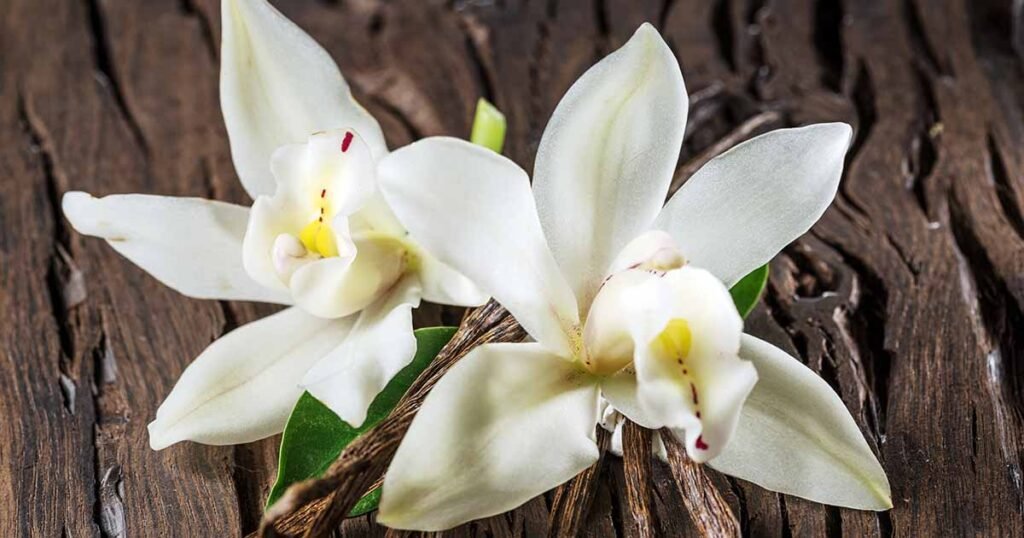
Plant a vanilla orchid in a loose, fast-draining orchid mix, and give the vine a moss pole or trellis to climb.
A mix of bark, perlite, and a bit of sphagnum moss drains well while still holding some moisture around the roots, which is what this plant wants. Standard potting soil holds too much water and will rot the roots quickly.
Because vanilla orchids are climbers, they need a physical support to grow up. A moss pole works particularly well since the aerial roots can grip the damp surface and pull in moisture as they climb. Without support, the vine will sprawl and struggle to put on healthy new growth. As the plant grows, loosely tie or clip the vine to the pole every so often until it starts gripping on its own.
Watering and feeding a vanilla orchid
Water a vanilla orchid every 5-7 days during spring and summer, letting the top of the growing mix dry slightly between waterings. Cut back to every 10-14 days in winter, when growth slows.
Always use room-temperature water and make sure the pot drains freely. These roots rot quickly if they sit in standing water, so a pot with real drainage holes matters more here than with most houseplants.
Feed with a balanced orchid fertilizer diluted to half strength every two weeks during the growing season, from spring through early fall. Cut back to monthly feeding once growth slows for winter. Avoid fertilizing dry roots. Water first, then apply the fertilizer solution.
Why vanilla orchids take years to flower
A vanilla orchid plant needs 3-5 years of steady growth before it’s mature enough to bloom, and even then, flowering isn’t guaranteed without consistent care.
The plant generally needs to reach a substantial length, often several meters of vine, before it has the energy reserves to put out flowers. That’s a long runway compared to most houseplants, and it’s the main reason vanilla is one of the more expensive spices in the world. Growers are managing years of care per plant before there’s anything to harvest.
Consistent light, warmth, and humidity throughout that whole period matter more than any single fix. A plant that gets cold snaps, dry spells, or long stretches of low light will take even longer to reach flowering size, if it gets there at all.
Hand-pollinating vanilla orchid flowers
If your vanilla orchid does flower, you’ll need to hand-pollinate it within a few hours of the flower opening, since the plant’s natural pollinator isn’t present outside its native range in Mexico.
Each flower opens for roughly one day. Using a thin stick or toothpick, gently lift the flap that separates the male and female parts of the flower and press the pollen against the stigma. It’s a delicate, fiddly process, but it’s the standard method growers use worldwide, including on most commercial vanilla farms outside Mexico.
If pollination takes, you’ll see the flower’s base begin to swell within a few days. From there, it takes another 8-9 months for the pod to fully mature and reach harvest size.
Common mistakes with vanilla orchid care
- Using regular potting soil: this holds too much moisture for an epiphytic vine and leads to root rot. Use a chunky, well-draining orchid mix instead.
- Skipping a climbing support: without a pole or trellis, the vine sprawls and puts out weak growth. Give it something to climb from the start.
- Letting humidity drop too low: dry indoor air, especially in winter, stalls growth and stresses the plant. Use a humidifier or a pebble tray to keep levels up.
- Missing the pollination window: each flower only opens for about a day, so check daily once buds start to form.
Frequently asked questions about vanilla orchid plants
What is a vanilla orchid plant?
It’s a climbing, epiphytic orchid vine, most commonly Vanilla planifolia, that produces the pods used to make real vanilla flavoring.
How often should I water a vanilla orchid?
Water every 5-7 days during the growing season, letting the top of the mix dry slightly between waterings, and cut back to every 10-14 days in winter.
How long does it take for a vanilla orchid to flower?
Most plants need 3-5 years of consistent growth before they’re mature enough to bloom.
Can I grow a vanilla orchid without hand-pollinating it?
You can grow the plant without hand-pollinating, but outside its native range it won’t set pods on its own, so hand-pollination is necessary if you want vanilla beans.
What’s the difference between a vanilla orchid and other houseplant orchids?
Most houseplant orchids, like Phalaenopsis, are compact and stay in a pot, while a vanilla orchid is a vigorous climbing vine that needs a support structure and can grow several meters long.