
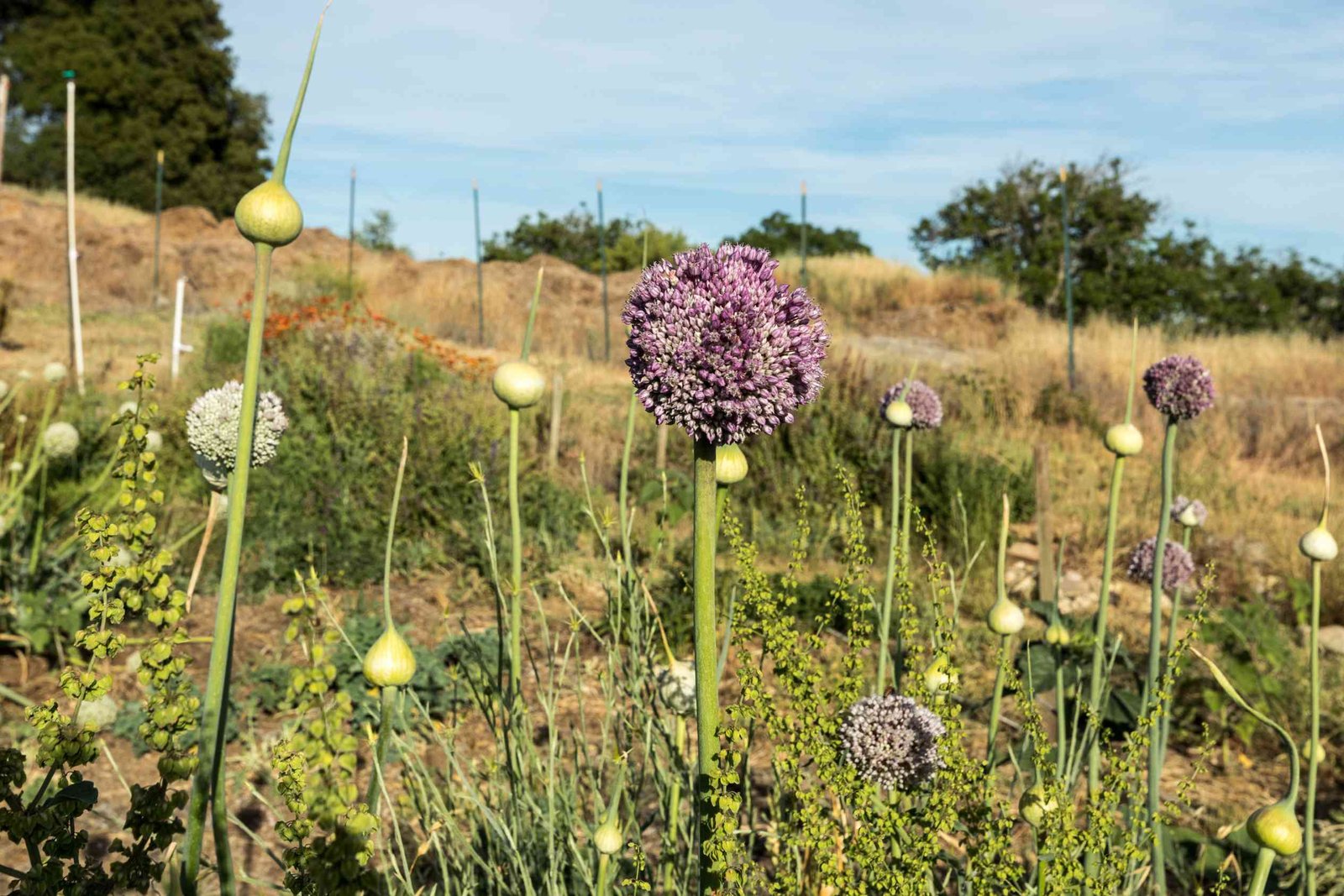
The elephant garlic plant produces some of the biggest bulbs you’ll ever pull from a garden bed, but it isn’t garlic at all – it’s a close cousin of the leek. This guide covers what it is, how to plant it, and how to keep it healthy from clove to harvest.
TL;DR
- Elephant garlic (Allium ampeloprasum) is a leek relative, not true garlic, with a mild, sweet flavor.
- Plant cloves 4-6 inches deep, pointed end up, in fall about 4-6 weeks before the first hard frost.
- Space cloves 8-12 inches apart in full sun and well-drained soil.
- Bulbs take 180-240 days to mature and can weigh up to a pound each.
- Harvest when the lower third of the leaves turns yellow-brown, usually mid-summer.
What is elephant garlic?
Elephant garlic is a large-bulbed plant with the botanical name Allium ampeloprasum. Despite the name, it’s more closely related to leeks than to true garlic, which is why it has a milder, sweeter flavor and a much bigger bulb.
A single bulb splits into just three to six oversized cloves, compared to the many small cloves you’d find in a head of regular garlic. The plant is a perennial, so with the right conditions it will keep producing bulbs year after year instead of needing to be replanted from scratch each season.
How to plant elephant garlic
Plant individual cloves 4-6 inches deep with the pointed end facing up, spaced 8-12 inches apart in rows about 12 inches apart. Choose a site in full sun with loose, well-drained soil, and work in compost or aged manure before planting.
Timing
Fall planting works best in most climates. Get cloves in the ground 4-6 weeks before the first hard frost so roots can establish before winter. Spring planting is possible in colder regions, but bulbs tend to be smaller since the growing season is shorter.
Soil preparation
Break up the soil to a depth of 12-16 inches with a spade or tiller, then mix in organic matter until it’s loose and crumbly. Elephant garlic bulbs are large and need room to expand underground, so compacted soil will limit their size no matter how well you feed and water the plant.
Caring for elephant garlic through the season
credit: https://www.gardenersworld.com/
Keep the soil consistently moist, especially while bulbs are forming underground, but avoid letting it stay soggy since wet soil invites rot. A 2-3 inch layer of straw mulch after planting helps hold moisture, moderate soil temperature, and suppress weeds through winter.
Feed with a balanced organic fertilizer or a top-dressing of compost partway through the growing season, when leaf growth is active. Pull weeds regularly, since elephant garlic competes poorly with aggressive growers early on.
Watering
Water deeply once a week if there’s no rain, tapering off as the plant approaches harvest. Cutting back on water in the final few weeks helps the bulb cure properly instead of staying waterlogged.
Common pests and problems
Onion thrips and white rot are the main issues to watch for. Rotate elephant garlic to a new bed every 3-4 years to keep soil-borne diseases from building up, and pull any plant that shows soft, discolored bulb tissue right away.
Harvesting and storing elephant garlic
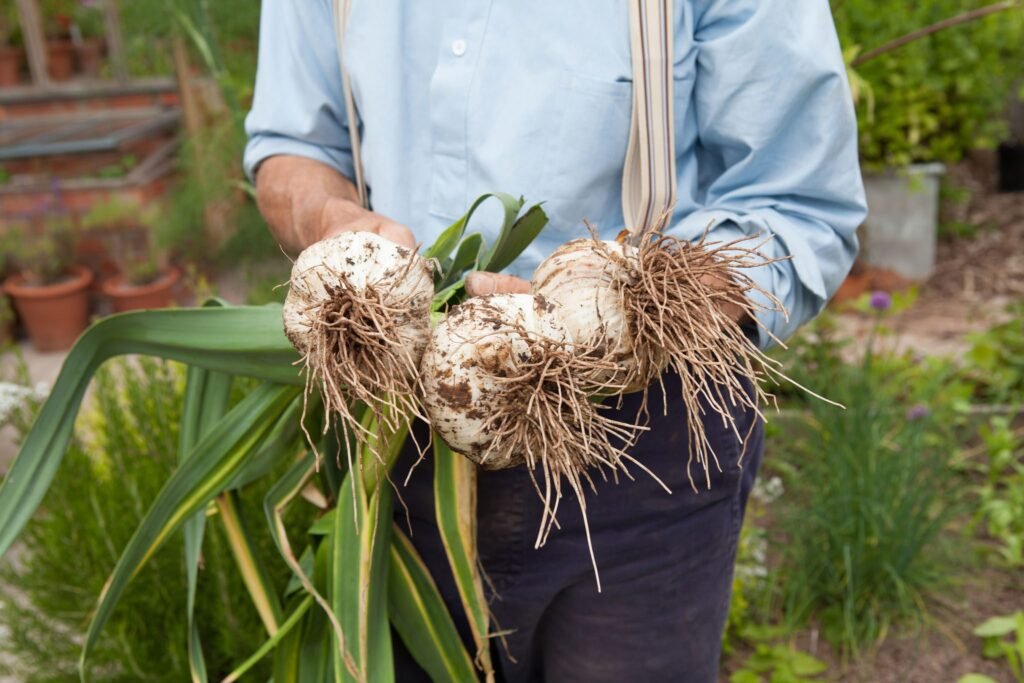
Harvest when the bottom third of the leaves has turned yellow-brown, which typically happens in early to mid-summer, 180-240 days after fall planting. Loosen the soil around the bulb with a garden fork before lifting it, rather than pulling straight up, to avoid tearing the wrapper or bruising the cloves.
Cure the bulbs in a dry, well-ventilated spot out of direct sun for 2-3 weeks before storing. Properly cured elephant garlic keeps for 3-6 months, a shorter window than standard softneck garlic, so plan to use it before winter’s end.
Frequently asked questions about elephant garlic
Is elephant garlic actually garlic?
No. It’s botanically closer to the leek and belongs to a different variety of Allium ampeloprasum than true garlic (Allium sativum).
How deep do you plant elephant garlic cloves?
Plant cloves 4-6 inches deep with the pointed end facing up.
When should I plant elephant garlic?
Fall is best, about 4-6 weeks before the first hard frost, though spring planting works in colder climates.
How big do elephant garlic bulbs get?
A mature bulb can weigh up to a pound, roughly three times the size of a typical garlic bulb.
Can I grow elephant garlic from a bulb bought at the grocery store?
Yes, as long as the bulb is firm and hasn’t been treated to prevent sprouting, though bulbs sold specifically for planting tend to give more reliable results.