
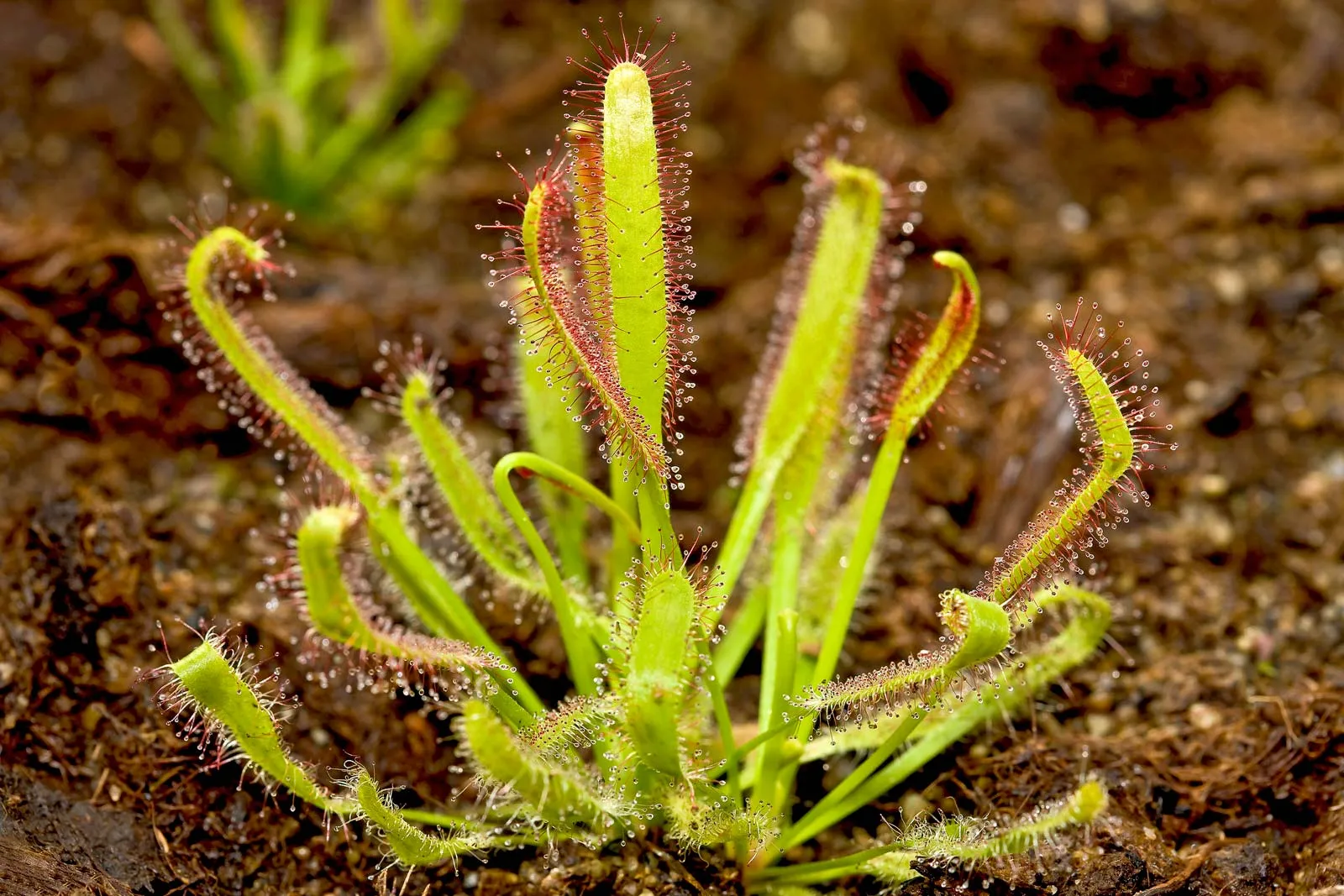
A Drosera plant is a carnivorous plant, commonly called a sundew, that catches small insects with sticky glands on its leaves. Most Drosera need bright light, mineral-free water, acidic low-nutrient growing media, and steady moisture.
TL;DR
- A Drosera plant catches small insects with sticky glands on its leaves.
- Grow Drosera in acidic, low-nutrient media and keep the growing conditions moist.
- Use rainwater, distilled water, or another suitable low-mineral water source rather than ordinary hard tap water.
- Give most sundews plenty of light, while protecting sensitive types from harsh heat.
- Choose care based on the species because Drosera includes plants from very different climates.
What is a Drosera plant?
A Drosera plant is a carnivorous plant in the genus Drosera. Sundews have leaves covered with tiny gland-tipped tentacles that produce sticky mucus. When a small insect lands on a leaf, the mucus holds it in place, and the plant can release digestive enzymes that break down the prey. Kew describes this trapping method in its overview of carnivorous plants.
Drosera grows naturally in places where the soil has few available nutrients. Kew’s Plants of the World Online describes the genus as adapted to wet areas with very few available nutrients, including bogs and swamps. The insects provide nutrients that are scarce in the growing medium.
The genus contains many different forms. Some make low rosettes close to the soil, while others have upright stems or unusual leaves. This difference matters because a care routine that suits one Drosera may be poor for another.
How do you care for a Drosera plant?
A Drosera plant needs strong light, acidic low-nutrient media, and reliable moisture, but the exact routine depends on the species. Cape sundew, for example, is commonly grown as a houseplant, while some temperate sundews need a seasonal dormant period.
| Need | General requirement |
|---|---|
| Light | Bright light to full sun, with protection from excessive heat where needed |
| Water | Rainwater or another low-mineral water source |
| Soil | Acidic, low-nutrient carnivorous-plant media |
| Moisture | Usually consistently moist, with the exact level depending on species |
| Fertilizer | Avoid ordinary fertilizer in the growing medium |
The Royal Horticultural Society recommends full light and continually moist conditions for several Drosera species. Its guidance for Cape sundew also recommends keeping the plant moist with rainwater in a saucer.
Light needs
Give most Drosera plenty of light. Strong light helps many sundews develop better color and maintain active sticky leaf glands.
An indoor Drosera can grow near a bright window or under a suitable grow light. Watch the temperature around sunny glass, especially in a small enclosed space. Some species need protection from intense midday heat.
Watering
Keep the growing medium moist, but use water with very little mineral content. Rainwater is a simple choice. Reverse-osmosis or distilled water can also be suitable when the source is appropriate.
The RHS recommends lime-free water, such as rainwater, for several Drosera species. Its profile for Drosera rotundifolia recommends keeping the compost continually moist to wet during the growing season by standing the container in a tray of lime-free water.
Do not treat every Drosera as a bog plant. Some species have different root systems and seasonal needs. Species-specific care matters more than following one watering rule for the entire genus.
Soil and potting
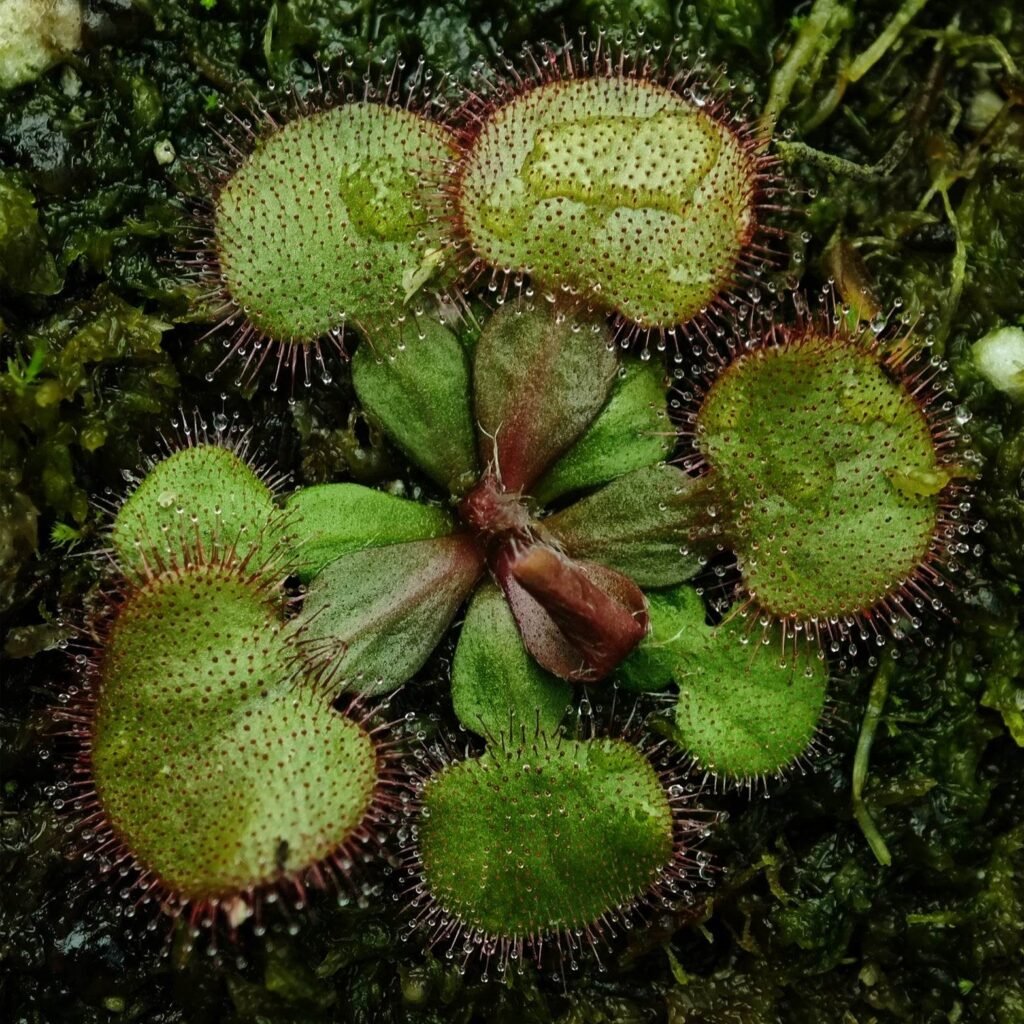
Use a low-nutrient, acidic growing medium made for carnivorous plants. Ordinary potting soil and regular fertilizer mixes are poor choices because Drosera are adapted to nutrient-poor conditions.
The RHS recommends specialist carnivorous-plant compost or suitable peat-free mixes with sand for several sundews.
Choose a pot with enough depth and drainage for the species you grow. Keep the medium from becoming contaminated with fertilizer or mineral-heavy amendments.
Does a Drosera plant need insects?
A Drosera plant can catch insects for nutrients, but you do not need to make feeding the main part of its care routine. A plant that receives suitable light, water, and growing media can catch prey when small insects are available.
The sticky tentacles are the plant’s natural trapping system. Kew explains that sundews use sticky mucus to hold insects, after which digestive enzymes break down the prey.
Avoid feeding a sundew large pieces of meat or ordinary household food. Its traps are adapted to small prey, and unsuitable food can cause problems instead of helping the plant.
Which Drosera plant is easiest for beginners?
Drosera capensis, the Cape sundew, is one of the easier sundews for beginners. The RHS lists it among carnivorous plants that can be grown as houseplants and recommends full light, moisture, and rainwater for cultivation.
Cape sundew also gives you a useful way to learn the basics of carnivorous plant care without starting with a species that has highly specialized seasonal needs.
Other Drosera can be more demanding. Temperate species may need winter dormancy, while some South African and Australian species have different watering patterns. Always check the species name before changing its care routine.
When is a Drosera plant not a good fit?
A Drosera plant is a poor choice if you cannot provide suitable low-mineral water, bright enough light, and the moisture level required by the species. It is also a poor match for a normal houseplant setup based on rich potting soil and routine fertilizer.
Species selection matters in warm climates. A tropical or subtropical sundew may be easier to keep indoors than a temperate species that expects a cooler seasonal cycle.
For example, the RHS notes that Drosera rotundifolia enters winter dormancy and has different winter watering needs from its growing-season routine.
Common mistakes with Drosera plants
- Growing Drosera in ordinary potting soil can expose the roots to more nutrients than the plant is adapted to handle, so use a suitable carnivorous-plant medium instead.
- Watering with mineral-rich water can cause problems over time, so choose rainwater or another suitable low-mineral source.
- Keeping a sundew in poor light can reduce its color and growth, so move it to a brighter location when conditions allow.
- Assuming every Drosera needs the same watering routine can lead to root problems, so identify the species before changing its care.
- Adding fertilizer to the potting medium defeats the purpose of using a low-nutrient carnivorous-plant medium, so skip routine fertilizer unless a species-specific source says otherwise.
Frequently asked questions about Drosera plants
What is a Drosera plant?
A Drosera plant is a carnivorous plant in the sundew genus. Its sticky leaf glands trap small insects, which the plant can digest for nutrients.
How often should I water a Drosera plant?
Keep the growing medium at the moisture level required by the species. Many sundews need consistently moist conditions during active growth, while some species need a drier winter period.
Can I grow a Drosera plant indoors?
Yes. Cape sundew and some other species can grow well indoors when they receive enough light and suitable water.
Does a Drosera plant need fertilizer?
Do not use ordinary fertilizer in the growing medium. Drosera are adapted to low-nutrient conditions, and several RHS species profiles specifically advise against fertilizer.
What water is best for Drosera?
Rainwater is a good choice when it is clean and suitable for plant use. Distilled or reverse-osmosis water can also be used when appropriate.
Why is my Drosera losing its sticky droplets?
Low light, unsuitable water, dry conditions, or species-specific dormancy can all affect the appearance of a sundew. Check the plant’s light, moisture, water source, and species requirements before changing its care.
Can I feed my Drosera plant insects?
A Drosera can catch small insects with its leaves, so extra feeding is usually unnecessary when prey is available. If you do feed a plant, use only an appropriate small prey item rather than household food.