
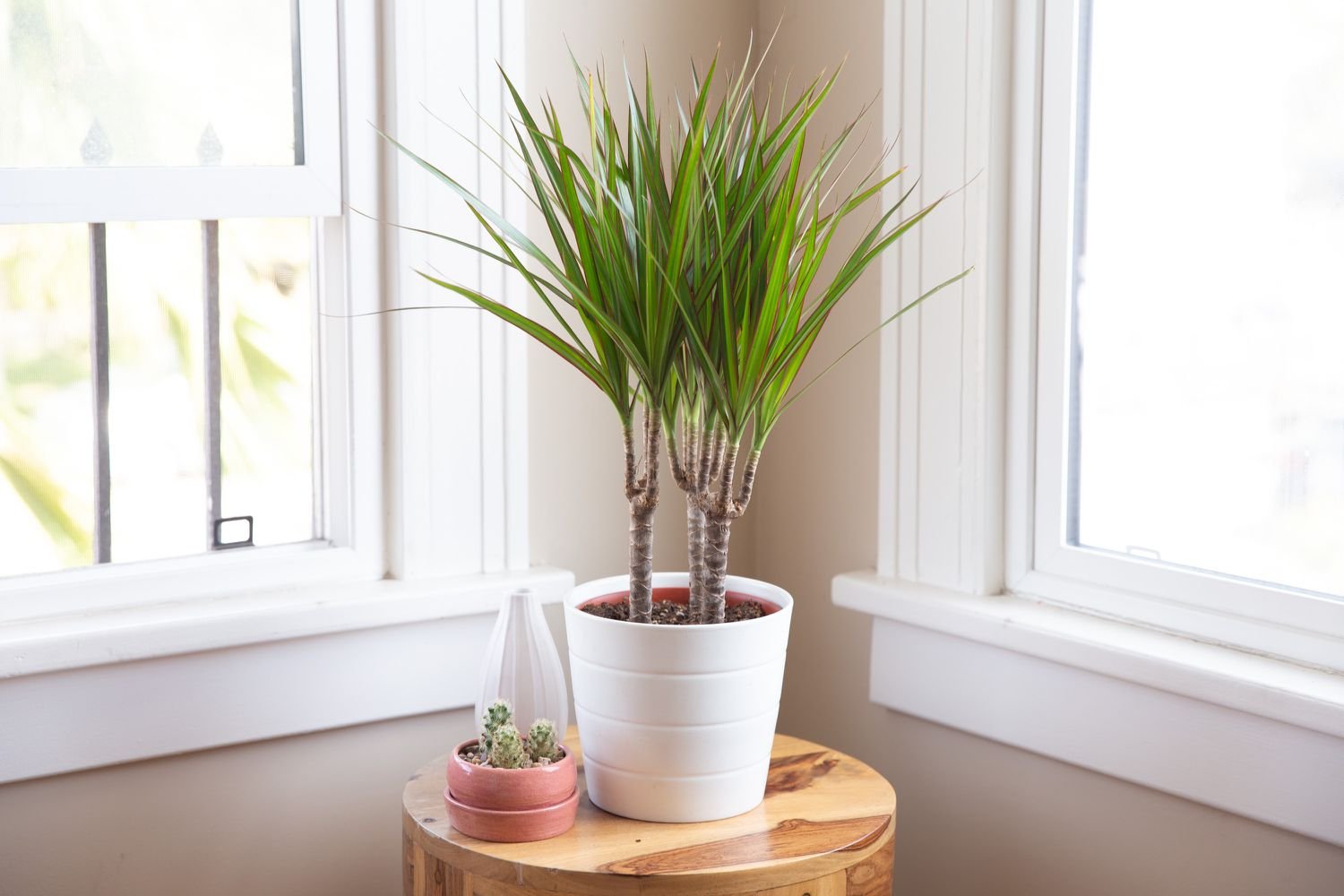
The dragon tree plant, Dracaena marginata, is a slender houseplant with narrow leaves and woody stems. Give it bright indirect light, well-drained soil, and careful watering, and it can stay healthy indoors for years.
TL;DR
- Keep a dragon tree plant in bright, indirect light.
- Water when the top 5 cm (2 inches) of potting mix feels dry.
- Use a well-drained pot and avoid leaving the roots in standing water.
- Keep the plant warm and away from cold drafts and hot radiators.
- Prune tall or weak stems to control the shape and encourage new shoots.
- Dragon trees are toxic to cats and dogs if eaten.
What is a dragon tree plant?
A dragon tree plant is Dracaena marginata, commonly called the Madagascar dragon tree. It has narrow, pointed leaves that grow from the tops of woody stems. The foliage is usually green, often with reddish or darker margins depending on the cultivar.
RHS lists Dracaena marginata as a popular houseplant and notes that mature plants can become several metres tall outdoors in suitable conditions. Indoors, regular pruning can keep the plant at a manageable size.
The plant suits homes with steady warmth and filtered or indirect light. It also tolerates lower indoor light better than many plants, although stronger indirect light generally supports better growth.
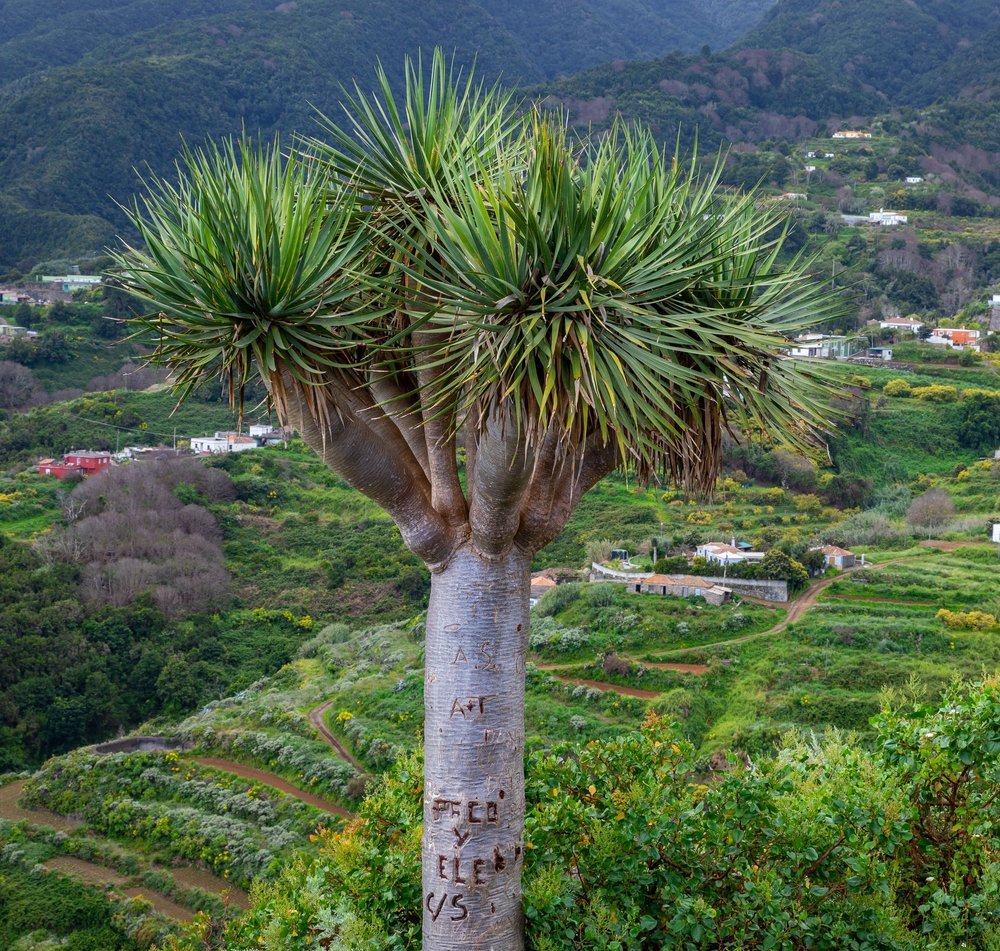
One useful distinction is worth knowing: “dragon tree” can refer to several Dracaena species. This guide focuses on Dracaena marginata, the common Madagascar dragon tree sold as an indoor plant.
How to care for a dragon tree plant
A dragon tree plant needs bright indirect light, moderate watering, good drainage, and warmth. Let the surface of the potting mix dry before watering again, and avoid keeping the roots constantly wet.
Light
Place your dragon tree plant near a bright window where the leaves receive plenty of filtered light. An east- or west-facing window can work well. If the plant sits near a strong south-facing window, use a sheer curtain to soften direct sun.
Too much hot, direct sunlight can scorch the foliage. Very low light can also slow growth.
Water
Check the potting mix before reaching for the watering can. When the top 5 cm (2 inches) feels dry, water thoroughly, then allow excess water to drain away.
Overwatering is a common problem with dragon trees. Roots need access to air as well as moisture, so constantly wet compost can lead to root problems.
The RHS also recommends rainwater or filtered water where possible because fluoride and minerals in some tap water can contribute to brown leaf tips.
Soil and pot
Use a loose, well-drained houseplant mix in a container with drainage holes. The pot should allow excess water to escape rather than trapping it around the roots.
A pot that is much larger than the root system can hold more wet compost for longer, so choose a container that suits the size of the plant.
Temperature and humidity
Keep a dragon tree plant somewhere warm and away from cold drafts. The RHS recommends around 18 to 30°C (65 to 86°F) for good growth and advises avoiding cold conditions and hot radiators.
Average indoor humidity is often workable, but very dry air can contribute to brown leaf tips. Moving the plant away from strong heat sources is a simple first step.
How to prune a dragon tree plant
Pruning a dragon tree plant is useful when the stems have become too tall, sparse, or uneven. Cut a stem at the height where you want new growth to develop.
Dragon trees can produce new shoots below a pruning cut, so cutting back a tall stem can help create a fuller shape. The RHS notes that weak stems can be shortened and that dragon trees respond well to pruning.
Use clean, sharp pruning shears. If you are removing several stems, work gradually rather than cutting the whole plant back at once.
You can also remove yellowing or damaged leaves by cutting them close to the main stem.
When a dragon tree plant is not a good fit
A dragon tree plant may struggle in a cold room, a location with harsh direct afternoon sun, or a pot that stays wet for long periods. It also needs a different setup from plants that prefer consistently moist soil.
Think about the spot where you plan to keep it. If the only available location is beside a cold window, directly above a radiator, or in strong unfiltered sun, another houseplant may be easier to manage.
Pet owners should also take care with placement. The ASPCA lists Dracaena marginata as toxic to cats and dogs, with possible signs including vomiting, drooling, weakness, depression, and other symptoms after ingestion.
Keep the plant where pets cannot chew the leaves. If you suspect a pet has eaten part of the plant, contact a veterinarian or animal poison service promptly.
Common mistakes with dragon tree plants
The most common care problems usually come from watering, light, or placement.
- Watering on a fixed schedule: Check the soil first instead of watering simply because a certain number of days has passed.
- Keeping the pot wet: Make sure the container drains freely and never leave it sitting in excess water.
- Putting it in harsh sun: Strong direct sunlight can scorch the leaves.
- Ignoring brown tips: Check watering habits, water quality, humidity, and nearby heat sources.
- Keeping it beside a radiator: Hot, dry air can cause foliage problems.
- Forgetting about pets: Dragon trees can be harmful when eaten by cats and dogs.
If the leaves develop brown tips, look at the growing conditions as a whole. A single symptom can have several possible causes, so changing several care factors at once can make the problem harder to diagnose.
Frequently asked questions about dragon tree plants
How often should I water a dragon tree plant?
Water when the top 5 cm (2 inches) of potting mix feels dry. The exact timing depends on light, temperature, pot size, and the type of potting mix.
Does a dragon tree plant need direct sunlight?
A dragon tree plant does best with bright, indirect light. Some direct light may be tolerated, but strong hot sun can scorch the foliage.
Why are the leaves on my dragon tree plant turning brown?
Brown tips can be linked to dry air, inconsistent watering, unsuitable water quality, or exposure to heat. Check the soil and the plant’s location before changing your watering routine.
Can I cut the top off a dragon tree plant?
Yes. Pruning a stem can encourage new shoots below the cut and help control the plant’s height.
Is a dragon tree plant safe for cats and dogs?
No. The ASPCA lists Dracaena marginata as toxic to cats and dogs if eaten. Keep it away from pets that chew plants.
Can a dragon tree plant grow in low light?
It can tolerate lower indoor light, but bright indirect light is generally a better choice for healthy growth. Avoid placing it in deep shade for long periods.
How tall can a dragon tree plant become?
Dracaena marginata can become several metres tall in suitable outdoor conditions. As a houseplant, regular pruning can keep it much smaller and encourage branching.