
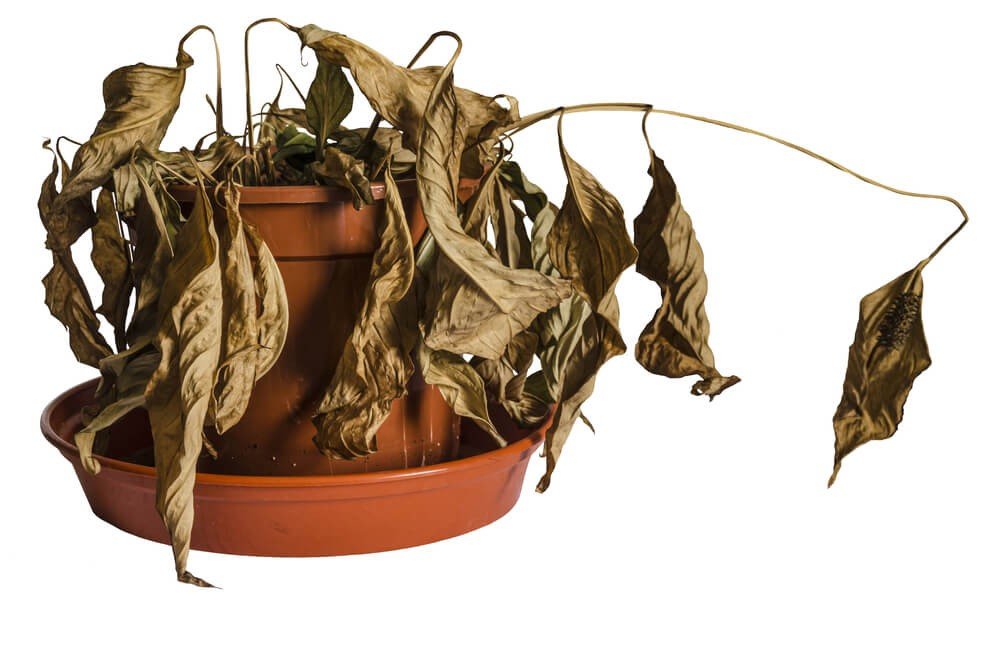
A dead plant can look very different from a dying plant, and brown leaves alone do not prove that the whole plant is gone. Check the stems, growing points, and roots before you throw it away. If some living tissue remains, the plant may still recover.
TL;DR
- Brown, dry, or fallen leaves do not always mean the entire plant is dead.
- Check stems for living tissue and roots for signs of healthy or damaged growth.
- A plant with some living roots, a living crown, or healthy stem tissue may recover.
- Overwatering, underwatering, poor light, temperature stress, pests, and disease can all cause severe decline.
- If all major stems, roots, and growing tissue are dead, recovery is no longer possible.
What is a dead plant?
A plant is dead when its living tissues can no longer function or produce new growth. The difficult part is that a plant can lose most of its leaves and still have living tissue below the soil or inside its stems.
This is why appearance alone can be misleading. A plant may look completely brown after drought, cold damage, or another setback while its roots or lower stems remain alive.
The first question to ask is not, “Do the leaves look dead?” It is, “Is there any living tissue left?”
How can you tell if a plant is really dead?
You can get a better answer by checking the stem, roots, and growing points rather than relying on the leaves alone.
For many woody or stemmed plants, gently scratch a very small area of the outer stem with a clean fingernail. Living tissue underneath may be green or otherwise moist and healthy-looking, while a completely dead stem is usually dry and brown beneath the surface.
This test is not universal. Some plants naturally have brown or differently colored stems, so compare the area with healthy growth when possible.
Also look for these signs:
- New buds or shoots indicate that at least part of the plant is still active.
- Flexible, firm stems are more encouraging than stems that are completely dry, brittle, or collapsing.
- Healthy roots are generally firm rather than mushy or slimy, although natural root color varies between plants.
- A completely dried root system with no living crown, stem, or growing point is a strong sign that the plant cannot recover.
For a potted plant, you may need to slide it carefully from the container to inspect the root system. Avoid pulling hard on the stem because damaged roots can make diagnosis more difficult.
Can a dead plant be revived?
A truly dead plant cannot be revived, but a badly stressed plant sometimes can. The deciding factor is whether living tissue remains.
If you find living stems, roots, a crown, or growing points, give the plant stable conditions rather than trying several treatments at once.
Start with these steps:
- Remove leaves and stems that are clearly dead and dry.
- Check the soil before watering. Do not add more water simply because the plant looks wilted.
- If the soil is saturated and the roots are damaged, correct the drainage problem rather than continuing to water.
- Move the plant to the light level that suits its species.
- Protect it from severe heat, cold, or sudden environmental changes.
- Give it time to respond before adding fertilizer or making another major change.
Recovery can be slow. A plant that has lost most of its foliage may need time to produce new growth, so look for gradual changes rather than expecting a quick turnaround.
Why do plants die?
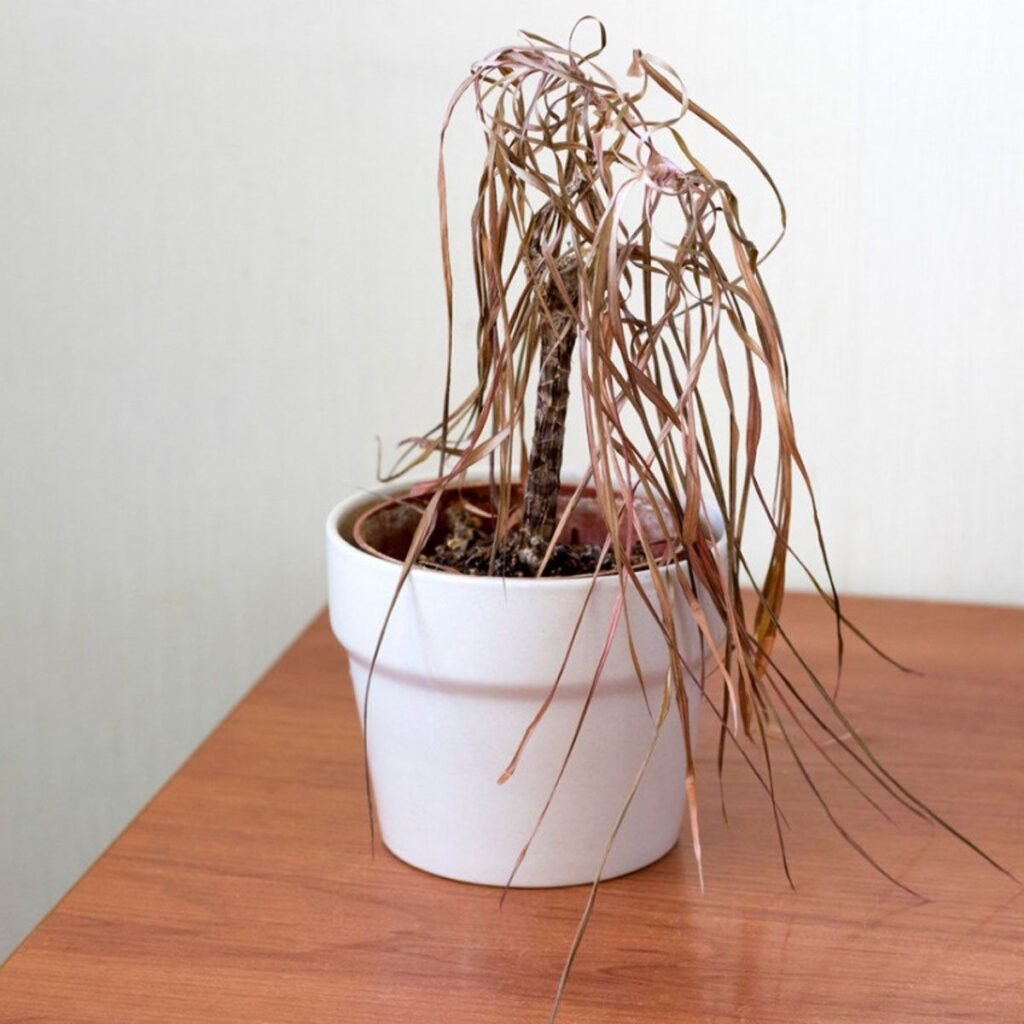
The cause matters because fixing the original problem gives a struggling plant a better chance of recovery.
Too much water is a common problem, especially when soil stays wet for long periods. Saturated soil reduces the air available around roots, and root diseases can also develop under wet conditions.
Too little water can cause severe wilting, leaf loss, and tissue death when the problem continues for too long.
Poor light can weaken a plant over time, while excessive direct light can damage foliage on plants that are not adapted to it.
Temperature stress can also cause serious damage. Cold or freezing conditions may kill leaves, stems, roots, or the entire plant depending on the species and severity.
Pests and diseases can damage foliage, stems, or roots. Root problems are especially difficult because substantial root damage may occur before the above-ground symptoms become obvious.
A useful clue is the soil. Wilted leaves do not automatically mean the plant needs more water. A wilted plant sitting in constantly wet soil may have a root problem rather than a shortage of water.
When should you stop trying to save a plant?
You should stop trying to revive a plant when there is no convincing sign of living tissue.
If the stems are completely dry from the tips to the base, the roots are entirely dead or decayed, and there are no living buds, shoots, crown tissue, or other signs of recovery, the plant is unlikely to return.
There is also a practical reason to stop. A severely diseased plant can sometimes become a source of problems for nearby plants, particularly when the disease affects roots or stems.
If you are unsure, give the plant a little more time and monitor it rather than repeatedly disturbing the roots or changing its growing conditions.
Common mistakes when trying to revive a dead plant
The biggest mistake is treating every wilted plant as though it needs more water.
Other common problems include:
- Keeping a plant in saturated soil because its leaves are wilted.
- Moving a stressed plant repeatedly from one location to another.
- Fertilizing heavily when the plant is already damaged.
- Cutting away healthy tissue because it looks less vigorous than usual.
- Repotting unnecessarily when the existing root system is already weak.
- Assuming brown leaves mean the entire plant is dead.
The goal is to identify what is still alive and correct the condition that caused the decline.
FAQ about dead plants
Can a plant come back after all its leaves fall off?
Yes, some plants can recover after losing their leaves if their roots, stems, crown, or growing points are still alive. Check the plant before assuming it is dead.
How do I know if a plant has dead roots?
Dead or badly damaged roots may be dark, limp, mushy, or slimy, although natural root color differs among plants. Healthy roots are generally firm, so texture is often more useful than color alone.
Should I water a dying plant?
Not automatically. Check the soil and the plant’s normal watering needs first, because adding water to already saturated soil can worsen root problems.
Should I cut off all the dead leaves?
Remove leaves that are clearly dead, dry, or diseased, but avoid cutting healthy tissue simply because the plant looks sparse. Leave living stems and growing points intact.
How long does it take a struggling plant to recover?
There is no single recovery time because it depends on the plant, the cause of the damage, and how much living tissue remains. Watch for new buds, shoots, or other signs of active growth rather than using a fixed deadline.
Can a plant recover from root rot?
Sometimes, if enough healthy root and plant tissue remains and the conditions causing the root problem are corrected. Severe root loss can make recovery unlikely.
Is a brown plant always dead?
No. Brown foliage can result from drought, cold, excessive light, root problems, disease, or other stress. Check stems and roots before deciding that the entire plant is dead.