
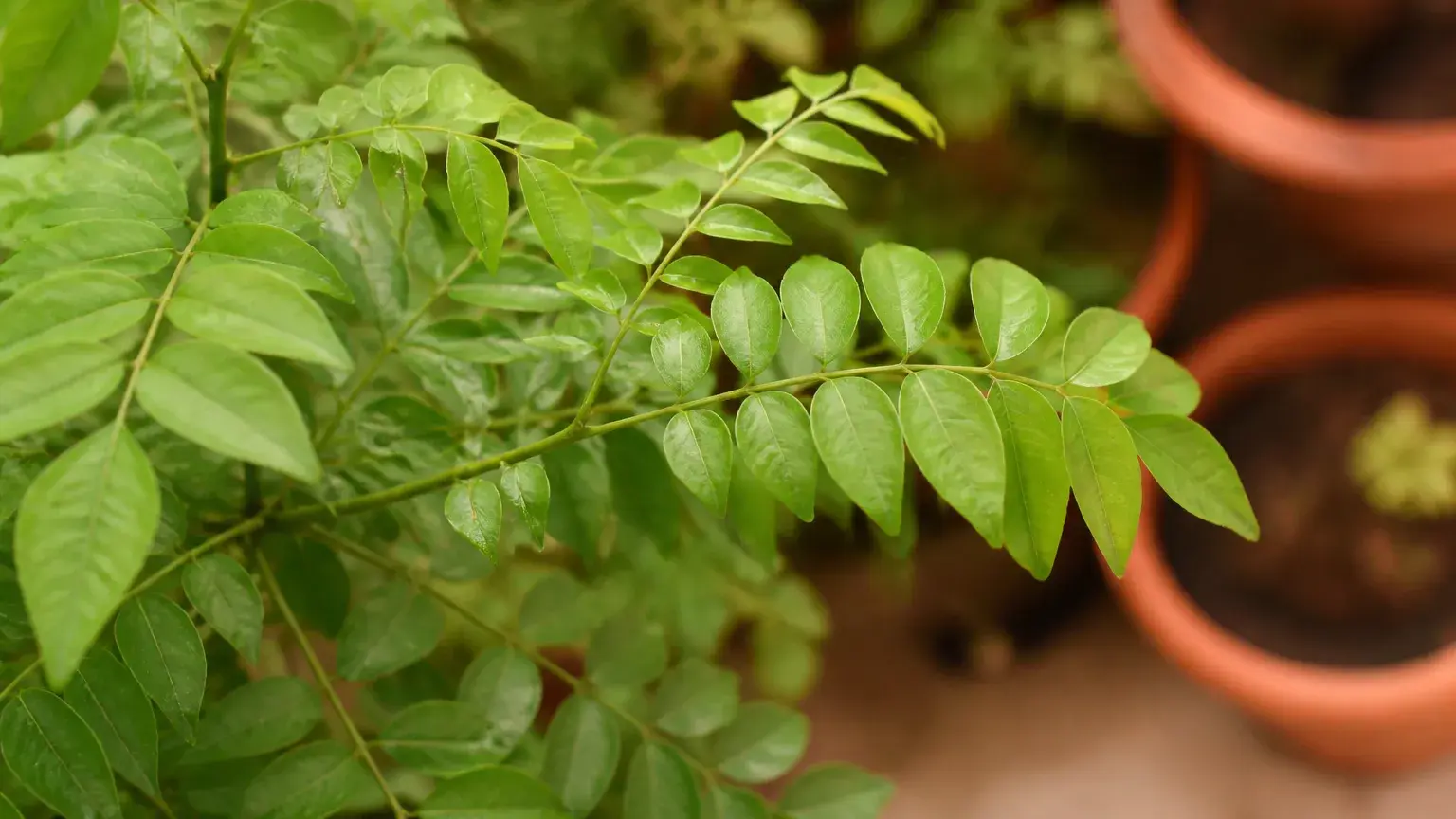
A curry leaves plant (Murraya koenigii) is a small aromatic tree grown for its fragrant leaves, which are widely used in South Asian cooking. Give it warmth, good light, free-draining soil, and enough time between waterings for the soil to dry slightly.
TL;DR
- A curry leaves plant grows best in warm conditions with full sun to partial shade.
- Let the soil dry slightly between waterings rather than keeping it constantly wet.
- Use rich, well-drained soil and feed the plant during active growth.
- Prune the plant to encourage branching and keep container-grown plants manageable.
- In cold climates, grow curry leaf in a container and protect it from frost.
What is a curry leaves plant?
A curry leaves plant is a small evergreen or semi-evergreen tree in the citrus family, Rutaceae. Its botanical name is Murraya koenigii, although some current botanical references use Bergera koenigii. The plant is native to parts of South Asia, including India and Sri Lanka.
The leaves are made up of several small leaflets along a central stem. They have a strong, fresh aroma and a citrus-like flavor. The State Botanical Garden Odisha describes the plant as a small tree with fragrant white flowers and small round fruits.
Curry leaf is different from curry powder. The plant gives you fresh leaves for cooking, while curry powder is a spice blend made from several ingredients.
How to care for a curry leaves plant
A curry leaves plant needs warmth, good light, well-drained soil, and moderate watering. These conditions are especially important in containers, where wet soil can remain around the roots for too long.
| Need | Requirement |
|---|---|
| Light | Full sun to partial shade |
| Soil | Rich, well-drained soil |
| Water | Moderate; allow the soil to dry slightly between waterings |
| Temperature | Warm conditions; protect from frost |
| Container | Use a pot with drainage holes and room for root growth |
| Feeding | Feed during active growth according to the fertilizer label |
For outdoor growing, choose a sheltered position with good light. In very hot conditions, some afternoon protection can help prevent leaf scorch. Missouri Botanical Garden also recommends a site protected from strong winds.
For indoor growing, place the plant beside a bright window. A warm, sunny position is better than a dim room. If natural light is weak, the plant may need supplemental grow lighting.
Watering
Water a curry leaves plant when the upper part of the soil has dried rather than keeping the pot constantly wet. Then water thoroughly until excess water drains from the bottom.
Poor drainage is a common cause of trouble. If the soil stays wet for long periods, roots can suffer. Check the drainage holes and use a loose potting mix if water drains slowly.
How to grow curry leaves in a pot
Growing a curry leaves plant in a container gives you more control over soil, water, and temperature. It is also the practical choice in climates where winter frost can damage the plant.
Choose a container with drainage holes and enough depth for the roots. Repot when the plant has clearly outgrown its container, but avoid moving it into a very large pot all at once. A pot that is much larger than the root system can hold excess moisture.
Keep the plant in a bright, warm position during active growth. If you move a container outdoors for summer, introduce it to stronger sunlight gradually. This reduces the chance of leaf scorch after a period indoors.
In cold climates, bring the container indoors before frost. Missouri Botanical Garden recommends overwintering curry leaf plants indoors in colder regions and placing them in bright light.
How to prune a curry leaves plant
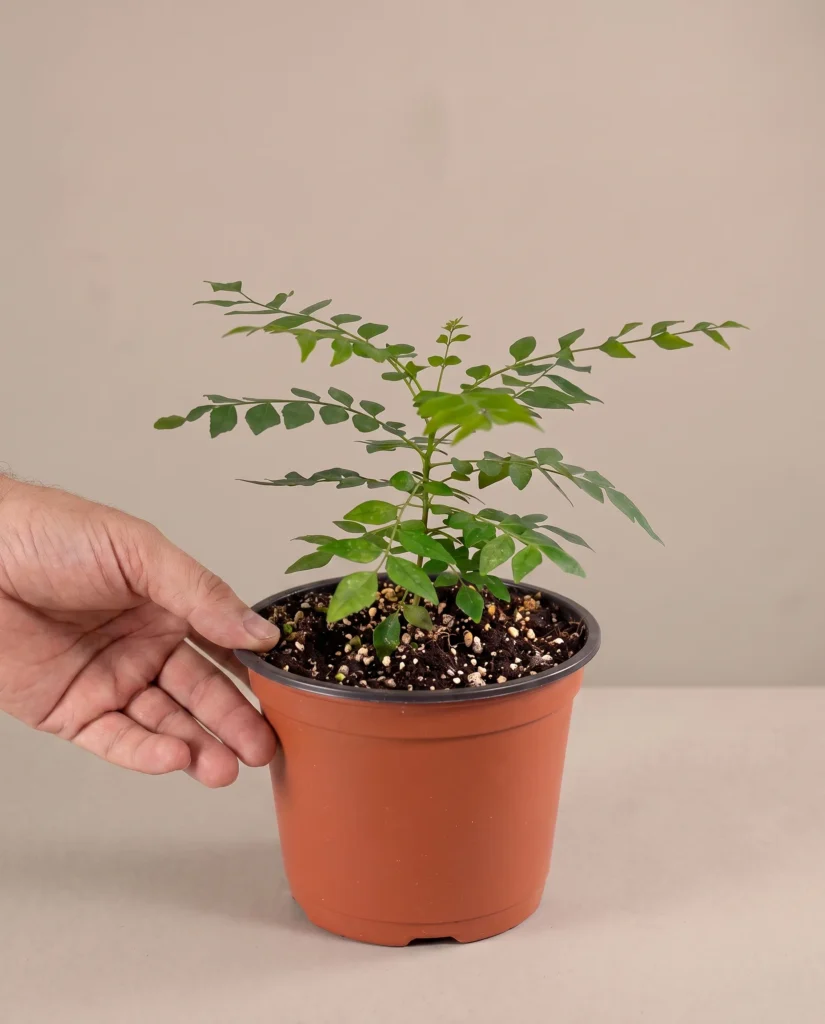
Prune a curry leaves plant to encourage branching and keep the plant compact. Pinch or cut back growing tips rather than allowing one stem to grow much taller than the rest.
Regular harvesting also gives you a reason to prune. Take leafy shoots cleanly and avoid removing most of the foliage at one time, especially from a young plant.
If the plant produces flowers and your main goal is leaf production, removing developing flower or fruit clusters can direct more of the plant’s growth toward foliage.
How to propagate a curry leaves plant
A curry leaves plant can be propagated from seed or vegetative growth, but seed can be slow and uneven. UC Master Gardeners of Santa Clara County notes that fresh ripe seeds can take more than a month to germinate and that germination may be erratic.
Root suckers and cuttings are other propagation options. A root sucker is a new shoot that develops from the plant’s root system. When available, a healthy sucker can be easier to establish than starting from seed.
If you grow from seed, use fresh seed and keep the growing medium warm. Older seed may give poor results, so patience is important.
How to harvest curry leaves
You can harvest curry leaves whenever the plant has enough healthy growth to spare. Cut leafy stems rather than stripping every leaflet from the plant.
Fresh leaves have the strongest flavor for cooking. UC Master Gardeners of Santa Clara County also notes that curry leaves can be frozen for later use, while drying can reduce their flavor.
Harvest lightly from young plants until they have developed several strong branches. Once the plant is well established, regular picking can also help keep the shape compact.
Common problems with a curry leaves plant
- Yellow leaves often point to watering or root problems, especially when the soil stays wet for too long. Check drainage before adding more water.
- Brown or scorched leaves can result from excessive heat or a sudden change from low light to strong sun. Give the plant bright light while increasing direct sun gradually.
- Slow growth often occurs when the plant lacks warmth or light. Move it to a warmer, brighter position during active growth.
- Leaf drop can happen when a plant is exposed to cold conditions. Protect curry leaf from frost and cold drafts.
- A tall, thin plant usually needs more light and regular pruning. Cut back growing tips to encourage side branches.
When a curry leaves plant is not a good fit
A curry leaves plant is a poor outdoor choice where winters bring regular frost unless you can move it indoors or otherwise protect it. The plant is naturally suited to warm climates, so cold conditions can cause leaf loss or damage.
It can still work well as a container plant in cooler areas. Keep the pot outdoors during suitable warm weather and move it into a bright, warm location before cold temperatures arrive.
Frequently asked questions about curry leaves plant
Is a curry leaves plant easy to grow?
A curry leaves plant is fairly straightforward in warm conditions, but it can be slower and more demanding in cold climates. Good light, warmth, drainage, and careful watering make the biggest difference.
How often should I water a curry leaves plant?
Water when the soil has dried slightly rather than following a fixed weekly schedule. Hot weather, pot size, soil type, and light levels can all change how quickly the plant dries.
Can I grow a curry leaves plant indoors?
Yes. A curry leaves plant can grow indoors when it has a warm position and plenty of bright light. A sunny window is a good starting point.
Does a curry leaves plant need full sun?
A curry leaves plant grows well in full sun to partial shade. In very hot conditions, some protection from intense afternoon sun can reduce leaf scorch.
Can I grow curry leaves from seed?
Yes, but seed propagation can be slow and germination can be uneven. Fresh seed and warm growing conditions give you a better starting point.
How do I make my curry leaves plant bushier?
Prune or pinch growing tips to encourage side branches. Regular light harvesting can also help keep a mature plant compact.
Why are the leaves falling off my curry leaves plant?
Cold temperatures, low light, watering problems, and sudden changes in growing conditions can cause leaf drop. Check the plant’s temperature, light, and soil moisture before changing anything else.