
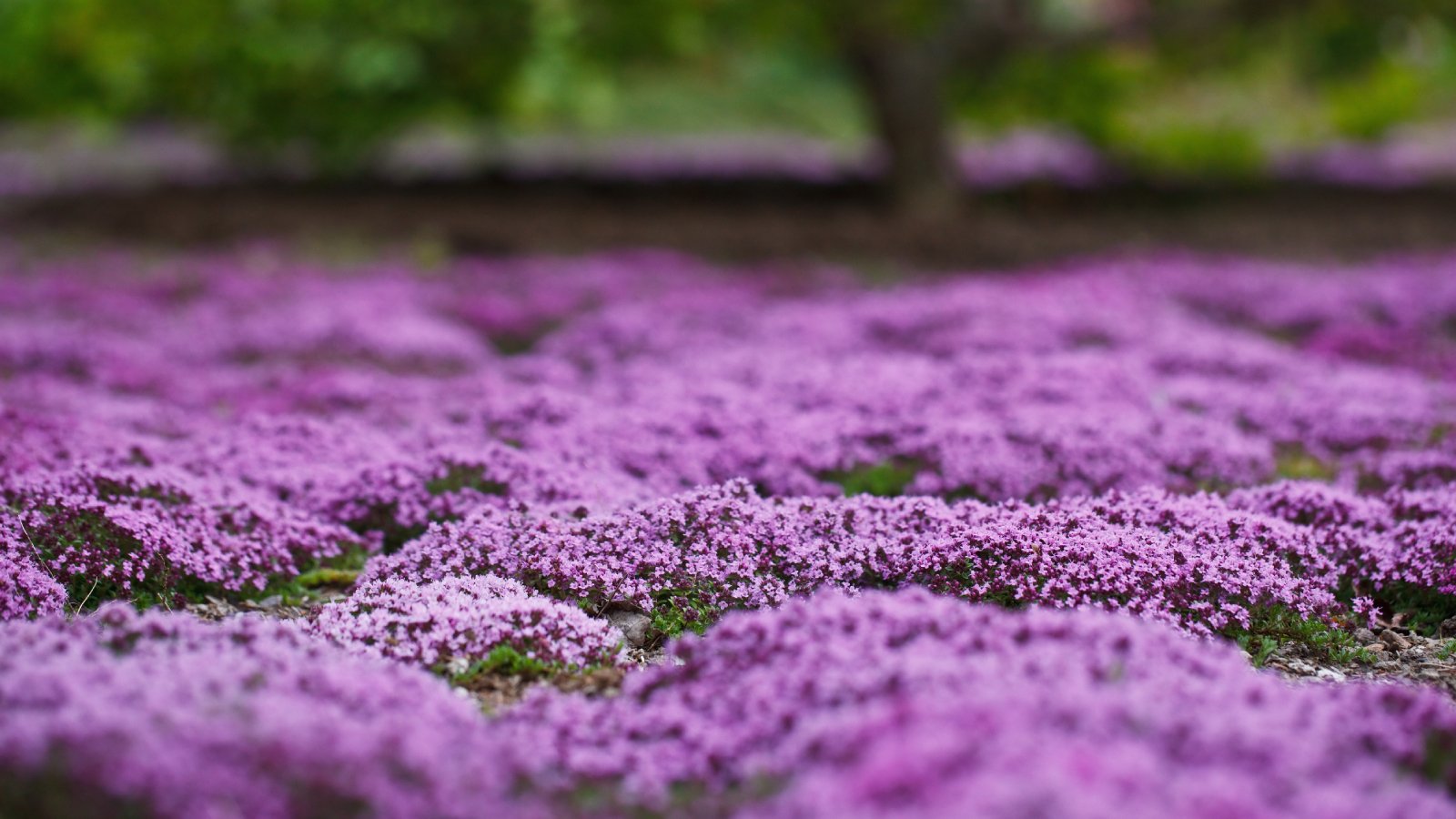
Creeping thyme is a low-growing, flowering herb that spreads across sunny garden beds, between stepping stones, and along the edges of paths. It is a good choice for gardeners who want a soft carpet of foliage and small flowers without the upkeep of a traditional lawn.
TL;DR
- Creeping thyme grows into a low mat of fragrant leaves and small flowers.
- Choose a sunny planting site with soil that drains well after rain.
- Water regularly while young, then reduce watering once the roots are established.
- Use creeping thyme around stepping stones, rock gardens, and sunny borders.
- Avoid waterlogged soil and paths that receive heavy, constant foot traffic.
Why choose creeping thyme as a ground cover plant?
Creeping thyme (Thymus serpyllum and related creeping species) is a spreading perennial herb that grows close to the ground. Its small leaves form a dense mat, while its flowers add color during the growing season.
This plant suits gardeners who want a low-growing cover for open, sunny areas. It works especially well in rock gardens, along path edges, and between paving stones where the soil stays relatively dry.
Creeping thyme has several practical benefits:
- It stays low and needs little trimming in suitable conditions.
- Its leaves release a pleasant herbal scent when brushed.
- Its small flowers provide nectar and pollen for visiting pollinators.
- It can tolerate dry conditions once established.
- It fills spaces between stones where taller plants may look out of place.
Creeping thyme is not suitable for every garden. It needs good drainage and enough sunlight to grow well. If your garden stays wet after rain or receives heavy shade for most of the day, choose a ground cover that suits those conditions instead.
What growing conditions does creeping thyme need?
Creeping thyme grows best in full sun and well-drained soil. It can tolerate light shade, but too little sunlight may reduce flowering and leave the planting thinner than expected.
Check the planting site before buying plants. A sunny slope or raised rock garden often suits creeping thyme better than a low spot where water collects.
| Growing factor | What creeping thyme needs |
|---|---|
| Sunlight | Full sun is best, with some tolerance for light shade. |
| Soil | Well-drained soil, including sandy or gritty soil. |
| Water | Regular moisture during establishment, followed by less frequent watering. |
| Growth habit | A low, spreading mat of foliage. |
| Flowers | Small flowers that may be pink, purple, red, or white, depending on the variety. |
| Foot traffic | Occasional light contact, rather than regular heavy walking. |
Heavy clay soil can be a problem when it holds water for long periods. Improve drainage before planting or grow creeping thyme in a raised bed with a suitable soil mix.
Climate also matters. Creeping thyme generally suits areas with sunny, relatively dry growing conditions. In hot, humid regions with frequent rain, wet soil can cause poor growth and root problems. Choose a planting location with good airflow and drainage, and consider other ground cover plants if the site remains damp.
How to plant creeping thyme as a ground cover
Plant creeping thyme in spring when the weather is mild and the soil is workable. This gives young plants time to develop roots before they face extreme heat or cold.
Follow these steps to prepare the planting area.
1. Remove existing weeds. Clear grass and weeds from the bed before planting. Persistent weeds can compete with young thyme for water, light, and space.
2. Check soil drainage. Water the area and see how quickly excess moisture drains away. Choose another site or raise the bed if water remains around the roots.
3. Prepare the soil. Loosen the surface and mix in a suitable gritty material if needed to improve drainage. Avoid adding large amounts of rich compost or fertilizer to an already fertile bed.
4. Set out the plants. Place young plants about 8 to 12 inches apart. Closer spacing fills the area sooner, while wider spacing reduces the number of plants needed.
5. Plant at the correct depth. Set each plant so its crown, where the stems meet the roots, sits at soil level. Cover the roots with soil without burying the crown.
6. Water after planting. Give the soil a thorough watering, then allow excess water to drain away.
7. Keep weeds under control. Remove weeds as they appear while the thyme spreads. Young plants need time to cover the gaps between them.
Creeping thyme may take more than one growing season to form a continuous mat. The rate depends on the variety, planting density, sunlight, soil, and local weather.
How to care for creeping thyme ground cover
Creeping thyme needs regular attention while its roots establish, but established plants usually need less watering and trimming than many conventional ground covers. The best routine is to keep the soil from drying out completely during establishment while avoiding prolonged wetness.
Watering
Water newly planted creeping thyme when the soil begins to dry. Check beneath the surface rather than relying on how dry the top looks.
Once the plants have spread and rooted well, water during prolonged dry spells if the foliage shows signs of stress. Do not keep the soil constantly moist, especially in humid weather.
Sunlight and soil
Give creeping thyme as much direct sunlight as the site allows. A position with several hours of strong sunlight is generally better than a shaded bed beneath dense trees.
Keep the soil loose enough for water to drain. If the plants begin to yellow, thin out, or die in patches after rainy weather, check for poor drainage before adding fertilizer or more water.
Pruning and feeding
Creeping thyme rarely needs frequent pruning. Trim lightly after flowering if the plants become untidy, and remove dead or damaged growth when needed.
Avoid heavy feeding. Excess fertilizer can encourage softer foliage rather than the compact growth that makes creeping thyme useful as a ground cover.
Where should you use creeping thyme in the garden?
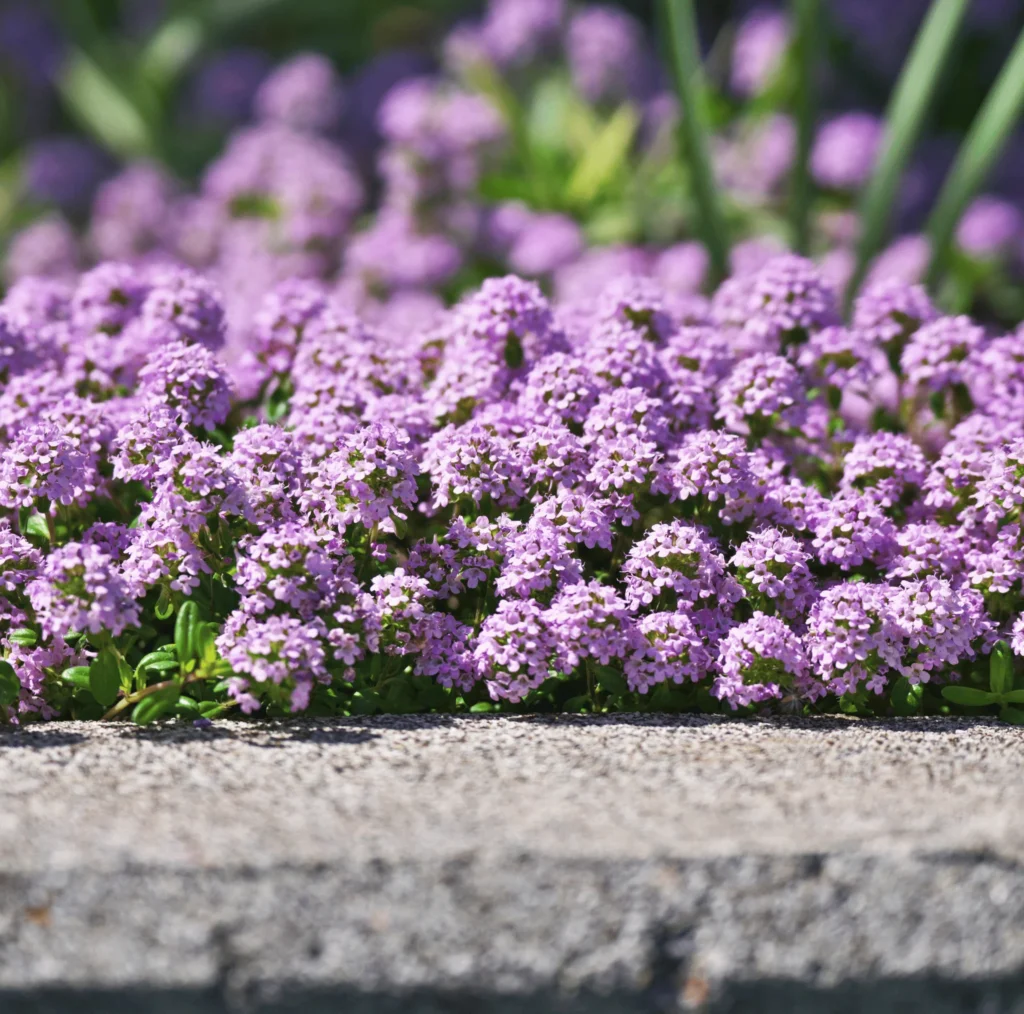
Creeping thyme works best in sunny places where its low growth and fragrant leaves can be enjoyed without constant disturbance. Choose areas with enough space for the plants to spread and where water does not collect.
Good planting locations include:
- Rock gardens, where the plants can grow around stones and small gravel patches.
- Path edges, where the foliage softens the boundary between paving and planting beds.
- Gaps between stepping stones, provided the gaps contain suitable soil and drain well.
- Sunny slopes, where low-growing plants can cover exposed soil.
- The front of flower borders, where the low foliage stays below taller plants.
Creeping thyme can also be used as a small-area alternative to lawn grass. However, it does not tolerate heavy or constant foot traffic well. Install stepping stones or a proper path if people regularly walk through the area.
For a large garden, consider planting creeping thyme alongside other ground covers that suit the same conditions. A mixed planting can reduce the risk of losing the entire ground cover if one plant struggles with a particular season or soil problem.
What problems can affect creeping thyme?
Poor drainage is one of the main reasons creeping thyme struggles. Wet soil can damage roots and cause sections of the plant to decline, even when the garden receives plenty of sunlight.
Use the symptoms below to identify common problems.
| Problem | Likely cause | What to do |
|---|---|---|
| Yellowing leaves | Excess moisture or poor drainage | Check the soil and reduce watering if it stays wet. |
| Thin growth | Too much shade or competition from weeds | Increase sunlight where possible and clear nearby weeds. |
| Dead patches | Waterlogged roots, prolonged drought, or damaged plants | Check soil moisture and remove dead material. |
| Slow spreading | Young plants, unsuitable soil, or limited sunlight | Improve growing conditions and allow more time for establishment. |
| Woody or sparse centers | Older growth or overcrowding | Trim lightly and divide healthy sections when appropriate. |
Do not assume that every dying patch needs fertilizer. First check the roots, drainage, and amount of sunlight. Correcting the growing conditions is often more useful than adding extra nutrients.
When is creeping thyme the wrong ground cover?
Creeping thyme is a poor choice for shady, waterlogged, or heavily used areas. It also needs time to spread, so it may not suit a garden that needs complete soil coverage straight away.
Choose another plant if your garden has dense shade, heavy clay that stays wet, or regular foot traffic across the whole planting area. A shade-tolerant ground cover is more suitable beneath trees, while a tougher surface or established walkway is better for busy paths.
Local climate should guide your choice, too. In hot, humid regions, creeping thyme may struggle when rain and poor drainage keep the roots wet. Test a small area first if you are unsure how well it will grow in your garden.
Frequently asked questions about creeping thyme ground cover
Does creeping thyme spread quickly?
Creeping thyme spreads gradually as its stems grow outward and fill nearby spaces. Growth is faster under suitable conditions, especially with full sun and well-drained soil, but complete coverage may take more than one season.
Does creeping thyme come back every year?
Yes, creeping thyme is a perennial in suitable climates, so established plants can return each growing season. Cold tolerance varies by species and variety, and wet winter soil can damage the plants.
Can creeping thyme grow between stepping stones?
Yes, creeping thyme can grow between stepping stones when the gaps contain soil and receive enough sunlight. It tolerates occasional light contact but may suffer if people walk on it constantly.
Does creeping thyme need fertilizer?
Creeping thyme usually needs little or no fertilizer when grown in suitable soil. Too much fertilizer can encourage soft growth and reduce the compact habit desired in a ground cover.
Can creeping thyme grow in partial shade?
Creeping thyme can tolerate light shade, but full sun usually produces denser growth and better flowering. Deep shade is likely to leave the planting sparse.
Is creeping thyme drought-tolerant?
Established creeping thyme can tolerate dry conditions better than many moisture-loving ground covers. Young plants still need regular watering while their roots develop, and prolonged drought can damage even established plants.
Can creeping thyme replace grass?
Creeping thyme can replace grass in small, sunny areas with well-drained soil and limited foot traffic. It is unsuitable for a lawn that receives frequent running, playing, or other heavy use.
How far apart should creeping thyme plants be?
Space creeping thyme plants about 8 to 12 inches apart to allow room for spreading. Planting closer together can help fill an area sooner, while wider spacing requires more time for the foliage to meet.
Is creeping thyme the right choice for your garden?
Choose creeping thyme if you have a sunny planting area with soil that drains well and you want a low-growing cover with fragrant foliage and small flowers. It works particularly well in rock gardens, along borders, and between stepping stones.
Prepare the soil before planting, keep weeds under control while the plants spread, and avoid excessive watering. If your garden stays damp or receives little direct sunlight, choose a ground cover better suited to those conditions.