
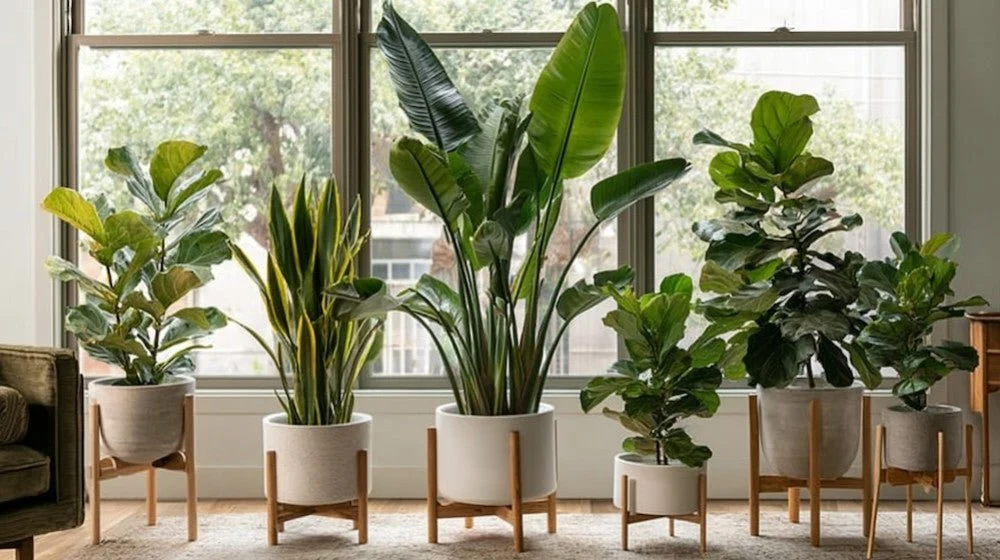
A green plant can grow well indoors or outdoors when its light, water, soil, and temperature match its needs. From easy-care houseplants to leafy garden plants, learning a few basic care practices will help you choose the right variety and keep it healthy.
What is a green plant?
A green plant is a plant with green leaves or other green parts, usually because its cells contain chlorophyll. This pigment absorbs light that plants use during photosynthesis, the process through which they make sugars from water and carbon dioxide.
Green plants come in many shapes and sizes. Some grow upright with long, narrow leaves, while others spread across the ground, climb supports, or form compact clusters. Many are grown for their foliage, making them suitable for homes, offices, balconies, patios, and gardens.
Common examples include:
- Snake plants, which have upright, firm leaves.
- Pothos, which produces trailing stems and heart-shaped leaves.
- Monstera, known for its large leaves with natural splits or holes as they mature.
- Spider plants, which form arching leaves and small plantlets.
- Ferns, which often have finely divided leaves and prefer more moisture than drought-tolerant houseplants.
- Hostas, which grow broad leaves in outdoor garden beds.
The right plant depends on your available light, room temperature, growing space, and how much care you can provide.
Which green plant is best for your home?
The best green plant for your home is one that suits the light and humidity in your room and fits your care routine. If you are new to growing plants, start with a forgiving variety rather than one that needs frequent attention.
| Green plant | Light needs | Watering needs | Best place |
|---|---|---|---|
| Snake plant | Low to bright indirect light | Allow soil to dry between waterings | Bedrooms, offices, living rooms |
| Pothos | Medium to bright indirect light | Water when the upper soil begins to dry | Shelves, desks, hanging pots |
| Spider plant | Bright indirect light | Water when the top layer dries | Windowsills, shelves |
| ZZ plant | Low to bright indirect light | Let most of the soil dry | Offices, rooms with limited light |
| Monstera | Bright indirect light | Water when the upper soil dries | Spacious living rooms |
| Boston fern | Bright indirect light | Keep soil lightly moist, not waterlogged | Humid rooms and shaded patios |
These are general care guidelines. A plant may need more or less water depending on pot size, soil, temperature, humidity, and the season.
Before buying a plant, check its mature size and light requirements. Also find out whether it is safe around pets and children, since some popular houseplants can cause irritation or illness if chewed or swallowed.
How much light does a green plant need?
Most leafy houseplants grow best in bright, indirect light, although some tolerate lower-light conditions and others need several hours of direct sun. The amount of light a plant receives affects its growth, leaf color, and overall condition.
A bright room does not always provide enough light for a plant. Windows facing different directions receive different amounts of sunlight, and curtains, nearby buildings, and trees can reduce the light reaching the leaves.
Use these guidelines when choosing a location:
- Bright indirect light: Place plants near a bright window where the leaves are not exposed to harsh midday sun.
- Direct sunlight: Choose plants suited to sun exposure, and introduce them gradually if they have been growing indoors.
- Low light: Consider tolerant varieties such as snake plants and ZZ plants, but remember that low light still needs to be sufficient for growth.
- Outdoor shade: Use shade-tolerant plants in covered balconies, beneath trees, or in protected garden areas.
Watch how your plant responds after moving it. Long, weak stems and widely spaced leaves may indicate insufficient light. Brown, scorched patches can result from excessive direct sunlight, especially when a plant is moved suddenly into strong sun.
Rotate a potted plant occasionally if it grows toward one side of a window. This helps encourage more even growth.
How often should you water a green plant?
Water a green plant when its soil moisture matches the needs of that particular species, rather than following a fixed daily or weekly schedule. Many houseplants prefer the upper layer of soil to dry between waterings, while moisture-loving plants need more consistent moisture.
To check whether watering is needed, press a finger into the soil. For larger pots, a wooden stick or moisture meter can help you assess conditions deeper in the container.
Follow these watering practices:
- Check the soil before adding water.
- Water the soil evenly until excess water drains from the bottom of the pot, when appropriate for the plant.
- Empty standing water from the saucer so the roots are not left sitting in it.
- Reduce watering when growth slows and the soil takes longer to dry.
- Check plants more often during hot weather, when soil may dry faster.
Overwatering is a common cause of houseplant problems. Soil that stays wet for too long can reduce the oxygen available to roots and contribute to root rot. Yellow leaves, a persistently wet potting mix, and soft, dark roots may indicate a problem.
Underwatering can cause drooping leaves, dry soil, and brown edges. However, drooping alone does not tell you whether a plant needs water. Check the soil first, since a plant with damaged roots can wilt even when its pot is wet.
What soil and pot are best for a green plant?
Choose a potting mix that holds enough moisture for the plant while allowing excess water to drain. Most houseplants do well in a suitable indoor potting mix, but cacti, succulents, orchids, and some other plants need more specialized growing materials.
The pot matters, too. Select a container with drainage holes unless you are using a suitable inner pot that can be removed for watering. A decorative pot without drainage can trap water around the roots.
Keep these points in mind:
- Choose a pot only slightly larger than the existing root ball when repotting.
- Use a well-draining mix suited to the plant species.
- Avoid compacting the soil tightly around the roots.
- Repot when roots crowd the container, water runs through too quickly because the pot is root-bound, or growth becomes restricted.
- Do not place a layer of gravel at the bottom as a substitute for drainage holes.
A pot that is much too large can hold more wet soil than the roots can use. This may leave the growing medium damp for too long and increase the risk of root problems.
How do you keep green plant leaves healthy?
Healthy leaves depend on suitable light, balanced watering, clean foliage, and regular checks for pests. You do not need to apply fertilizer or leaf treatments every week to keep a plant in good condition.
Wipe broad leaves gently with a damp, soft cloth to remove dust. For plants with delicate or fine leaves, use a gentle rinse if the species tolerates it, and allow the foliage to dry in a place with good air circulation.
Inspect the upper and lower surfaces of leaves for small insects, webbing, sticky residue, or unusual spots. Spider mites, mealybugs, aphids, and scale insects can affect houseplants.
If you find pests, move the affected plant away from other plants when practical. Identify the pest before choosing a treatment, and follow the product label carefully. Test any leaf treatment on a small area first to check for damage.
Fertilize during active growth if the plant needs it. Use a fertilizer suitable for the species and follow the recommended dilution. Too much fertilizer can damage roots and cause leaf-edge browning. Fresh potting mix may already contain nutrients, so immediate feeding is not always necessary.
Why is your green plant turning yellow or brown?
Yellow or brown leaves can result from watering problems, unsuitable light, temperature stress, pests, or normal leaf aging. Look at the soil, the pattern of leaf damage, and recent changes in the plant’s environment before deciding what to do.
Here are common signs and possible causes:
| Plant symptom | Possible cause | What to check |
|---|---|---|
| Yellow leaves with wet soil | Overwatering or poor drainage | Check soil moisture and roots |
| Dry, crispy leaf edges | Low humidity, underwatering, or fertilizer buildup | Review watering and feeding |
| Pale leaves and weak stems | Insufficient light | Move the plant to a brighter location gradually |
| Brown, scorched patches | Strong direct sun or heat stress | Reduce harsh exposure |
| Sticky leaves or fine webbing | Possible pest activity | Inspect leaves and stems closely |
| One or two older leaves turning yellow | Natural aging or temporary stress | Check whether new growth remains healthy |
Do not remove every discolored leaf immediately. If only an occasional older leaf is affected and the rest of the plant looks healthy, it may be part of normal growth. Remove dead or badly damaged foliage with clean scissors, and correct any underlying care problem.
Can you grow a green plant outdoors?
Yes, many green plants grow outdoors in garden beds, pots, balconies, and shaded patios. The right choice depends on local temperatures, sunlight, rainfall, wind exposure, and whether the species can tolerate the conditions throughout the year.
Tropical foliage plants may grow well outside during warm weather but can suffer in cold conditions. Sun-loving plants need enough direct light, while shade-loving varieties may develop scorched leaves in exposed positions.
Before planting outdoors, check the plant’s temperature tolerance and mature size. Place containers where they can drain freely, and protect sensitive plants from strong wind and extreme weather. In rainy climates, inspect pots after heavy rainfall because waterlogged soil can damage roots.
If you grow plants on a balcony, consider the weight of large containers, how quickly the pots dry, and whether the location receives intense afternoon sun. Container plants often need more frequent moisture checks than plants growing in the ground.
Frequently asked questions
What is the easiest green plant to grow indoors?
Snake plants, ZZ plants, and pothos are good options for many beginners because they tolerate a range of indoor conditions. They still need suitable light, occasional watering, and a pot with proper drainage.
How often should I water an indoor green plant?
There is no single schedule for every plant. Check the soil before watering, and adjust based on the species, pot size, temperature, humidity, and season.
Can a green plant grow without sunlight?
A green plant cannot grow indefinitely without light because it needs light for photosynthesis. Some indoor plants tolerate low-light rooms, but they still need an adequate light source.
Why are the leaves on my green plant turning yellow?
Yellow leaves can indicate overwatering, poor drainage, insufficient light, nutrient problems, or normal aging. Check the soil and growing conditions before changing your care routine.
Should I spray water on green plant leaves?
Some plants benefit from higher humidity, but misting often provides only a short-lived increase in moisture around the leaves. A suitable room environment and correct watering are generally more useful than frequent spraying.
Do green plants need fertilizer?
Many potted plants benefit from fertilizer during active growth because repeated watering can reduce available nutrients. Use a suitable product at the recommended rate, and avoid feeding plants that are stressed or sitting in waterlogged soil.
How do I make my green plant grow more leaves?
Provide enough light, water according to the plant’s needs, use suitable potting mix, and feed during active growth when necessary. Pruning some species can encourage branching, but the right method depends on the plant.
Can I keep green plants in a bedroom?
Yes, many houseplants can grow in bedrooms if the light, temperature, and watering conditions suit them. Choose a variety that fits the available space, and check whether it is safe around pets or children.
Choose a green plant that fits your routine
Start with a plant that matches the light and space you already have. Check its soil before watering, use a pot that drains properly, and inspect its leaves regularly for signs of stress or pests. Once you understand how your plant responds to its surroundings, you can adjust its care and enjoy healthy foliage indoors or outdoors.