
The Farmers Almanac planting calendar uses the phases of the Moon to suggest favorable days for sowing, transplanting, harvesting, and other garden tasks. Use those dates alongside your local frost dates and growing conditions rather than treating the calendar as a fixed planting schedule.
TL;DR
- The Farmers Almanac planting calendar is based on traditional gardening by the Moon.
- Its dates are general and apply across growing zones, so local weather still matters.
- Check your frost dates before planting tender crops.
- Waxing and waning Moon phases are used for different types of garden tasks.
- Treat the calendar as a planning aid, not a replacement for local growing information.
What is the Farmers Almanac planting calendar?
The Farmers Almanac planting calendar is a Moon-based gardening guide that suggests when to plant crops and perform certain garden tasks. Farmers’ Almanac has included this type of planting calendar in its print editions for more than 200 years, according to the publication itself.
The calendar groups days according to the Moon’s phases and traditional planting practices. It includes guidance for above-ground crops, root crops, seedbeds, flowers, transplanting, harvesting, and other garden work.
The calendar is different from a local planting calendar based only on frost dates. It gives you another way to choose a planting day after you have considered whether the weather and soil are suitable.
How does the Farmers Almanac planting calendar work?
The Farmers Almanac planting calendar uses Moon phases as the basis for its recommended gardening days. The traditional method divides the lunar cycle into waxing and waning periods and assigns different garden tasks to those periods.
During the waxing Moon, the calendar favors many above-ground crops, such as beans, tomatoes, peppers, and squash. During the waning Moon, it favors root crops and some other garden tasks.
Farmers’ Almanac also uses terms such as “favorable,” “good,” and “best” to describe planting days. Its calendar explains that these terms refer to increasingly preferred days within its Moon-based system.
These recommendations are part of a traditional gardening practice. Farmers’ Almanac states that modern science has not definitively established that lunar gardening improves plant growth or harvests under controlled conditions.
Should you follow the calendar or your frost date?
Follow your local frost date and weather conditions first, then use the Farmers Almanac planting calendar to choose among suitable planting days. A Moon-based date cannot make a cold-sensitive crop safe to plant when frost or cold soil is still a problem.
For example, a tomato may have a favorable Moon-based planting date, but that does not mean it should go outdoors during a local cold snap. Tomatoes need suitable temperatures and growing conditions to establish well.
Your local climate can also change the planting window by several weeks. A gardener in a warm region may plant a crop outdoors while a gardener farther north is still starting seeds indoors.
Farmers’ Almanac itself advises readers to consider regional weather and climate before using its planting recommendations.
How to use the Farmers Almanac planting calendar
Use the calendar as a second layer of planning after checking the conditions in your own garden.
- Check your local frost dates and current weather before choosing a planting day.
- Decide whether the crop can tolerate the current soil and air temperatures.
- Find the crop or garden task in the Farmers Almanac calendar.
- Look for a suitable Moon-based date within the period when the crop can actually be planted.
- Adjust the plan if rain, frost, heat, drought, or poor soil conditions make planting unsuitable.
This approach keeps the calendar practical. You are using the Moon-based recommendation to choose a date, while local growing conditions determine whether that date is workable.
What do the planting calendar terms mean?
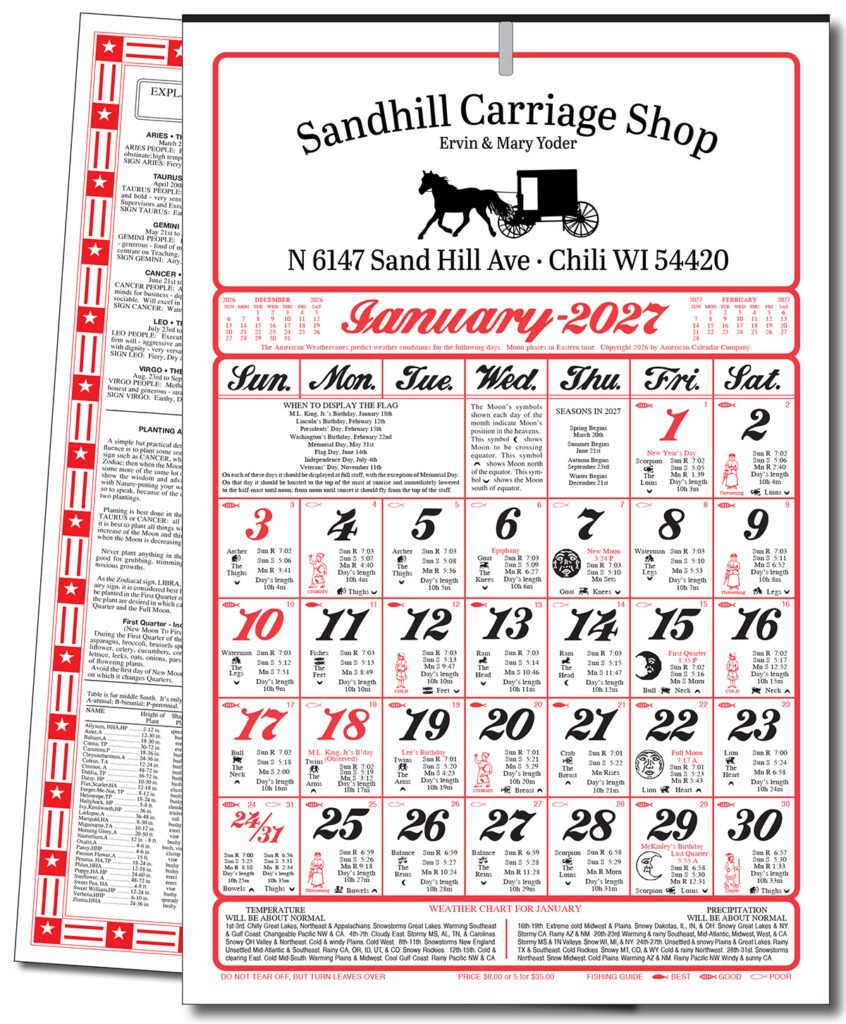
The Farmers Almanac planting calendar uses several terms that can be confusing at first.
Above-ground crops produce their harvest above the soil, such as tomatoes, peppers, beans, and squash.
Root crops produce their main harvest below the soil, such as carrots, beets, radishes, and potatoes.
Seedbeds are prepared areas where seeds or young plants are started before they are moved to their final growing place.
Transplanting means moving a young or established plant from one growing place to another.
The calendar also uses “favorable,” “good,” and “best” to describe planting days within its traditional system.
Farmers Almanac vs. Old Farmer’s Almanac: are they the same?
No. Farmers’ Almanac and The Old Farmer’s Almanac are separate publications, although both publish gardening calendars and use traditional agricultural information.
The Farmers’ Almanac has its own Moon-based planting calendar. The Old Farmer’s Almanac also provides a planting calendar, but its current online calendar uses local frost information and location-based planting dates, with an optional Moon-based view.
This distinction matters when you search for a “farmers almanac planting calendar.” Check the publication name before using the dates because the two calendars are not the same tool.
When should you avoid relying on the calendar alone?
Do not rely on the Farmers Almanac planting calendar alone when weather or growing conditions are unsuitable. This matters most for tender vegetables, seedlings, and crops that need warm soil.
A few situations call for extra caution:
- Delay planting if a frost is expected and the crop is frost-sensitive.
- Wait if soil is too wet to work without damaging its structure.
- Adjust the date when extreme heat or drought is likely to stress new plants.
- Use crop-specific planting guidance when a vegetable has unusual temperature needs.
- Give your local growing season priority when a Moon-based date conflicts with practical conditions.
The calendar can help you choose a day, but plants still respond to temperature, moisture, light, soil, and the length of the growing season.
Is planting by the Moon proven to work?
There is not strong scientific evidence establishing Moon-based planting as a reliable way to increase crop growth or yields. Farmers’ Almanac presents the practice as a long-standing gardening tradition, while also stating that modern science has not definitively proven its effects under controlled conditions.
That makes the calendar best suited to gardeners who enjoy lunar gardening as part of their planning routine. You can use its dates without ignoring the basic conditions each crop needs.
For gardeners who prefer evidence-based scheduling, frost dates, crop temperature requirements, seed-starting guidance, and local weather provide a stronger basis for deciding when conditions are suitable.
Frequently asked questions about the Farmers Almanac planting calendar
What is the Farmers Almanac planting calendar?
It is a gardening calendar based on Moon phases that recommends days for planting and other garden tasks. Farmers’ Almanac publishes these dates as part of its traditional Moon-based gardening system.
Is the Farmers Almanac planting calendar accurate?
It can be used as a traditional planting guide, but its dates should not replace local frost and weather information. Actual planting success depends on the crop and local growing conditions.
Does the Farmers Almanac planting calendar work for all zones?
The Moon-based dates are presented as general dates across growing zones. You still need to adjust your planting decisions for local climate, frost dates, and crop needs.
What is the best day to plant according to the Farmers Almanac?
The calendar identifies days it considers “favorable,” “good,” or “best” within its Moon-based system. The best practical day is one that also fits your local weather and the crop’s growing requirements.
Is Farmers Almanac the same as Old Farmer’s Almanac?
No. They are separate publications with different gardening calendars. Both use traditional gardening information, but their online planting tools and methods differ.
Should I use Moon phases or frost dates for planting?
Use frost dates and local growing conditions to decide when a crop can safely be planted, then use Moon-based dates if you want lunar gardening to guide the exact day.