
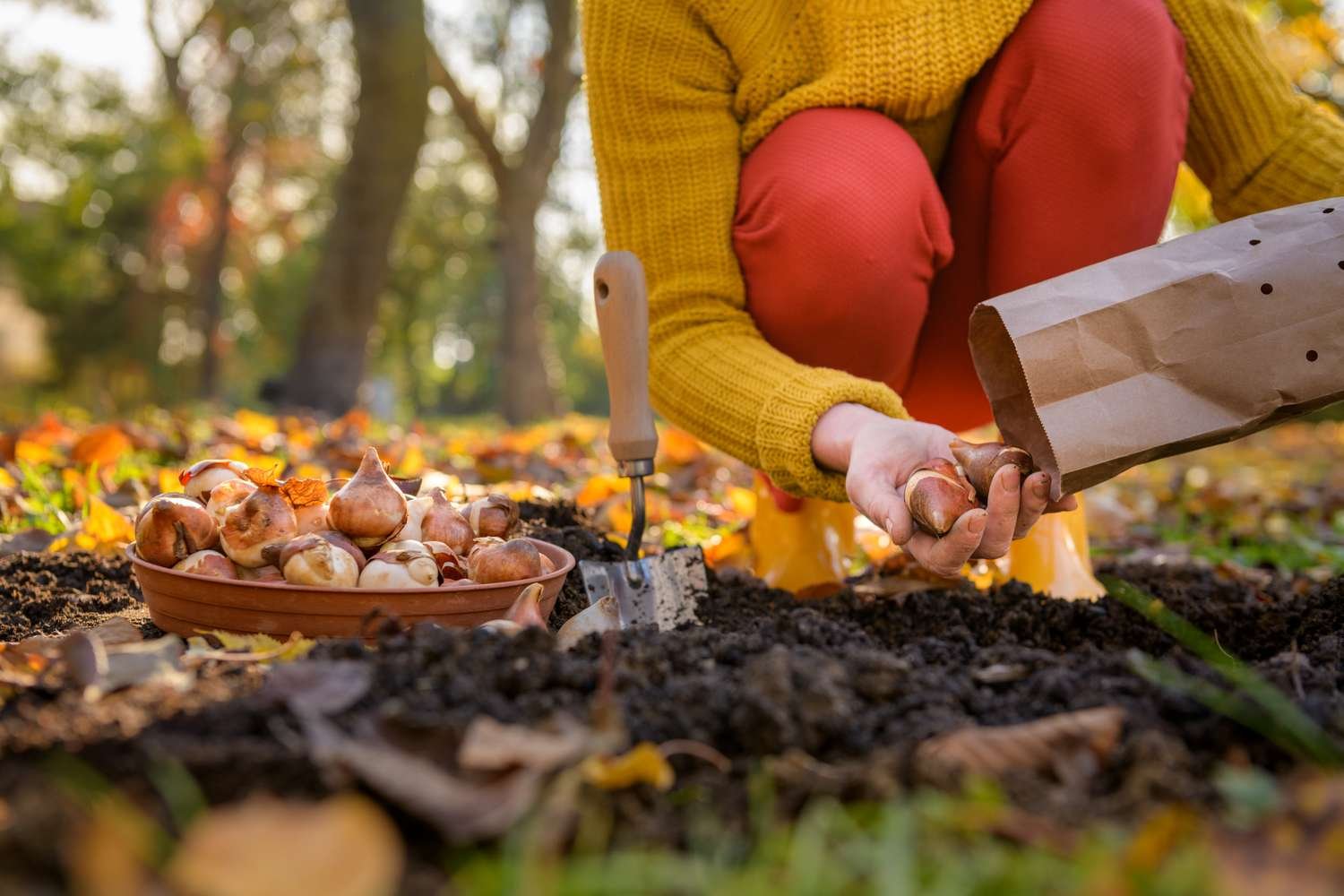
Fall planting gives many garden plants time to settle in while temperatures are cooler. The best choices include spring-flowering bulbs, many trees and shrubs, hardy perennials, and cool-season vegetables, but the right timing depends on your local climate.
TL;DR
- Fall planting works well for many trees, shrubs, hardy perennials, spring bulbs, and cool-season vegetables.
- Plant trees and shrubs early enough for roots to settle before the ground freezes.
- Plant spring bulbs after the weather cools but before the ground freezes.
- Use local frost dates and crop maturity times to plan fall vegetable planting.
- Water new plants during dry autumn weather until the ground freezes or regular rainfall keeps the soil moist.
What can you plant in fall?
Fall planting works for several plant groups, but the timing and purpose differ between them. Spring-flowering bulbs need autumn cold, while trees and shrubs benefit from cool conditions and moist soil. Cool-season vegetables use the lower temperatures to produce leaves and roots when summer heat has passed.
Good choices for fall planting include:
- Tulips, daffodils, crocuses, and other hardy spring-flowering bulbs.
- Many container-grown trees and shrubs.
- Hardy perennial flowers that can establish roots before winter.
- Cool-season vegetables such as spinach, kale, radishes, lettuce, carrots, and turnips.
- Cover crops such as winter rye, oats, and some legumes where they suit the garden.
The main exception is tender plants that cannot handle your area’s winter cold. Tender bulbs such as dahlias and gladiolus, for example, are generally planted in spring rather than fall in cold-winter climates.
When should you start fall planting?
Start fall planting according to your local weather rather than a fixed month. For trees, shrubs, and hardy perennials, plant early enough to allow root establishment before the soil freezes. For spring bulbs, wait until the weather is cool and plant before the ground freezes.
Penn State Extension recommends allowing at least six weeks before the first frost when planting container-grown trees, shrubs, and hardy perennials in its four-season climate. That timing will not apply everywhere, so gardeners in warmer regions should use local seasonal conditions instead.
For vegetables, work backward from your expected first frost and the crop’s days to maturity. A crop planted too late may run out of suitable growing weather before it reaches harvest size.
In warm climates without a hard winter, the term “fall planting” can mean something different. Cool-season vegetables may be planted as temperatures fall, while trees and shrubs may have a much longer planting window.
How to prepare the soil for fall planting
Prepare the soil before putting new plants in the ground. Remove spent plants and weeds, loosen compacted soil, and check that the planting area drains well.
For a vegetable garden, fall is also a useful time to test the soil. Penn State Extension notes that testing in fall gives gardeners time to make soil amendments before spring.
Do not dig a planting hole deeper than the plant’s root ball. For trees and shrubs, the root flare should remain at the soil surface rather than being buried.
If the soil is very wet, wait until it can be worked without becoming sticky and compacted. Good drainage matters more than getting the plant into the ground on a particular day.
How to plant trees and shrubs in fall
Plant trees and shrubs while the weather is cool and the soil still can be worked. Container-grown plants are commonly suitable for fall planting, while bare-root trees are generally planted while dormant in spring.
Dig a broad planting hole with enough room for the roots to spread. Set the plant at the same soil level at which it grew in its container or root ball, then backfill with the soil you removed.
Water the planting area thoroughly after planting. Keep checking soil moisture through autumn because a newly planted tree or shrub can still dry out even when temperatures are low.
Fall planting does not remove the need for watering. Utah State University Extension notes that fall-planted trees can need water during dry autumn weather.
How to plant spring bulbs in fall
Plant hardy spring bulbs after the weather becomes cool and before the ground freezes. Tulips, daffodils, and crocuses are common examples.
Choose a site with suitable light and well-drained soil. Plant each bulb at the depth recommended for its type, place the pointed end upward, and water the area after planting if the soil is dry.
Hardy spring bulbs need a period of cold to break dormancy and develop spring flowers. This is why autumn planting works for them in climates with a suitable winter.
Do not treat tender bulbs the same way. Dahlias, begonias, and gladiolus are examples of tender bulbs that are normally planted after the soil warms in spring in cold-winter climates.
How to plan fall vegetables
Fall vegetables need enough growing time to reach harvest before severe cold. Start with your local first-frost date, then count backward using the crop’s days to maturity.
Cool-season crops are the best fit. Lettuce, spinach, kale, radishes, carrots, beets, turnips, and other cool-season vegetables can be grown as temperatures fall.
For direct-sown crops, allow extra time if germination slows in cool soil. For transplants, count maturity from the date the plant goes into the garden rather than the date the seed was started.
Penn State Extension lists leafy greens and root crops among the common cool-season choices for fall gardens. Some crops can also tolerate light frost, giving you a longer harvest window.
How to care for a fall planting
Water new plants when the soil is dry, especially during a warm or dry autumn. Newly planted trees and shrubs need particular attention because their roots have not yet spread far into the surrounding soil.
Apply a layer of mulch around trees, shrubs, perennials, and bulbs to help protect the soil and reduce moisture loss. Keep mulch away from direct contact with tree trunks and plant crowns.
Avoid pushing late-season growth with heavy fertilizer unless a soil test or local growing guidance calls for it. The goal is to help plants establish under suitable conditions, not to force soft new growth just before cold weather.
Common fall planting mistakes
- Planting too close to the first hard freeze can leave trees, shrubs, and perennials with too little time to establish roots.
- Using spring planting dates for fall vegetables can cause crops to mature too late.
- Planting tender bulbs outdoors in a cold climate can expose them to winter temperatures they cannot tolerate.
- Forgetting to water during a dry autumn can stress newly planted trees and shrubs.
- Planting into waterlogged soil can damage soil structure and reduce healthy root growth.
Frequently asked questions about fall planting
What is the best month for fall planting?
There is no single best month because planting time depends on climate, soil temperature, frost dates, and the plant. Use local seasonal conditions instead of following a fixed calendar date.
Is fall a good time to plant trees?
Yes, fall can be a good time for many trees and shrubs, especially container-grown plants in climates with a cool autumn. Give roots time to establish and keep the soil moist during dry periods.
Can I plant vegetables in fall?
Yes. Choose cool-season crops and plant early enough for them to reach harvest size before severe cold arrives.
When should I plant bulbs in fall?
Plant hardy spring-flowering bulbs when the weather has cooled but before the ground freezes. The exact timing varies with climate.
Should I water after fall planting?
Yes. Water new plants thoroughly after planting and continue checking the soil during dry weather. Newly planted trees and shrubs may need supplemental water until the ground freezes in cold climates.
Can I plant perennials in the fall?
Many hardy perennials can be planted in fall when they have enough time to establish roots before severe winter conditions. Check the plant’s hardiness and local planting window first.