
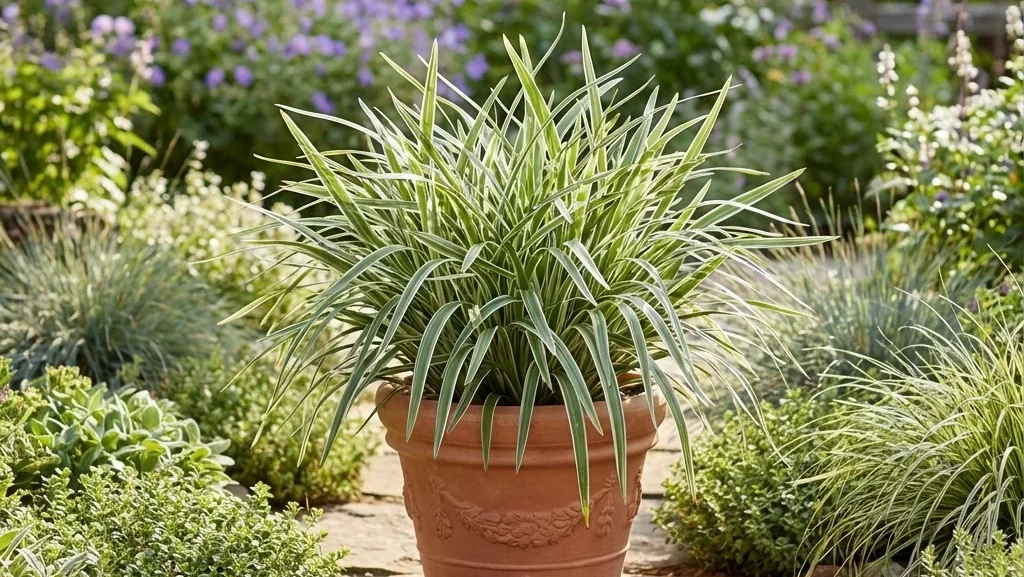
The dianella flax lily plant is an evergreen perennial grown for its long, grass-like leaves and small blue flowers. Most forms prefer sun to partial shade, well-drained soil, and steady moisture while they establish.
TL;DR
- The dianella flax lily plant is an evergreen perennial with strap-like foliage and blue flowers.
- Grow Dianella in full sun or partial shade with soil that drains well.
- Water regularly while the plant establishes, then reduce watering as it becomes settled.
- Trim damaged or old leaves when needed to keep the clump neat.
- Propagation is usually done by dividing established clumps in spring.
What is the dianella flax lily plant?
The dianella flax lily plant is a clump-forming perennial in the genus Dianella. Dianella tasmanica is one of the commonly grown flax lilies, with stiff, grass-like leaves and small blue to violet-blue flowers followed by blue or purple berries.
Flax lily is also called Australian flax lily. It is native to parts of Australia and Tasmania and is grown as a foliage plant in borders, containers, groundcover areas, and other garden beds.
The leaves give the plant most of its garden value. They stay green through much of the year in suitable climates and form a neat clump. Some cultivars have white or cream markings on the leaves.
How do you care for a Dianella flax lily plant?
A Dianella flax lily plant is easy to grow when you give it good drainage, suitable light, and enough water during establishment. It tolerates both full sun and partial shade, although the best position depends on the local climate and the cultivar.
| Care need | What to provide |
|---|---|
| Light | Full sun to partial shade |
| Soil | Moderately fertile, well-drained soil |
| Water | Regular water while establishing, less after it settles |
| Soil reaction | Acidic to neutral soil suits many forms |
| Pruning | Remove old or damaged leaves as needed |
| Propagation | Divide established rhizomes in spring |
Avoid planting flax lily where water stays around the roots after rain. Good drainage matters more than keeping the soil constantly wet.
Light needs
Dianella grows in full sun or partial shade. In a hot climate, partial shade can help protect the foliage from harsh afternoon conditions.
A bright spot with some afternoon shade is a useful choice where summers are very hot. In milder conditions, the plant can take more direct sun.
Watering
Water a newly planted flax lily regularly while its roots settle into the soil. Once established, it can cope with periods of drier soil, but prolonged drought can still cause stress.
Let the soil begin to dry between waterings rather than keeping it saturated. Container-grown plants usually need more frequent checks because pots dry faster than garden beds.
Soil and planting
Use soil that drains freely and contains some organic matter. Heavy, poorly drained soil can hold too much water around the roots.
When planting, set the plant at the same depth it was growing in its container. Water it well after planting and keep the soil evenly moist during the establishment period.
Does flax lily need pruning?
Flax lily does not need regular hard pruning. Remove brown, damaged, or tired leaves at the base when they detract from the clump.
If a plant becomes untidy, trim away the oldest foliage rather than cutting every leaf back on a fixed schedule. This keeps the plant useful as a foliage feature without unnecessary pruning.
Flower stems can also be removed after flowering if you do not want the berries to develop. If you leave them, the blue or purple fruit can add another seasonal feature.
How does Dianella flax lily spread?
Dianella spreads through underground rhizomes and forms clumps over time. This growth habit makes established plants suitable for division when you want more plants or need to reduce an overcrowded clump.
Spring is a suitable time to divide an established plant. Lift the clump, separate healthy sections with roots and rhizomes attached, then replant them at the same depth and water them well.
Seed propagation is also possible for some Dianella species, but division is usually the simpler choice for gardeners who want to reproduce an established plant.
Where should you plant flax lily?
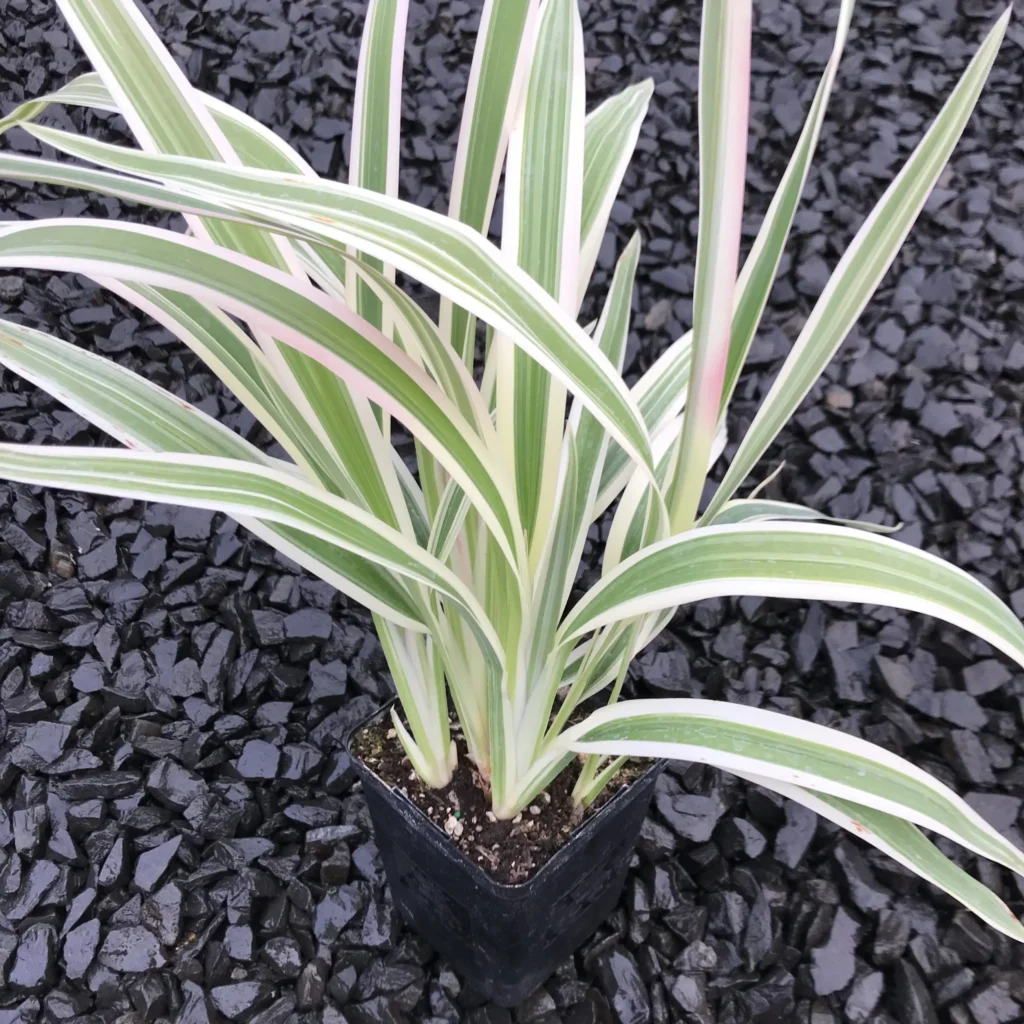
Plant flax lily in a border, container, groundcover area, or other bed where its strap-like foliage can form a clear clump. It works particularly well where you want dependable foliage rather than a plant grown mainly for large flowers.
Leave enough room for the clump to spread without crowding nearby plants. Check the mature size of your particular cultivar before planting because Dianella forms vary considerably.
For containers, use a free-draining potting mix and a pot with drainage holes. Check the soil more often than you would for a plant growing in the ground.
What problems can affect flax lily?
Most problems with flax lily come from poor growing conditions rather than complicated care needs. The first things to check are watering, drainage, light, and damaged foliage.
Brown leaves can appear after drought, cold weather, physical damage, or other stress. If the soil stays wet for long periods, improve drainage before increasing watering.
Remove badly damaged leaves and check the plant regularly. Dianella is generally described as having few pest and disease problems, but stressed plants still need attention.
The berries are ornamental and should not be eaten. Keep this in mind when planting flax lily where children or animals may have easy access to the fruit.
When is flax lily not a good fit?
Flax lily is a poor choice for a site that stays waterlogged or for a climate where the selected cultivar cannot tolerate the winter conditions. Check the requirements of the exact Dianella cultivar before planting.
It may also be a poor fit if you need a plant with large, showy flowers. Flax lily is mainly valued for its foliage, while its flowers are relatively small.
For a hot, dry garden, choose a form with suitable drought tolerance and give it enough water while it establishes. For a cold garden, choose a cultivar suited to your local conditions rather than assuming every Dianella has the same hardiness.
Common mistakes with a Dianella flax lily plant
- Keeping the soil constantly wet can create poor root conditions, so plant in well-drained soil and avoid frequent watering when the soil is already moist.
- Giving a newly planted flax lily too little water can slow establishment, so check the soil often during dry weather.
- Cutting the whole clump back too often can remove healthy foliage, so prune only damaged or old leaves when possible.
- Planting without checking the cultivar’s mature size can lead to crowding, so read the plant label before choosing its final position.
- Treating every Dianella as identical can cause problems because species and cultivars differ in size, appearance, and growing conditions.
Frequently asked questions about the dianella flax lily plant
What is a dianella flax lily plant?
A dianella flax lily plant is an evergreen perennial in the genus Dianella. Dianella tasmanica is a commonly grown species with grass-like leaves, small blue flowers, and blue or purple berries.
Does flax lily like sun or shade?
Flax lily grows in full sun or partial shade. In very hot conditions, some afternoon shade can help protect the foliage.
How often should I water flax lily?
Water regularly while the plant establishes, then allow the soil to dry somewhat between waterings. Established plants can tolerate periods of drier conditions better than newly planted ones.
Can you grow flax lily in a pot?
Yes. Flax lily can grow in containers when the pot has drainage holes and the growing mix drains freely. Container plants need more frequent soil checks because they can dry out faster.
How do you propagate flax lily?
You can propagate established flax lily by dividing the clump and its rhizomes, with spring being a suitable time for division. Some Dianella species can also be grown from seed.
Should flax lily be cut back?
Flax lily does not need routine hard pruning. Remove old or damaged leaves as needed, and trim flower stems after flowering if you do not want the fruit to develop.