
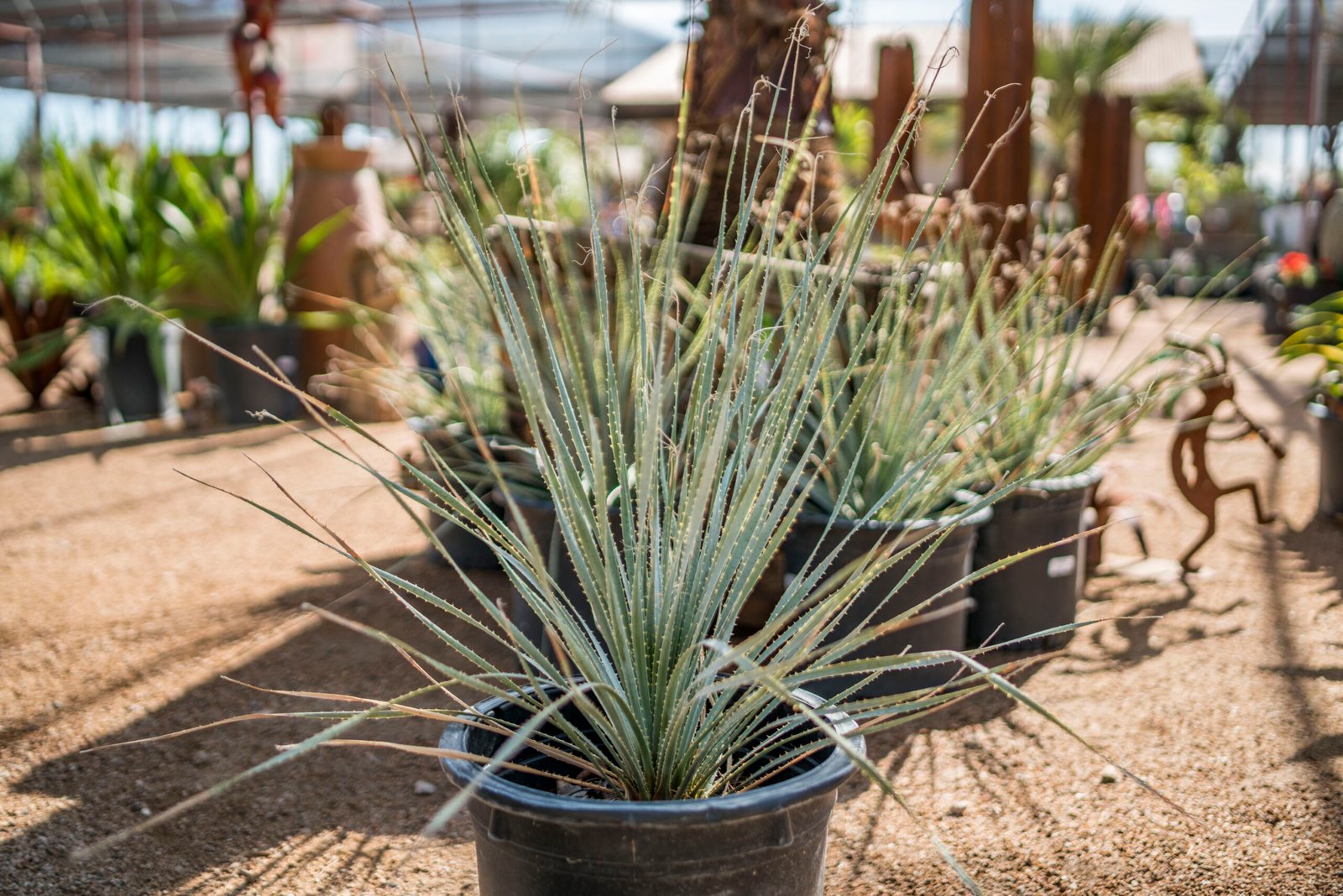
The desert spoon plant is a tough, low-water desert plant with narrow, spiky leaves arranged in a rounded rosette. Give it strong light, fast-draining soil, and careful watering, and it can stay attractive with little routine care.
TL;DR
- Desert spoon plant is Dasylirion wheeleri, also called Wheeler sotol or sotol.
- Give it full sun or very bright light and soil that drains quickly.
- Water deeply, then let the soil dry before watering again.
- Avoid planting it beside narrow paths because the leaf edges are sharp.
- Do not cut healthy green leaves or strip the plant’s outer foliage.
What is a desert spoon plant?
The desert spoon plant, Dasylirion wheeleri, is an evergreen desert plant native to parts of the southwestern United States and Mexico. It forms a dense rosette of long, narrow leaves with toothed or spiny edges.
The U.S. Forest Service lists desert spoon, spoon-flower, spoon-leaf, and Wheeler sotol among its common names. In its native range, it grows on rocky slopes and in dry grassland, desert, and woodland habitats.
Despite its succulent-like appearance, desert spoon is a woody desert plant rather than a typical soft-leaved succulent. Its leaves can be blue-gray to green and become more upright or spreading as the plant matures.
How much sun does a desert spoon plant need?
A desert spoon plant grows best with plenty of direct sunlight. A sunny planting spot is usually the simplest choice, especially where the soil drains well.
UC Davis Arboretum recommends at least six hours of direct sunlight for desert spoon. In very hot conditions, some afternoon shade can also work, particularly if the plant is protected from reflected heat.
If your plant has weak, stretched growth or loses its compact shape, check its light before changing the watering routine. Too little sun can make a desert plant look less dense and balanced.
How often should you water a desert spoon plant?
Water a desert spoon plant deeply, then allow the soil to dry before watering again. The plant is adapted to dry conditions, so frequent shallow watering can create problems when drainage is poor.
The right schedule depends on your soil, temperature, rainfall, and whether the plant is growing in the ground or a container. A plant in fast-draining soil during a hot, dry period may need more water than one growing in heavy soil during cool weather.
As a starting point, check the soil rather than watering by the calendar. If the soil is still damp several inches below the surface, wait. When you do water, soak the root zone thoroughly and let excess water drain away.
What soil does desert spoon need?
Desert spoon needs soil that drains quickly. Rocky, gravelly, or sandy soil is generally a better match than dense soil that stays wet.
This is especially important if your garden receives regular rain. In heavy clay, consider improving drainage before planting or choose a raised or sloped location where water does not collect.
For containers, use a fast-draining growing mix and a pot with drainage holes. Avoid leaving the container sitting in a saucer of standing water.
Where should you plant a desert spoon?
Choose a sunny spot with enough room for the mature rosette and enough distance from places where people regularly brush past it. The leaves have sharp margins and pointed tips.
This matters more than it may seem. A desert spoon can look tidy and compact from a distance, but its leaf edges can make a poor choice beside a narrow walkway, seating area, or frequently used garden path.
UC Cooperative Extension recommends considering mature size and keeping pointed-leaved Dasylirion plants away from paths. Extra care is also sensible around children and pets.
How big does desert spoon get?
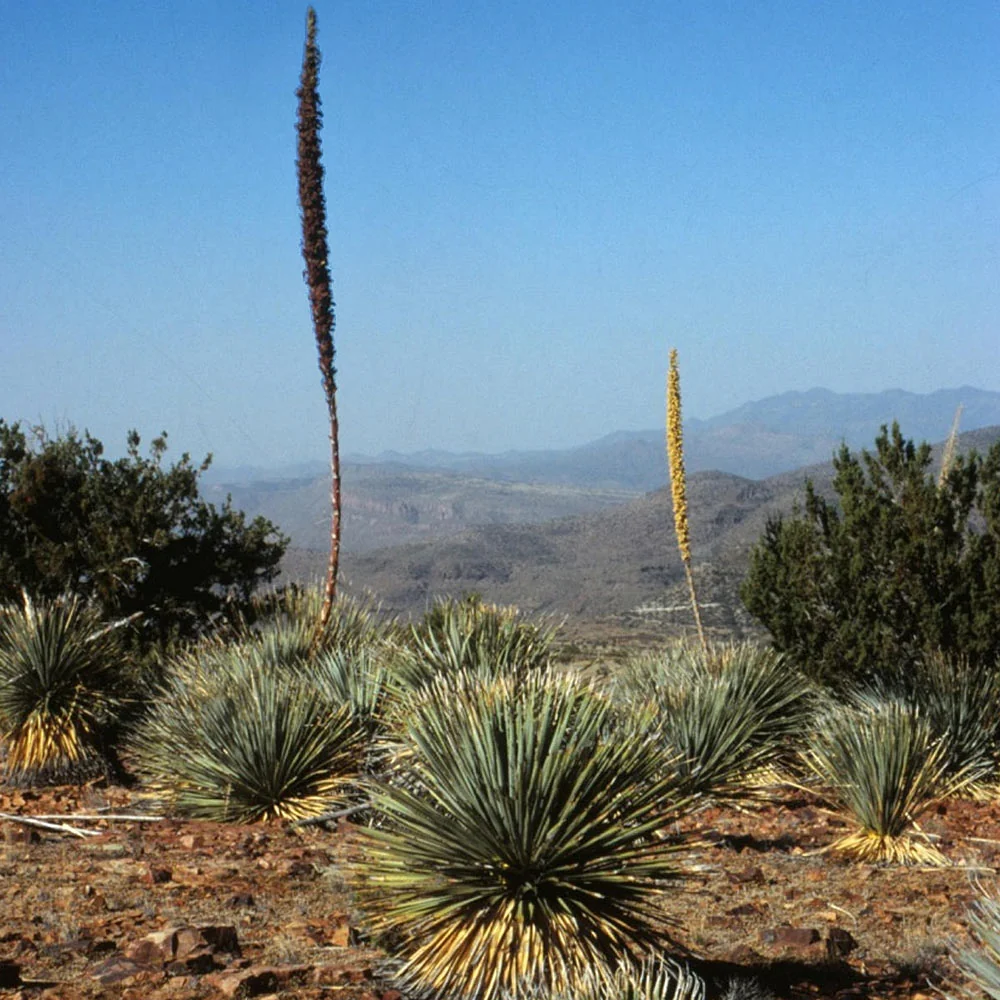
Desert spoon can form a broad rosette several feet across, with long leaves radiating from a central growing point. Mature size varies with growing conditions.
The U.S. Forest Service describes plants with leaves roughly 0.8 to 1.6 inches wide and notes that mature plants can develop a short trunk. UC Davis Arboretum lists a cultivated height and width of about four feet for its desert spoon specimen.
Give the plant enough space from the beginning. Crowding it against walls, paths, or neighboring plants can make maintenance harder later.
Does desert spoon flower?
Yes. A mature desert spoon can produce a tall flower stalk that rises far above the leaf rosette.
The U.S. Forest Service describes flower stalks reaching roughly 6 to 17 feet in height, with flowering generally occurring in spring or early summer. The flowers are small and arranged along the tall, branched stalk.
The stalk changes the plant’s appearance dramatically for a short period. Make sure there is vertical clearance if your desert spoon is planted beneath trees, near structures, or beside overhead features.
Should you prune a desert spoon plant?
Usually, very little pruning is needed. Remove dead or damaged material when necessary, but leave healthy green leaves alone.
University of Nevada, Reno Extension specifically advises against removing green leaves from Dasylirion. It also warns against stripping the plant or cutting the leaves into decorative spirals because this exposes living tissue.
If an old leaf has completely died, you can remove it for appearance. Wear appropriate protection when working around the sharp foliage.
How cold hardy is desert spoon?
Desert spoon tolerates cold better than many people expect, but its performance depends on the local climate and growing conditions.
The U.S. Forest Service describes Dasylirion wheeleri as cold tolerant and records the species from elevated areas of the Southwest. A healthy plant in well-drained soil generally has a better chance of handling cold than one sitting in wet ground.
If you garden outside the plant’s typical dry, warm range, pay particular attention to drainage and winter moisture. Cold combined with persistently wet soil can be harder on desert plants than cold alone.
What are the most common desert spoon care mistakes?
The biggest problems usually come from treating desert spoon like a thirsty garden plant rather than a dry-climate species.
Avoid these common mistakes:
- Watering too often: Let the soil dry between thorough waterings.
- Planting in wet soil: Poor drainage can keep the roots too wet.
- Putting it beside a walkway: Sharp leaf edges can become a safety problem.
- Removing green leaves: Healthy foliage helps the plant grow and protects its center.
- Overcrowding the plant: Allow room for the mature rosette and flower stalk.
- Assuming every climate needs the same care: Rainfall, soil, temperature, and exposure all affect watering needs.
A simple approach works well: give the plant strong light, good drainage, room to grow, and less water than you might give a typical landscape plant.
Desert spoon plant FAQs
Is desert spoon a succulent?
Desert spoon has a succulent-like appearance and is adapted to dry conditions, but it is better described as a desert plant in the genus Dasylirion rather than simply treating it as a typical succulent.
Can desert spoon grow in pots?
Yes. A container can work well if it has drainage holes and a fast-draining growing medium. Choose a stable pot that can support the plant as the rosette becomes wider.
Does desert spoon need fertilizer?
Desert spoon generally needs little routine feeding when grown in suitable soil. Focus first on light, drainage, and watering rather than frequent fertilizer.
Can desert spoon grow in shade?
It can tolerate some shade, but strong light is a better match for its normal growth habit. If the site is heavily shaded, choose a plant that naturally prefers lower light.
Is desert spoon safe beside a walkway?
It is better to keep desert spoon away from narrow or heavily used walkways because its leaves have sharp edges and pointed tips.
Does desert spoon need pruning?
Usually not. Remove dead foliage if you want to tidy the plant, but avoid cutting healthy green leaves or stripping the rosette.
How long does desert spoon live?
A specific lifespan varies with climate and growing conditions, so it is better not to rely on a single number. In suitable dry landscapes, desert spoon can remain a long-lived perennial landscape plant.