

Dappled willow planting is straightforward when you give the shrub enough sun, moist soil, and room to grow. This guide covers the best planting time, site choice, planting method, watering, and early care.
TL;DR
- Plant dappled willow from autumn to early spring when the ground is workable.
- Choose full sun or light shade with soil that stays moist but drains well.
- Give the shrub enough room for its mature spread instead of planting it tightly.
- Water deeply after planting and keep the soil moist while the roots establish.
- Prune in late winter or early spring if you want fresh, colorful new growth.
What you need before you start
Prepare the planting site before you remove the dappled willow from its container. You need a spade, water, compost or another well-rotted organic matter, and mulch.
Choose a planting spot that can stay moist during the growing season. Dappled willow prefers full sun but can grow in part shade. In hot summer areas, some afternoon shade can help protect the foliage.
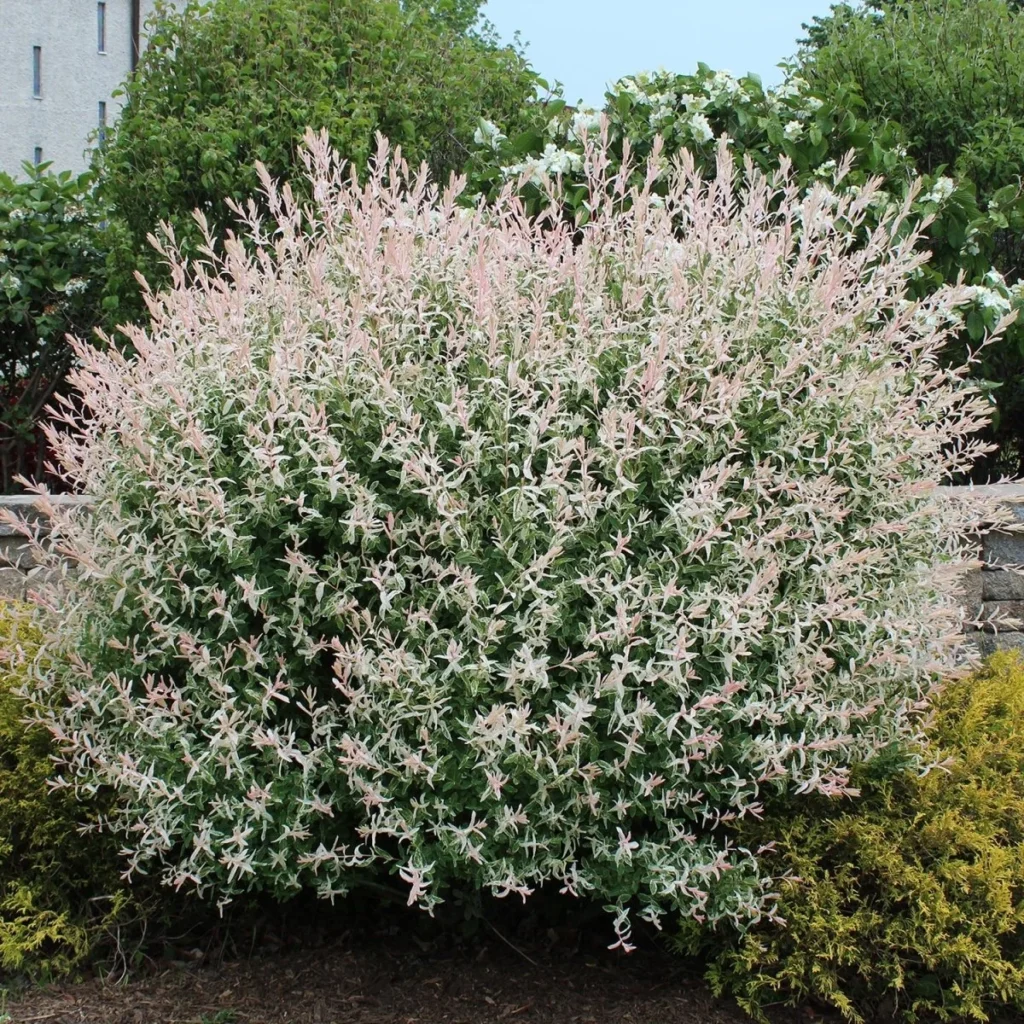
Check the mature size before planting. Dappled willow is commonly sold as Salix integra ‘Hakuro-nishiki’, a compact cultivar that can reach about 4 to 6 feet tall and 5 to 7 feet wide.
Avoid placing the shrub right beside foundations or underground pipes. Willows can develop vigorous roots, especially where soil stays moist.
Step 1: Choose the right time to plant dappled willow
Plant dappled willow from autumn to early spring while the ground is workable and not frozen. Autumn is often a good choice because the roots can settle before the warmer growing season.
Spring planting also works. If you plant in spring, pay closer attention to watering during hot or dry weather.
Avoid planting into dry, hard soil. If the ground is difficult to dig, wait until conditions improve or water the site first.
Step 2: Pick a sunny, moist planting site
Choose full sun for the best foliage color, although dappled willow also tolerates part shade. The soil should hold moisture without staying stagnant around the roots.
A spot beside a pond, stream, or other naturally moist area can work well if there is enough space for the shrub. Ordinary garden soil can also work when it holds moisture and drains reasonably well.
Before digging, look at the space from several directions. Dappled willow develops an open, rounded shape, so allow room for branches to spread without crowding paths or nearby plants.
Step 3: Prepare the soil
Dig an area wider than the root ball rather than making a narrow, deep hole. Mix well-rotted compost or similar organic matter into poor soil to improve moisture retention.
Do not bury the shrub deeper than it was growing in its container. The top of the root ball should sit at about the same level as the surrounding soil.
If the soil is already fertile and moisture-retentive, extensive soil amendment is not needed.
Step 4: Plant the dappled willow
Remove the shrub from its container and check the roots. If they are tightly circling the outside of the root ball, gently loosen them before planting.
Set the dappled willow in the center of the hole. Check the planting depth, then backfill with the soil you removed.
Press the soil gently around the roots to remove large air pockets. Water slowly and deeply so the soil settles around the root ball.
For a single shrub, leave enough space for its expected spread. A mature dappled willow can become several feet wide, so tight spacing can lead to crowding later.
Step 5: Water the new shrub
Water dappled willow thoroughly after planting, then keep the soil consistently moist while the roots establish.
Check the soil rather than watering on a fixed calendar. During hot, dry weather, newly planted willows may need water more often. Once established in suitable moist soil, they usually need less supplemental water.
A layer of organic mulch around the planting area can help slow moisture loss. Keep mulch away from direct contact with the stems.
How to care for dappled willow after planting
Dappled willow needs regular attention during its first growing season, especially if rainfall is low. Check the soil during dry spells and water deeply when the planting area begins to dry.
Feeding is usually unnecessary if the soil is fertile and the shrub is growing well. Mulch can help maintain soil moisture and add organic matter as it breaks down.
Pruning is useful when you want to control the size and encourage fresh new stems. Many gardeners prune dappled willow in late winter or early spring before strong new growth begins.
The fresh leaves are often pink in spring and develop cream, green, and pink variegation. The color can become less pronounced as summer progresses, particularly in warmer conditions.
How much space does dappled willow need?
Give dappled willow several feet of open space because the shrub can grow about 5 to 7 feet wide under suitable conditions. The exact size depends on growing conditions and pruning.
For a mixed border, measure the space from the center of the planting hole to nearby plants. This simple check helps prevent the common mistake of planting a young shrub based on its current size rather than its eventual spread.
Common dappled willow planting mistakes
- Planting in deep shade can reduce the foliage color that makes this cultivar attractive.
- Letting new plants dry out during their first growing season can slow establishment.
- Planting too close to paths, structures, or other shrubs can create crowding as the willow grows.
- Setting the root ball too deeply can interfere with healthy establishment.
- Keeping the soil constantly waterlogged can create poor root conditions even though dappled willow prefers moisture.
Frequently asked questions about dappled willow planting
When is the best time to plant dappled willow?
Autumn through early spring is a good planting window when the ground is workable. Spring planting is also suitable if you water the new shrub regularly during dry weather.
How much sun does dappled willow need?
Dappled willow grows best in full sun but can tolerate part shade. More sun generally helps produce better foliage color.
Does dappled willow need wet soil?
Dappled willow prefers consistently moist soil, but the soil should still drain reasonably well. Avoid sites that stay stagnant and waterlogged for long periods.
How far apart should dappled willows be planted?
Allow several feet between plants and nearby shrubs because a mature dappled willow can spread about 5 to 7 feet. Use the expected mature width rather than the size of the young plant as your guide.
How often should I water dappled willow after planting?
Water deeply after planting and keep the soil moist while the roots establish. Check the soil during hot or dry periods and water when it begins to dry.
Should I prune dappled willow after planting?
Pruning is optional, but it can help control size and encourage fresh new growth. Late winter to early spring is a suitable time for routine pruning.