
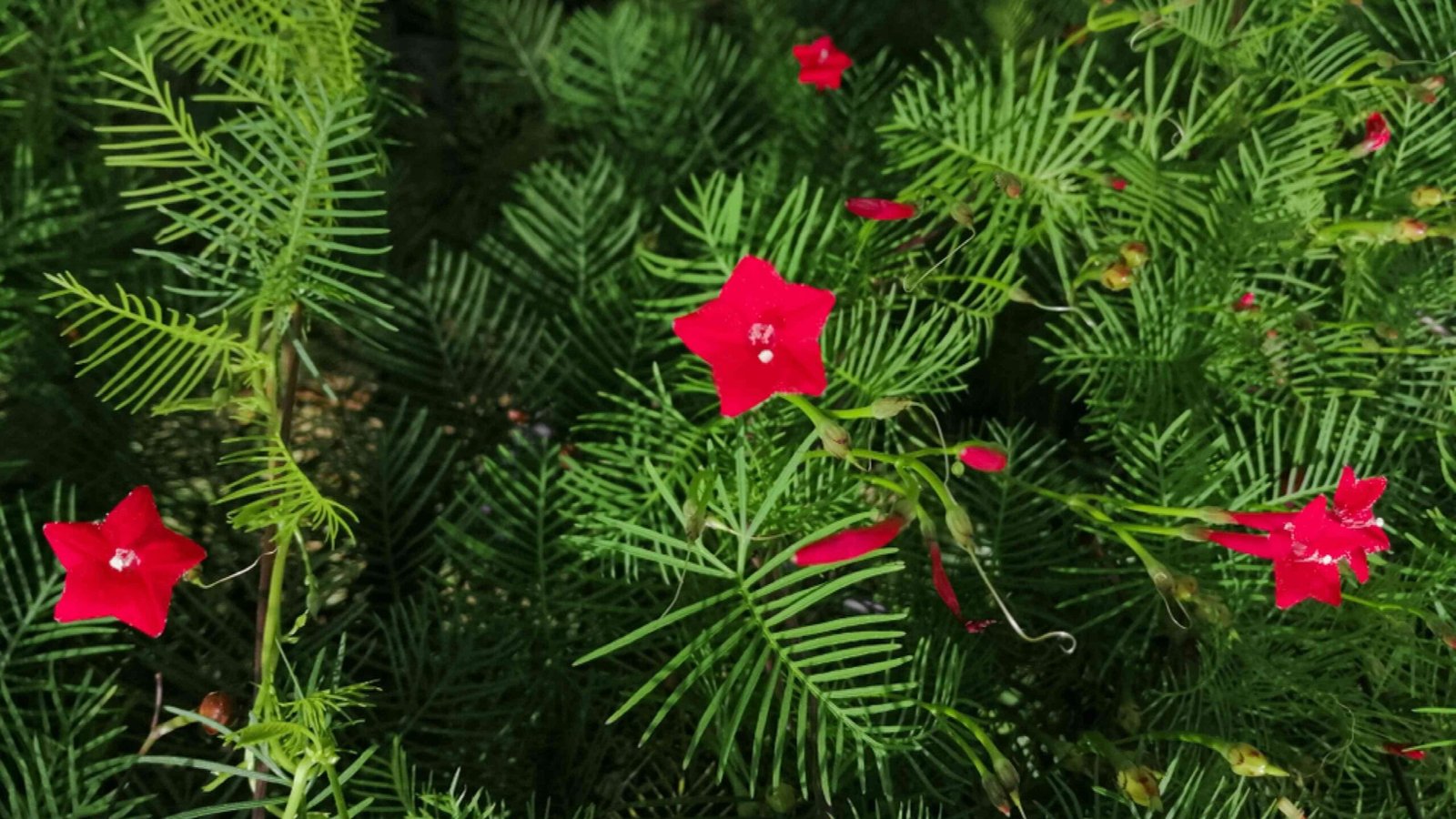
The cypress vine plant is a fast-growing annual vine with fine, fern-like leaves and small star-shaped flowers. Give it full sun, well-drained soil, regular moisture, and a trellis or other support for the best growth.
TL;DR
- Cypress vine is a warm-season annual vine known for fine foliage and red, star-shaped flowers.
- Grow cypress vine in full sun with well-drained soil and steady moisture.
- Give the vine a trellis, fence, or other support because its thin stems climb by twining.
- Cypress vine grows quickly and can reseed, so remove unwanted seed pods or seedlings.
- Keep the seeds away from pets and children because the plant has toxic properties.
What is the cypress vine plant?
The cypress vine plant is Ipomoea quamoclit, a climbing annual in the morning glory family. It has slender stems, deeply divided leaves that look almost fern-like, and small tubular flowers that open into five-pointed stars.
The flowers are usually scarlet red, although white forms also occur. The plant grows quickly and can reach about 10 to 20 feet in suitable conditions, so it needs something to climb.
Cypress vine is also called cypressvine morningglory. It is often grown on trellises, fences, arches, and other vertical structures where its fine foliage can spread.
The plant attracts hummingbirds and butterflies. It also produces seed capsules after flowering, and those seeds can remain in the garden and produce new plants the following season.
How do you grow cypress vine?
Cypress vine grows best in full sun, well-drained soil, and evenly moist conditions. Choose a spot that receives at least six hours of direct sunlight and give the vine a support structure before the stems begin climbing.
| Need | Requirement |
|---|---|
| Light | Full sun is the safest choice for strong growth and flowering. |
| Soil | Use average soil that drains well. |
| Water | Keep the soil moderately moist, especially while the plant is establishing. |
| Support | Use a trellis, fence, arch, or similar structure for the twining stems. |
| Growth | Expect rapid growth during warm weather. |
Cypress vine can handle some dry conditions once established, but growth is better when the soil does not stay dry for long periods. Avoid planting it in a spot where water collects around the roots.
Because the stems are thin, the vine needs something to climb. A trellis with narrow openings works well because the stems can wind around the support.
How do you plant cypress vine seeds?
Cypress vine is easy to start from seed, and treating the hard seed coat can help water reach the seed. Nick or lightly scratch the seed coat, then soak the seeds in water for about 12 to 24 hours before planting.
Plant the seeds after the danger of frost has passed in areas with cold winters. In warm climates, planting time depends on local temperatures and the length of the growing season.
Keep the seed-starting mix moist but not soggy. Once seedlings are established, give them strong light and move them outdoors gradually if they were started indoors.
Cypress vine grows quickly in warm weather, so provide its support early. Waiting until the stems are long can make it harder to guide them where you want them.
When does cypress vine bloom?
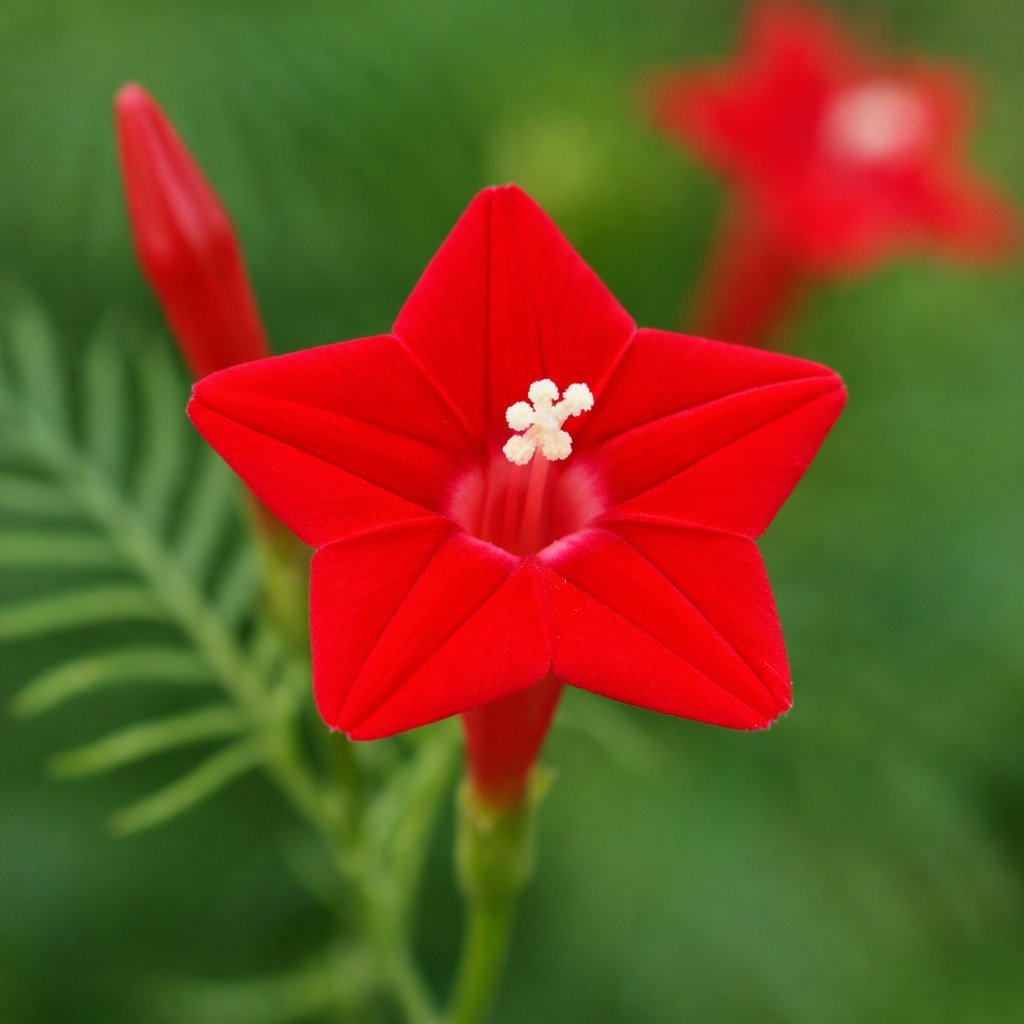
Cypress vine usually flowers from early summer into fall in a warm growing season. The flowers are small, tubular, and star-shaped, with scarlet red being the most common color.
The delicate foliage gives the plant a different look from many other climbing vines. Its leaves are divided into very fine segments, which makes the plant appear light and airy even when the vine covers a support.
Full sun encourages good flowering. If a cypress vine produces lots of foliage but few flowers, check its light first. A shaded location can limit flowering and slow growth.
Cypress vine flowers attract hummingbirds and butterflies, which makes the plant useful in a pollinator-focused garden.
Does cypress vine come back every year?
Cypress vine is an annual, but it can return from seed. The plant dies after the growing season in climates where winter is too cold for it, while dropped seeds can remain in the soil and germinate later.
This self-seeding habit can be useful if you want a recurring display without replanting every year. It can also become a nuisance if seedlings appear where you do not want them.
Remove developing seed pods before they mature if you want to limit reseeding. Pull unwanted seedlings while they are small and easier to remove.
Local conditions matter. Cypress vine has naturalized in some regions, and the University of Florida IFAS currently rates it as having a high invasion risk in Florida’s natural areas. Check local guidance before planting it near natural habitats.
Is cypress vine safe around pets?
Cypress vine has toxic properties, and the University of Florida IFAS identifies it as toxic to dogs, cats, and horses. The North Carolina Extension Gardener Plant Toolbox also lists low-severity poison characteristics for the plant.
The seeds deserve particular care because they contain compounds associated with poisoning. Keep seeds, seed capsules, and plant material away from pets and children.
If you grow cypress vine where animals have access, prevent them from chewing the plant or eating fallen seeds. For a suspected poisoning, contact a veterinarian or an appropriate poison-control service rather than trying to treat the problem at home.
What are common cypress vine problems?
Cypress vine usually has few serious pest or disease problems, but its fast growth and reseeding can create garden-management issues.
- Too little sunlight can lead to weak growth and fewer flowers, so move the plant to a sunnier location when possible.
- Poor drainage can cause root problems, so choose soil that drains excess water.
- Long, unsupported stems can become tangled or fall outward, so install a support structure early.
- Unwanted seedlings can spread around the planting area, so remove young volunteers before they mature.
- Excessively dry soil can slow growth, so water when the soil begins to dry rather than letting the root area stay dry for long periods.
Cypress vine is also thin-stemmed, so avoid rough handling when training it around a trellis. Guide young stems gently instead of forcing mature stems into tight spaces.
Frequently asked questions about cypress vine
What is the cypress vine plant?
The cypress vine plant is Ipomoea quamoclit, a fast-growing annual climbing vine with fern-like foliage and small star-shaped flowers.
How much sun does cypress vine need?
Cypress vine grows best in full sun, with at least six hours of direct sunlight each day. Good light also supports flowering.
How often should I water cypress vine?
Water when the soil begins to dry, giving the plant enough moisture to keep the root area from staying dry for long periods. Reduce watering when rainfall already keeps the soil moist.
How tall does cypress vine grow?
Cypress vine commonly grows about 10 to 20 feet long in suitable conditions. Its thin stems need a trellis, fence, or another support.
Can cypress vine grow in a container?
Yes, cypress vine can grow in a container if the pot drains well and the plant has a sturdy support. A container also makes it easier to manage unwanted reseeding.
Does cypress vine need a trellis?
Cypress vine benefits from a trellis or similar support because it is a twining vine with slender stems. Install the support before the plant becomes large.
How do I stop cypress vine from spreading?
Remove seed pods before they mature and pull unwanted seedlings while they are young. Check local guidance if you live in an area where cypress vine is considered invasive.
Is cypress vine poisonous to dogs and cats?
Yes. University of Florida IFAS lists cypress vine as toxic to dogs, cats, and horses, so keep the plant and especially its seeds away from pets.