
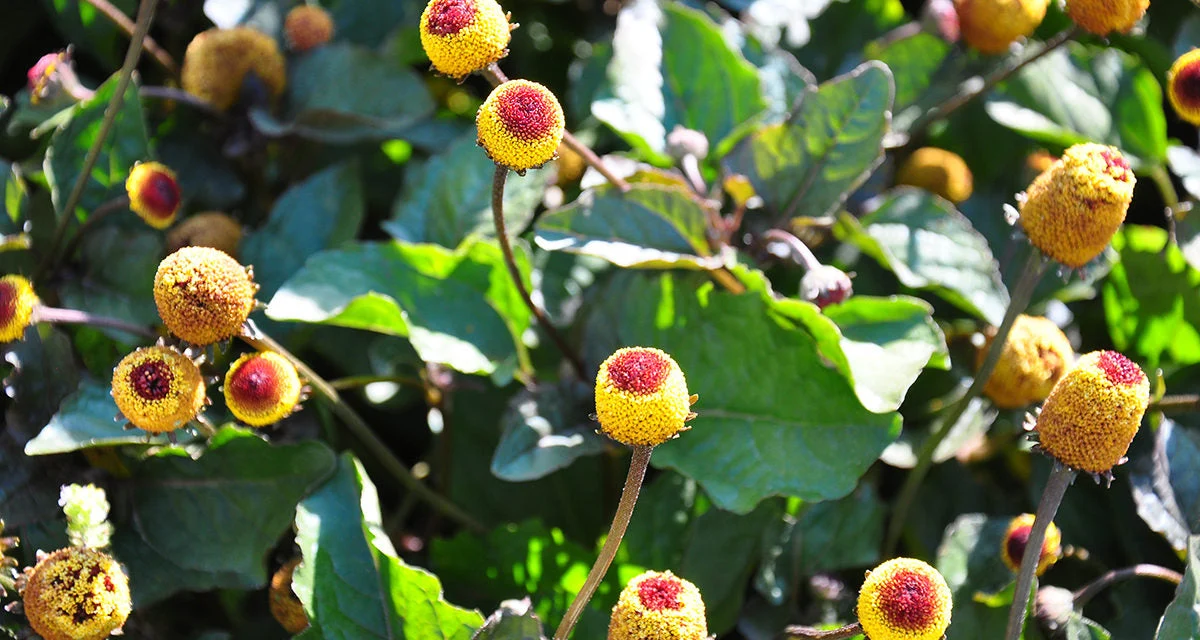
Spilanthes is a fast-growing, heat-loving annual best known for one strange party trick: chew a flower and your mouth goes numb. This guide covers what the plant is, how to grow it from seed, and how to avoid the mistakes that stall it.
TL;DR
- Spilanthes (Acmella oleracea) is a tropical annual grown for its numbing, spilanthol-rich flowers.
- Plant it in full sun after the last frost, in soil that’s moist but never soggy.
- Space plants 6-12 inches apart; they top out around 12 inches tall.
- Harvest leaves anytime and flowers once they bloom, for the strongest numbing effect.
- It’s low-maintenance and pest-resistant, making it a forgiving plant for beginners.
What is a spilanthes plant?
Spilanthes is a warm-season annual grown for its odd, golf-tee-shaped flowers and the tingling numbness they produce when chewed. Its botanical name is Acmella oleracea, though older sources still list it as Spilanthes oleracea.
Most gardeners know it by a nickname instead: toothache plant. It also goes by eyeball plant, buzz buttons, or Szechuan buttons, all references to the same bullseye-shaped bloom. This article uses “spilanthes” throughout to keep things consistent.
The plant is native to South America and grows as a tender perennial in warm climates, but almost everywhere else it’s treated as an annual. It survives as a true perennial only in USDA zones 10 through 12. Outside those zones, expect one growing season before frost ends it.
How spilanthes gets its numbing effect
The tingling comes from spilanthol, a natural compound concentrated in the plant’s leaves and flowers. Chew a flower and within seconds your mouth buzzes, produces extra saliva, and then goes numb, which is exactly why people have used it for tooth and gum pain.
The flowers carry the strongest dose of spilanthol, so if you’re growing spilanthes specifically to use it, harvest blooms rather than leaves alone. The numbing sensation is temporary and fades within a few minutes.
How to plant spilanthes
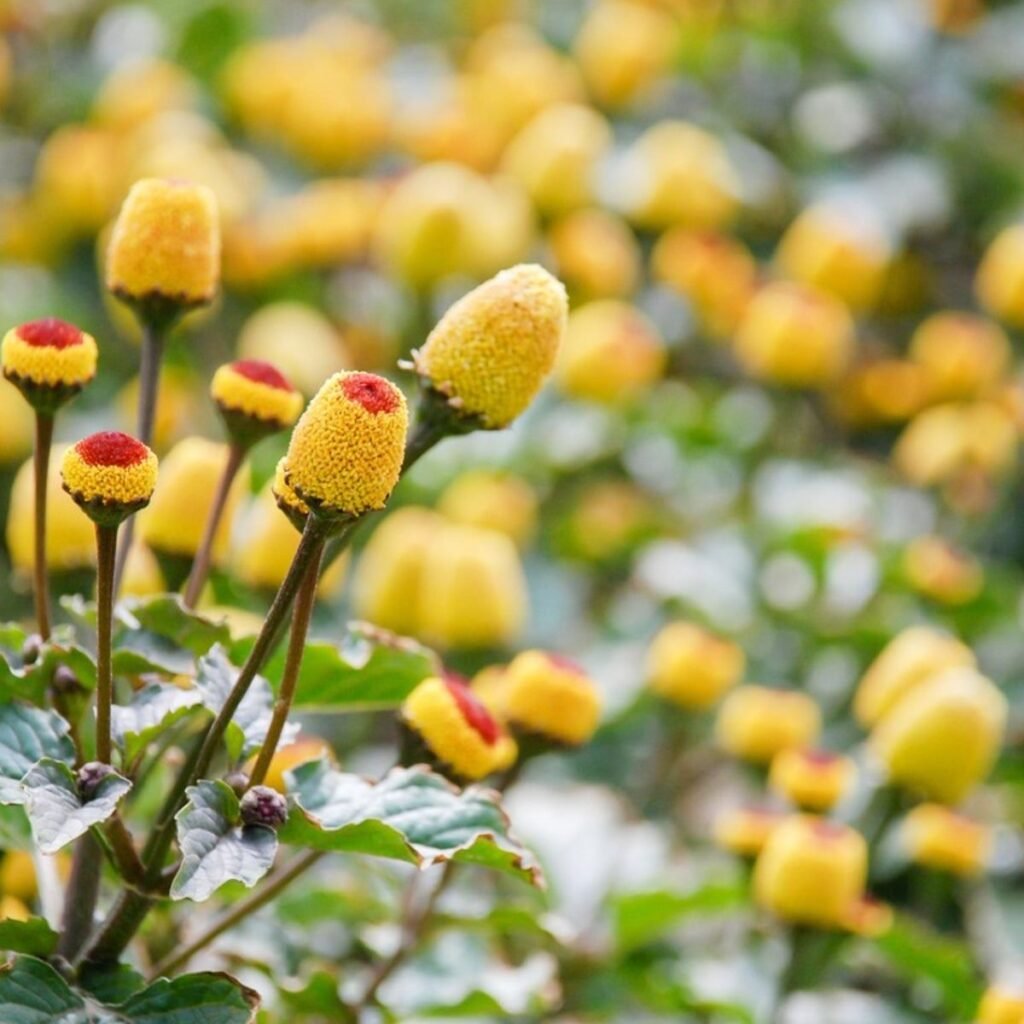
Start seeds indoors 10 to 12 weeks before your last frost date, or direct-sow outside once the danger of frost has passed and soil has warmed. Scatter seeds on the soil surface rather than burying them; they need light to germinate and typically need soil temperatures of 65-85°F.
Space plants 6 to 12 inches apart in a spot that gets full sun, with some afternoon shade tolerated in hotter climates. Spilanthes stays compact, reaching about 12 inches tall and 12 to 18 inches wide, so it works well in garden beds, containers, and window boxes alike.
Watering and soil needs
Spilanthes wants soil that’s consistently moist but never waterlogged. Overwatering is the fastest way to cause stem rot or stunted growth, so let the top layer of soil dry slightly between waterings rather than keeping it saturated.
Well-draining soil matters more than rich soil here. A basic potting mix or garden soil with decent drainage is enough; you don’t need to amend heavily. During hot, dry stretches, water more often to keep the plant from wilting.
Common mistakes with spilanthes
- Overwatering: Soggy soil leads to stem rot. Water when the top inch of soil feels dry, not on a fixed schedule.
- Planting before soil warms: Cold soil delays or prevents germination. Wait until soil temperatures reach at least 65°F.
- Skipping the pinch: Left alone, spilanthes can get leggy. Pinch back growing tips early to encourage a fuller, bushier plant.
- Harvesting too early: Leaves can be picked anytime, but flowers carry the most spilanthol. Wait for blooms if the numbing effect is the point of growing it.
Frequently asked questions about spilanthes
What is a spilanthes plant used for?
Spilanthes is grown as an ornamental for its unusual bullseye flowers and, traditionally, as a home remedy for tooth and gum pain because of its numbing effect.
How often should I water spilanthes?
Water enough to keep the soil moist but not soggy, typically every few days in hot weather. Let the top inch of soil dry out between waterings.
Is spilanthes the same as the toothache plant?
Yes. Spilanthes, toothache plant, buzz buttons, and eyeball plant are all common names for the same species, Acmella oleracea.
Can spilanthes survive winter outdoors?
Only in USDA zones 10 to 12. Everywhere else, frost kills it, so it’s grown as an annual or brought indoors before cold weather hits.
Does spilanthes need full sun?
Yes, spilanthes grows best in full sun. In very hot climates, afternoon shade helps prevent stress without hurting flower production.