
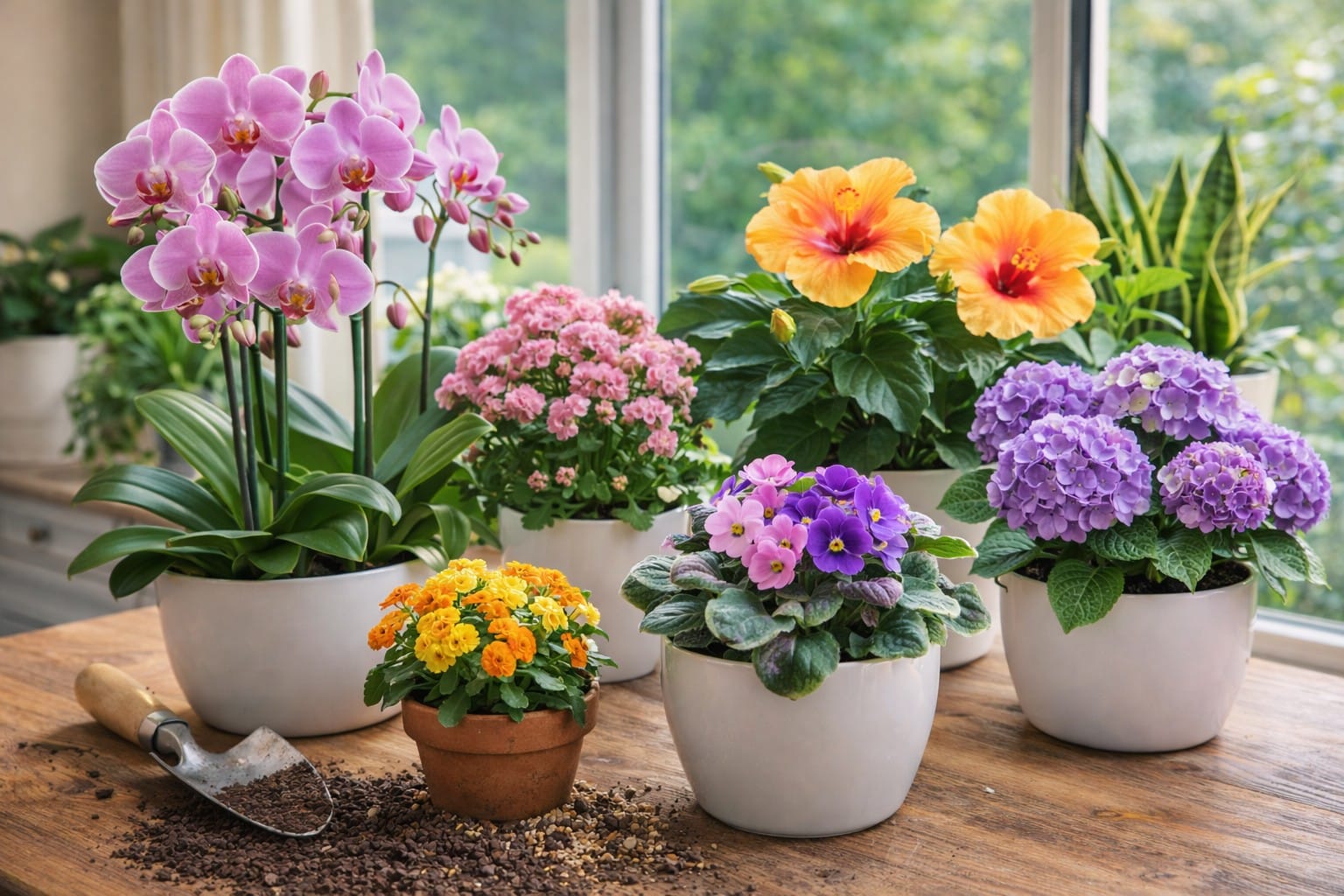
Indoor flower plants bring color, fragrance, and life into living spaces while improving mood and indoor air quality. Unlike foliage plants, flowering houseplants reward you with beautiful blooms when given the right light, water, and care. Whether you live in an apartment or a house, there are indoor flowering plants suited for bright rooms, low light corners, and even small tabletops.
This in-depth guide covers everything you need to know about indoor flower plants, including the best types, light requirements, watering, care tips, common problems, and how to keep them blooming longer.
Benefits of Indoor Flower Plants
Growing flowering plants indoors offers many advantages beyond decoration.
Key benefits include:
Brighten interiors with natural color
Improve mood and reduce stress
Add pleasant fragrance
Enhance indoor air quality
Create a calming, welcoming atmosphere
Flowering houseplants also make excellent gifts and statement pieces.
Best Indoor Flower Plants for Homes
There are many flowering plants that adapt well to indoor conditions.
Peace Lily
One of the most popular indoor flowering plants.
Produces elegant white blooms
Thrives in low to medium light
Helps improve indoor air quality
Orchid
Known for long-lasting, exotic flowers.
Prefers bright, indirect light
Blooms can last for weeks or months
Low watering needs
African Violet
Compact plant with colorful flowers.
Blooms year-round with proper care
Prefers bright, indirect light
Ideal for tabletops and shelves
Anthurium
Features glossy leaves and long-lasting blooms.
Flowers come in red, pink, or white
Prefers warm temperatures and humidity
Excellent for modern interiors
Begonia
Produces vibrant flowers and decorative foliage.
Grows well in indirect light
Suitable for pots and hanging baskets
Kalanchoe
Succulent flowering plant with clusters of blooms.
Very low maintenance
Prefers bright light and minimal watering
Jasmine (Indoor Varieties)
Produces fragrant white flowers.
Needs bright light and regular pruning
Perfect for bedrooms or balconies
Christmas Cactus
Blooms in winter when most plants don’t.
Prefers indirect light
Easy to care for and long-lived
Light Requirements for Indoor Flower Plants
Light is the most important factor for flowering indoors.
General guidelines:
Bright indirect light works for most flowering plants
South or east-facing windows are ideal
Avoid harsh direct sunlight unless plant requires it
Rotate plants regularly for even growth
Low light reduces blooming, even if the plant remains healthy.
Watering Indoor Flower Plants
Proper watering is essential for blooms.
Watering tips:
Water when topsoil feels dry
Avoid waterlogging roots
Use pots with drainage holes
Empty saucers to prevent standing water
Overwatering is the most common cause of indoor plant failure.
Humidity and Temperature Needs
Most flowering houseplants prefer stable indoor conditions.
Ideal conditions:
Temperature between 18–27°C (65–80°F)
Moderate humidity
Avoid cold drafts and heat vents
Humidity can be increased using pebble trays or humidifiers.
Best Soil for Indoor Flower Plants
Soil quality directly affects flowering.
Use:
Well-draining potting mix
Light, airy soil with organic matter
Special orchid or cactus mixes for specific plants
Avoid garden soil indoors—it compacts and drains poorly.
Fertilizing Indoor Flower Plants
Flowering plants need nutrients to bloom.
Fertilizing guidelines:
Use balanced or bloom-boosting fertilizer
Feed every 2–4 weeks during active growth
Reduce feeding in winter
Avoid over-fertilizing
Too much fertilizer promotes leaves instead of flowers.
How to Encourage More Blooms Indoors
If your plant is healthy but not flowering, try these tips:
Increase light exposure
Switch to bloom fertilizer
Deadhead spent flowers
Maintain consistent watering
Avoid frequent relocation
Prune lightly to encourage new growth
Patience is important—some plants bloom seasonally.
Indoor Flower Plants for Low Light
Not all homes have bright windows.
Good low-light flowering plants include:
Peace Lily
Phalaenopsis Orchid
Anthurium
Bromeliad
These plants can flower even in indirect or filtered light.
Indoor Flower Plants for Small Spaces
Compact flowering plants are ideal for apartments.
Best choices:
African Violet
Mini orchids
Kalanchoe
Begonia
Cyclamen
They fit well on desks, shelves, and window sills.
Common Problems with Indoor Flower Plants
Flowering plants may face issues indoors.
Common problems:
No flowers – insufficient light or nutrients
Yellow leaves – overwatering or poor drainage
Wilting – underwatering or temperature stress
Bud drop – sudden environmental changes
Pests – aphids, spider mites, mealybugs
Early detection helps prevent long-term damage.
Pruning and Maintenance
Regular care keeps plants healthy and blooming.
Maintenance tips:
Remove dead flowers and leaves
Clean leaves to improve photosynthesis
Prune lightly to shape plant
Repot every 1–2 years if roots outgrow pot
Healthy plants bloom more consistently.
Seasonal Care for Indoor Flower Plants
Plant needs change throughout the year.
Spring and summer:
More light, water, and feeding
Fall and winter:
Reduce watering and fertilizer
Provide bright light
Some plants enter dormancy
Understanding seasonal cycles improves flowering success.
Choosing the Right Indoor Flower Plant
When selecting a plant, consider:
Light availability
Time for care
Space size
Desired flower color and fragrance
Matching the plant to your home conditions ensures long-term success.
Final Thoughts
Indoor flower plants are one of the best ways to bring natural beauty, color, and calm into your home. With the right plant choice, proper light, consistent watering, and gentle care, flowering houseplants can bloom indoors for weeks or even months at a time.
Whether you prefer low-maintenance bloomers, fragrant flowers, or exotic orchids, indoor flowering plants offer endless variety and joy. With patience and attention, your indoor space can stay bright, lively, and full of blooms all year round. 🌸🌿