
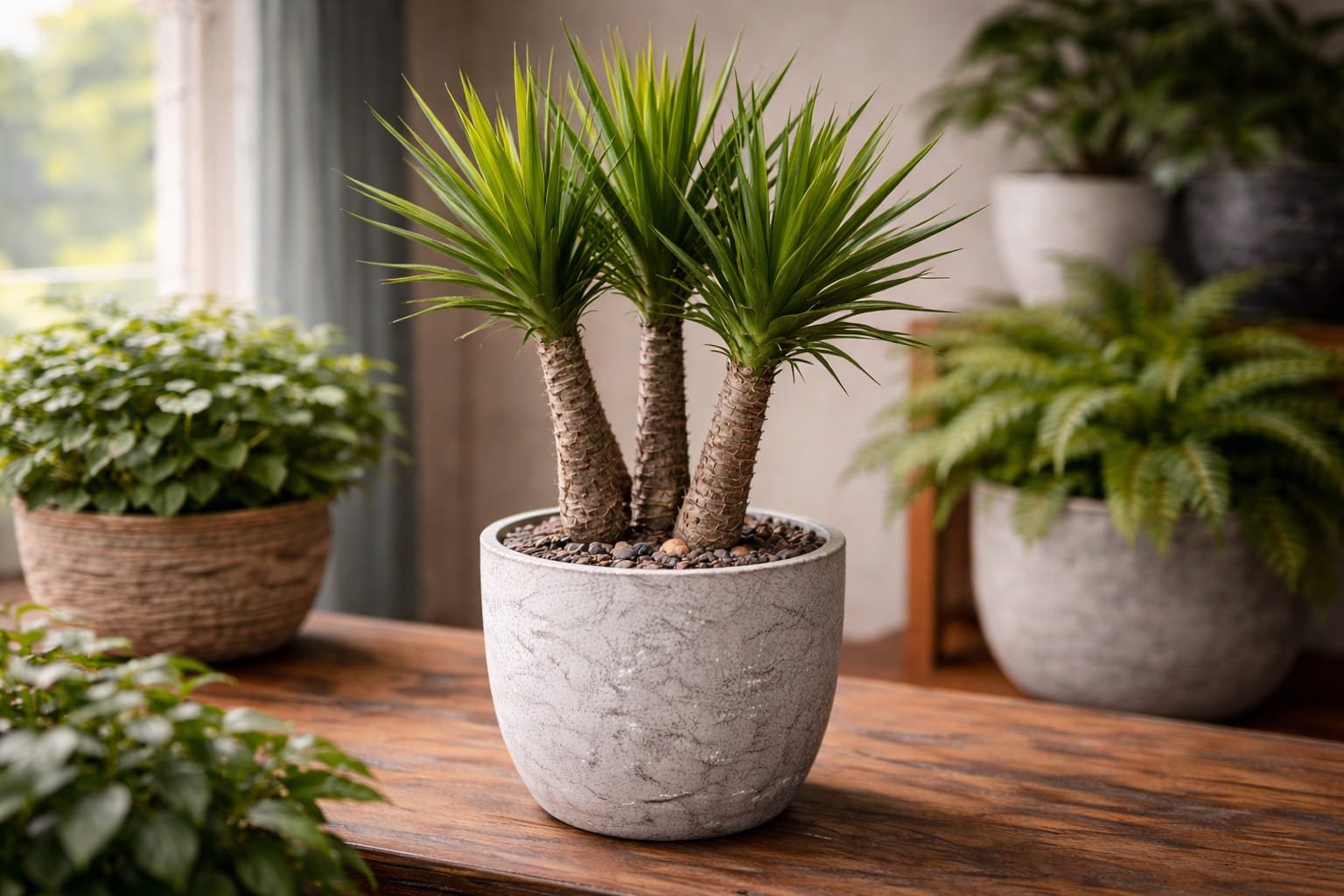
The yucca plant is a bold, architectural plant known for its sword-like leaves, strong stems, and extreme toughness. It is one of the best plants for people who want a low-maintenance, drought-tolerant, and long-living plant that still makes a strong visual impact. Yucca plants grow well indoors and outdoors, adapt to harsh conditions, and require very little attention once established.
This detailed guide covers everything you need to know about the yucca plant, including what it is, popular types, indoor and outdoor care, light and watering needs, soil, pruning, propagation, common problems, safety, benefits, and expert tips to help your yucca thrive for years.
What Is a Yucca Plant?
The yucca plant is a perennial evergreen plant native to dry and semi-desert regions of North and Central America. It belongs to the Asparagaceae family and is naturally adapted to survive drought, heat, and poor soil conditions.
Yucca plants are recognized by their:
- Long, stiff, pointed leaves
- Woody or cane-like stems
- Upright, dramatic growth
- Slow but steady development
Some yucca species produce tall flower spikes with white, bell-shaped flowers, especially when grown outdoors.
Why Yucca Plant Is So Popular
Yucca plants are popular because they combine strength, beauty, and simplicity. They are perfect for busy households, offices, and modern interiors.
Main reasons people choose yucca plants include:
- Extremely low maintenance
- Tolerates drought and neglect
- Thrives in bright light and sun
- Modern, sculptural appearance
- Long lifespan
- Suitable for indoor and outdoor use
Yucca is often compared to a natural sculpture, adding height and structure to any space.
Popular Types of Yucca Plants
There are many yucca species, but only a few are commonly grown as houseplants or garden plants.
Yucca Elephantipes
Also known as spineless yucca, this is the most popular indoor variety.
Features include:
- Smooth-edged leaves
- Thick cane-like stems
- Safe-looking compared to sharp yuccas
- Ideal for homes and offices
Yucca Gloriosa
A hardy outdoor yucca known for its flowers.
Characteristics:
- Sharp, pointed leaves
- Tall flower stalks
- Grows well in gardens
Yucca Filamentosa
Commonly grown outdoors.
Key traits:
- Thread-like fibers along leaf edges
- Cold-hardy
- Produces large white flowers
Yucca Aloifolia
A more aggressive-looking type.
Features:
- Very sharp leaf tips
- Dense leaf clusters
- Best for outdoor landscapes
Ideal Growing Conditions for Yucca Plant
Light Requirements
Yucca plants love bright light.
Best lighting conditions include:
- Bright indirect light indoors
- Direct sunlight for several hours daily
- South or west-facing windows are ideal
Low light causes slow growth, weak stems, and pale leaves.
Watering Needs
Yucca plants prefer dry conditions over wet soil.
Watering guidelines:
- Water only when soil is completely dry
- Usually every 2–3 weeks indoors
- Reduce watering in winter
- Never let the plant sit in water
Overwatering is the most common cause of yucca plant problems.
Soil Requirements
Yucca needs fast-draining soil.
Ideal soil mix:
- Cactus or succulent soil
- Sandy or gritty texture
- Excellent drainage
Heavy soil traps moisture and leads to root rot.
Temperature and Humidity
Yucca plants thrive in:
- Temperatures between 60–90°F
- Low to moderate humidity
- Dry indoor air
They tolerate heat well but dislike frost when grown indoors.
Yucca Plant Care Indoors
Yucca is one of the easiest indoor plants to care for.
Indoor care tips:
- Place near a bright window
- Rotate occasionally for even growth
- Avoid frequent watering
- Keep away from cold drafts
Yucca adapts well to indoor environments and grows slowly but steadily.
Yucca Plant Care Outdoors
Outdoor yucca plants are extremely hardy.
Outdoor care tips:
- Plant in full sun
- Use sandy, well-drained soil
- Minimal watering once established
- Protect young plants from frost
Outdoor yucca plants can live for decades with little care.
Pruning Yucca Plant
Pruning keeps yucca healthy and manageable.
When to prune:
- Remove yellow or dead leaves
- Cut back tall stems to control height
- Best done in spring
Pruned stems often produce new shoots, creating a fuller plant.
Propagation of Yucca Plant
Yucca can be propagated in several ways.
Propagation by Stem Cuttings
Steps:
- Cut a healthy stem section
- Allow it to dry for a day
- Plant in well-draining soil
- Water lightly until roots form
Propagation by Offsets
- Remove baby plants from the base
- Plant separately
- Water sparingly
Propagation is slow but reliable.
Common Yucca Plant Problems
Yellow Leaves
Causes:
- Overwatering
- Poor drainage
Solution:
- Reduce watering
- Improve soil drainage
Brown Leaf Tips
Causes:
- Dry air
- Salt buildup
Solution:
- Flush soil occasionally
- Trim brown tips
Soft or Mushy Stem
Cause:
- Root rot from excess water
Solution:
- Cut healthy sections and replant
- Discard severely damaged plants
Leaning Plant
Cause:
- Insufficient light
Solution:
- Move to brighter location
Fertilizing Yucca Plants
Yucca plants need very little fertilizer.
Fertilizing tips:
- Feed once every 2–3 months
- Use diluted balanced fertilizer
- Fertilize only in spring and summer
Overfeeding can harm the plant.
Benefits of Yucca Plant
Yucca plants offer many advantages.
Benefits include:
- Improves indoor air quality
- Extremely drought tolerant
- Long lifespan
- Low maintenance
- Adds height and structure to spaces
- Ideal for modern and minimalist interiors
Yucca plants are perfect for people who forget to water plants regularly.
Is Yucca Plant Safe for Pets?
Yucca plants are toxic to cats and dogs if ingested.
Possible symptoms include:
- Vomiting
- Drooling
- Lethargy
Keep yucca plants out of reach of pets.
Best Places to Keep a Yucca Plant
Ideal locations include:
- Bright living rooms
- Near sunny windows
- Office corners
- Entryways
Yucca plants work well as floor plants due to their height.
Interesting Facts About Yucca Plant
- Yucca plants can live over 20 years
- Some species produce edible flowers
- Yucca was used traditionally for soap
- It thrives in desert climates
- Flowers bloom mainly outdoors
Frequently Asked Questions About Yucca Plant
Yucca plants grow slowly but steadily. They prefer bright light and minimal watering. Overwatering is the biggest mistake. Indoor yucca rarely flowers, while outdoor plants bloom more easily. Pruning helps control height and encourages branching.
Final Thoughts
The yucca plant is a strong, striking, and dependable plant that thrives where many others fail. Its ability to survive drought, adapt to indoor and outdoor environments, and maintain its bold appearance with minimal care makes it a top choice for modern homes and offices.
With proper light, well-draining soil, and careful watering, the yucca plant will reward you with years of healthy growth and dramatic beauty. If you want a plant that looks powerful, lives long, and demands very little, the yucca plant is an excellent choice.