Dahlia Lavender Perfection is a showy flower that rewards steady care with soft lavender blooms and strong stems. Give it full sun, rich soil, regular water, and deadheading, and you will get more flowers for a longer season. This guide explains how to plant, feed, support, and troubleshoot dahlia lavender perfection so your plants stay healthy and bloom well.
On this page
Key TakeawaysWhat Dahlia Lavender Perfection Needs to Grow WellHow to Plant Dahlia Lavender Perfection for Strong StartsWatering and Feeding Dahlia Lavender Perfection the Right WayStaking, Pinching, and Deadheading for More BloomsCommon Problems with Dahlia Lavender Perfection and How to Fix ThemOverwintering and Saving Dahlia Lavender Perfection TubersQuick Reference for Dahlia Lavender Perfection CareFrequently Asked QuestionsKey Takeaways
- Planting matters: Dahlia lavender perfection grows best in full sun and loose, well-drained soil that warms up fast in spring.
- Water with care: Deep, even watering is better than light daily sprinkles, because tubers need moisture without staying soggy.
- Support is key: Tall stems need staking early, before wind or heavy blooms bend them.
Show 4 more takeaways
- Feed for flowers: A low-nitrogen fertilizer helps dahlia lavender perfection make blooms instead of too much leafy growth.
- Deadheading helps: Removing spent flowers pushes the plant to keep producing new buds.
- Pests and disease can be managed: Slugs, aphids, powdery mildew, and rot are common issues, but simple checks and clean growing habits reduce risk.
- Fall care protects next year’s plants: Lift and store tubers in cold climates so dahlia lavender perfection can return strong next season.
What Dahlia Lavender Perfection Needs to Grow Well
Dahlia lavender perfection grows best when it gets full sun, loose soil, and steady care. This dahlia lavender perfection plant is a tuber crop, which means it grows from an underground storage root, much like a potato that stores energy for later.
Give it at least 6 to 8 hours of direct sun each day. In hot regions, morning sun with light afternoon shade can help keep blooms from fading too fast. The soil should drain well, because soggy ground can rot the tuber before the plant has a chance to grow.
What kind of soil works best?
Dahlia lavender perfection likes rich, crumbly soil with added compost. Think of the soil like a sponge that also lets extra water escape. If your garden soil is heavy clay, mix in compost and plant on a slight mound so water moves away from the roots.
How to Plant Dahlia Lavender Perfection for Strong Starts
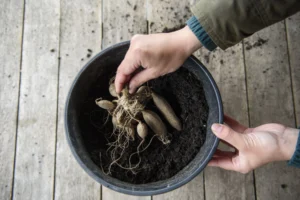
Planting dahlia lavender perfection the right way gives you stronger stems and earlier blooms. Set the tuber in the ground after the last frost, when the soil is warm and easy to work. A cold, wet bed slows growth and raises the chance of rot.
Place the tuber about 4 to 6 inches deep, with the eye, or growing point, facing up. Space plants 18 to 24 inches apart so air can move around them. Good spacing helps lower disease risk and gives each plant room to spread.
Should you start in pots or in the ground?
You can do either, but each method has a use. Pots work well if spring is still cold, because you can keep the tubers protected until outdoor conditions improve. Ground planting is simpler if your soil drains well and frost is gone.
- Plant in pots if your spring is long and cool.
- Plant in the ground if your site has warm soil and full sun.
- Use a container at least 12 inches wide if you want to grow dahlia lavender perfection on a patio.
Watering and Feeding Dahlia Lavender Perfection the Right Way
Dahlia lavender perfection needs deep watering and light, regular feeding to bloom well. Water at the base of the plant, not over the leaves, so you keep the foliage drier and reduce fungus problems. A deep soak once or twice a week is better than a quick splash every day.
When the plant is small, water sparingly until shoots appear. Once growth is active, keep the soil evenly moist. If the top inch feels dry, it is time to water again. During hot spells, container plants may need water more often because pots dry out fast.
What fertilizer should you use?
Use a fertilizer that is lower in nitrogen and higher in phosphorus and potassium. Nitrogen pushes leaf growth, while phosphorus and potassium support flowers and strong stems. A balanced flower fertilizer or a tomato fertilizer often works well for dahlia lavender perfection.
| Care Task | What to Do | Why It Helps |
|---|---|---|
| Watering | Water deeply at the base 1 to 2 times per week | Keeps roots moist without soaking them |
| Feeding | Apply low-nitrogen fertilizer every 3 to 4 weeks | Supports blooms instead of excess leaves |
| Mulching | Add 2 inches of mulch around the plant | Slows moisture loss and cools the soil |
Staking, Pinching, and Deadheading for More Blooms
Dahlia lavender perfection often needs support because its flower heads can get heavy. A stake or cage keeps stems upright and stops them from snapping in wind or rain. Put the support in place early, when the plant is still small, so you do not damage roots later.
Pinching is also useful. When the plant is about 12 inches tall, pinch off the top growing tip. This encourages side shoots, which means more stems and more flowers. It works like trimming a hedge so it grows fuller instead of taller and thin.
Why does deadheading matter?
Deadheading means removing faded blooms before they set seed. Dahlia lavender perfection puts more energy into new flowers when old ones are removed. Cut back to a leaf node, which is the spot where a leaf joins the stem, and new growth usually follows.
- Use clean pruners so you do not spread disease.
- Check plants every few days during peak bloom.
- Remove weak or damaged stems to improve airflow.
Common Problems with Dahlia Lavender Perfection and How to Fix Them
Dahlia lavender perfection is fairly easy to grow, but a few problems come up often. Yellow leaves, poor blooming, and drooping stems usually point to water, light, or feeding issues. Most of these are simple to correct once you know what to look for.
What causes fewer flowers?
Too much shade is a common reason. Another cause is too much nitrogen, which makes leafy growth at the expense of blooms. If your plant is healthy but slow to flower, check sun exposure first, then review your fertilizer.
| Problem | Likely Cause | Fix |
|---|---|---|
| Yellow leaves | Overwatering or poor drainage | Let the soil dry a bit and improve drainage |
| Few blooms | Too much shade or too much nitrogen | Move to a sunnier spot and switch fertilizer |
| Drooping stems | Need for staking or water stress | Support the plant and water deeply |
| Powdery white coating | Powdery mildew | Improve airflow and avoid wetting leaves |
How do pests affect the plant?
Aphids, slugs, and spider mites can bother dahlia lavender perfection. Aphids cluster on new growth and suck sap. Slugs chew holes in leaves. Spider mites show up in hot, dry weather and leave fine webbing. A quick morning check helps you catch them early.
Overwintering and Saving Dahlia Lavender Perfection Tubers
Dahlia lavender perfection can come back year after year if you store the tubers well in cold climates. After the first frost blackens the foliage, cut the stems down and dig up the tubers carefully. Handle them gently, because bruises can lead to rot in storage.
Let the tubers dry for a day or two in a cool, airy place. Then store them in peat moss, wood shavings, or dry vermiculite in a box or crate. Keep them in a dark spot that stays cool but does not freeze. Check them once a month for soft spots or shriveling.
When should you leave tubers in the ground?
If you live in a mild climate where the soil does not freeze hard, you may leave dahlia lavender perfection in the ground with a thick mulch layer. In colder areas, lifting the tubers is safer. The goal is simple, protect the stored energy that will feed next year’s growth.
Quick Reference for Dahlia Lavender Perfection Care
Dahlia lavender perfection grows best when you match the plant’s needs to the season. Use this quick guide to solve common issues fast and keep blooms coming. It works like a field note card you can check before each garden visit.
| Task | Best Timing | Simple Goal |
|---|---|---|
| Plant tubers | After last frost | Warm soil and no frost risk |
| Pinch tips | When plants reach 12 inches | More side shoots and more blooms |
| Stake stems | At planting or early growth | Prevent breakage |
| Deadhead flowers | All season | Keep new buds forming |
| Lift tubers | After first frost | Save plants for next year |
With the right sun, water, and support, dahlia lavender perfection gives you long-lasting color and strong garden impact. Keep the soil loose, feed lightly, and remove spent blooms often. Those simple steps are the heart of dahlia lavender perfection care, and they lead to better flowers all season.
Frequently Asked Questions
How much sun does dahlia lavender perfection need?
Dahlia lavender perfection needs 6 to 8 hours of direct sun each day. More sun usually means more blooms, as long as the soil does not dry out too fast.
How often should I water dahlia lavender perfection?
Water deeply once or twice a week, depending on heat and rainfall. The soil should stay evenly moist, but never stay soggy.
Can dahlia lavender perfection grow in pots?
Yes, dahlia lavender perfection can grow well in a large container. Use a pot at least 12 inches wide and make sure it drains well.
Why are the leaves on my dahlia lavender perfection turning yellow?
Yellow leaves often mean too much water or poor drainage. Check the soil first, then reduce watering if the roots feel wet for too long.
Do I need to deadhead dahlia lavender perfection?
Yes, deadheading helps the plant make more flowers. Remove faded blooms often so the plant sends energy into new buds.
Will dahlia lavender perfection come back next year?
It can come back if you protect the tubers from freezing. In cold climates, dig them up after frost and store them indoors until spring.