
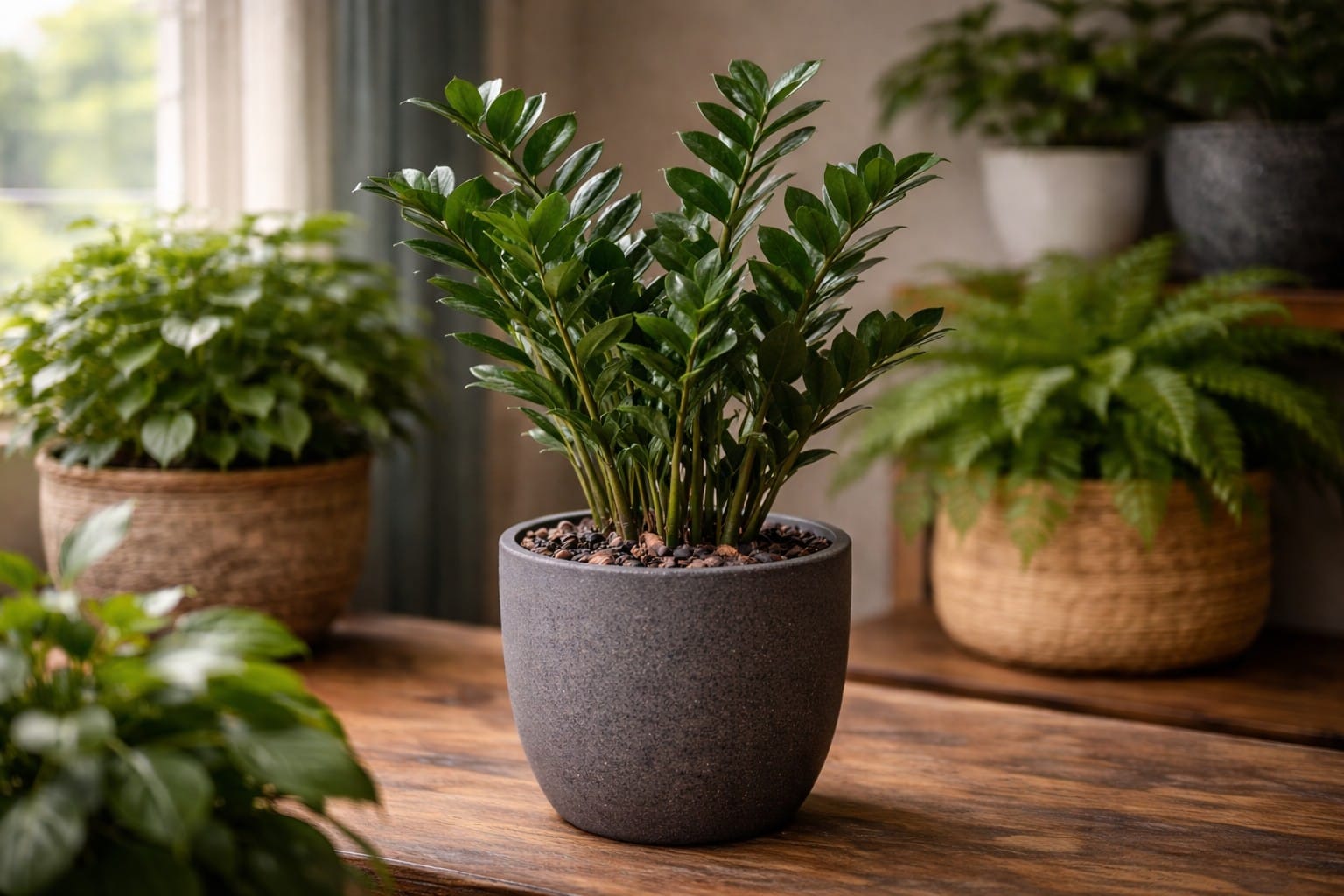
The ZZ plant is one of the toughest and most forgiving houseplants you can own. With its glossy green leaves, upright growth, and ability to survive in low light and dry conditions, the ZZ plant is perfect for beginners, busy plant owners, and office spaces. It looks polished and elegant while needing very little attention.
This complete guide covers everything about the ZZ plant, including its meaning, benefits, types, care requirements, watering schedule, light needs, common mistakes, propagation, safety, and frequently asked questions. By the end, you’ll understand why the ZZ plant is often called an “almost unkillable” houseplant.
What Is a ZZ Plant?
The ZZ plant, scientifically known as Zamioculcas zamiifolia, is a tropical perennial plant native to Eastern Africa. It is grown mainly as an indoor plant and is prized for its thick stems, waxy leaves, and strong survival skills.
ZZ plants store water in their rhizomes, which are thick, potato-like structures under the soil. This allows the plant to survive long periods without water.
Key features of the ZZ plant include:
- Thick, upright stems
- Shiny, dark green leaves
- Slow and steady growth
- Extreme drought tolerance
Meaning and Symbolism of ZZ Plant
The ZZ plant is often associated with positive symbolism:
- Prosperity and good luck
- Stability and growth
- Resilience and strength
- Success and longevity
In Feng Shui, ZZ plants are believed to attract wealth and positive energy, making them popular choices for offices and business spaces.
Benefits of ZZ Plant
Low Maintenance Houseplant
ZZ plants are famous for their ability to survive neglect. They tolerate:
- Low light
- Irregular watering
- Dry indoor air
This makes them ideal for people who forget to water plants or travel frequently.
Improves Indoor Appearance
With its glossy leaves and clean structure, the ZZ plant adds a modern, upscale look to any room. It pairs well with minimalist and contemporary décor.
Air Quality Benefits
ZZ plants help improve indoor air quality by filtering airborne toxins and increasing oxygen levels, contributing to a healthier indoor environment.
Long Lifespan
With proper care, ZZ plants can live for many years and grow slowly but steadily over time.
Types of ZZ Plants
While the classic green ZZ plant is most common, there are a few popular varieties.
Classic Green ZZ Plant
- Dark green, shiny leaves
- Most widely available
- Very hardy and adaptable
Raven ZZ Plant
A striking modern variety.
Features include:
- Deep purple to almost black leaves
- New growth starts bright green and darkens over time
- Dramatic appearance
Variegated ZZ Plant
A rare and decorative type.
Characteristics:
- Cream or yellow streaks on leaves
- Slower growth
- Needs brighter indirect light
How to Care for a ZZ Plant
ZZ plant care is simple, but understanding its needs helps prevent problems.
Light Requirements
ZZ plants tolerate a wide range of light conditions.
Best light options:
- Bright, indirect light for best growth
- Tolerates low light very well
- Avoid strong direct sunlight
Low light will slow growth but will not kill the plant.
Watering Schedule
Overwatering is the biggest risk to a ZZ plant.
Watering tips:
- Water only when soil is completely dry
- Usually every 2–3 weeks
- Less frequent watering in winter
Always check soil moisture before watering.
Soil Requirements
ZZ plants need well-draining soil.
Best soil mix:
- Standard houseplant soil
- Mixed with perlite or sand
- Avoid heavy or compacted soil
Good drainage prevents root and rhizome rot.
Temperature and Humidity
Ideal conditions include:
- Temperature between 65–85°F
- Normal indoor humidity
- Keep away from cold drafts
ZZ plants prefer warmth but adapt well to typical indoor environments.
Fertilizing ZZ Plants
ZZ plants do not require frequent feeding.
Fertilizer guidelines:
- Feed once or twice during spring and summer
- Use diluted balanced fertilizer
- Do not fertilize in winter
Too much fertilizer can cause leaf damage.
Common ZZ Plant Problems and Mistakes
Most ZZ plant problems are caused by excess care.
Common mistakes include:
- Overwatering
- Poor drainage
- Keeping soil constantly moist
- Exposure to cold temperatures
- Over-fertilizing
Warning signs:
- Yellowing leaves
- Mushy stems
- Drooping or soft growth
Adjusting watering habits usually fixes these issues.
How to Propagate ZZ Plant
ZZ plants can be propagated, but patience is required.
Propagation by Leaf Cuttings
Steps:
- Cut a healthy leaf with stem
- Let it dry for several hours
- Place in soil or water
- Wait several months for rhizomes to form
This method is slow but effective.
Propagation by Division
The fastest method.
Steps:
- Remove plant from pot
- Separate rhizomes gently
- Repot into new containers
This method ensures faster growth.
ZZ Plant in Pots and Containers
ZZ plants grow very well in pots.
Potting tips:
- Use pots with drainage holes
- Choose pots slightly larger than root ball
- Avoid oversized containers
Heavy pots help support taller plants.
Is ZZ Plant Safe for Pets?
ZZ plants are toxic to pets and humans if ingested.
Possible symptoms include:
- Mouth irritation
- Vomiting
- Stomach discomfort
Keep ZZ plants out of reach of children and pets.
Best Places to Keep a ZZ Plant Indoors
ZZ plants are versatile and fit many spaces.
Ideal locations include:
- Living rooms
- Offices
- Bedrooms with indirect light
- Hallways and corners
They handle low light but grow best in bright, indirect light.
Interesting Facts About ZZ Plants
- ZZ plants can survive months without water
- They grow from underground rhizomes
- They were introduced as houseplants in the 1990s
- Raven ZZ plants change color as they mature
- ZZ plants are native to drought-prone regions
FAQs About ZZ Plants
Q: How often should I water a ZZ plant?
A: Only when the soil is fully dry, usually every 2–3 weeks.
Q: Can ZZ plants live in low light?
A: Yes, they tolerate low light extremely well.
Q: Do ZZ plants grow fast?
A: No, they are slow-growing plants.
Q: Can ZZ plants grow outdoors?
A: Only in warm, frost-free climates.
Q: Why are my ZZ plant leaves turning yellow?
A: Yellow leaves usually indicate overwatering.
Final Thoughts
The ZZ plant is one of the best low-maintenance houseplants available. Its glossy leaves, strong structure, and ability to survive neglect make it ideal for homes, offices, and beginners. With minimal watering, indirect light, and well-draining soil, the ZZ plant will stay healthy and attractive for years. If you want a stylish plant that thrives with little effort, the ZZ plant is an excellent choice.