
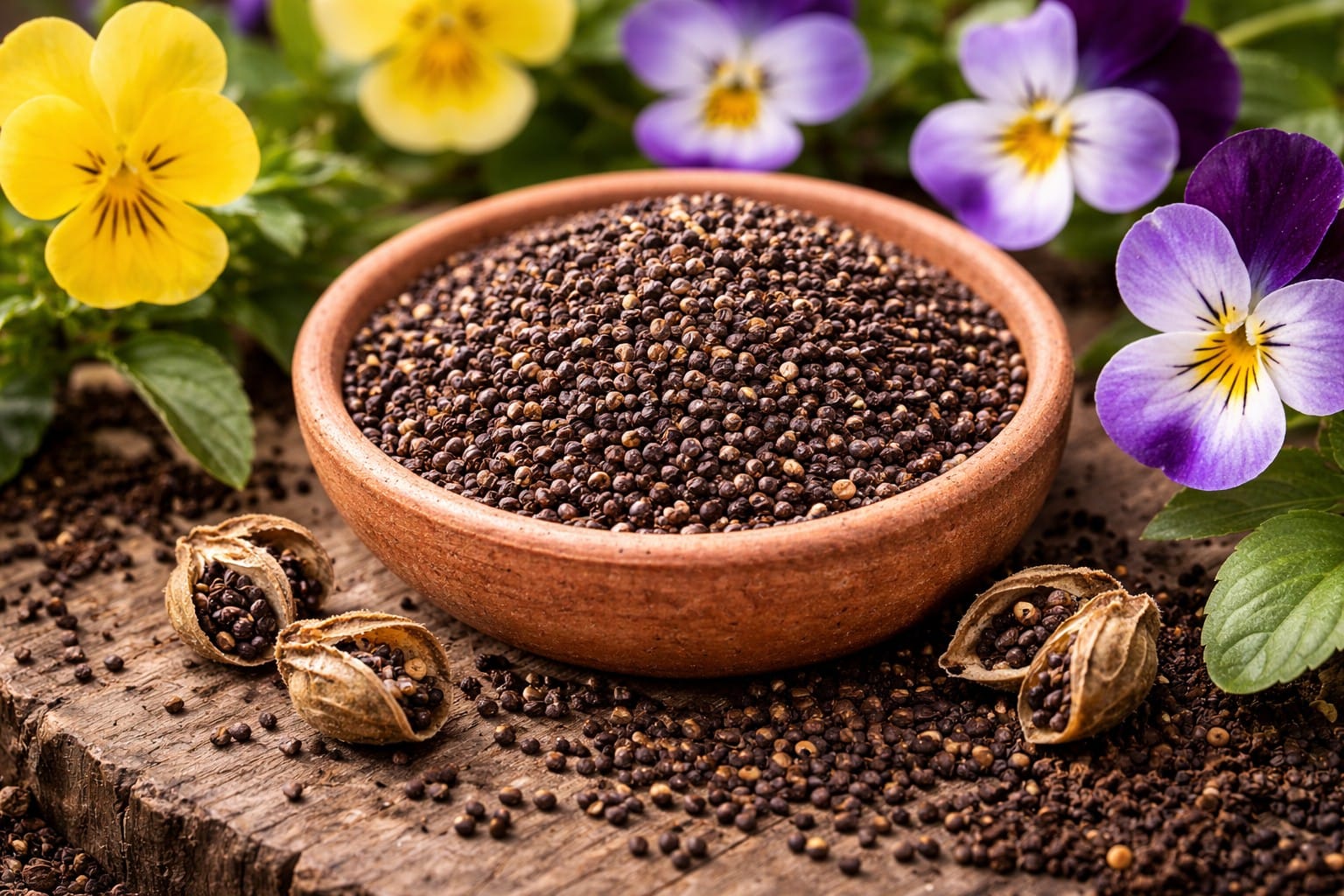
Growing viola flower seeds is a simple and rewarding way to add long-lasting color to gardens, borders, containers, and hanging baskets. Violas are loved for their cheerful faces, delicate fragrance, cool-season toughness, and wide range of colors. When grown from seed, violas are affordable, adaptable, and often bloom longer than nursery-grown plants.
This detailed guide covers everything you need to know about viola flower seeds, including seed selection, sowing, germination, care, common problems, and expert tips to help you grow healthy plants with abundant blooms.
Understanding Viola Flower Seeds
Viola seeds grow into compact flowering plants that belong to the Viola genus, closely related to pansies. Violas usually have smaller flowers but bloom more freely and tolerate a wider range of conditions.
Key characteristics of viola seeds:
Small, round to oval seeds
Dark brown to black when mature
Cool-season germination preference
Grow into low, spreading plants
Violas are commonly grown as annuals or short-lived perennials depending on climate.
Types of Violas Grown from Seed
Several viola types are popular for home gardens.
Common varieties include:
Viola cornuta – horned violas with continuous blooms
Viola tricolor – wild violets and Johnny-jump-ups
Hybrid violas – bred for large flowers and strong colors
Flower colors range from purple, blue, yellow, white, pink, and multicolor blends.
Choosing Quality Viola Flower Seeds
High-quality seeds improve germination and bloom success.
Choose seeds that are:
Fresh and within expiration date
Uniform in color and size
Stored in cool, dry conditions
Purchased from reputable suppliers
Older seeds may still germinate but usually at lower rates.
Best Time to Sow Viola Flower Seeds
Violas prefer cool temperatures, making timing very important.
Best sowing times:
Late winter to early spring for spring blooms
Late summer to early fall for fall and winter blooms in mild climates
Indoor sowing 8–12 weeks before last frost
Ideal germination temperature is 60–70°F (15–21°C).
Soil Requirements for Viola Seeds
Violas thrive in loose, fertile, well-draining soil.
Ideal soil mix:
Quality seed-starting mix or light potting soil
Added compost for nutrients
Perlite or sand for drainage
Avoid heavy clay soil or overly rich mixes that retain too much moisture.
Preparing Viola Seeds for Sowing
Viola seeds do not require scarification, but they benefit from cool conditions.
Optional preparation tips:
Chill seeds in the refrigerator for 1–2 weeks to improve germination
Soak seeds briefly (2–4 hours) if very dry
Handle carefully due to small size
Cold treatment helps mimic natural conditions.
How to Sow Viola Flower Seeds
Step-by-step sowing guide:
Fill seed trays or small pots with moist soil
Scatter seeds lightly on the surface
Cover seeds very lightly with soil or vermiculite
Press gently for seed-to-soil contact
Mist with water to avoid displacement
Viola seeds need darkness to germinate, so avoid exposing them to strong light initially.
Germination Time and Conditions
Viola seeds germinate slowly but reliably under proper conditions.
Germination details:
Sprouting occurs in 10–21 days
Keep soil consistently moist, not soggy
Maintain cool temperatures
Cover trays loosely to block light if needed
Remove covers once seedlings appear.
Light Requirements After Germination
Once seedlings emerge, light becomes essential.
Seedlings need:
Bright indirect light or gentle sunlight
12–14 hours of light daily if grown indoors
Protection from intense midday sun initially
Insufficient light causes weak, stretched plants.
Watering Viola Seedlings
Proper watering ensures steady growth.
Watering tips:
Keep soil evenly moist
Water from the bottom if possible
Avoid waterlogging
Allow surface to dry slightly between watering
Overwatering is a common cause of damping-off disease.
Thinning and Transplanting Violas
Thinning prevents overcrowding.
When seedlings have 2–3 true leaves:
Remove weaker seedlings
Maintain spacing of 6–8 inches
Transplanting steps:
Harden off seedlings gradually
Plant at the same depth
Water well after transplanting
Violas transplant very well when handled gently.
Sunlight Requirements for Mature Violas
Violas perform best in:
Full sun in cool climates
Partial shade in warmer regions
Morning sun with afternoon shade
Too much heat reduces flowering.
Fertilizing Viola Plants
Violas benefit from light, regular feeding.
Fertilizing tips:
Use balanced liquid fertilizer every 2–3 weeks
Avoid excessive nitrogen
Organic compost works well
Proper feeding promotes continuous blooming.
Growing Violas in Containers
Violas are excellent container plants.
Container tips:
Use pots with drainage holes
Choose shallow but wide containers
Plant closely for a full look
Water more frequently than garden beds
They pair beautifully with pansies, alyssum, and spring bulbs.
Common Problems When Growing Violas from Seed
Poor Germination
Caused by warm temperatures or light exposure
Damping-Off
Caused by overwatering and poor airflow
Few Flowers
Caused by heat stress or excess nitrogen
Pests
Aphids and slugs are common
Control with organic methods
Early care prevents most issues.
Saving Viola Seeds
Viola plants can self-seed easily.
Seed-saving steps:
Allow seed pods to dry on the plant
Collect pods before they burst
Dry seeds fully
Store in labeled containers
Saved seeds may produce slight variations in flower color.
Companion Planting with Violas
Violas work well with:
Pansies
Primroses
Tulips
Daffodils
Ornamental grasses
They add ground cover, color, and texture to gardens.
Expert Tips for More Blooms
Plant in cool conditions
Deadhead spent flowers regularly
Water consistently
Provide afternoon shade in warm climates
Use light fertilizer
These small steps greatly extend blooming time.
Final Thoughts
Growing viola flower seeds is an excellent way to enjoy colorful, low-growing flowers that thrive in cool weather and brighten gardens for months. With proper timing, cool temperatures, gentle care, and patience, violas grown from seed reward gardeners with abundant blooms, compact growth, and versatile use in beds, borders, and containers.
Whether you are a beginner or experienced gardener, violas are one of the most reliable and charming flowers you can grow from seed, offering beauty, resilience, and long-lasting seasonal color year after year.