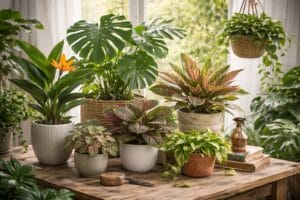
Most tropical houseplants are easy to keep once you match three things: light, water and humidity. Many of them come from rainforest understories, so the goal indoors is bright but filtered light, a loose potting mix and air that is not too dry.
On this page
Key TakeawaysPopular Tropical HouseplantsLightWateringHumidity and TemperatureSoil and FeedingCommon ProblemsFrequently Asked QuestionsSourcesKey Takeaways
- Filtered light suits most: Many tropical plants grow under the shelter of larger trees, so bright, filtered light and protection from drafts work well.
- Overwatering is the main killer: Let the top of the soil dry before watering again, and never leave water standing in trays.
- Watch humidity: Around 40 to 60 percent is preferred for most houseplants, and very dry air causes leaf drying and curling.
Show 3 more takeaways
- Keep temperatures steady: Roughly 65 to 75 F (18 to 21 C) suits most houseplants.
- Feed in the growing season: Fertilise lightly in spring and summer and pause in autumn and winter.
- Check the label: Light, water and pet safety differ by species.
Popular Tropical Houseplants
These are popular tropical plants with care guides on this site:
- Monstera: bold split leaves and a forgiving habit.
- Pothos: trailing vines that cope with a range of conditions.
- Philodendron: many leaf shapes, from heart-leaf to large climbers.
- Fiddle leaf fig: a striking statement plant that can be fussy about light and watering.
- Calathea: patterned leaves that appreciate higher humidity.
- Anthurium: glossy leaves with long-lasting colourful blooms.
- Peace lily: a classic that tolerates lower light.
- Snake plant: very tolerant of neglect.
Light
Many tropical plants originate in rainforests, growing under the shelter of large trees, so they usually prefer filtered light over harsh midday sun. Plants labelled high light generally want five or more hours of bright light, ideally near a south-facing window, while low-light plants still need some light, just less of it. Rotating a pot a quarter turn when you water keeps growth even.
Watering
More houseplants die from improper watering than from any other single cause. For most species, water thoroughly and then let the top of the soil dry before the next watering. Use tepid water, and do not allow water to accumulate in saucers or trays. Watering frequency depends on the potting mix, season, light, temperature, humidity, plant and pot size, so a fixed calendar rarely works.
Humidity and Temperature
Most houseplants are injured when humidity falls below about 20 percent, and 40 to 60 percent is preferred. Leaf drying and curling are typical signs of air that is too dry. To raise humidity, group plants together, use a humidifier, or set the pot on a tray of moist pebbles with the pot base above the water. Keep rooms in the 65 to 75 F (18 to 21 C) range where possible and away from cold drafts.
Soil and Feeding
A good quality, loose, crumbly potting mix works for most tropical houseplants. Mixes that hold too much water encourage root rot. Feed lightly during spring and summer, and stop or reduce in autumn and winter when growth slows. Diluting fertiliser to half strength is a safe starting point.
Common Problems
- Brown leaf tips: Often low humidity or inconsistent watering.
- Yellow leaves: Usually overwatering or poor drainage.
- Leaf drop after buying: Homes usually have lower light and humidity than the nursery, so some leaf loss in the first weeks is common.
- Leaning growth: Plants bend toward the light, so rotate the pot regularly.
Frequently Asked Questions
Can tropical plants live in low light?
Some tolerate it, such as snake plants and peace lilies, but they still need some light and will grow more slowly.
How often should I water tropical plants?
Check the soil rather than the calendar. Water when the top of the soil feels dry, and adjust for season and light.
Is misting enough for humidity?
Misting gives only a brief boost. A humidifier, grouping plants, or a pebble tray is more effective.
Are tropical houseplants safe for pets?
Not all of them. Check each species against a pet-safe plant list before bringing it home, and keep any plant out of reach if you are unsure.
Do tropical plants need fertiliser?
Light feeding in spring and summer is enough for most. Skip it in winter.