
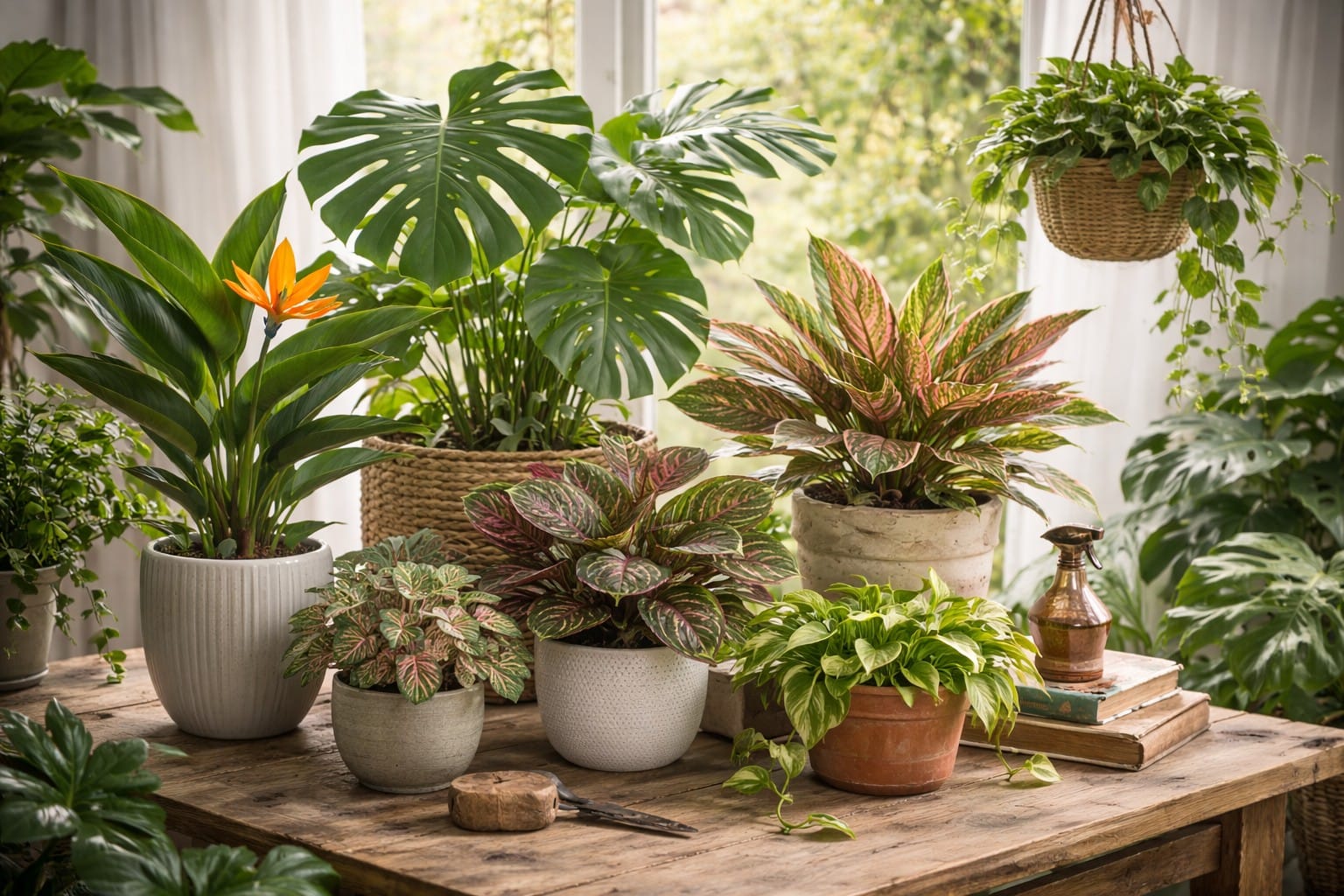
Tropical houseplants are some of the most popular indoor plants for homes, offices, and apartments. Known for their lush foliage, vibrant colors, and dramatic leaf shapes, tropical plants can instantly transform any space into a green, lively oasis. They thrive in environments that mimic their natural tropical habitat—warm, humid, and bright with indirect sunlight.
Tropical houseplants are not just beautiful—they also improve air quality, mental well-being, and home aesthetics. From large-leafed monsteras to colorful calatheas, there is a tropical plant suitable for every space, style, and level of gardening experience. This comprehensive guide covers everything you need to know about tropical houseplants, including types, care tips, propagation, common problems, display ideas, benefits, and expert insights.
What Are Tropical Houseplants?
Tropical houseplants are plants that naturally grow in warm, humid regions near the equator, such as Southeast Asia, Central and South America, and Africa. Unlike desert or temperate plants, tropical plants thrive in high humidity, indirect bright light, and consistently warm temperatures.
Key characteristics of tropical houseplants include:
- Large, broad, or uniquely shaped leaves
- Vibrant colors, including greens, reds, purples, and variegated patterns
- Tolerance to indoor environments with consistent care
- Ability to improve indoor air quality
- Preference for humidity and warmth
Tropical plants are adaptable, but they flourish when their indoor environment mimics their natural habitat.
Why Tropical Houseplants Are Popular
Tropical plants are popular because they combine beauty, exotic appeal, and air-purifying benefits. They can make a bold statement in interior décor while being relatively easy to care for with the right knowledge.
Some reasons people love tropical houseplants include:
- Lush, dramatic foliage adds visual interest
- Air-purifying properties improve indoor air quality
- Low to moderate maintenance depending on the species
- Wide variety of shapes, colors, and sizes
- Suitable for indoors, even in apartments or offices
- Tropical ambiance creates a calming and relaxing environment
Their ability to transform spaces, along with their health and aesthetic benefits, makes tropical plants a favorite choice worldwide.
Popular Types of Tropical Houseplants
There are countless tropical houseplants, but some of the most popular include:
Monstera Deliciosa (Swiss Cheese Plant)
- Large, split leaves with unique perforations
- Thrives in bright indirect light
- Moderate watering required
- Can climb moss poles or trail from hanging baskets
Fiddle Leaf Fig (Ficus Lyrata)
- Broad, violin-shaped leaves
- Prefers bright, indirect light
- Sensitive to overwatering and drafts
- Iconic indoor tree for modern décor
Calathea
- Colorful patterned leaves with purple undersides
- Prefers high humidity and indirect light
- Leaves may fold at night, giving a unique dynamic effect
- Ideal for bathrooms or humid rooms
Philodendron
- Heartleaf and split-leaf varieties
- Trailing or climbing growth habit
- Thrives in moderate light
- Easy to care for and fast-growing
Alocasia (Elephant Ear Plant)
- Dramatic, arrow-shaped leaves
- Prefers warm temperatures and high humidity
- Moderate watering, avoid waterlogging
- Makes a bold statement in any room
Bird of Paradise (Strelitzia)
- Large, paddle-shaped leaves resembling a tropical palm
- Can produce vibrant orange and blue flowers indoors
- Needs bright indirect light
- Moderate water, occasional feeding for flowering
Anthurium
- Glossy, heart-shaped leaves with red, pink, or white flowers
- Prefers bright, filtered light
- Keep soil moist but well-drained
- Adds color and tropical appeal to indoor spaces
Snake Plant (Sansevieria)
- Hardy tropical succulent
- Tolerates low light and irregular watering
- Air-purifying properties
- Ideal for beginners or low-maintenance décor
Ideal Growing Conditions for Tropical Houseplants
Light
- Most tropical plants prefer bright, indirect sunlight
- Avoid harsh direct sun which can scorch leaves
- Low-light tropical plants (e.g., snake plant, pothos) tolerate indirect or artificial light
Watering
- Water according to species needs
- Keep soil consistently moist for humidity-loving plants
- Allow soil to partially dry for drought-tolerant tropical plants
- Avoid waterlogged soil to prevent root rot
Humidity
- Tropical plants thrive in 50–80% humidity
- Increase humidity using:
- Pebble trays with water
- Regular misting
- Humidifiers
- Bathrooms and kitchens often provide ideal humidity
Temperature
- Ideal indoor temperature: 65–85°F (18–30°C)
- Avoid cold drafts, sudden temperature changes, and frost
- Tropical plants prefer steady warmth
Soil
- Well-draining, nutrient-rich soil is ideal
- Mix peat, perlite, and potting soil for most tropical plants
- Epiphytic tropicals (like air plants or orchids) may require special mediums
Propagation of Tropical Houseplants
Many tropical plants are easy to propagate, which allows gardeners to grow new plants at home.
Stem Cuttings
- Common for pothos, philodendrons, monsteras, and anthuriums
- Cut a healthy stem with at least one node
- Place in water or soil
- Roots develop within 2–4 weeks
Division
- Suitable for plants with clumping roots like calatheas, alocasias, and peace lilies
- Remove the plant from the pot
- Separate roots and replant individually
- Water lightly until established
Leaf Cuttings
- Works for plants like begonias or alocasias
- Place cut leaves in moist soil
- New plantlets will develop at the base
Common Problems and How to Fix Them
- Yellow leaves: Overwatering or poor drainage
- Brown leaf tips: Dry air, low humidity, or inconsistent watering
- Slow growth: Low light or nutrient deficiency
- Pests: Spider mites, aphids, mealybugs
- Leaf drop: Temperature stress, drafts, or sudden environmental changes
Proper care, light adjustment, humidity management, and occasional pest control solve most problems.
Display Ideas for Tropical Houseplants
- Hanging baskets for trailing tropical vines
- Large floor pots for tall tropical trees like fiddle leaf figs or bird of paradise
- Shelves or ledges for small to medium tropical plants
- Terrariums for humidity-loving small tropical plants
- Group plants together to create a tropical mini-garden indoors
Proper arrangement enhances the visual impact and health of tropical plants.
Benefits of Tropical Houseplants
- Air purification: Remove toxins like formaldehyde and xylene
- Aesthetic appeal: Create a calming, tropical ambiance
- Mental health: Improves mood, reduces stress, and enhances creativity
- Versatility: Suitable for indoors, apartments, offices, and homes
- Low maintenance: Many tropical plants tolerate minor neglect
Are Tropical Houseplants Good for Beginners?
Yes, many tropical plants are beginner-friendly, such as pothos, snake plant, and philodendron. These tolerate low light, irregular watering, and adapt easily to indoor environments. Some tropical plants require more humidity and attention but provide spectacular visual rewards.
Frequently Asked Questions About Tropical Houseplants
- Do tropical plants need a lot of water? Some do, like calatheas, while drought-tolerant species like snake plants need less.
- Can they survive low light? Many tropical plants prefer bright, indirect light, but some tolerate moderate light.
- How often should I fertilize? Fertilize once every 4–6 weeks during the growing season.
- Do they improve indoor air quality? Yes, tropical houseplants help filter toxins and improve air quality.
- Can I propagate tropical plants? Most tropical plants propagate easily via cuttings, division, or leaves.
Final Thoughts
Tropical houseplants are the perfect way to bring nature’s beauty indoors. With their lush foliage, exotic appeal, and air-purifying qualities, they make any space feel vibrant, fresh, and alive.
By understanding light, water, humidity, soil, and propagation, anyone can grow healthy, thriving tropical plants indoors. Whether you choose dramatic monsteras, colorful calatheas, or hardy pothos, tropical houseplants provide long-lasting beauty, health benefits, and a touch of the tropics in your home or office.
With proper care, these plants will reward you with years of greenery, vibrant colors, and a peaceful, natural atmosphere, turning your space into a personal indoor tropical oasis.